
The global manufacturing landscape is increasingly driven by demands for higher quality, greater transparency, and full accountability. In the realm of foundry operations, particularly for sand casting parts, achieving robust quality traceability remains a significant challenge. Traditional quality management systems often treat defect resolution as a terminal event—a defective part is scrapped or reworked, and the case is closed. This approach fails to capture the systemic lessons and fails to enact preventive controls across relevant production batches. Through my research and practical implementation in the industry, I have identified that the core impediments to effective traceability in sand casting enterprises are the fragmentation of the traceability chain and the oversimplification of defect causality. In response, I developed and applied a comprehensive Serial-Parallel Quality Accountability and Tracking Model, which reframes quality追溯 as a continuous, multidimensional process.
The production of sand casting parts is inherently complex, involving numerous interdependent variables from raw material properties to intricate process parameters and human-operated production steps. A single defect in a finished casting can rarely be attributed to a lone, isolated factor. More often, it is the result of a confluence of issues or has the potential to affect an entire batch produced under similar conditions. The common industry practice of weak or non-existent batch tracking and a lack of rigorous root-cause accountability makes it nearly impossible to contain quality issues promptly or to prevent their recurrence. The consequences are substantial: increased scrap and rework costs, delayed deliveries, customer dissatisfaction, and reputational damage.
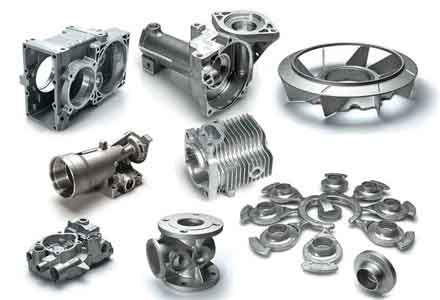
The proposed model is designed to address these exact shortcomings. Its foundational principle is the construction of a complete, unbroken traceability chain. This chain is formed by serially linking four critical nodes: (1) Defect Diagnosis, (2) Cause Accountability (Responsibility Claim), (3) Batch Tracking, and (4) Batch Disposal. No quality incident is considered resolved until it has progressed through this entire sequence. Furthermore, to address the multifactorial nature of defects and the varied states of affected parts, the model incorporates parallel analysis and action pathways. Accountability and tracking are performed in parallel across three distinct causal dimensions: Production, Process, and Raw Materials. Similarly, the disposal actions are executed in parallel based on the three possible states of the castings: Work-in-Progress (WIP), In Inventory, and Delivered/Shipped.
Deconstructing the Model: Theoretical Framework and Mathematical Representation
The efficacy of the Serial-Parallel model can be conceptualized both logically and mathematically. Let us define a quality traceability event \( QTE \) for a defective sand casting part. The complete resolution of \( QTE \) is a function of successfully executing the serial chain and activating the relevant parallel branches.
The serial chain represents a mandatory sequence of operations \( S \):
$$ S = D \rightarrow R \rightarrow T \rightarrow P $$
Where:
\( D \): Defect Diagnosis and Registration.
\( R \): Root-cause analysis and Accountability assignment.
\( T \): Batch identification and Tracking.
\( P \): Disposition (Disposal) of the affected batch.
The probability of a fully successful traceability resolution \( P(QTE) \) depends on the successful completion of each step. If we treat them as dependent events, we can express it as:
$$ P(QTE) = P(D) \cdot P(R|D) \cdot P(T|R) \cdot P(P|T) $$
This equation underscores that a failure at any node (e.g., skipping accountability \( R \)) reduces the overall probability of effective resolution to zero. The model enforces \( P(D) = P(R|D) = P(T|R) = P(P|T) = 1 \) by design through systematic workflow controls in an ERP/MES environment.
The parallel analysis occurs primarily at the \( R \) and \( T \) nodes. A defect \( Def \) is diagnosed as belonging to one or more causal categories \( C_i \).
$$ Def \in \{C_{prod}, C_{proc}, C_{mat}\} $$
Where \( C_{prod} \) denotes Production-related causes (e.g., operator error, machine malfunction), \( C_{proc} \) denotes Process-related causes (e.g., faulty gating system design, incorrect pouring temperature), and \( C_{mat} \) denotes Raw Material-related causes (e.g., off-specification chemical composition, poor sand quality). For a given \( Def \), the diagnosis module assesses the likelihood for each category:
$$ L_{prod} = P(C_{prod} | Def) $$
$$ L_{proc} = P(C_{proc} | Def) $$
$$ L_{mat} = P(C_{mat} | Def) $$
The accountability and tracking procedures are then initiated for all categories where \( L_i \) exceeds a predefined threshold. This is the essence of parallel, multi-dimensional analysis, preventing the neglect of contributing factors.
Similarly, at the disposal node \( P \), the affected batch \( B \) is partitioned based on the state \( S_j \) of each constituent sand casting part:
$$ B = B_{wip} \cup B_{inv} \cup B_{ship} $$
Appropriate disposal protocols \( A_j \) are applied in parallel to each partition:
\( A_{wip} \): Halt processing, inspect, route to rework/scrap.
\( A_{inv} \): Recall from stock, reinspect, decide disposition.
\( A_{ship} \): Initiate customer notification and reverse logistics, followed by replacement or credit.
The following table summarizes the parallel pathways for accountability and their corresponding tracking logic:
| Causal Dimension | Accountability Focus | Key Data Source for Tracking | Batch Definition Rule |
|---|---|---|---|
| Production (C_prod) | Operator, Machine, Shift, Environmental conditions at the specific faulty operation. | Production Work Report, Quality Inspection Record for the defective operation. | All sand casting parts that underwent the same faulty operation under identical conditions (e.g., same machine, same shift, same operator). |
| Process (C_proc) | Process Engineer, Designer, Reviewer of the specific工艺 (Mold/Core Design, Gating, Pouring parameters). | Process Card/Sheet number associated with the defective casting. | All sand casting parts manufactured using the identical, faulty process design across all production orders. |
| Raw Material (C_mat) | Material Inspector, Melting Furnace Operator, Purchasing for a specific material batch/lot. | Material Test Certificate (e.g., chemical analysis, sand property test), Melt/Batch number. | All sand casting parts produced from the same identified batch of non-conforming raw material or melt. |
Operationalizing the Model: A Step-by-Step Application within an ERP System
The theoretical model finds its practical power when embedded within a manufacturing execution system (MES) or Enterprise Resource Planning (ERP) system tailored for foundries. I implemented this model within a framework used by numerous sand casting enterprises. The workflow is triggered by the formal registration of a defective part, often through a Non-Conformance Report (NCR) or Reject Ticket module.
Step 1: Defect Diagnosis & Causal Classification
The quality technician records the defect type (e.g., porosity, shrinkage, crack, misrun) and, based on standard defect analysis guides, assigns one or more causal dimensions. The system interface forces this classification, ensuring the initiation of the parallel branches.
Step 2: Parallel Accountability and Tracking Execution
Based on the classification, the system automatically prompts and guides the user through the relevant accountability and tracking procedures, pulling data from integrated modules.
For a Production Defect: The system traces the part’s serial or batch number to its production routing. It identifies the specific operation where the defect likely originated (e.g., molding, core setting, pouring, finishing). It then retrieves the work report for that operation, identifying the responsible operator, machine ID, and timestamp. The accountability record is created against this operational context. To define the affected batch, the system queries the database for all other sand casting parts that were processed on the same machine, by the same operator, or within the same time window (e.g., same shift) for that operation.
For a Process Defect: The system retrieves the unique Process Card ID linked to the defective part’s work order. The process card contains information about the designers and reviewers. Accountability is assigned to these roles for allowing a flawed design into production. For tracking, the system executes a query to find all active and completed work orders that are linked to the same Process Card ID. This identifies the entire population of sand casting parts potentially at risk from this design flaw, regardless of their current production status.
For a Raw Material Defect: The system traces the part back to its melt number or raw material lot number (e.g., resin binder batch, alloy ingot lot). The chemical or property test certificate for that specific lot is reviewed to confirm non-conformance. Accountability is directed towards the quality control personnel responsible for material release and the melting team. The tracking query is straightforward: find all parts cast from the implicated melt or manufactured using the implicated material lot.
The scope determination for tracking can be formalized. If \( P_d \) is the defective part, and \( X \) is the traceable attribute (Machine/Operator ID, Process Card ID, Melt ID), then the affected batch \( B_{aff} \) is:
$$ B_{aff} = \{ p_i \in P \ | \ X(p_i) = X(P_d) \} $$
where \( P \) represents the total population of sand casting parts produced.
Step 3: Parallel Disposition Based on Part State
Once \( B_{aff} \) is identified, the system segments it by querying the current status of each part. The disposal workflow is then a parallel set of procedures. The table below outlines the standard operating procedures for each part-state segment:
| Part State | Immediate Action | Subsequent Inspection & Decision Logic | Final Disposition Paths |
|---|---|---|---|
| Work-in-Progress (WIP) | Immediate halt of further processing for all parts in \( B_{aff} \). | 100% inspection at the current or previous critical station. Part \( p_i \) is judged conforming (\( C \)) or non-conforming (\( NC \)). | If \( C \): Resume normal production flow. If \( NC \): Route to Material Review Board (MRB) for rework/scrap decision. |
| In Inventory (INV) | Physical quarantine and system block on shipping for all parts in \( B_{aff} \). | 100% re-inspection (may be sampling-based for large batches with statistical justification). Part \( p_i \) is judged \( C \) or \( NC \). | If \( C \): Release from quarantine, return to available stock. If \( NC \): Route to MRB for rework/scrap decision. |
| Delivered/Shipped (SHIP) | Automatic generation of customer notification alert. Initiation of reverse logistics process. | Inspection upon return to facility. Assessment of severity and reparability. | Options: 1) Replace with conforming part from stock or new production. 2) Authorize customer-performed repair with credit. 3) Issue full credit/refund. Root cause data feeds into corrective action for future orders. |
The entire process generates a comprehensive traceability dossier for the initial defect, documenting the diagnostic conclusion, the accountable parties across relevant dimensions, the exact scope of the affected batch, and the detailed disposition results for every part within that batch. This creates a closed-loop quality management system.
Implementation Challenges and System Integration Considerations
Successfully implementing the Serial-Parallel model in a real-world environment for manufacturing sand casting parts requires addressing several practical challenges. The foremost prerequisite is data integrity and granularity. The model’s tracking logic depends on the ability to accurately link a finished or in-process casting back to its specific production parameters, process version, and material provenance. This necessitates:
- Consistent Part/Batch Identification: A robust numbering scheme (serial or batch-based) that follows the part throughout its lifecycle.
- Digital Process Documentation: Process cards must be version-controlled digital assets within the ERP, uniquely identifiable and immutably linked to work orders.
- Material Genealogy: The system must maintain a “pedigree” for raw materials, tracking lot numbers from receipt through storage, issue to production, and consumption in specific melts or sand mixtures.
- Point-of-Work Data Capture: Operator inputs at each workstation (via terminals, barcodes, or RFID) must be reliable to create an accurate digital record of who did what, when, and on which equipment.
Another challenge is cultural: instituting a formal accountability step can meet resistance. It is crucial to position this not as a punitive “blame” tool, but as a fundamental component of organizational learning and process improvement. The system should facilitate assigning accountability to roles and processes rather than solely to individuals, focusing on systemic fixes.
Finally, the model increases the initial administrative workload for quality incidents. Instead of scrapping one part, dozens or hundreds may need to be tracked and inspected. The cost-benefit analysis, however, overwhelmingly supports the model. The cost of a single escaped defect reaching a key customer, potentially causing downstream assembly line stoppages or field failures, far outweighs the internal costs of rigorous containment. Furthermore, the data collected feeds predictive analytics, allowing for the prevention of future defects, ultimately reducing the total cost of quality.
Quantitative Impact and Concluding Synthesis
In application within a typical mid-sized job-shop foundry producing a variety of sand casting parts, the model demonstrated measurable impact. The time required to perform a full root-cause analysis and batch containment for a defect incident was standardized and significantly reduced because the process was systematic and data-driven, not ad-hoc. The percentage of quality incidents where batch tracking was performed increased from an estimated 30-40% to 100%, as it became a mandatory step in the digital workflow. Perhaps most importantly, the analysis of defect causes became richer. Previously, a defect might be classified simply as “porosity.” Under the new model, the same defect might be recorded as: 70% probability related to Process (inadequate venting design), 20% to Production (improper core assembly practice), and 10% to Materials (slightly higher moisture content in sand). This multidimensional diagnosis enables more comprehensive corrective actions.
The Serial-Parallel Traceability Model represents a paradigm shift in managing quality for sand casting parts. It moves beyond reactive defect recording to proactive, systemic quality governance. By enforcing a serial chain of diagnosis, accountability, tracking, and disposal, it ensures no critical step is missed. By analyzing causes and executing dispositions in parallel pathways, it accurately reflects the complex reality of foundry processes and enables swift, appropriate action across all affected assets. While its implementation demands disciplined data management and cultural adaptation, the rewards are substantial: enhanced customer trust through demonstrable control, reduced risk of costly quality escapes, and the creation of a powerful knowledge base for continuous process improvement. This model provides a foundational framework for any sand casting enterprise aiming to thrive in an era where traceability is not a luxury, but a necessity.