
In recent years, as an engineer deeply involved in the foundry industry, I have witnessed the rapid advancement of 3D printing technology and its transformative impact across various sectors. Within the casting domain, particularly for producing complex sand casting parts, the adoption of 3D printing has garnered significant attention. This technology is not merely a tool for prototyping but has evolved into a viable method for direct manufacturing, revolutionizing how we approach design and production. In this article, I will share my insights and experiences regarding the principles, technical characteristics, and practical application of sand 3D printing technology, with a focused case study on automotive engine block casting—a quintessential example of intricate sand casting parts. The ability to fabricate molds and cores directly from digital models without traditional patterns or tooling has opened new frontiers, enabling faster innovation, cost reduction, and enhanced performance for sand casting parts.
Sand 3D printing, specifically based on the binder jetting process (often referred to as 3DP), operates on a layer-by-layer additive manufacturing principle. From my perspective, the process begins with preparing a mixture of foundry sand and a curing agent, which is loaded into a sand hopper. Simultaneously, a binder resin is supplied to the print head’s ink cartridge. Upon initiation, the printer’s spreader deposits a thin layer of sand onto the build platform. The print head then moves across this layer, selectively jetting binder onto areas where the sand should solidify, based on cross-sectional data from a digital model. The chemical reaction between the binder and curing agent bonds the sand particles, forming a solid layer. This cycle repeats—layering sand, jetting binder, and lowering the platform—until the entire 3D sand mold or core is complete. The precision of this method allows for the creation of highly detailed geometries that are challenging or impossible with conventional methods. One key advantage I’ve observed is the elimination of multiple steps: mold making, pattern creation, core shooting, and assembly are consolidated into a single 3D printing operation, drastically streamlining the production of sand casting parts.
The technical characteristics of sand 3D printing make it exceptionally suitable for manufacturing complex sand casting parts. Compared to traditional sand casting, which often requires numerous cores and molds, 3D printing enables integrated design. For instance, in a typical engine block casting, traditional methods might necessitate 30 to 40 separate cores, leading to cumulative errors and assembly difficulties. With 3D printing, we can optimize the structure through topological design, consolidating multiple cores into a few monolithic pieces. This not only reduces the number of components but also minimizes dimensional deviations, improving the overall accuracy of sand casting parts. Moreover, the absence of draft angles and supports in 3D printed sand molds allows for greater design freedom, facilitating the production of thin-walled and intricate features common in sand casting parts. The environmental benefits are also notable, as it reduces labor intensity and waste, aligning with modern sustainable manufacturing practices. To quantify some aspects, consider the layer thickness and bonding strength. In our work, we often use a layer thickness ($$h$$) of 0.3 mm to balance resolution and speed. The bonding strength ($$S_b$$) can be modeled as a function of binder concentration ($$C_b$$) and curing time ($$t_c$$): $$S_b = k \cdot C_b \cdot \ln(t_c + 1)$$, where $$k$$ is a material constant. This ensures that the sand casting parts produced meet rigorous mechanical requirements.
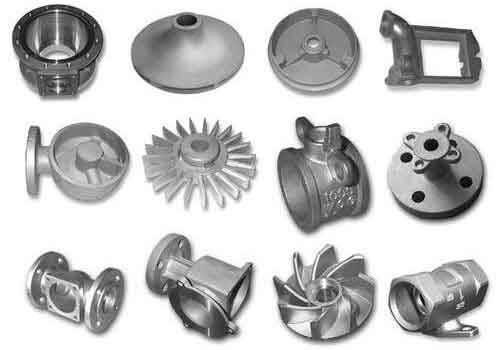
In applying sand 3D printing to automotive engine block casting, we focused on a specific model with dimensions of 649 mm × 98 mm and a minimum wall thickness of 4 mm, made of HT250 iron. This sand casting part exemplifies complexity due to its thin-walled, multi-cavity structure. Traditional casting approaches involved numerous cores, increasing the risk of defects like misalignment or gas entrapment. By leveraging 3D printing, we redesigned the process from the ground up. The key was to utilize the technology’s ability to produce integrated sand cores, reducing the total number from over 30 to just 3. This simplification profoundly impacted the assembly process and dimensional control for these sand casting parts. We employed CAD software to create a full mold envelope, then partitioned it into three cores based on critical interfaces: the cylinder head face, water jacket top, and flange surface. Each core included定位 structures and lifting lugs to facilitate handling and precise assembly, ensuring that the final sand casting parts met tight tolerances. The design process emphasized minimizing joints to enhance the integrity of sand casting parts.
The工艺 design for sand 3D printed engine blocks encompasses several critical stages: gating system design, sand core design, and core assembly and molding. For the gating system, we adopted a bottom-gated open design to ensure smooth metal flow. The system consisted of a sprue, runner, and ingates positioned at thermal junctions in each cylinder. The ratio was set at 1:2:2 to control velocity and reduce turbulence. The gating volume ($$V_g$$) can be calculated based on the casting volume ($$V_c$$) and desired fill time ($$t_f$$): $$V_g = \frac{V_c}{t_f} \cdot \rho$$, where $$\rho$$ is the metal density. This optimization helps prevent defects in sand casting parts, such as cold shuts or inclusions. For sand core design, we created a rectangular block encompassing the entire casting and gating system, then subtracted the part geometry to form the mold cavity. Partitioning was performed along strategic planes to yield three cores: Core 1 from the cylinder head face, Core 2 from the water jacket top, and Core 3 from the flange surface. These cores incorporated features like interlocking定位 pins and sockets to ensure accurate alignment during assembly. The core strength ($$\sigma_c$$) is vital for withstanding metallostatic pressure, given by $$\sigma_c \geq \rho_m \cdot g \cdot h$$, where $$\rho_m$$ is the molten metal density, $$g$$ is gravity, and $$h$$ is the metal head height. Our 3D printed sand cores consistently exceeded this requirement for sand casting parts.
Core assembly and molding are streamlined with 3D printing. We sequentially placed Core 1 on a flat platform, then lowered Core 2 and Core 3 using guide pins for alignment. After verifying dimensions, we clamped the assembly with bolts. The entire core package was then positioned in a molding box slightly larger than the core轮廓, and resin sand was poured around it to provide support during pouring. This method reduces handling errors and maintains the precision of sand casting parts. To quantify the improvements, we compared traditional pattern-based sand casting with sand 3D printing across various metrics. The table below summarizes the production cycle times, highlighting the dramatic reduction enabled by 3D printing for sand casting parts.
| Casting Method | Process Design (days) | Mold Manufacturing (days) | Casting (days) | Cleaning (days) | Inspection & Storage (days) | Total (days) |
|---|---|---|---|---|---|---|
| Traditional Pattern-Based | 5 | 45 | 6 | 3 | 1 | 60 |
| Sand 3D Printing | 5 | 0 | 3 | 1 | 1 | 10 |
Furthermore, the quality indicators for sand casting parts show marked enhancement with 3D printing. The table below presents a comparison based on our engine block case study. The reduction in sand molds, improved dimensional accuracy, and lower sand-to-metal ratio all contribute to higher yield and better surface finish for sand casting parts.
| Casting Method | Number of Sand Molds | Dimensional Accuracy (mm) | Surface Roughness (μm) | Sand-to-Metal Ratio | Casting Yield (%) |
|---|---|---|---|---|---|
| Traditional Pattern-Based | 30-40 | ±0.35 | Ra100 | 15 | 50 |
| Sand 3D Printing | 3 | ±0.2 | Ra25 | 2.5 | 98 |
In our practice, the application of sand 3D printing technology has led to significant outcomes for producing sand casting parts like engine blocks. The production cycle was shortened from 60 days to just 10 days, while the casting yield soared from 50% to 98%. Dimensional accuracy improved, with tolerances tightening from ±0.35 mm to ±0.2 mm, and surface roughness decreased from Ra100 to Ra25 μm. These enhancements are attributable to the integrated core design, which minimizes assembly errors and ensures consistent quality for sand casting parts. We also developed a standard for装配间隙 design in 3D printed sand cores to account for dimensional误差传递, further optimizing the precision of sand casting parts. The relationship between core间隙 ($$g$$) and cumulative error ($$E_c$$) can be expressed as $$E_c = \sum_{i=1}^{n} \delta_i + g$$, where $$\delta_i$$ represents the误差 of individual cores. By controlling $$g$$ through design, we achieve near-net-shape sand casting parts with minimal post-processing.
From a broader perspective, the advantages of sand 3D printing extend beyond cycle time and quality. It enables rapid prototyping and customization, allowing us to iterate designs quickly for sand casting parts without the cost and lead time of hard tooling. This is particularly beneficial for low-volume or complex components, such as those in aerospace or defense, where sand casting parts often have intricate internal passages. The technology also supports sustainability by reducing waste sand and energy consumption associated with pattern production. In terms of material usage, the sand consumption ($$M_s$$) per sand casting part can be modeled as $$M_s = \rho_s \cdot V_m \cdot (1 + \epsilon)$$, where $$\rho_s$$ is the sand density, $$V_m$$ is the mold volume, and $$\epsilon$$ is a waste factor. With 3D printing, $$\epsilon$$ is significantly lower compared to traditional methods, making it more efficient for producing sand casting parts.
Looking ahead, I believe sand 3D printing technology will continue to evolve and find wider adoption in the casting industry. Future developments may include multi-material printing for graded properties, integration with simulation software for real-time optimization, and advancements in binder chemistry to enhance strength and recyclability. For sand casting parts, this means even greater design freedom, reduced costs, and improved performance. As the technology matures, it could become the standard for manufacturing complex sand casting parts, from automotive engines to turbine housings. In conclusion, based on my experience, sand 3D printing is not just a supplementary tool but a transformative force that redefines how we conceive and produce sand casting parts, offering unparalleled benefits in complexity, speed, and precision.
To further illustrate the technical细节, let’s delve into some formulas that govern the 3D printing process for sand casting parts. The print speed ($$v_p$$) in layers per hour can be derived from the layer thickness ($$h$$) and total height ($$H$$): $$v_p = \frac{H}{h \cdot t_l}$$, where $$t_l$$ is the time per layer, including spreading and printing. For our engine block, with $$H = 600$$ mm and $$h = 0.3$$ mm, assuming $$t_l = 30$$ seconds, we get $$v_p \approx 240$$ layers per hour. The binder saturation ($$S$$) is critical for strength and is defined as $$S = \frac{V_b}{V_p}$$, where $$V_b$$ is the binder volume and $$V_p$$ is the pore volume in the sand. Optimal saturation, typically around 0.1 to 0.2, ensures adequate bonding without excessive resin usage for sand casting parts. Additionally, the curing kinetics can be described by an Arrhenius-type equation: $$r_c = A \cdot e^{-\frac{E_a}{RT}}$$, where $$r_c$$ is the curing rate, $$A$$ is a pre-exponential factor, $$E_a$$ is the activation energy, $$R$$ is the gas constant, and $$T$$ is the temperature. Controlling these parameters allows us to tailor the properties of 3D printed sand molds for diverse sand casting parts.
In summary, the integration of sand 3D printing into the casting workflow represents a paradigm shift. My hands-on experience confirms that it addresses longstanding challenges in producing complex sand casting parts, offering a blend of flexibility, efficiency, and quality. As we continue to refine the technology, I anticipate its role will expand, paving the way for more innovative and sustainable manufacturing of sand casting parts across industries.