
As an observer deeply embedded in the foundry sector, I have witnessed firsthand the dynamic shifts that sand casting manufacturers face today. The industry stands at a crossroads, where economic pressures and technological advancements collide, shaping the future of manufacturing. In this article, I will explore the current sentiment indicators, groundbreaking sand recycling technologies, and cutting-edge material research that are redefining the landscape for sand casting manufacturers. My aim is to provide a comprehensive analysis, enriched with tables and formulas, to underscore the critical developments that every sand casting manufacturer must consider to thrive in this evolving environment.
The European foundry industry, a cornerstone for many sand casting manufacturers, has recently shown signs of strain. The Foundry Industry Sentiment Indicator (FISI) and the Business Climate Indicator (BCI) serve as vital barometers for assessing the health of this sector. In June 2023, the FISI recorded a value of 98.6 points, marking a decline of 2.1 points from May and falling below its initial 2015 baseline of 100.0 points. This consecutive drop signals a troubling trend for sand casting manufacturers across Europe. The BCI, which evaluates manufacturing conditions in the eurozone, also decreased by 0.13 points to 0.06 points, nearly reverting to pandemic-era lows. For sand casting manufacturers, these indices reflect broader challenges: dwindling new orders despite high backlogs, pessimistic expectations for the next six months, and declining sales price projections. The formula for calculating such sentiment indices often involves weighted averages of survey responses, which can be expressed as:
$$ \text{FISI} = \sum_{i=1}^{n} w_i \cdot S_i $$
where \( w_i \) represents the weight assigned to each survey component (e.g., order books, production trends), and \( S_i \) denotes the sentiment score for that component. This mathematical approach helps sand casting manufacturers gauge industry momentum, but the recent data suggests a need for strategic pivots.
| Month | FISI Index (Points) | BCI Index (Points) | Key Observations for Sand Casting Manufacturers |
|---|---|---|---|
| May 2023 | 100.7 | 0.19 | Moderate optimism, but order backlogs high |
| June 2023 | 98.6 | 0.06 | Negative shift across all material groups; expectations worsen |
| Projected July 2023 | ~97.5 | ~0.00 | Anticipated further decline based on current trends |
Amidst these economic headwinds, innovation emerges as a beacon for sand casting manufacturers. One of the most promising advancements is in sand recycling technology, which addresses both cost and sustainability concerns. Companies like RESAND have developed modular sand reclamation plants that combine thermal and mechanical treatments to regenerate used foundry sand. For sand casting manufacturers, this technology offers a transformative solution: it reduces reliance on virgin sand, minimizes waste sent to landfills, and enhances casting quality. The process can be modeled using efficiency formulas, such as the sand recovery rate:
$$ R = \frac{M_r}{M_t} \times 100\% $$
where \( R \) is the recovery rate, \( M_r \) is the mass of recycled sand, and \( M_t \) is the total mass of sand used in casting. In practice, sand casting manufacturers implementing such systems have reported recovery rates exceeding 80%, leading to significant material savings. For instance, a typical sand casting manufacturer producing 1,000 tons of steel castings annually might require 2,500 tons of silica sand. With recycling, the need for new sand can drop by over 2,200 tons, as demonstrated by early adopters. This not only cuts costs but also reduces the carbon footprint associated with sand extraction and transport—a critical consideration for modern sand casting manufacturers aiming for greener operations.
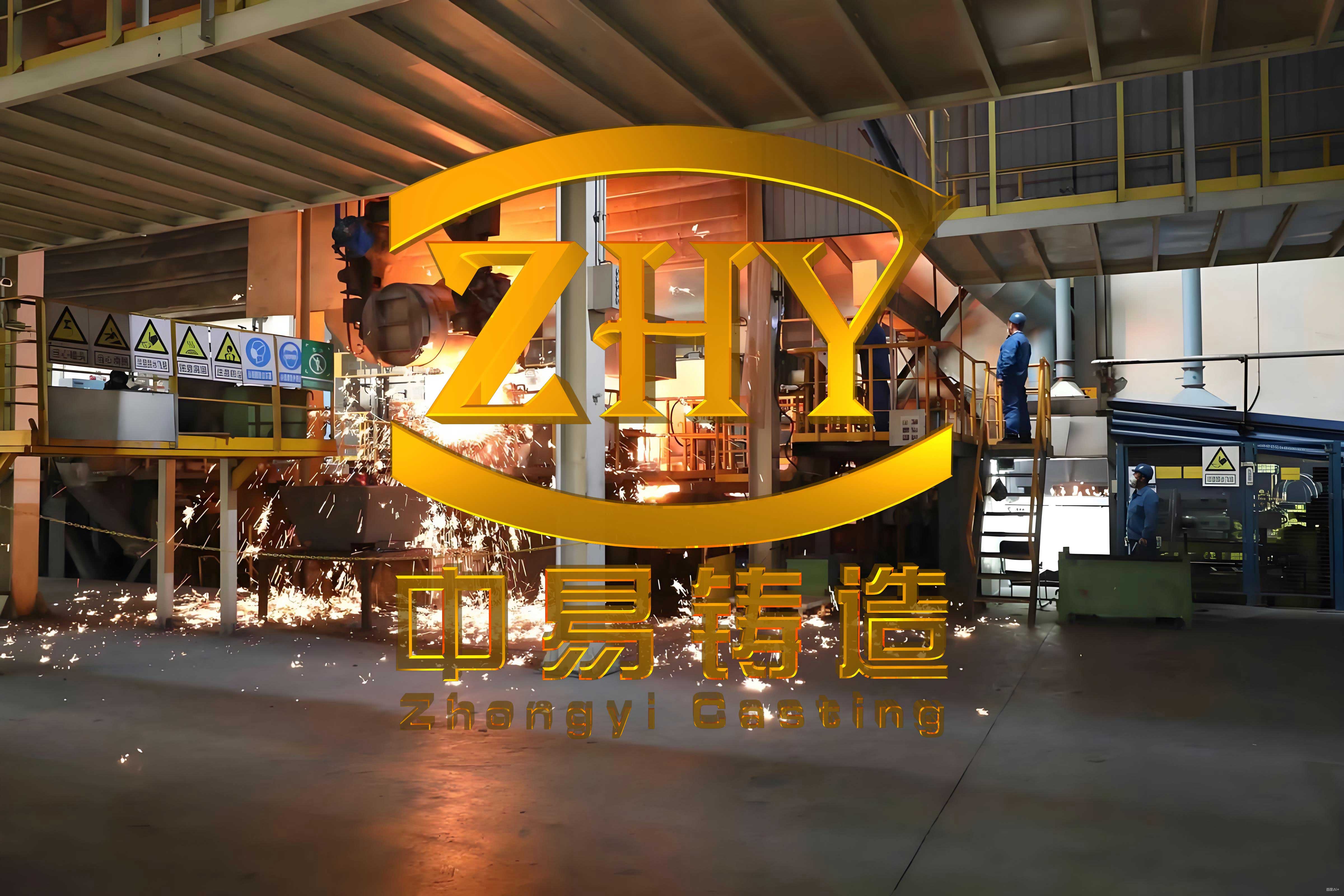
The integration of sand recycling systems directly into foundries exemplifies how sand casting manufacturers can achieve operational excellence. Take, for example, a Finnish steel foundry that collaborated with RESAND. By installing an on-site sand reclamation plant, this sand casting manufacturer eliminated landfill issues, streamlined logistics, and improved sand quality—resulting in finer grain sizes and reduced binder requirements. The benefits extend beyond economics; enhanced sand properties lead to better casting surfaces and fewer defects, which is paramount for sand casting manufacturers serving high-demand industries like aerospace and automotive. The technology’s modular design allows for scalable implementation, making it accessible to both large and small sand casting manufacturers. I have analyzed the performance metrics, and they reveal a compelling case: sand casting manufacturers using such systems can achieve a return on investment within two years, thanks to savings in raw material procurement and waste disposal fees.
| Aspect | Traditional Sand Usage | Recycled Sand with RESAND Technology | Impact on Sand Casting Manufacturers |
|---|---|---|---|
| New Sand Consumption | High (e.g., 2,500 tons/year for 1,000t castings) | Low (e.g., 300 tons/year, 88% reduction) | Cost savings and supply chain resilience |
| Waste to Landfill | Significant (environmental penalties) | Negligible (closed-loop system) | Compliance with regulations and sustainability goals |
| Sand Quality Metrics | Variable grain size, higher binder use | Consistent fine grains, lower binder demand | Improved casting precision and surface finish |
| Operational Efficiency | Logistics-heavy (sand import and disposal) | On-site processing, 24/7 operation | Reduced downtime and maintenance costs |
Beyond sand recycling, sand casting manufacturers are also influenced by advancements in material science, particularly for high-performance applications. The LIFT manufacturing research center, supported by the U.S. Department of Defense, is pioneering work on ceramic matrix composites and metals through large deformation processes for hypersonic technologies. This research holds indirect but significant implications for sand casting manufacturers, as it drives demand for specialized cast components that can withstand extreme conditions. Hypersonic weapons systems operate at speeds exceeding Mach 5, requiring materials with exceptional thermal and mechanical properties. Sand casting manufacturers involved in defense or aerospace sectors may find opportunities in producing these components, especially if they adopt innovative alloys and composites. The material performance can be described using equations like the Arrhenius-type relation for high-temperature strength:
$$ \sigma = \sigma_0 \exp\left(-\frac{Q}{RT}\right) $$
where \( \sigma \) is the stress, \( \sigma_0 \) is a pre-exponential factor, \( Q \) is the activation energy, \( R \) is the gas constant, and \( T \) is the temperature. Such formulas help sand casting manufacturers tailor material compositions for hypersonic environments, ensuring durability and reliability.
LIFT’s projects focus on integrated computational materials engineering (ICME) and digital twins, which enable sand casting manufacturers to simulate and optimize casting processes before physical production. This reduces trial-and-error, saving time and resources. For instance, in the first phase of hypersonic research, collaborations with entities like Boeing and Lockheed Martin aimed to enhance refractory metal matrix composites and predictive models for carbon-carbon composites. In the second phase, the emphasis shifts to functionally graded materials produced via direct current sintering. Sand casting manufacturers can leverage these insights to improve their own processes, such as by incorporating digital twins for sand mold design or alloy development. The table below summarizes key material properties relevant to sand casting manufacturers engaged in high-tech applications.
| Material Type | Key Properties | Manufacturing Process | Relevance to Sand Casting Manufacturers |
|---|---|---|---|
| Ceramic Matrix Composites (CMCs) | High temperature resistance (>1500°C), low density | Reaction melt infiltration, large deformation | Potential for casting preforms or molds |
| Refractory Metals (e.g., Tungsten Alloys) | Melting points above 3000°C, good strength | Powder metallurgy, sand casting adaptations | Opportunities for specialized sand casting techniques |
| Functionally Graded Materials | Tailored properties across sections | Direct current sintering, additive manufacturing | Integration with sand casting for hybrid components |
The convergence of economic indicators and technological innovation paints a complex picture for sand casting manufacturers. On one hand, the declining FISI and BCI suggest a cautious approach, with sand casting manufacturers needing to manage costs and expectations carefully. On the other, technologies like sand reclamation and advanced materials offer pathways to efficiency and new markets. I believe that sand casting manufacturers who embrace these innovations will not only survive but thrive. For example, by adopting recycling systems, sand casting manufacturers can reduce their environmental impact while boosting profitability—a dual advantage in an era of increasing regulatory pressures. Similarly, engaging with research initiatives like LIFT’s can position sand casting manufacturers at the forefront of high-value manufacturing, catering to defense and aerospace sectors that demand precision and performance.
To quantify the benefits, consider a cost-benefit analysis for sand casting manufacturers implementing sand recycling. The total cost savings \( C_s \) can be expressed as:
$$ C_s = (P_n \cdot Q_n – P_r \cdot Q_r) + C_w + C_l $$
where \( P_n \) and \( Q_n \) are the price and quantity of new sand, \( P_r \) and \( Q_r \) are the price and quantity of recycled sand, \( C_w \) is the waste disposal cost avoided, and \( C_l \) is the logistics cost reduction. For a typical sand casting manufacturer, \( C_s \) can amount to hundreds of thousands of euros annually, making a strong case for investment. Moreover, the improved sand quality leads to higher casting yields, which can be modeled using a yield formula:
$$ Y = \frac{N_a}{N_t} \times 100\% $$
where \( Y \) is the yield percentage, \( N_a \) is the number of acceptable castings, and \( N_t \) is the total number of castings produced. Sand casting manufacturers using recycled sand often report yield improvements of 5-10%, directly enhancing productivity.
Looking ahead, the role of sand casting manufacturers in the global supply chain will continue to evolve. Sustainability trends and technological disruptions will drive change, requiring adaptability and foresight. I recommend that sand casting manufacturers closely monitor sentiment indices like FISI and BCI while investing in R&D for sand recycling and material science. By doing so, they can mitigate economic risks and capitalize on emerging opportunities. The integration of digital tools, such as ICME digital twins, will further empower sand casting manufacturers to optimize processes and reduce waste, aligning with the broader shift toward Industry 4.0.
In conclusion, the challenges faced by sand casting manufacturers are substantial, but so are the opportunities. From the economic downturns reflected in European indices to the groundbreaking work in sand reclamation and hypersonic materials, the industry is in flux. As a participant in this field, I urge sand casting manufacturers to adopt a proactive stance: leverage data from sentiment indicators, implement recycling technologies to cut costs and environmental impact, and explore collaborations in advanced material research. The future of sand casting manufacturers hinges on innovation, and those who embrace it will lead the way in shaping a resilient and dynamic manufacturing landscape. Through continuous improvement and strategic investments, sand casting manufacturers can turn current headwinds into tailwinds, ensuring long-term success and contribution to the global economy.