
In my research on sand casting foundry processes for magnesium alloys, I have systematically investigated the solidification behavior and grain size of Mg-6Al-xZn alloys (designated as AZ6x alloys, where x = 0, 2, 4, 6 in mass fraction percentage) using a combination of experimental thermal analysis, microstructural characterization, and thermodynamic calculations. The sand casting foundry technique is particularly relevant for producing large, complex aerospace components where weight reduction is critical, and understanding the solidification path and grain refinement mechanisms is essential for optimizing mechanical properties.
I employed a two-thermocouple thermal analysis setup embedded in a resin-bonded sand mold to capture the cooling curves during solidification. The data acquisition frequency was 20 Hz, and the dendrite coherency point (DCP) was determined as the temperature at which the temperature difference between the center and wall thermocouples first reaches a maximum. To accurately compute the solid fraction at DCP (fsDCP), I applied the Newton baseline method, although I also cross-checked with non-equilibrium Scheil simulations using the Pandat thermodynamic software with the Pan Mg database. The chemical compositions of the four alloys were measured by inductively coupled plasma atomic emission spectrometry (ICP-AES) and are summarized in Table 1.
| Alloy | Al | Zn | Mn | Mg |
|---|---|---|---|---|
| AZ60 | 5.74 | — | 0.22 | Bal. |
| AZ62 | 5.79 | 1.90 | 0.21 | Bal. |
| AZ64 | 5.69 | 3.70 | 0.24 | Bal. |
| AZ66 | 5.82 | 5.66 | 0.28 | Bal. |
The sand casting foundry trials were conducted without any grain refiner or modifier. The melt was prepared in a mild steel crucible and poured at 735 °C into a cylindrical resin sand mold with an inner diameter of 100 mm and height of 120 mm, while sulfur powder was used for protection. The cooling rate near the center thermocouple was approximately 0.1 °C/s, typical for sand casting foundry conditions.
Solidification Path and Secondary Phase Formation
From the cooling curves and their first derivatives, I identified distinct exothermic peaks corresponding to phase transformations. For AZ60, only two peaks appeared: peak A (primary α-Mg nucleation) and peak B (non-equilibrium eutectic reaction forming α-Mg + γ-Mg₁₇Al₁₂). In AZ62, although the thermal analysis still showed only two peaks, my SEM observations revealed a small amount of Φ-Mg₂₁(Al,Zn)₁₇ phase. When the Zn content reached 4% and 6% in AZ64 and AZ66, a third peak (peak C) appeared, corresponding to the formation of Φ-Mg₂₁(Al,Zn)₁₇. The characteristic temperatures (onset and peak) are listed in Table 2.
| Alloy | Peak A Tonset | Peak A Tpeak | TDCP | Peak B Tonset | Peak B Tpeak | Peak C Tonset | Peak C Tpeak |
|---|---|---|---|---|---|---|---|
| AZ60 | 617 | 614 | 610 | 439 | 436 | — | — |
| AZ62 | 610 | 608 | 604 | 407 | 404 | — | — |
| AZ64 | 602 | 599 | 593 | 389 | 385 | 361 | 359 |
| AZ66 | 598 | 594 | 587 | 372 | 369 | 362 | 360 |
Using Pandat thermodynamic calculations, I constructed a vertical section of the Mg-5.76Al-0.24Mn-xZn quaternary phase diagram. The calculated liquidus temperature (first appearance of α-Mg) agreed well with the experimental peak A onset for all alloys. However, the solidification under sand casting foundry conditions is non-equilibrium; the γ-Mg₁₇Al₁₂ phase observed in the as-cast microstructure does not form directly from the liquid in equilibrium but rather through a eutectic reaction at the final stage. For AZ60 and AZ62, the equilibrium phase diagram shows a large α-Mg + Al₁₁Mn₄ two-phase region above 400 °C, indicating that both the γ and Φ phases can be fully dissolved by solution heat treatment. For AZ64, the alloy composition lies near the boundary, requiring careful heat treatment. For AZ66, the Φ phase is stable down to room temperature, making complete dissolution impossible.
My microstructural observations (SEM) confirmed that in AZ60, only the γ-Mg₁₇Al₁₂ phase exhibited a lamellar eutectic morphology, while in AZ62–AZ66, the γ phase appeared as blocky particles surrounded by a eutectic mixture of Φ and α-Mg. This is consistent with the peritectic-type reaction L + γ → Φ + α-Mg predicted by the thermodynamic calculation.
Grain Size Determination and Growth Restriction Factor
To quantitatively characterize the grain size, I used electron backscatter diffraction (EBSD) on electrolytically polished samples. The average grain size, measured by the linear intercept method, decreased significantly with increasing Zn content, as shown in Table 3.
| Alloy | Average Grain Size (μm) | Q (K) | fsDCP-Scheil (%) | fsDCP-TA (%) |
|---|---|---|---|---|
| AZ60 | 557 | 21 | 36 | 35 |
| AZ62 | 275 | 28 | 27 | 27 |
| AZ64 | 271 | 34 | 31 | 26 |
| AZ66 | 235 | 43 | 23 | 25 |
The growth restriction factor Q is a crucial parameter for understanding grain refinement. For multi-component alloys, the conventional definition Q = mLC0(k-1) is inadequate because the liquidus slope and partition coefficient are not constants. Instead, I applied the rigorous thermodynamic definition proposed by Schmid-Fetzer and Kozlov:
$$ Q_{\text{true}} = \left( \frac{\partial(\Delta T_{\text{cs}})}{\partial f_s} \right)_{f_s \to 0} $$
where ΔTcs is the constitutional undercooling and fs is the solid fraction. Using Pandat, I calculated Qtrue for each alloy, which increased monotonically with Zn content (see Table 3). The classical grain size model proposed by StJohn et al. suggests a linear relationship between grain size d and 1/Q:
$$ d = a + \frac{b}{Q} $$
where a and b are constants related to nucleation potency. Plotting my experimental data (d vs. 1/Q) revealed significant deviation from linearity, indicating that Zn addition influences grain size through multiple mechanisms beyond simple solute suppression. In my sand casting foundry experiments, the relatively slow cooling rate may also allow more time for solute redistribution, further complicating the relationship.
Dendrite Coherency Point and Solid Fraction
I determined the dendrite coherency point (DCP) from the two-thermocouple thermal analysis. The temperature difference between the center (Tc) and wall (Tw) thermocouples was monitored. The DCP temperature TDCP is the point where this difference first reaches a maximum (see Table 2). The corresponding solid fraction fsDCP was obtained from the fraction-solid curve derived from the cooling curve using the Newton baseline method (denoted fsDCP-TA). For comparison, I also calculated fsDCP from the Scheil solidification model (fsDCP-Scheil). These values are reported in Table 3.
The solid fraction as a function of temperature is shown in Figure 1 (refer to the thermal analysis curves). The agreement between experimental and Scheil-calculated fs curves was excellent at the early stages of solidification (up to about 50% solid), confirming the reliability of the Newton baseline approach for the determination of fsDCP (which is always below 50%).
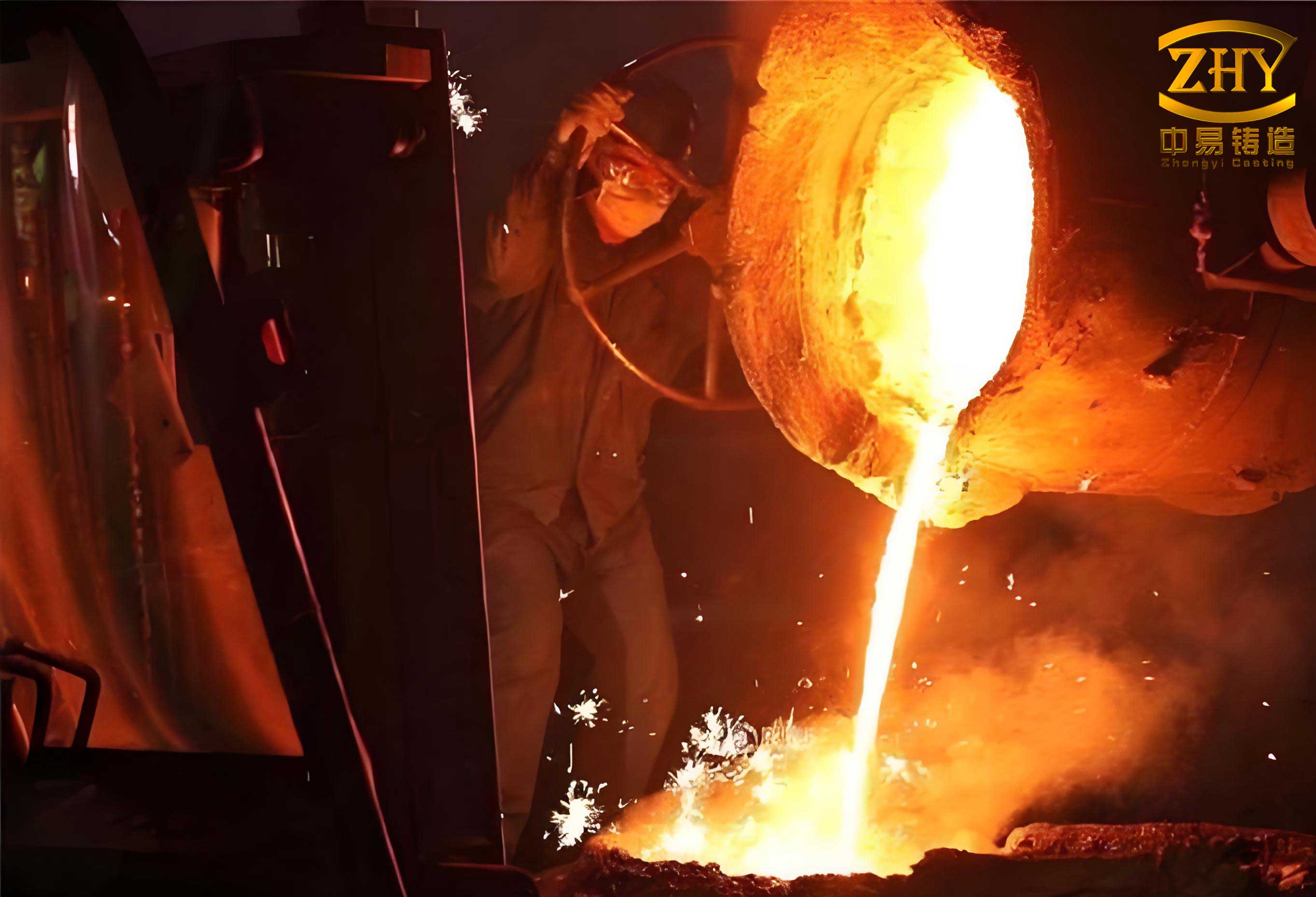
Figure 1 (above) illustrates a typical resin-bonded sand mold used in my sand casting foundry trials. The mold design allowed for controlled thermal gradients and reproducible cooling conditions.
Relationship Between fsDCP, Grain Size, and Q
With increasing Zn content, fsDCP decreased from 36% (AZ60) to 23% (AZ66, Scheil value) or 25% (thermal analysis). This trend is consistent with the concept that a higher growth restriction factor Q leads to more developed dendritic arms with thinner secondary branches, thus the dendrites become coherent at a lower fraction of solid. My schematic representation of dendritic morphology at low and high solute contents is shown conceptually: at low Q, dendrites are coarse and become coherent later (higher fsDCP), while at high Q, dendrites are finer and become coherent earlier (lower fsDCP). The experimental data in Table 3 confirm this: AZ60 (Q=21, fsDCP=35%) coarse grains, AZ66 (Q=43, fsDCP=25%) fine grains.
However, the correlation between fsDCP and grain size is not monotonic across all alloys. For example, AZ62 and AZ64 have similar grain sizes (275 μm and 271 μm) yet their fsDCP values differ (27% vs 26%). This suggests that fsDCP is more directly related to dendritic morphology and branching than to final grain size, which also depends on nucleation density. The sand casting foundry process, with its moderate cooling rate, may allow heterogeneous nucleation on native particles (e.g., Al₈Mn₅ or oxide films), and the effect of Zn on nucleation potency deserves further investigation.
To better understand the combined influence, I performed a multivariate analysis. Let d be the average grain diameter, Q the growth restriction factor, and fsDCP the solid fraction at coherency. I propose an empirical relationship:
$$ d = \alpha \cdot \exp\left(-\beta \cdot Q\right) + \gamma \cdot f_s^{\text{DCP}} + \delta $$
However, with only four data points, a reliable fit is not possible. Nevertheless, the qualitative trend is clear: higher Zn content increases Q, decreases fsDCP, and reduces grain size. The ability to tailor these parameters through alloy composition is a key advantage of the sand casting foundry approach for AZ6x alloys.
Thermodynamic Calculations for Complete Solution Treatment
Using Pandat, I calculated the equilibrium vertical section phase diagram for the Mg-5.76Al-0.24Mn-xZn system. The results provide guidance for heat treatment of sand casting foundry products. For AZ60 and AZ62, the γ and Φ phases can be completely dissolved into α-Mg at temperatures below the solidus (approximately 400 °C), leaving only a small amount of Al₁₁Mn₄ particles. For AZ64, the alloy lies near a three-phase region boundary; careful temperature control is required to avoid incipient melting. For AZ66, the Φ phase appears in the equilibrium diagram down to room temperature, so solution treatment can only dissolve the non-equilibrium γ phase but not the Φ phase. This is a critical limitation for achieving full supersaturation in high-Zn alloys processed by sand casting foundry.
I also calculated the solid fraction evolution using the Scheil model, which assumes no diffusion in the solid and perfect mixing in the liquid. The Scheil equation for fraction solid fs versus temperature T for a binary system is:
$$ f_s = 1 – \left( \frac{T_f – T}{T_f – T_{\text{liq}}} \right)^{\frac{1}{k-1}} $$
but for multi-component alloys, the heat balance must be solved using thermodynamic database integration. My Pandat simulations automatically accounted for the formation of γ and Φ phases at the end of solidification. The calculated Scheil fs(T) curves matched the experimental cooling-curve-derived fs(T) well in the early stages, confirming that the sand casting foundry solidification follows near-equilibrium conditions until the coherency point is reached.
Conclusion
From my systematic study of sand casting foundry Mg-6Al-xZn alloys, I have drawn the following conclusions:
- The as-cast microstructure of AZ60 alloy consists of α-Mg and non-equilibrium γ-Mg₁₇Al₁₂ phase. For AZ62 to AZ66, a second intermetallic phase Φ-Mg₂₁(Al,Zn)₁₇ appears, and its volume fraction increases with Zn content while the γ phase decreases.
- Thermodynamic calculations indicate that the γ and Φ phases in AZ60–AZ64 can be fully dissolved by appropriate solution heat treatment, but in AZ66, the Φ phase is thermodynamically stable at all temperatures, preventing complete homogenization.
- The growth restriction factor Q, calculated using the rigorous thermodynamic method, increases from 21 K (AZ60) to 43 K (AZ66). The average grain size decreases from 557 μm to 235 μm, but the relationship d vs. 1/Q is not linear, indicating complex grain refinement mechanisms in the sand casting foundry process.
- The solid fraction at the dendrite coherency point (fsDCP) decreases from 35% to 25% as Zn content increases from 0 to 6 wt%. A higher Q promotes finer dendritic arms, leading to earlier coherency and finer final grains.
My findings demonstrate that careful control of Zn content in AZ6x alloys, combined with optimized sand casting foundry practice, can yield fine-grained microstructures with tailored secondary phases, offering a pathway to high-strength, high-ductility magnesium castings for aerospace applications. The use of thermodynamic simulation tools in conjunction with thermal analysis proves invaluable for designing both alloy composition and heat treatment schedules.