
In today’s fiercely competitive manufacturing landscape, the ability to respond swiftly to market demands is paramount for survival, especially for enterprises engaged in sand casting foundry operations. Traditional methods of producing sand casting molds are time-consuming and costly, often becoming bottlenecks in product development cycles. The emergence of rapid prototyping (RP) technologies has revolutionized this domain, enabling the rapid fabrication of sand casting foundry molds through both direct and indirect approaches. This article presents my comprehensive exploration of various rapid tooling (RT) techniques applied to sand casting foundry molds, with a particular focus on a case study involving a crankshaft mold manufactured by combining RP with ceramic precision casting. Throughout this work, I emphasize the pivotal role of sand casting foundry in modern manufacturing and how RT technologies enhance its responsiveness.
The core philosophy behind rapid tooling for sand casting foundry is the layer-by-layer additive manufacturing principle, which allows the production of complex geometries without the need for expensive and time-consuming conventional machining. Among the diverse RP technologies, selective laser sintering (SLS), stereolithography (SLA), laminated object manufacturing (LOM), and fused deposition modeling (FDM) have been adapted for direct and indirect mold fabrication. Each method offers unique advantages and limitations when applied to sand casting foundry. The following sections systematically discuss these techniques, along with quantitative comparisons, to provide a clear understanding of their applicability.
1. Direct Mold Fabrication for Sand Casting Foundry
Direct fabrication involves using RP technologies to produce the mold itself, which can then be used directly in sand casting foundry operations. The primary approaches are:
1.1 Selective Laser Sintering (SLS) of Metal Powders
High-power lasers (exceeding 1000 W) sinter metal powders layer by layer to form a solid mold. Subsequent surface treatments, such as micro-shot peening, reduce roughness and improve dimensional accuracy. The dimensional tolerance achievable in sand casting foundry molds via SLS is approximately ±0.1–0.2 mm, which meets typical sand casting requirements. Key parameters influencing the process include laser power, scan speed, and powder composition. Mixed metal powders, where a lower-melting-point metal binds higher-melting-point particles, can minimize overall shrinkage to below 0.1%. For example, using a steel-based powder with a sintering layer thickness of 20 μm can yield a density of 95%–99% of theoretical, with a surface roughness of around Ra 6–10 μm after treatment. The following table summarizes typical SLS direct metal mold characteristics.
| Parameter | Value |
|---|---|
| Laser power (W) | 1000 – 2000 |
| Layer thickness (μm) | 20 – 50 |
| Density after sintering (% of theoretical) | 95 – 99 |
| Linear shrinkage (%) | < 0.1 |
| Surface roughness Ra (μm) | 6 – 10 (before shot peening) |
| Dimensional tolerance (mm) | ±0.1 – 0.2 |
| Post-processing | Micro-shot peening, polishing |
1.2 Stereolithography (SLA) for Sand Casting Foundry Molds
SLA uses a laser to solidify liquid photopolymer resin layer by layer. Although SLA is primarily used for producing master patterns in indirect methods, it can directly fabricate sand casting foundry molds using high-temperature resins. For example, DuPont developed a resin capable of withstanding injection molding temperatures; similar resins can be used for sand casting foundry patterns or even low-pressure molds. However, the mechanical strength and thermal stability of photopolymer resin remain inferior to metal molds, limiting direct use in high-volume sand casting foundry production. Typical SLA layer thickness is 0.05–0.15 mm, achieving accuracy of ±0.05 mm over 100 mm. The cost of specialized high-temperature resin is relatively high, making indirect methods more economical for sand casting foundry applications.
1.3 Laminated Object Manufacturing (LOM) for Sand Casting Foundry
LOM builds molds by stacking adhesive-coated paper, plastic, or metal sheets, cutting each layer with a laser. A variant known as CAM-LEM (Computer-Aided Manufacturing of Laminated Engineering Materials) uses metal or ceramic foils bonded with adhesive, then sintered to achieve near-full density with about 18% shrinkage. For sand casting foundry, LOM has been successfully used to produce large molds, such as a 685 mm automotive crankshaft pattern with a dimensional accuracy of ±0.13 mm, meeting common sand casting foundry tolerances. After surface coating (e.g., epoxy or metal spray), LOM molds can withstand high-volume production. The process is particularly suited for large, complex patterns in sand casting foundry where traditional machining would be prohibitively expensive. The following equation relates the final mold dimension \(L_f\) to the initial LOM dimension \(L_i\) considering shrinkage \(\alpha\) (typically 0.18 for CAM-LEM):
$$ L_f = L_i (1 – \alpha) $$
Thus, the initial pattern must be scaled up by a factor of \(1/(1-\alpha)\) to compensate. For sand casting foundry, this scaling factor is approximately 1.22.
1.4 SLS with Resin Powders and FDM for Sand Casting Foundry
SLS of resin powders (e.g., polyamide or polystyrene) can produce patterns or direct molds for sand casting foundry. Using low-power lasers, a complete mold can be fabricated in 2–3 days from a CAD model. FDM deposits thermoplastic filament layer by layer to build patterns or molds. Although FDM is slower and has lower surface quality than SLA or SLS, it is cost-effective for one-off prototypes. For sand casting foundry, FDM patterns are often used as master patterns for indirect mold making. Table 2 compares these direct methods for sand casting foundry.
| Method | Material | Accuracy (mm) | Surface Roughness Ra (μm) | Build Time (for typical mold) | Cost (relative) | Suitability for sand casting foundry |
|---|---|---|---|---|---|---|
| SLS metal | Steel/bronze powders | ±0.1 – 0.2 | 6 – 10 | 1 – 3 days | High | High-volume production |
| SLA resin | High-temp photopolymer | ±0.05 – 0.1 | 0.5 – 2 | 1 – 2 days | Very high | Limited low-pressure molds |
| LOM paper/metal | Paper, metal foil | ±0.13 – 0.2 | 3 – 6 (after coating) | 2 – 5 days | Medium | Large complex patterns |
| SLS resin | Polyamide, polystyrene | ±0.15 – 0.3 | 5 – 15 | 1 – 2 days | Low | Master patterns |
| FDM | ABS, PLA | ±0.25 – 0.5 | 10 – 20 | 2 – 5 days | Low | Low-volume prototypes |
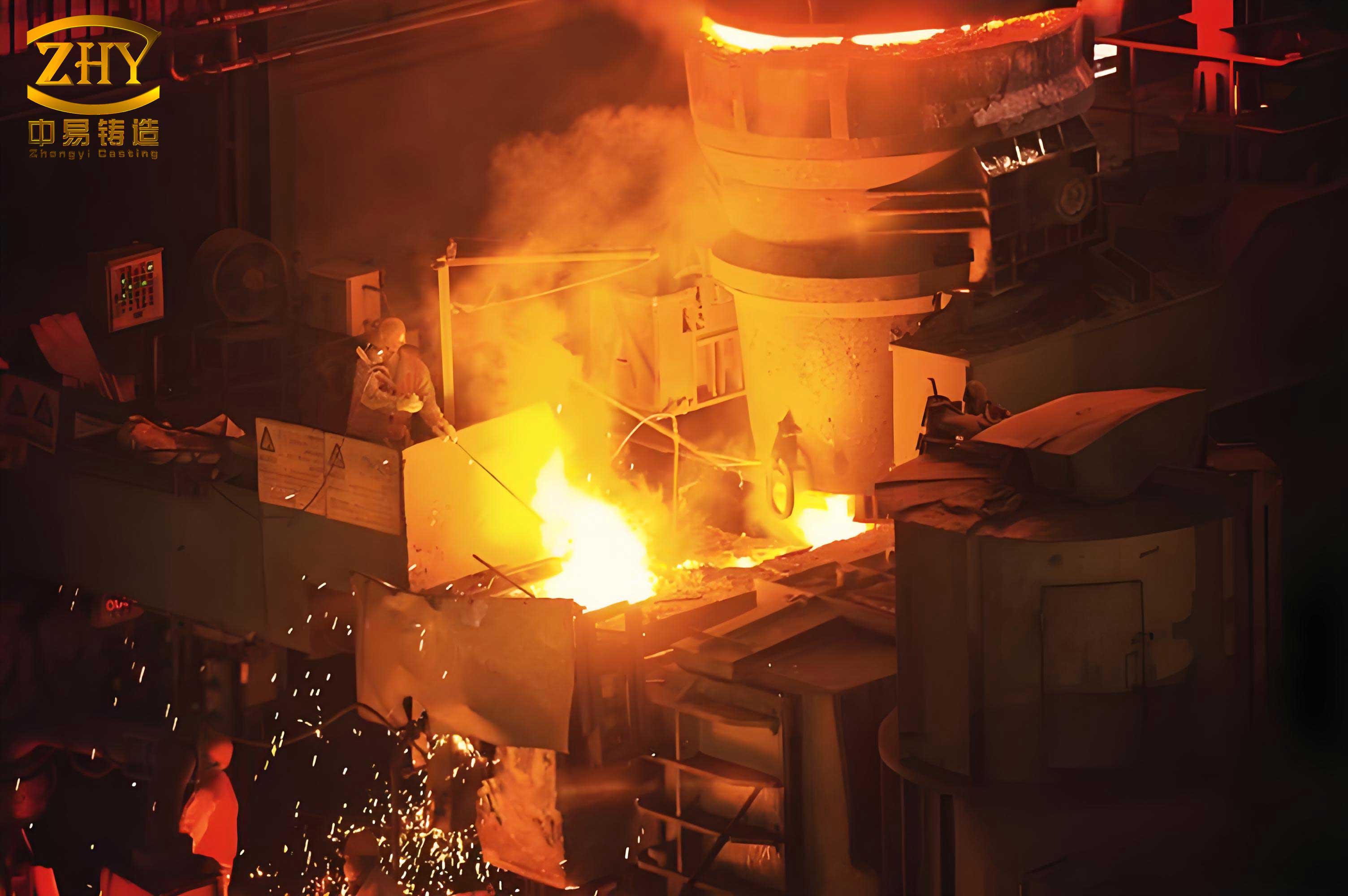
Figure above illustrates typical sand castings produced using rapid tooling techniques in a sand casting foundry environment. The rapid mold fabrication enables shorter lead times and faster product iteration.
2. Indirect Mold Fabrication for Sand Casting Foundry
Indirect methods are more widely adopted in sand casting foundry because they combine the speed of RP with the strength and durability of traditional mold materials. The RP technology is used to create a master pattern, which is then used to produce the final mold through casting, sintering, or coating processes.
2.1 Ceramic Precision Casting (Shaw Process)
The Shaw process, invented in the 1950s, is ideal for sand casting foundry molds. The procedure involves: fabricating a master pattern via RP (e.g., SLS wax or SLA resin), coating the pattern with a ceramic slurry, gelling the ceramic shell, removing the pattern by burnout, preheating the shell, and pouring molten metal. Critical aspects include controlling shrinkage to ensure dimensional accuracy and optimizing the preheat temperature to prevent shell deformation or cracking. The slurry composition typically includes refractory powder (e.g., fused alumina), binder (ethyl silicate hydrolyzate), catalyst (calcium hydroxide), and a permeability agent (hydrogen peroxide). The ratio of refractory to binder is often 2:1 by weight. The total shrinkage \(\delta\) of the ceramic mold can be expressed as:
$$ \delta = \delta_p + \delta_s + \delta_c $$
where \(\delta_p\) is the shrinkage of the RP pattern (typically 0.3%–0.5% for wax), \(\delta_s\) is the shrinkage of the ceramic shell during drying and firing (0.2%–0.5%), and \(\delta_c\) is the contraction of the cast metal (1.5%–2.5% for steel). The master pattern must be scaled up accordingly.
2.2 Investment Casting (Lost Wax) for Sand Casting Foundry
Investment casting uses a wax pattern that is coated with ceramic slurry to form a shell. The wax is melted out, and the shell is fired before metal pouring. RP can directly produce the wax pattern via SLS or SLA, or produce a silicone rubber mold to replicate multiple wax patterns. This method is cost-effective when multiple molds are needed. The typical shell thickness \(h\) is determined by the mold weight and size, and can be estimated as:
$$ h = \frac{2 \cdot W}{\rho \cdot A} $$
where \(W\) is the weight of the casting, \(\rho\) is the density of the ceramic shell, and \(A\) is the surface area. For sand casting foundry applications, shell thicknesses of 5–10 mm are common.
2.3 Sand Mold Direct Sintering
Using coated sand (e.g., resin-coated silica) in SLS, a sand shell can be directly sintered to form a mold cavity. This method eliminates the need for a separate pattern, but the surface quality is inferior, requiring post-machining. The linear shrinkage of the sand shell is about 0.1%–0.3%. The resulting mold is suitable for low-volume sand casting foundry.
2.4 Metal Powder Laser Sintering with Infiltration (RapidSteel Process)
In this process, a coated metal powder (e.g., RapidSteel 2.0) is laser-sintered to create a low-strength “green” part. The binder is burned off in a furnace at 450–600 °C under hydrogen, then the part is sintered at high temperature to create a porous skeleton. Finally, molten copper is infiltrated into the pores to achieve high density and strength. The porosity \(\phi\) after binder removal is about 30%–40%, and after copper infiltration the density reaches 98%–100%. The final shrinkage is approximately 0.2%–0.5%. The process sequence is:
CAD model → SLS of coated metal powder → Debinding (450–600 °C) → Sintering (high temperature) → Copper infiltration → Post-processing
2.5 Keltool Process
The Keltool process, originally developed by 3M, uses a master pattern to create a negative mold, then fills it with a metal composite powder. After sintering and copper infiltration, a strong mold is produced. The shrinkage is linear and can be compensated in the master pattern design. The relationship between the master pattern dimension \(L_{master}\) and final mold dimension \(L_{mold}\) is:
$$ L_{master} = L_{mold} \cdot (1 + \beta) $$
where \(\beta\) is the total shrinkage coefficient (typically 0.02–0.04 for Keltool steel molds).
2.6 Resin Mold Fabrication
For sand casting foundry, resin molds (epoxy, polyurethane) are often used for low-volume production. The RP master pattern is used to create a negative mold (silicone rubber, metal spray, or plaster), which is then used to cast the resin. The resin mold can be reinforced with metal inserts or fillers to improve wear resistance. The cost is significantly lower than metal molds, and the lead time is 1–2 weeks. Table 3 compares indirect methods.
| Method | Master Material | Final Mold Material | Accuracy (mm) | Surface Roughness Ra (μm) | Lead Time (weeks) | Volume Suitability |
|---|---|---|---|---|---|---|
| Ceramic precision casting | Wax, resin | Steel, iron | ±0.2 – 0.5 | 3 – 6 | 2 – 3 | Low to medium |
| Investment casting | Wax (RP produced) | Steel, stainless steel | ±0.1 – 0.3 | 1 – 3 | 3 – 4 | Medium to high |
| Sand mold direct SLS | None (direct shell) | Resin-coated sand | ±0.5 – 1.0 | 10 – 20 | 1 – 2 | Low (prototype) |
| RapidSteel infiltration | Coated metal powder | Steel-copper composite | ±0.1 – 0.2 | 3 – 8 | 2 – 3 | Medium to high |
| Keltool | Metal or resin master | Steel-copper composite | ±0.15 – 0.3 | 3 – 6 | 3 – 4 | High |
| Resin mold | Any RP master | Epoxy, polyurethane | ±0.3 – 0.5 | 5 – 10 | 1 – 2 | Low (few hundred parts) |
3. Case Study: Crankshaft Mold for Sand Casting Foundry via RP and Ceramic Casting
To demonstrate the practical application of RT in a sand casting foundry, I present a case of producing a crankshaft mold for a new engine model. The requirement was urgent: deliver a functional metal pattern within two weeks to enable rapid casting trials. The combination of SLS wax pattern and ceramic precision casting was selected.
3.1 Wax Master Pattern via SLS
A wax powder specifically formulated for precision casting (e.g., PCP1) was used. The SLS process parameters are listed in Table 4.
| Parameter | Value |
|---|---|
| Layer thickness (mm) | 0.15 |
| Laser power (W) | 12 |
| Scan speed (mm/s) | 1400 |
| Preheat temperature (°C) | 40 |
| Scan spacing (mm) | 0.2 |
The as-sintered surface had a roughness of Ra 10–15 μm, which was improved by dipping in a low-melting-point wax containing surfactant, followed by applying a mold release agent. The final pattern roughness was Ra 3–5 μm.
3.2 Ceramic Slurry Preparation and Pouring
The refractory used was fused alumina powder with a particle size distribution as shown in Table 5 to achieve a balance between surface finish and strength.
| Mesh (μm) | Percentage (%) |
|---|---|
| M28 (≤28 μm) | 30 |
| 320 mesh (≈45 μm) | 20 |
| 240 mesh (≈63 μm) | 20 |
| 120 mesh (≈125 μm) | 30 |
The binder was ethyl silicate hydrolyzate with 0.5% acetic acid. Catalyst was calcium hydroxide at 0.45 g per 100 mL of hydrolyzate. Hydrogen peroxide (≥29% concentration) was added at 0.2% of refractory weight to improve permeability. The refractory-to-binder ratio was 2:1 by weight. The required slurry weight was calculated as:
$$ Q = F \times h \times \rho $$
where \(Q\) (kg) = slurry weight, \(F\) (m²) = pattern surface area, \(h\) (m) = shell thickness, \(\rho\) (kg/m³) = slurry density (≈2000 kg/m³). For the crankshaft pattern, \(F \approx 0.3\) m², \(h = 0.008\) m, giving \(Q = 4.8\) kg. The slurry was mixed and immediately poured once gelation began.
3.3 Stripping and Torching
After gelation (5–10 min), the ceramic was still elastic. The master pattern was carefully removed vertically. Immediately after stripping, the shell was torched to burn off residual ethanol, causing micro-cracks that improved permeability and dimensional stability.
3.4 Shell Firing
The shell was placed in a furnace at 800 °C for 2–3 hours, then furnace-cooled to below 250 °C to prevent cracks.
3.5 Casting and Finishing
The fired shell was preheated to 200 °C, then molten medium-carbon steel at 1600 °C was poured with a ceramic filter to trap slag. After cooling to ambient temperature, the casting was cleaned and lightly machined. The resulting pattern had a surface roughness of Ra 3.2 μm and dimensional accuracy within ±0.5% (approximately ±0.3 mm over 60 mm). This was fully acceptable for sand casting foundry. The total lead time from CAD to finished metal pattern was 9 days, compared to 4–6 weeks using conventional machining.
4. Conclusion: The Impact on Sand Casting Foundry
The integration of rapid tooling technologies into sand casting foundry operations dramatically reduces mold lead times, lowers costs for complex geometries, and enables rapid design iterations. By leveraging RP-based master patterns combined with ceramic or investment casting, sand casting foundries can produce metal molds with acceptable accuracy and durability within days instead of weeks. This agility is critical for modern manufacturing where product life cycles are short and customization is high. The case of the crankshaft mold exemplifies how a sand casting foundry can respond to urgent customer needs using SLS wax patterns and ceramic precision casting. As RP technologies continue to advance—with finer layer thicknesses, faster build speeds, and stronger materials—the application of RT in sand casting foundry will only expand, further enhancing the competitiveness of sand casting foundry as a versatile and rapid manufacturing process.
Finally, the key formulas for shrinkage compensation, shell thickness, and slurry weight are summarized below for easy reference in sand casting foundry practice:
$$ \text{Shrinkage compensation: } L_{pattern} = L_{mold} \cdot (1 + \delta_{total})^{-1} $$
$$ \text{Shell thickness: } h = \frac{2W}{\rho_{shell} A} $$
$$ \text{Slurry weight: } Q = F h \rho_{slurry} $$
$$ \text{Binder-to-refractory ratio: } R = \frac{V_{binder}}{W_{refractory}} = \frac{1}{2} \text{ (by weight)} $$