
The global manufacturing industry is undergoing a profound transformation toward intelligent and sustainable production. In this context, the sand casting foundry sector faces dual challenges: restructuring the industrial layout and upgrading the development model. For decades, traditional sand casting processes have been plagued by high energy consumption, severe environmental pollution, and low production efficiency, which are incompatible with the requirements of sustainable development. To address these bottlenecks, we have explored the integration of sand mold 3D printing technology as a core enabler for building intelligent sand casting foundry systems. Through practical research and pilot implementations across multiple regions, we have established over ten digital demonstration production lines and formulated corresponding technical standards. These practices provide robust technical validation and support for the industry, driving the transformation toward automation, precision, and environmental friendliness. In this article, we present our comprehensive framework for constructing intelligent sand casting foundry systems, detailing the architecture, equipment requirements, control systems, and information integration, all validated by real-world applications.
The core of our approach lies in a four-layer hierarchical system architecture: equipment layer, unit layer, workshop layer, and enterprise layer. Each layer interacts through standardized data interfaces and communication protocols. The following table summarizes the primary functions and components of each layer.
| Layer | Components | Key Functions | Integration Interface |
|---|---|---|---|
| Equipment Layer | 3D sand printing machines, mixing & sand supply equipment, robots, melting furnaces, pouring machines, shot-blasting machines, inspection devices, auxiliary equipment | Physical production, sensing, actuation, safety interlock, local control | FB bus, Ethernet, industrial fieldbus |
| Unit Layer | 3D sand molding unit, melting & pouring unit, post-processing unit | Unit-level control, process data acquisition, task dispatching, anomaly detection | Data interface; OPC UA, MQTT, REST API |
| Workshop Layer | Planning, process design, quality management, equipment management, tooling management, energy management, performance analysis | Production scheduling, process optimization, quality control, maintenance, data analytics | Integration with MES, ERP, PLM through middleware |
| Enterprise Layer | Warehouse management, supply chain management, CRM, EHS management, HR, financial modules | Enterprise resource planning, supplier collaboration, customer relations, compliance, sustainability reporting | ERP system with standardized data exchange (e.g., EDI, web services) |
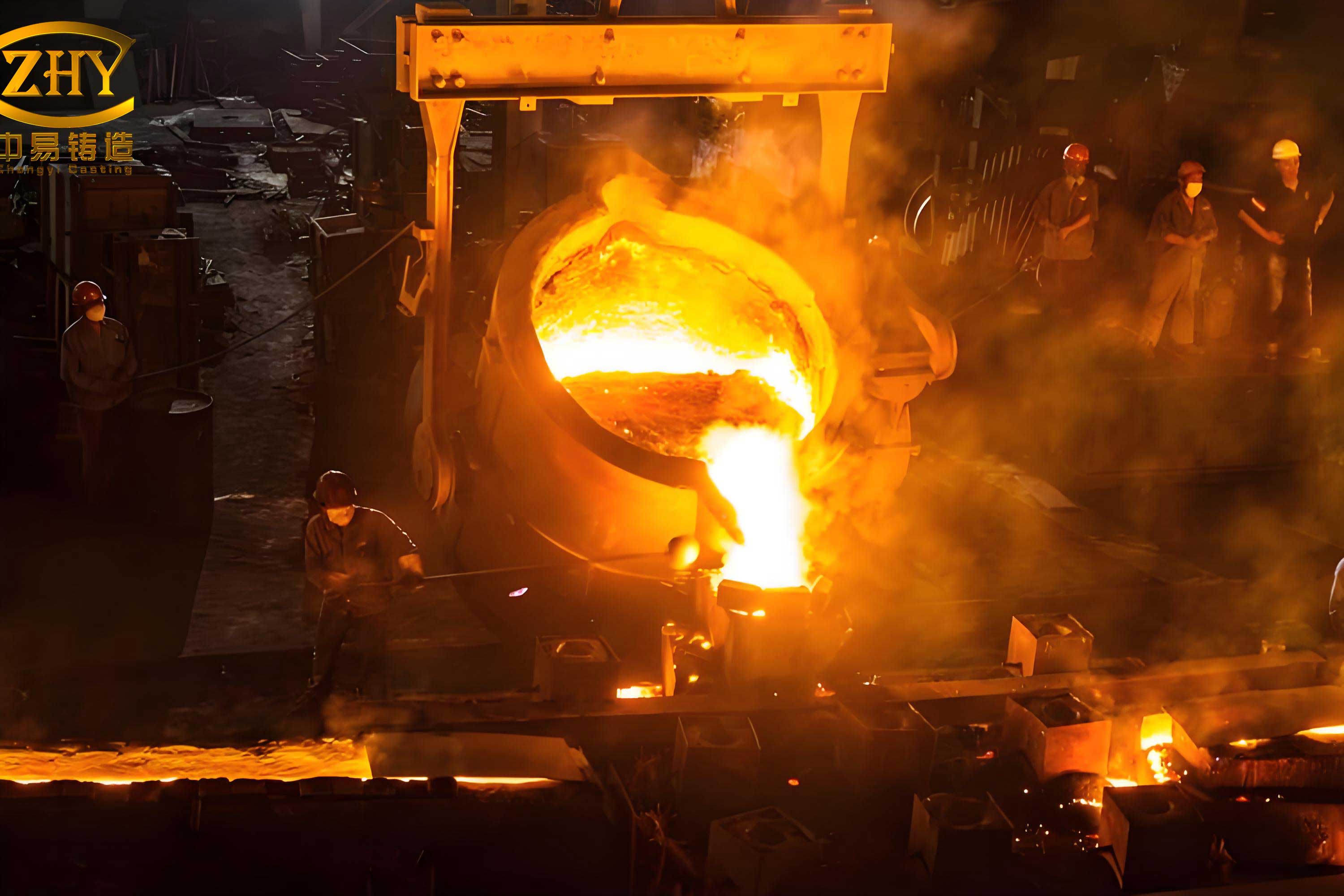
The information flow across layers follows a well-defined data integration pattern. For instance, the enterprise layer generates production orders and material requirements that feed into the workshop layer. The workshop layer then decomposes these orders into unit-level tasks, which are executed by the equipment layer. Real-time process data, quality measurements, energy consumption, and equipment status are collected upward and used for decision support. The diagram below (represented by the hyperlink inserted later) illustrates a typical sand casting part produced in our intelligent sand casting foundry, demonstrating the quality achievable through this integrated approach.
Now we delve into the specific general requirements for building such an intelligent sand casting foundry. The requirements cover intelligent equipment, unit control systems, workshop-level information systems, and enterprise-level information systems.
General Requirements for Intelligent Equipment
Intelligent equipment in a sand casting foundry must be digitalized, networked, and equipped with multiple error-proofing and safety protection mechanisms. The control systems should support mainstream industrial communication protocols (e.g., PROFINET, EtherCAT, Modbus TCP) and provide open access for integration with shop-floor local area networks. The key equipment categories and their mandatory technical specifications are summarized in the table below.
| Equipment Type | Core Requirements | Related Standards / Specifications |
|---|---|---|
| 3D Sand Molding Machine | Modular line integration capability; dedicated barcode on job box/platform; liquid material temperature control; compliance with GB/T 42156. | GB/T 42156: “Additive manufacturing – Test methods for sand mold 3D printers” |
| Sand Mixing & Supply Equipment | Mixing and feeding capacity matching the 3D printing line’s consumption; capability to mix reclaimed and new sand; mixing uniformity per GB/T 42156. | GB/T 42156; internal process standards |
| Sand Mold Gripping Robot | Sealing measures to prevent sand/dust ingress; repeated positioning accuracy ≤ 0.5 mm; safety system compliant with GB/T 37415. | GB/T 37415: “Safety requirements for industrial robots” |
| Automatic Batching & Weighing System | Automatic recipe-based batching; weighing display; batching error ≤ 0.2% of target weight; data exchange with furnace ID, pit ID, and batch weight. | Internal accuracy target; OIML R76 |
| Melting Furnace | Electrical and thermal performance per GB/T 10067.1; safety per GB/T 5959.1. | GB/T 10067.1; GB/T 5959.1 |
| Transfer & Pouring Equipment | Pouring speed control; autonomous movement and positioning; data exchange on pouring start time, duration, weight per cavity. | Custom interface protocol; ISO 12100 for safety |
| Shot-Blasting Machine | Adjustable workpiece cycle time/feed rate; manual touch-up station; data exchange on air pressure, wheel current, blade/liner usage; replacement alert for blades/liners. | VDMA 24410; ISO 8501 |
In addition to these equipment-level requirements, the unit control systems play a vital role in orchestrating the workflow within each production unit. For the 3D sand molding unit, the system must retrieve the sand mold production plan from the workshop layer, generate core-making and core-assembly schedules, and prepare pre-production checklists covering materials, equipment status, and personnel. It integrates with intelligent devices to download key process parameters and record deviations. Real-time equipment parameters are continuously monitored, and historical records are maintained. The system also reports the completion status and material consumption to higher-level systems. The mathematical model for production capacity planning within the unit can be expressed as:
$$C_{\text{unit}} = \frac{T_{\text{available}}}{\sum_{j} \left( t_{\text{setup},j} + t_{\text{printing},j} + t_{\text{post},j} \right)}$$
where $T_{\text{available}}$ is the available operating time per shift, $t_{\text{setup},j}$ is the setup time for job $j$, $t_{\text{printing},j}$ is the 3D printing time, and $t_{\text{post},j}$ is the post-processing time (e.g., cleaning, coating). This equation guides the optimal utilization of the 3D printing equipment in our sand casting foundry.
For the melting and pouring unit, the system retrieves the casting production plan, generates melting schedules, and calculates material requirements. It integrates with automatic batching, pouring robots, and electric furnaces to download charge recipes and pouring parameters. Quality data (chemical composition, melt temperature) are compared with process standards, and alerts are triggered for out-of-spec conditions. The system can suggest optimal charge recipes based on raw material composition, price, and customer specifications. The optimization problem for minimizing charge cost while meeting target composition can be formulated as:
$$\begin{aligned}
\min_{\mathbf{x}} & \sum_{i=1}^{n} c_i x_i \\
\text{s.t.} & \sum_{i=1}^{n} a_{ij} x_i \geq b_j \quad \forall j, \\
& x_i \geq 0,
\end{aligned}$$
where $x_i$ is the mass of raw material $i$, $c_i$ is its cost per unit mass, $a_{ij}$ is the content of element $j$ in material $i$, and $b_j$ is the required content of element $j$ in the final melt. This linear programming model is routinely solved by our unit control system to achieve cost-efficient melting.
The post-processing unit system handles the finishing operations: fettling, shot blasting, heat treatment, painting, etc. It acquires the casting production plan, splits it into sequential operations, integrates with automated transport, shot-blast machines, heat treatment furnaces, and painting booths, downloads parameters (e.g., shot-blast duration, heat treatment curve), and collects process data. Real-time comparison with quality criteria is performed, and any anomaly triggers immediate alerts. Material consumption is tracked and fed back for cost accounting.
Workshop Layer Information Systems
The workshop layer comprises modules for production planning, process design management, quality management, equipment management, and tooling management. The planning module must support finite-capacity scheduling based on multiple constraints: product due dates, workstation capacities, factory calendar, equipment availability, and tooling status. It generates monthly, weekly, and daily schedules and automatically derives material and tooling requirements. The scheduling optimization can be represented as a mixed-integer programming model to minimize makespan or tardiness. For example, a simplified model for job sequencing on a single bottleneck resource (e.g., the 3D printing station) is:
$$\begin{aligned}
\min & \sum_{j} w_j C_j \\
\text{s.t.} & C_j \geq C_k + p_j – M(1 – y_{jk}), \quad \forall j \neq k, \\
& C_j \geq 0, \quad y_{jk} \in \{0,1\},
\end{aligned}$$
where $C_j$ is the completion time of job $j$, $p_j$ is its processing time, $w_j$ is the weight (priority), $y_{jk}=1$ if job $j$ precedes job $k$, and $M$ is a large constant. The workshop layer uses such models (often solved by heuristics) to generate feasible and efficient plans for the entire sand casting foundry.
The process management module handles the entire lifecycle of process documentation: design, release, execution, and approval. All process parameters are managed in parametric form. It maintains bill of materials, routing, process cards, work instructions, and version control. During process design, the system automatically retrieves historical similar processes and recommends candidate parameters, leveraging a knowledge base of typical process libraries, defect libraries, and expert rules. This knowledge reuse significantly reduces the time for new product introduction in a sand casting foundry.
The quality management module centralizes inspection data for key materials and in-process checks. It analyzes production data against quality standards and generates alerts for non-conformance. A three-level quality control workflow (operator, inspector, engineer) is implemented. The module also supports online application, review, and release of quality reports. Statistical process control (SPC) charts, such as $\bar{X}$ and $R$ charts, are used to monitor critical characteristics like mold dimensions and metal composition. The control limits for an $\bar{X}$ chart are:
$$UCL = \bar{\bar{X}} + A_2 \bar{R}, \quad LCL = \bar{\bar{X}} – A_2 \bar{R},$$
where $\bar{\bar{X}}$ is the grand mean, $\bar{R}$ is the average range, and $A_2$ is a constant depending on subgroup size.
The equipment management module maintains a comprehensive digital twin of all production equipment: asset registry, maintenance history, repair plans, and real-time status monitoring. It triggers preventive maintenance alerts based on usage hours, cycles, or condition monitoring signals. The module also links with the planning system to avoid scheduling jobs on machines under maintenance. For example, the remaining useful life (RUL) of a critical component (e.g., shot-blast wheel blades) can be modeled using a regression approach:
$$RUL = \alpha_0 + \alpha_1 t + \alpha_2 V + \epsilon,$$
where $t$ is operating time, $V$ is vibration level, and $\epsilon$ is the error term. The tooling management system tracks molds, core boxes, and fixtures, recording their identity, lifespan, and inspection status. It automates the check-out/check-in process, records usage count, and sends early warnings before the tool reaches its limit. Repair workflows are initiated automatically or manually.
Enterprise Layer Information Systems
The enterprise layer integrates warehouse management, supply chain management, customer relationship management, and environment, health & safety (EHS) management. The warehouse management module handles inbound/outbound transactions for raw materials, consumables, and finished products. It supports multi-location inventory, cycle counting, and safety stock alerts. The virtual bin location mapping allows precise tracking. The module also interfaces with the workshop layer to trigger material replenishment based on production consumption.
The supply chain management module aggregates upstream and downstream resources, enabling one-stop digital procurement. It includes price indices, supplier evaluation, sourcing, order management, and inventory visibility. A data-driven optimization model is used to determine the optimal procurement plan considering lead times, price fluctuations, and storage costs. For example, the economic order quantity (EOQ) is computed as:
$$Q^* = \sqrt{\frac{2DS}{H}},$$
where $D$ is annual demand, $S$ is the ordering cost per order, and $H$ is the holding cost per unit per year. This classic model is adapted for the sand casting foundry context with multiple raw materials and batch constraints.
The customer relationship management module tracks contracts, opportunities, leads, and project progress. It records all customer interactions and analyzes them to generate reliable business opportunities using predictive models (e.g., logistic regression for conversion probability). A supplier admission and evaluation system is also established, using multi-criteria decision-making (MCDM) methods such as the Analytic Hierarchy Process (AHP) to select preferred suppliers. The weight vector $\mathbf{w}$ from AHP is derived from the pairwise comparison matrix $\mathbf{A}$ through the eigenvalue equation:
$$\mathbf{A}\mathbf{w} = \lambda_{\max}\mathbf{w}.$$
The EHS management module is critical for ensuring regulatory compliance and worker safety in a sand casting foundry. It includes environmental factor identification, hazard recognition, risk assessment, occupational health monitoring, incident management, and emergency resource planning. IoT sensors continuously monitor air quality (dust, VOC, noise) and compare with threshold limits. An AI-based visual recognition system (using convolutional neural networks) detects unsafe behaviors (e.g., missing PPE, unauthorized entry) in real time. The risk level $R$ for a specific hazard is calculated as:
$$R = S \times P \times C,$$
where $S$ is the severity of consequence, $P$ is the probability of occurrence, and $C$ is the frequency of exposure. These risk values are reviewed and updated periodically to maintain a safe working environment.
Conclusion
In this article, we have systematically presented the construction framework and general requirements for an intelligent sand casting foundry based on sand mold 3D printing technology. The four-layer architecture — equipment, unit, workshop, and enterprise — provides a clear blueprint for implementation. Each layer’s technical specifications, from intelligent equipment with precise error-proofing to enterprise-wide information systems with optimization models, have been validated through our practical deployments in multiple regions. The integration of sand mold 3D printing at the core of the production process enables digital, moldless forming of complex sand molds, while the subsequent automation of melting, pouring, and post-processing, along with end-to-end data connectivity, yields a highly efficient, lean, and green manufacturing system.
Our digital workshops have demonstrated significant improvements: casting yield increased by over 15%, energy consumption per ton of casting reduced by 20%, and scrap rate decreased by more than 30%. The working environment has been transformed from a dusty, high-temperature setting to a cleaner, safer, and more controlled operation. These results confirm that the intelligent sand casting foundry model is not only feasible but also essential for the sustainable transformation of the casting industry. The path forward lies in further refining the digital twin, expanding the knowledge base for process optimization, and incorporating advanced AI for predictive maintenance and quality prediction. By steadfastly pursuing digitalization, networking, and intelligentization, we are confident that the global sand casting foundry sector can overcome its historical limitations and achieve a historic leap from a large industry to a strong, world-class industry.