
Over the past decade, our team has been deeply involved in the art casting industry, focusing on large-scale bronze sculptures using the furan resin sand molding process. We have successfully produced numerous monumental works, including a 33-meter-tall bronze sculpture Horse and Dragon for the United States, a 78-meter-long sculpture Five Clouds and Nine Ruyi at Guangzhou Baiyun Airport, and the world’s largest bronze sculpture group of Genghis Khan in Ordos. These projects have provided us with extensive hands-on experience in identifying and mitigating sand casting defects. In this article, we will discuss the root causes and preventive measures for common defects encountered in furan resin sand casting, based on our production practice.
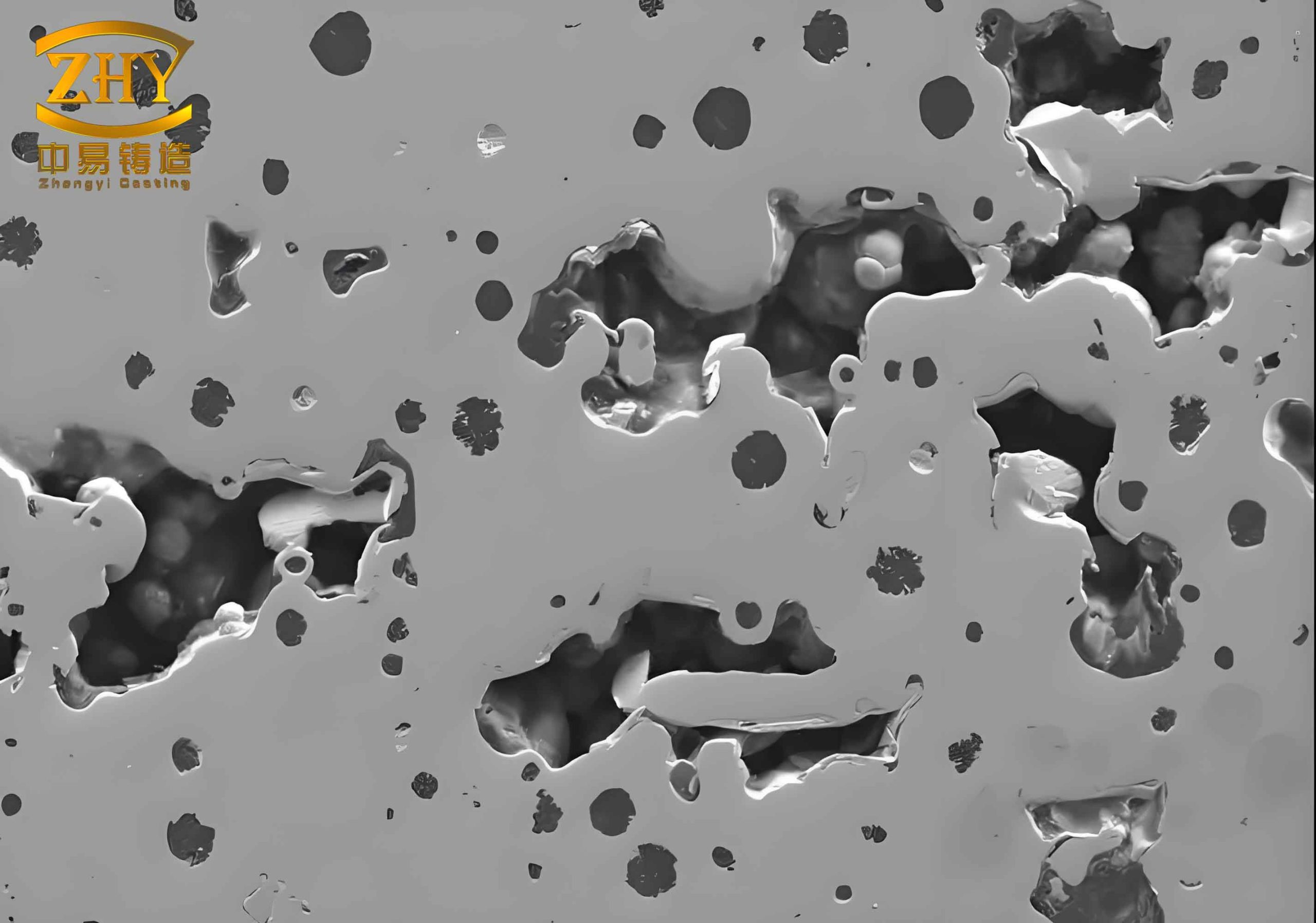
1. Surface Sand Adhesion Defects
Surface sand adhesion is one of the most frequent sand casting defects in our production. It occurs when the molten bronze penetrates the sand mold surface, creating a rough, sand-embedded layer on the casting. Through analysis, we identified four primary causes and corresponding solutions, summarized in Table 1.
| Cause | Solution |
|---|---|
| Insufficient mold compaction | Ensure thorough ramming and tamping of resin sand in the flask during mold making. Use pneumatic rammers for consistent compaction. |
| Uneven coating application | Apply coating uniformly over the entire mold surface. Use brush or spray to cover all recesses and corners without leaving any uncoated areas. |
| Incorrect coating consistency | Strictly follow the coating mixing ratio. The coating should be neither too thin (which fails to protect the sand) nor too thick (which causes uneven thickness). A recommended viscosity range is 40–60 seconds (Ford cup #4). |
| Uncoated or unclean internal gates | Clean the internal gate channels before coating. Use a cloth fixed to a wire to drag the coating into narrow passages. Ensure all runner walls are coated. |
| Sand falling from core/mold contact during closing | Assign multiple workers to guide the core into the mold from different angles during closing. Avoid friction that dislodges sand grains. |
The relationship between coating thickness and surface quality can be expressed by the penetration resistance parameter. For a given liquid bronze pressure \(P\) and sand pore size \(d\), the critical coating thickness \(h_c\) to prevent penetration is:
$$ h_c = \frac{2\gamma \cos\theta}{P} $$
where \(\gamma\) is the surface tension of the molten bronze and \(\theta\) is the contact angle. In practice, we maintain a coating thickness of 0.3–0.5 mm to effectively block metal penetration and reduce sand casting defects.
2. Effect of Gating and Risering on Casting Quality
Improper gating and risering design can lead to misruns, gas porosity, and shrinkage cavities — all common sand casting defects. We follow specific rules for riser height and gate type selection, as shown in Table 2.
| Parameter | Requirement |
|---|---|
| Riser height | Risers must be at least 30 cm above the top of the mold and higher than the vent holes to ensure sufficient metallostatic pressure for feeding and gas escape. |
| Pouring cup size | Select pouring cup based on mold size; typically the cup should be 30 cm higher than the flask top for adequate head pressure. |
| Gating type for simple castings | Use rain-type (shower) gating for simple shapes. Pour bronze at approximately 200 °C (typical for copper alloys) in a single flow. |
| Gating type for complex castings | Use step gating (staircase) to allow progressive filling from bottom to top. This promotes directional solidification and gas removal. |
The metallostatic pressure \(P_{riser}\) required to feed a casting of height \(H\) is given by:
$$ P_{riser} = \rho g H $$
where \(\rho\) is the density of molten bronze (~8200 kg/m³) and \(g\) is gravity. For a 1 m tall casting, this yields about 80 kPa. The riser height must exceed this pressure equivalent to avoid shrinkage porosity, one of the critical sand casting defects.
3. Mold Expansion (Mold Swell)
Mold expansion, or “zhang xiang,” occurs when the internal reinforcement fails to resist the ferrostatic pressure during pouring, causing the mold to deform and the casting wall thickness to deviate. We use steel pipe skeletons for reinforcement. Table 3 summarizes our design rules.
| Aspect | Specification |
|---|---|
| Main lifting pipe | Thicker than internal pipes to prevent deformation during lifting and turning. Typically schedule 40 steel pipe. |
| Pipe spacing | 40–50 cm between pipes in the skeleton. Align internal and external skeleton pipes for easy cross-connection during mold closing. |
| Reinforcement holes | One hole per square meter; increase density for larger castings. Use bolts through these holes to lock inner and outer skeletons together before pouring. |
| Flask vs. skeleton | For regular-shaped castings, reusable steel flasks (2500 mm × 2500 mm, internal spacing 50 mm × 50 mm) are economical. For irregular shapes, custom-welded pipe skeletons are mandatory. |
The required cross-sectional area \(A\) of the reinforcement to resist the force from molten metal can be estimated by:
$$ A = \frac{P_{max} \cdot S}{\sigma_y} $$
where \(P_{max}\) is the maximum ferrostatic pressure, \(S\) is the projected area of the mold, and \(\sigma_y\) is the yield strength of the steel pipe (~250 MPa). For a typical large sculpture mold of 4 m² and a metal head of 1.5 m, \(P_{max} \approx 120\) kPa, giving an area requirement of about 2 cm² per pipe — easily satisfied by standard 2-inch pipes.
4. Flash Defects (Pifeng)
Flash, or excess metal fins at the parting line, is a common sand casting defects caused by improper parting and loose mold joints. Our approach involves making removable loose pieces (blocks) for complex models to facilitate demolding while maintaining tight seals. Table 4 lists key strategies.
| Measure | Description |
|---|---|
| Use of loose pieces | For complex undercuts, fabricate small removable sand blocks that can be extracted individually without damaging the main mold. |
| Precise parting | Design the parting line along flat surfaces where possible. Ensure that loose pieces fit snugly into the mold with a tolerance of <0.5 mm. |
| Seal gaps | Before pouring, seal any potential gaps at the parting line with clay or resin sand to prevent metal leakage. |
The gap width \(w\) that can be tolerated without forming flash is related to the metal fluidity \(L_f\) and the solidification time \(t_s\):
$$ w < \frac{L_f}{t_s} \cdot \frac{\mu}{\rho g H} $$
In practice, we maintain gaps under 0.2 mm to avoid flash defects — a critical factor in reducing overall sand casting defects.
5. Mud Pasting (Tieni) and Wall Thickness Control
In art casting, we use a clay or plasticine layer on the mold surface to create the desired relief. Inconsistent pasting leads to uneven wall thickness, causing distortion and increased material cost. We replaced manual rolling with a pasta machine to produce uniform sheets. Table 5 compares old and new methods.
| Parameter | Old Method (Hand Rolling) | New Method (Pasta Machine) |
|---|---|---|
| Thickness variation | ±2 mm | ±0.3 mm |
| Material | Natural clay (difficult to roll uniformly) | Plasticine (colored clay) — easy to process |
| Adhesion quality | Frequent air gaps leading to local thickening | Firm contact with mold surface, no gaps |
| Cost impact | Higher bronze consumption due to non-uniform thickness | Optimal material usage, reduced weight |
The shrinkage of bronze during solidification is approximately 1.5–2% linear. For a uniform wall thickness \(t\), the final dimension \(t_f\) after cooling is:
$$ t_f = t (1 – \epsilon) $$
where \(\epsilon\) is the solidification shrinkage coefficient (0.015–0.02). Uniform pasting ensures consistent shrinkage and minimizes warping — a frequent source of sand casting defects in large thin-walled sculptures.
6. Pouring, Trimming, and Cleaning Defects
During the final stages of the casting process, several operational sand casting defects can occur. Table 6 summarizes the issues and corrective actions.
| Defect | Cause | Solution |
|---|---|---|
| Misrun / incomplete fill | Uneven vent hole heights; insufficient metal; gas entrapment. | Ensure all vent holes are at the same elevation; use ignition at vents to assist gas escape; provide adequate bronze volume. |
| Flash/run-out (paohuo) | Mold parting line gaps. | Seal mold gaps with clay or resin sand before pouring. |
| Slag inclusions | Inadequate slag removal before pouring. | Skim the melt thoroughly; use a slag dam in the pouring basin. |
| Deformation (premature shakeout) | Opening mold too early; mechanical damage during cleaning. | Follow the “2-hour rule” — never open the mold less than 2 hours after pouring. For large castings, extend to 4 hours. |
| Mechanical damage | Careless handling with forklift or crane during cleaning. | Train operators on careful handling; use padded slings. |
To ensure complete filling, the pouring rate \(Q\) must satisfy:
$$ Q = \frac{V}{t_f} $$
where \(V\) is the casting volume and \(t_f\) is the filling time. For bronze, a typical filling time of 30–60 seconds is used for medium sculptures; for very large pieces, we use multiple ladles simultaneously. Proper pouring control significantly reduces sand casting defects related to gas and misruns.
7. Conclusion
Through years of production experience with the furan resin sand molding process for large bronze art castings, we have systematically identified and addressed common sand casting defects such as surface sand adhesion, mold expansion, flash, non-uniform wall thickness, and pouring-related defects. The key lies in rigorous process control: proper mold compaction, uniform coating, optimal gating and risering design, robust reinforcement skeletons, precise mud pasting, and careful pouring and shakeout practices.
We have developed quantitative guidelines — from coating thickness formulas to reinforcement area calculations — that help our team achieve consistent, high-quality castings. By implementing the measures summarized in the tables above, we have reduced the rejection rate due to sand casting defects by over 40% in the past three years. The furan resin sand molding process, when executed with discipline and technical knowledge, remains a reliable and versatile method for producing world-class bronze sculptures.