
The pursuit of high-quality sand casting products drives continuous research into the fundamental physics governing the solidification process. Among various influencing factors, interfacial thermal resistance—the opposition to heat flow at boundaries between different materials—plays a pivotal yet often underexplored role. This article presents a detailed, first-person investigation into how thermal resistances at various interfaces critically affect the temperature distribution and, consequently, the solidification pattern, microstructure, and defect formation in sand casting products, with a particular focus on AZ91 magnesium alloy.
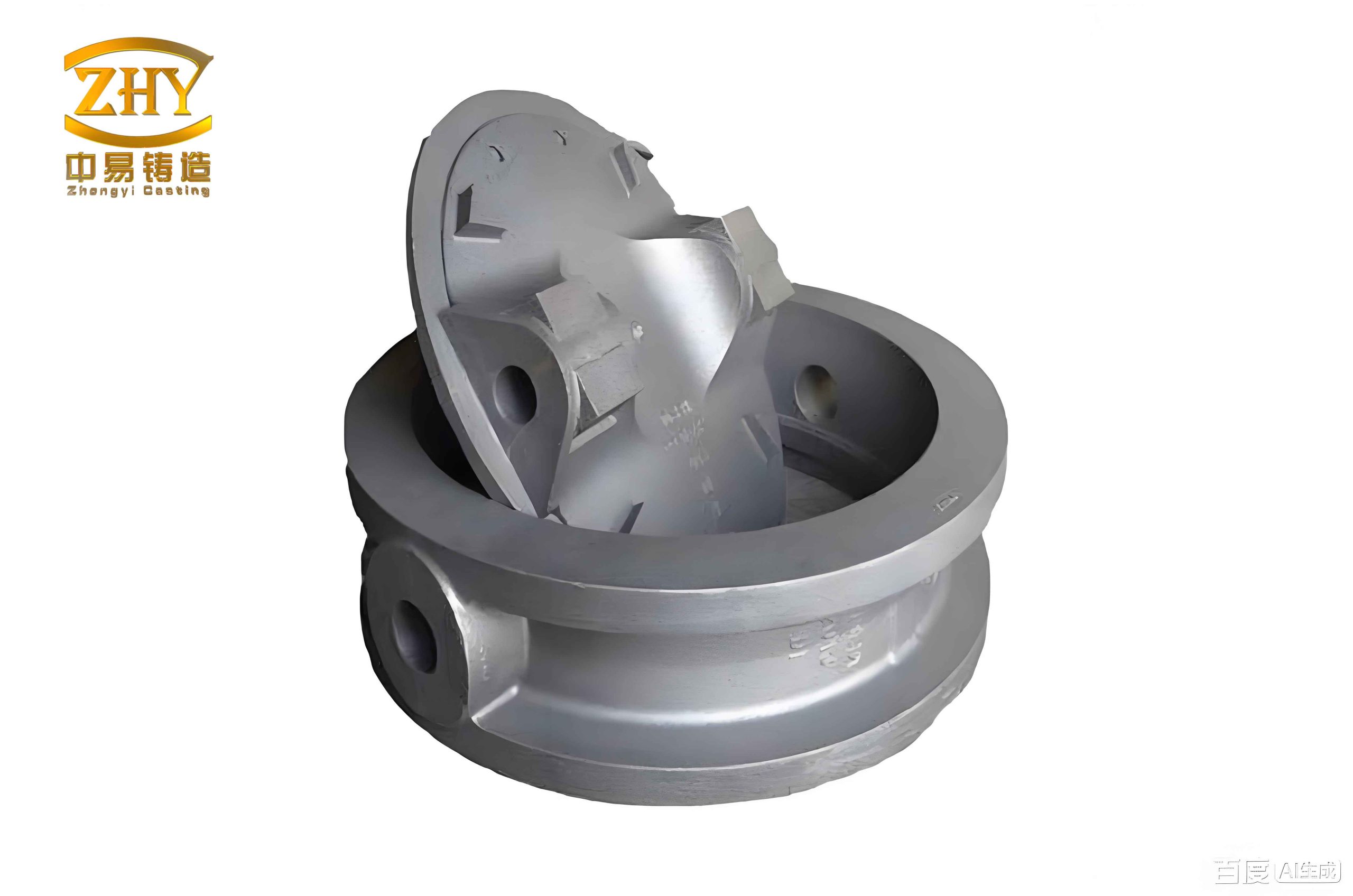
The manufacturing of complex and reliable sand casting products relies heavily on controlling the solidification sequence. Uncontrolled heat extraction can lead to shrinkage porosity, hot tears, and internal stresses, compromising the integrity of the final component. Numerical simulation has become an indispensable tool for visualizing the inaccessible thermal history within a mold. While commercial software offers powerful solutions, developing bespoke simulation codes provides unparalleled insight into specific physical phenomena, such as the discrete effect of boundary conditions. This work employs a direct finite-difference method to solve the transient heat conduction equations, enabling a granular analysis of how thermal barriers at the casting-mold, casting-air, and mold-air interfaces dictate the thermal landscape during the solidification of an AZ91 magnesium alloy T-shaped casting.
Theoretical Foundation: Governing Equations and Interfacial Conditions
The core physical model for simulating the solidification of sand casting products is the transient heat conduction equation, accounting for the release of latent heat. For a two-dimensional system, the governing equation is expressed using the Laplacian operator:
$$
\rho c_p \frac{\partial T}{\partial t} = \nabla \cdot (\lambda \nabla T) + \dot{q}_L
$$
where \(T\) is temperature (K), \(t\) is time (s), \(\rho\) is density (kg/m³), \(c_p\) is specific heat (J/kg·K), \(\lambda\) is thermal conductivity (W/m·K), and \(\dot{q}_L\) is the volumetric latent heat source term (W/m³) associated with the liquid-solid phase change. The thermal diffusivity, \(\alpha\), which governs the rate of heat propagation, is defined as:
$$
\alpha = \frac{\lambda}{\rho c_p}
$$
The complexity in modeling sand casting products arises not from the bulk material properties but from the treatment of boundaries. At interfaces, a discontinuity in thermal properties exists. The heat flux across an interface is often modeled using a thermal contact resistance or its inverse, the heat transfer coefficient (h). The relationship is:
$$
q” = \frac{\Delta T}{R_{th}} = h \cdot \Delta T
$$
where \(q”\) is the heat flux (W/m²), \(\Delta T\) is the temperature difference across the interface (K), and \(R_{th}\) is the interfacial thermal resistance (m²·K/W). In the context of this sand casting simulation, three critical interfacial resistances are defined, as summarized in the table below.
| Interface | Symbol | Physical Meaning |
|---|---|---|
| Casting / Mold | \(R_{cm}\) | Resistance due to imperfect contact between the solidified metal skin and the sand mold. |
| Casting / Air (Riser Top) | \(R_{ca}\) | Resistance governing heat loss from the open riser surface to the ambient atmosphere. |
| Mold / Ambient Air | \(R_{ma}\) | Resistance at the outer mold wall, affecting overall mold cooling. |
Methodology: Geometry, Discretization, and Numerical Solution
To investigate these effects systematically, a classic T-shaped geometry, representative of many sand casting products featuring junctions and varying section thicknesses, was selected. The computational domain encapsulates the casting and a substantial volume of the sand mold to simulate realistic boundary conditions.
| Parameter | Value | Unit |
|---|---|---|
| Base Width | 70 | cm |
| Base Height | 12 | cm |
| Riser Width | 30 | cm |
| Riser Height | 60 | cm |
| Mold Allowance (Sand) | 10 | cm |
| Domain Size | 82 x 82 | cm |
| Grid Size (Δx, Δy) | 1 x 1 | cm |
| Time Step (Δt) | 0.02 | s |
The energy conservation law is applied directly to each control volume (grid cell). The explicit finite-difference scheme updates the temperature at node (i,j) for the next time step (n+1) based on the net heat influx from its orthogonal neighbors (i±1, j±1) at the current time step (n). The general form of the discretized equation for an internal node is derived from energy balance:
$$
T_{i,j}^{n+1} = T_{i,j}^{n} + \frac{\Delta t}{\rho c_p \Delta V} \cdot \sum_{faces} \left( \frac{\lambda \cdot A \cdot \Delta T}{L} \right)_{face}
$$
where \(\Delta V\) is the cell volume, \(A\) is the face area, \(L\) is the distance between node centers, and the summation is over all cell faces. For boundary cells, the heat flux terms incorporate the specific interfacial thermal resistances (\(R_{cm}, R_{ca}, R_{ma}\)). The thermophysical properties for the AZ91 alloy and the silica sand mold used in the simulation are critical inputs.
| Material Property | AZ91 Magnesium Alloy | Silica Sand Mold | Unit |
|---|---|---|---|
| Density, \(\rho\) | 1810 | 1600 | kg/m³ |
| Specific Heat, \(c_p\) | 1020 | 1170 | J/kg·K |
| Thermal Conductivity, \(\lambda\) | 84 | 0.25 | W/m·K |
| Pouring Temperature | 871 | – | K |
| Liquidus Temperature | 868 | – | K |
| Solidus Temperature | 723 | – | K |
| Initial Mold Temperature | – | 293 | K |
Results and Analysis: The Dominant Influence of Interfacial Conditions
The simulation results provide a clear and quantitative visualization of how interfacial resistances dictate the thermal history of sand casting products. The analysis focuses on temperature distribution contours at a fixed time (t=4000s) and cooling curves at strategic points: a corner at the casting-mold junction and the center of the riser.
1. The Critical Role of Casting/Mold Resistance (\(R_{cm}\))
This resistance is paramount for the soundness of the main body of sand casting products. A high \(R_{cm}\) value (e.g., 3.00 m²·K/W) signifies poor thermal contact, severely impeding heat flow from the casting into the mold.
| Casting/Mold Resistance (\(R_{cm}\)) | Observed Solidification Pattern | Thermal Gradient Character |
|---|---|---|
| High (3.00 m²·K/W) | Strong directional solidification from the open riser top downwards. The base and corners remain hot for an extended period. | Very steep gradients from the riser towards the base, creating a distinct 5-tier temperature zonation. |
| Medium (0.75 m²·K/W) | More balanced cooling. The riser and mold walls begin to extract heat concurrently. | Reduced thermal gradient. The hottest core region shrinks and shifts. |
| Low (0.15 m²·K/W) | Near-ideal heat extraction through all mold walls. Solidification initiates almost simultaneously from all surfaces inward. | Flat, mild gradients. The casting cools uniformly, eliminating the large hot spot at the base. |
The cooling curve at the corner node reveals the dynamic impact. Initially, the temperature drop is highly sensitive to \(R_{cm}\); a lower resistance causes a faster initial chill. However, as a solidified shell forms and the internal temperature gradients diminish, the cooling rates for different \(R_{cm}\) values converge, as described by:
$$
\lim_{t \to \infty} \left( \frac{dT}{dt} \right)_{R_{cm}} \approx \text{constant}
$$
This implies that while interfacial resistance controls the early solidification structure and skin formation, the later-stage cooling is dominated by the internal thermal resistance of the solidified metal itself.
2. The Governing Effect of Riser Top Resistance (\(R_{ca}\))
The resistance at the casting-air interface, typically the top of the riser, is the primary control for feeding efficiency in sand casting products. A low \(R_{ca}\) promotes rapid heat loss from the riser, which is desirable for directional solidification.
| Riser Top Resistance (\(R_{ca}\)) | Riser Cooling Efficiency | Feeding Effectiveness |
|---|---|---|
| Low (0.012 m²·K/W) | The riser acts as a highly effective thermal “chimney,” cooling fastest and creating a strong temperature gradient toward itself. | Optimal for directional feeding. The riser remains liquid longest, effectively compensating for shrinkage in the casting body. |
| High (0.12 m²·K/W) | Heat loss from the riser is stifled. Its cooling rate slows dramatically, losing its thermal advantage over other sections. | Poor. The riser may solidify concurrently or even after the casting body, becoming a “hot spot” and creating a shrinkage cavity within the casting itself. |
The mathematical expression for heat loss from the riser top is \(q”_{riser} = (T_{riser} – T_{ambient}) / R_{ca}\). A high \(R_{ca}\) directly reduces \(q”_{riser}\), flattening the cooling curve at the riser center. This eliminates the necessary thermal gradient (\( \nabla T \)) directing solidification toward the riser, a condition essential for producing sound sand casting products. The cooling curves show that while initial cooling is similar, the curves diverge significantly after the first few hundred seconds, with higher \(R_{ca}\) leading to a persistently higher riser temperature.
3. The Negligible Impact of Mold/Ambient Resistance (\(R_{ma}\))
In contrast to the other two, simulations varying \(R_{ma}\) over a wide range (0.05 to 0.50 m²·K/W) showed minimal change in the temperature distribution within the casting. The thermal profiles at t=4000s were virtually indistinguishable. This can be explained by analyzing the overall heat transfer path. The dominant resistance in the series is the low-conductivity sand mold itself. The internal thermal resistance of the thick mold wall is significantly larger than the external convective/radiative resistance (\(R_{ma}\)). Therefore, improving external cooling has a marginal effect on the heat extraction rate from the casting. The total thermal resistance \(R_{total}\) from the casting interior to ambient air is approximately:
$$
R_{total} \approx R_{cm} + \frac{L_{mold}}{\lambda_{mold}} + R_{ma}
$$
For a sand mold with \(L_{mold} = 0.1 m\) and \(\lambda_{mold} = 0.25 W/m·K\), the mold’s conductive resistance \(L/\lambda = 0.4\) m²·K/W, which is an order of magnitude larger than typical \(R_{ma}\) values. Thus, \(R_{ma}\) becomes a negligible component in the series circuit for sand casting products.
Application to Process Design and Defect Prevention
The insights from this analysis directly inform the design and optimization of processes for manufacturing sand casting products. The key is to manipulate the interfacial conditions to achieve a controlled, directional solidification pattern.
Strategy 1: Minimizing \(R_{cm}\) for Uniform Section Cooling. To prevent hot spots at junctions and thick sections—common failure points in sand casting products—the casting-mold thermal contact must be enhanced. This can be achieved by using molds with higher density and thermal conductivity, ensuring proper mold compaction, and employing exothermic or insulating coatings strategically. For instance, a chill placed at a critical corner effectively reduces the local \(R_{cm}\), accelerating cooling and eliminating the last-to-freeze zone that would otherwise lead to shrinkage porosity.
Strategy 2: Optimizing \(R_{ca}\) for Effective Riser Performance. The riser must be the last point to solidify. This requires maintaining a low \(R_{ca}\). In practice, this is ensured by leaving the riser top exposed to air (not covered with sand), using riser sleeves with low thermal conductivity to insulate the sides while leaving the top open, or applying exothermic topping compounds. Any practice that inadvertently increases \(R_{ca}\), such as allowing a thick slag layer to form on the riser top, jeopardizes the soundness of the entire sand casting product by destroying the required thermal gradient.
The interplay of these resistances can be summarized for defect prevention:
| Target Defect Prevention | Recommended Interfacial Strategy | Practical Method in Sand Casting |
|---|---|---|
| Shrinkage Porosity in Heavy Sections | Local reduction of \(R_{cm}\). | Application of internal or external chills. |
| Shrinkage in Casting Body (Poor Feeding) | Maintain very low \(R_{ca}\) on riser. | Use of open risers with exothermic toppings; ensure clean metal surface. |
| Uniform Mechanical Properties | Achieve balanced and predictable \(R_{cm}\) across all mold faces. | Consistent mold compaction and coating application. |
Conclusion and Future Perspectives
This detailed numerical investigation elucidates the profound and discrete influence of interfacial thermal resistances on the solidification thermodynamics of sand casting products, specifically AZ91 magnesium alloy castings. The casting-mold interface resistance (\(R_{cm}\)) controls the rate of heat extraction through the mold walls, determining the cooling rate of sections and junctions. The riser-top resistance (\(R_{ca}\)) is the master variable for establishing directional solidification; its increase can completely nullify the riser’s feeding function. Conversely, the outer mold-air resistance (\(R_{ma}\)) has a negligible impact on the solidification pattern of typical sand casting products due to the dominant insulating effect of the sand mold itself.
The findings underscore that the quality and reproducibility of sand casting products are not solely determined by alloy chemistry or gross geometry but are exquisitely sensitive to these boundary conditions. Future work should focus on the dynamic evolution of \(R_{cm}\) during solidification, as it varies with air gap formation due to metal contraction and mold expansion. Integrating this dynamic resistance model with microstructure and stress prediction modules will pave the way for truly predictive digital twins for the sand casting process, enabling the first-time-right production of highly complex and critical sand casting products.