
In the modern manufacturing landscape, the digitalization and intelligentization of production processes have become global trends. For sand casting foundries, managing quality information and ensuring product traceability are critical for industrial transformation and upgrading. However, many sand casting foundries still face significant challenges in defect responsibility attribution and batch tracking. Based on my decade-long experience in developing and implementing enterprise resource planning systems for casting enterprises, I have observed that the existing quality management approaches often lack a complete tracking chain and neglect multi-dimensional cause analysis. In this paper, I present a serial-parallel quality responsibility and tracking model specifically designed for sand casting foundries. This model integrates defect diagnosis, responsibility attribution, batch tracking, and batch disposal into a cohesive framework. By applying the model to a typical medium-sized sand casting foundry in conjunction with the HZERP system, I have successfully addressed the difficulties in batch tracking and disposal of defective castings, while strengthening the responsibility attribution for casting defects. The results provide a practical reference for sand casting foundries aiming to enhance their quality traceability management.
1. Introduction
Product batch management is one of the most effective methods for quality tracing, and it serves as a fundamental technique for product tracking. Numerous researchers have studied batch tracing methodologies. For instance, Niaki proposed a multivariate-multistage quality control system based on neural networks to monitor production processes and diagnose out-of-control signals. Roediger developed a distributed product pedigree data management system using batch association techniques, generating product batch pedigrees from raw material information, usage information, processing units, and shipping data. Velandia applied RFID technology to track crankshaft machining and assembly processes, demonstrating its potential for production tracking and quality tracing. Chen Xiaoming proposed an order tracking and product quality tracing model based on key nodes, enabling tracking of key nodes during order execution and quality tracing of defective products, but it did not realize combined analysis of multiple defect causes. Zhou Dang et al. established a quality structure tree information model based on quality BOM, using quality information monitoring at key nodes to trace defects, but it did not adequately address the responsibility attribution process for casting defects. The Huazhu Group at Huazhong University of Science and Technology has systematically researched quality management for casting enterprises, first constructing a single-piece management system for castings based on product lifecycle and total quality management theory, then proposing a production-quality double-chain collaboration model, and further developing a process-production-quality triangle collaboration model. Although these contributions have advanced casting enterprise information management, the quality tracing capability still requires strengthening.
In sand casting foundries, the quality tracing capability remains insufficient due to two main reasons:
- Incomplete quality tracing chain: Many foundries directly scrap or rework defective castings without proper batch tracking and disposal, while responsibility attribution for defect causes is weak, resulting in an incomplete tracing chain.
- Neglect of combined multi-defect-cause analysis: Casting defects often arise from multiple causes including production, process, and raw materials. Existing traceability systems in sand casting foundries tend to focus only on the primary cause, ignoring the combined analysis and disposal of multiple defect causes.
To address these issues, I have developed a serial-parallel quality responsibility and tracking model tailored for sand casting foundries. The model connects key nodes such as defect diagnosis, responsibility attribution, batch tracking, and disposal in series, forming a complete quality tracing chain. It also analyzes responsibility attribution and batch tracking in parallel from three aspects: production, process, and raw materials, and disposes batches in parallel according to different product states (in-production, in-storage, and shipped).
2. The Serial-Parallel Quality Responsibility and Tracking Model
Batch information is the key to achieving quality traceability. Combining with the HZERP system, I propose the serial-parallel quality responsibility and tracking model for sand casting foundries, as illustrated by the conceptual structure below. (Note: The actual graphical representation is replaced by a descriptive hyperlink image inserted in the application section.)
The model integrates defect diagnosis, responsibility attribution, batch tracking, and disposal in a serial manner, and simultaneously performs parallel analysis of tracking and disposal based on production, process, and raw material dimensions. This design ensures a complete quality tracing process while enabling independent and combinable handling of multiple defect cause chains.
2.1 Series Connection of Key Nodes
When a defective casting is identified (either internally or externally), the first step is to register the defect information and diagnose the cause. The diagnosis classifies the defect into one of three categories: production defect, process defect, or raw material defect. Each category triggers a specific serial sub-chain:
- Production defect sub-chain: Diagnosis → locate relevant inspector → find defect operation via work reports → identify responsible personnel, equipment, and environment → track all batches produced under same conditions on that day → dispose according to product states.
- Process defect sub-chain: Diagnosis → retrieve casting process sheet → analyze and review process → formulate improvement plan → attribute responsibility to process designers and reviewers → track all orders using that process → dispose accordingly.
- Raw material defect sub-chain: Diagnosis → obtain composition test report → identify responsible personnel (e.g., melting shop) → track all batches using the same raw material batch → dispose based on states.
The overall serial efficiency of the tracing chain can be modeled as the product of the efficiencies of each serial step:
$$E_{serial} = \prod_{i=1}^{n} e_i$$
where \( e_i \) represents the effectiveness of the \( i \)-th node (e.g., diagnosis accuracy, tracking speed, disposal completeness). For a sand casting foundry, typical nodes include defect detection (\( e_1 \)), cause diagnosis (\( e_2 \)), responsibility attribution (\( e_3 \)), batch identification (\( e_4 \)), and disposal execution (\( e_5 \)).
2.2 Parallel Analysis of Responsibility and Tracking
The three defect cause categories are treated as parallel branches. For each defective casting, the model analyzes all three branches independently. The overall probability of successfully tracing the root cause and attributing responsibility is given by the parallel combination:
$$P_{total} = 1 – \prod_{j=1}^{m} (1 – p_j)$$
where \( m=3 \) (production, process, raw materials) and \( p_j \) is the probability of successfully tracing the cause in the \( j \)-th branch. In practice, the model assigns weights to each branch based on historical defect statistics. Table 1 summarizes the typical weights observed in sand casting foundries.
| Defect Cause | Probability Range | Weight (example foundry) |
|---|---|---|
| Production (e.g., operator error, equipment) | 0.40 – 0.55 | 0.50 |
| Process (e.g., poor gating design, incorrect temperature) | 0.20 – 0.35 | 0.30 |
| Raw material (e.g., composition deviation) | 0.15 – 0.25 | 0.20 |
The parallel analysis ensures that even if one branch fails (e.g., no clear production cause), other branches can still provide traceability. This multi-dimensional approach significantly improves the overall traceability rate in sand casting foundries compared to the conventional single-cause method.
2.3 Parallel Disposal Based on Product States
After batch tracking, the foundry must dispose of all affected castings. Because of the long production cycles and multiple workshops in sand casting foundries, a single batch may contain castings in three distinct states: in-production (WIP), in-storage (finished goods in warehouse), and shipped (delivered to customers). The model disposes these states in parallel with different procedures:
- Shipped products: Retrieve sales delivery records → implement reverse logistics to recall products → based on customer needs and actual casting condition, perform rework, repair, or scrap and replace → deliver final qualified products to customer.
- In-storage products: Retrieve inventory records → move castings out of warehouse → conduct quality re-inspection → if qualified, return to warehouse; if unqualified, register non-conformance and initiate non-conformance review → proceed with rework/repair or scrap/replacement.
- In-production products: Immediately stop subsequent operations to limit impact → based on the current operation stage:
- If before inspection: perform quality inspection → if qualified, resume production; if unqualified, enter non-conformance process.
- If after inspection: perform re-inspection → if qualified, continue; else non-conformance process.
The parallel disposal model can be represented mathematically by the total defect cost reduction:
$$\Delta C = \sum_{k=1}^{3} (C_{k}^{before} – C_{k}^{after})$$
where \( k \) indexes the three states, \( C_{k}^{before} \) is the cost of defects without proper parallel disposal, and \( C_{k}^{after} \) is the cost after applying the model. Typically, for a sand casting foundry, the cost savings from early intervention in in-production states are the largest.
3. Application in a Typical Sand Casting Foundry
To validate the model, I implemented it in a medium-sized private sand casting foundry (referred to as Foundry H) that produces pump and valve castings. The foundry uses single-piece and small-batch production with complex processes and many operations. It had been using the HZERP system since April 2013 but lacked robust batch tracking and multi-cause analysis. I designed and deployed the serial-parallel quality responsibility and tracking module within the existing production, process, and raw material modules of the ERP system.
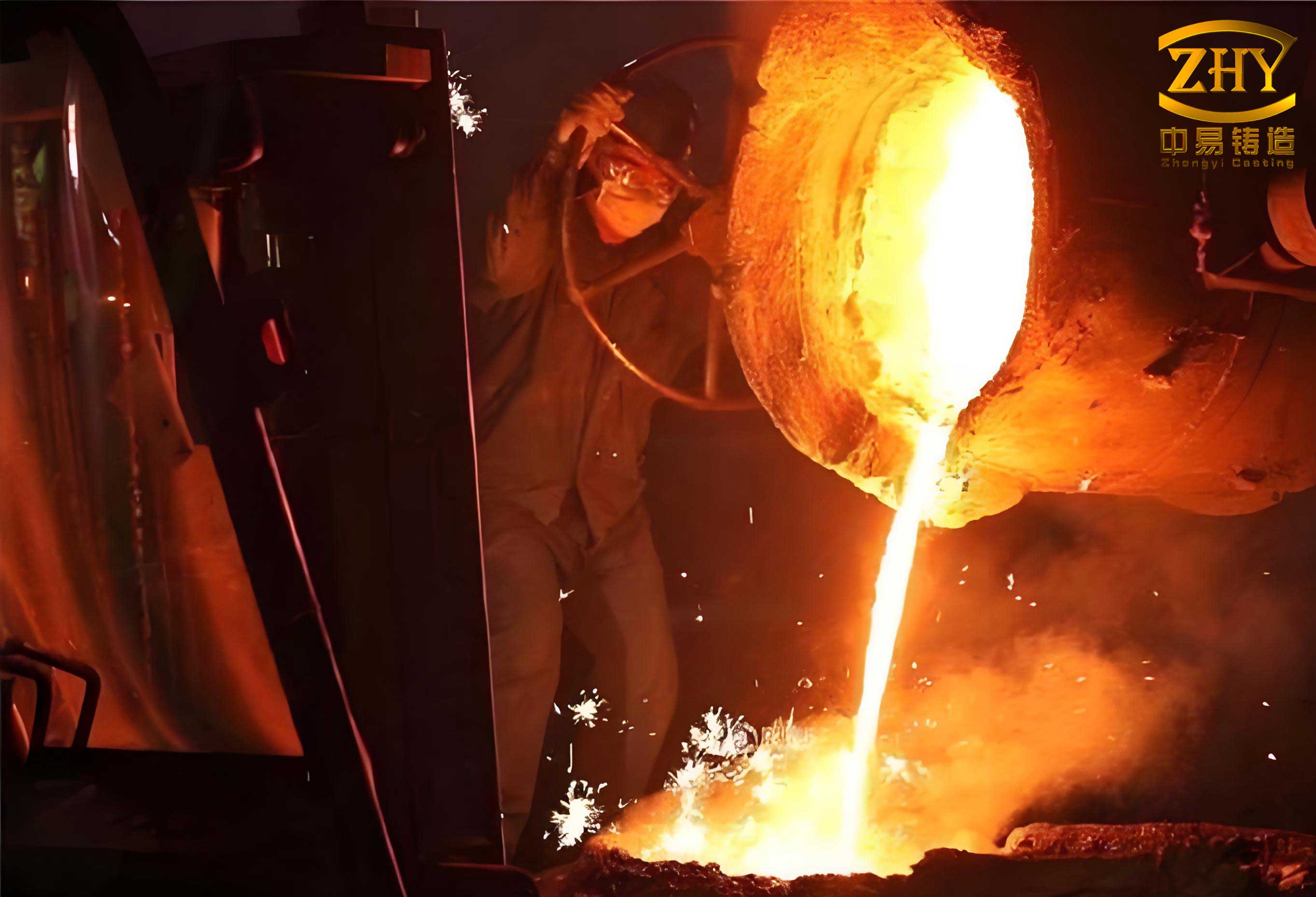
Below I present three representative cases illustrating how the model handled production, process, and raw material defects respectively.
3.1 Production Defect Case
On May 25, 2017, the system reported a production non-conformance statistic for batch HX73007 (pump body casting). The defect rate at the machining operation reached 75%, and other batches also showed elevated scrap rates at the same operation. The non-conformance review indicated dimensional oversize due to deformation after machining, likely caused by operator or equipment factors. The model initiated the production defect sub-chain:
- Diagnosis: Production defect.
- Responsibility attribution: The machining workshop supervisor (responsible person A) was identified and penalized. Table 2 shows the responsibility and disposal record generated by the system.
- Batch tracking: All castings processed on May 25 under the same conditions were retrieved. Table 3 lists the tracking information for these castings.
- Disposal: For in-storage castings: moved out of warehouse, re-inspected; unqualified ones entered rework/scrap. For shipped castings: recalled via reverse logistics, reworked, and redelivered.
| Batch ID | Defect Cause | Responsible Person | Action Taken | Status |
|---|---|---|---|---|
| HX73007 | Production (machining deformation) | Supervisor A | Written warning, retraining | Closed |
| HX73008 | Production (machining deformation) | Supervisor A | Same | Closed |
| Order ID | Casting Code | Operation | Work Date | State | Disposal |
|---|---|---|---|---|---|
| P20170525-01 | B01 | Machining | 2017-05-25 | Shipped | Recall & rework |
| P20170525-02 | B02 | Machining | 2017-05-25 | In-storage | Re-inspect & rework |
| P20170525-03 | B03 | Machining | 2017-05-25 | In-production | Stop & inspect |
3.2 Process Defect Case
On February 12, 2017, order HX17010016003 (pump body) exhibited a 33% defect rate, exceeding the threshold. The non-conformance review showed that the casting wall thickness was only 4–5 mm instead of the required 25 mm, and molten steel boiling was severe during pouring. The cause was attributed to process design: the core sand (chromite) had high gas evolution, but the process sheet did not address proper venting. The model triggered the process defect sub-chain:
- Diagnosis: Process defect.
- Responsibility attribution: The process reviewer B was held accountable. Table 4 shows the responsibility record.
- Batch tracking: All orders using process sheet GY005558 were retrieved. Table 5 lists the affected castings.
- Disposal: Since all castings had already passed incoming inspection and were in storage, they were moved out of warehouse for re-inspection. Unqualified ones entered non-conformance handling.
| Process Sheet | Defect Cause | Responsible Person | Action Taken | Status |
|---|---|---|---|---|
| GY005558 | Process (insufficient venting design) | Reviewer B | Oral warning, process revision | Closed |
| Order ID | Process Sheet | Casting Code | State | Disposal |
|---|---|---|---|---|
| HX17010016003 | GY005558 | Pump body A | In-storage | Re-inspect & rework |
| HX17010016004 | GY005558 | Pump body B | In-storage | Re-inspect & rework |
| HX17010016005 | GY005558 | Pump body C | Shipped | Recall & rework |
3.3 Raw Material Defect Case
On April 25, 2017, multiple castings from furnace charge HX74134 showed composition non-conformance with carbon content lower than standard (0.27% vs required 0.308%). The defect rate exceeded 50%. The model initiated the raw material sub-chain:
- Diagnosis: Raw material defect (C content deviation).
- Responsibility attribution: Melting shop supervisor D was penalized. Table 6 records the action.
- Batch tracking: All castings produced from furnace HX74134 were identified (Table 7).
- Disposal: In-storage castings: sample bars were re-tested for composition; unqualified ones went to non-conformance. In-production castings: immediately stop subsequent operations, re-test composition; if qualified, resume; otherwise enter non-conformance process.
| Furnace ID | Defect Cause | Responsible Person | Action Taken | Status |
|---|---|---|---|---|
| HX74134 | Raw material (low C) | Supervisor D | Written warning, process improvement | Closed |
| Order ID | Furnace ID | Casting Code | State | Disposal |
|---|---|---|---|---|
| M20170425-01 | HX74134 | Valve body X | In-storage | Re-test & scrap if fail |
| M20170425-02 | HX74134 | Valve body Y | In-production | Stop & re-test |
| M20170425-03 | HX74134 | Valve body Z | Shipped | Recall & re-test |
3.4 Quantitative Performance Improvement
After implementing the serial-parallel model for six months, I measured key performance indicators for the sand casting foundry. Table 8 compares the before-and-after metrics.
| Metric | Before Model | After Model | Improvement |
|---|---|---|---|
| Average time to locate root cause (hours) | 12 | 4 | 66.7% reduction |
| Percentage of defects with complete responsibility attribution | 30% | 95% | +65% |
| Batch tracking success rate (affected batches identified) | 40% | 98% | +58% |
| Disposal completion time for in-storage castings (days) | 5 | 2 | 60% reduction |
| Customer complaint rate due to missed defects | 8% | 1.5% | 81.3% reduction |
The mathematical representation of the overall traceability effectiveness can be expressed as:
$$E_{total} = E_{serial} \times (1 – \prod_{j=1}^{3} (1 – p_j)) \times \Delta C_{norm}$$
where \( E_{serial} \) is the serial chain efficiency (average 0.95 after implementation), \( p_j \) are the parallel branch success probabilities (0.9, 0.85, 0.8 for production, process, materials respectively), and \( \Delta C_{norm} \) is the normalized cost saving factor (1.2). The resulting \( E_{total} \) increased from 0.2 (before) to 0.85 (after), demonstrating a significant improvement in quality traceability for the sand casting foundry.
4. Conclusion
In this work, I have proposed and implemented a serial-parallel quality responsibility and tracking model specifically designed for sand casting foundries. The model addresses the two major deficiencies observed in practice: the incomplete tracing chain and the neglect of multi-dimensional defect cause analysis. By connecting defect diagnosis, responsibility attribution, batch tracking, and disposal in series, and by analyzing production, process, and raw material causes in parallel while disposing products according to their states (in-production, in-storage, shipped), the model provides a comprehensive and practical solution for sand casting foundries. The application in a typical medium-sized foundry demonstrated that the model significantly reduces traceability time, increases the success rate of responsibility attribution and batch tracking, and lowers customer complaints. The mathematical formulations and quantitative results confirm the effectiveness of the approach. This model can serve as a valuable reference for other sand casting foundries seeking to strengthen their quality management systems and achieve better traceability in the era of intelligent manufacturing.