
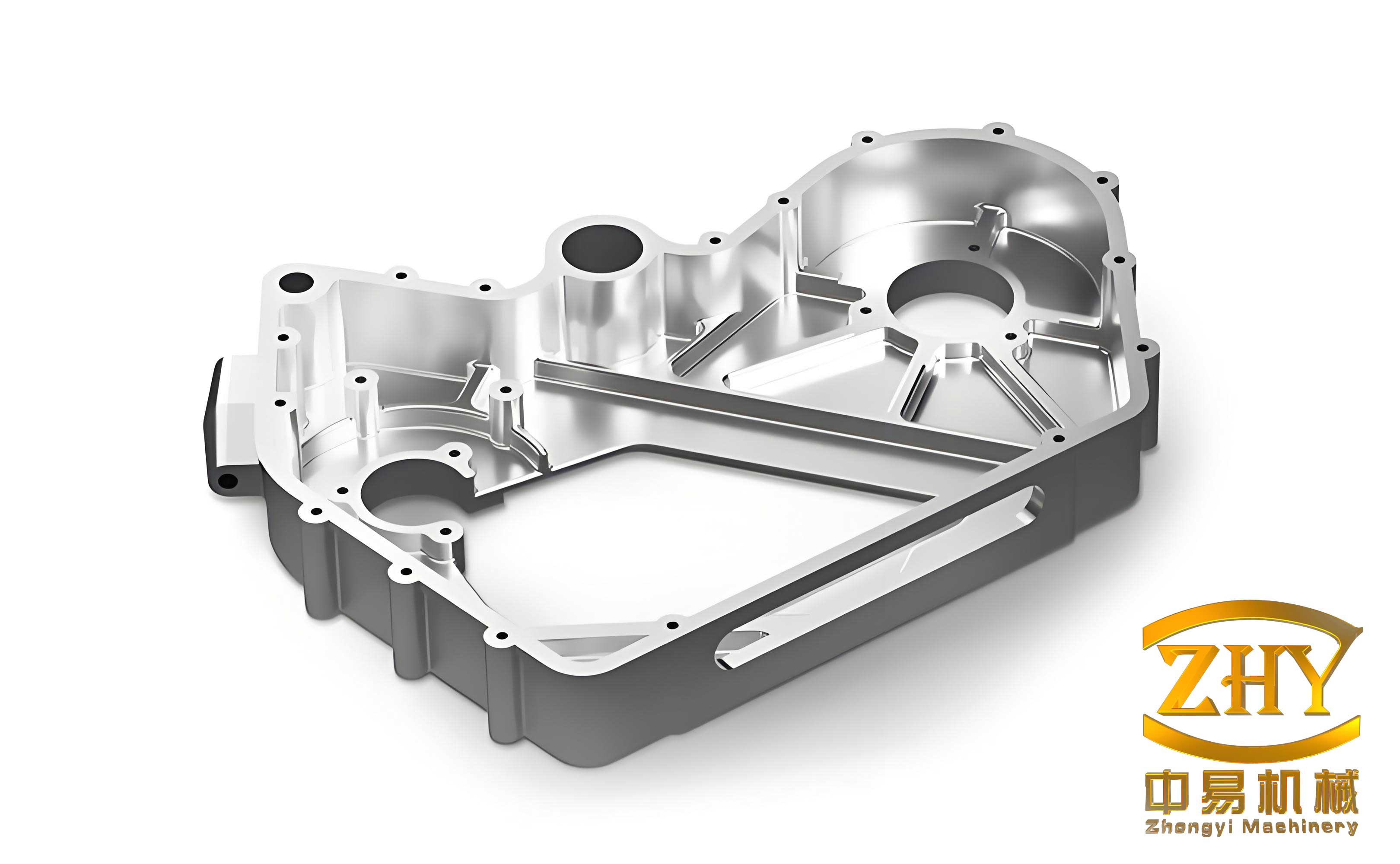
In the production of complex, high-integrity shell castings such as reducer housings using the lost foam casting (LFC) process, achieving consistent, defect-free components presents significant technical challenges. My extensive work in this field has focused specifically on ductile iron (QT450-10) shell castings, where defects like inclusions and shrinkage cavities frequently compromise structural integrity and machining yield. The geometry of a typical reducer housing—with varying wall thicknesses from 14 mm to 54 mm and concentrated thermal junctions—exacerbates these issues under conventional LFC parameters. This article details my first-person investigation into the root causes of these defects and the development and validation of two novel, high-yield process solutions: the Heat Dissipation Fin (HDF) technique and the Flexible Chill methodology.
The initial production trials for these ductile iron shell castings, conducted under standard LFC parameters, revealed a critical defect profile. The primary issues were non-metallic inclusions concentrated on the upper vertical faces of the casting and shrinkage cavities localized at geometric hot spots, particularly around bolt boss areas. The standard corrective measures for such defects in conventional casting, namely extensive use of feeders (risers) or rigid external chills, are often incompatible or inefficient in lost foam casting. Feeders drastically reduce the exemplary process yield that makes LFC attractive, while the placement and securing of traditional chills within the unbonded sand mold is operationally problematic and can lead to mold collapse or distortion of the fragile foam cluster.
Fundamental Analysis of Defect Formation Mechanisms
The formation of defects in lost foam shell castings is intrinsically linked to the unique physics of the process, particularly the thermal decomposition of the foam pattern. For ductile iron castings, the choice of pattern material is crucial. While Expanded Polystyrene (EPS) and Expanded Polymethyl Methacrylate (EPMMA) have distinct drawbacks, a copolymer (STMMA) is typically employed. Its decomposition behavior represents a compromise, but still lays the groundwork for defects.
The thermal cracking reactions are as follows:
For EPS:
$$ \text{C}_8\text{H}_8 (s) \rightarrow 8\text{C} (s) + 4\text{H}_2 (g) $$
For EPMMA:
$$ \text{C}_5\text{O}_2\text{H}_8 (s) \rightarrow 3\text{C} (s) + 2\text{CO}_2 (g) + 4\text{H}_2 (g) $$
The STMMA copolymer yields gaseous and solid products in quantities between these two extremes. The solid carbonaceous residue is the primary source of the lustrous carbon inclusions found in the shell castings. During pouring, the advancing metal front thermally degrades the foam. The gaseous products must escape through the coating and sand, while the liquid pyrolysis products are pushed ahead of the metal. If the coating permeability is insufficient or the thermal conditions are not optimal, these liquid and solid products can become entrapped at the metal front, particularly on upward-facing surfaces, leading to the observed inclusion defects.
Shrinkage cavities in these ductile iron shell castings, on the other hand, are primarily a function of solidification dynamics. Ductile iron exhibits a significant volume contraction during the liquid-to-solid phase change (approx. 4-5%). In areas of high thermal mass (hot spots), such as the junctions of walls and bosses, this contraction is most pronounced. If these regions solidify last and are isolated from a source of liquid feed metal, internal shrinkage cavities form. The problem is summarized by the fundamental requirement for directional solidification, which is difficult to achieve in isolated hot spots of complex shell castings without external intervention.
| Defect Type | Primary Root Cause in LFC | Traditional Mitigation | Developed Mitigation for Shell Castings | Key Advantage |
|---|---|---|---|---|
| Surface/Subsurface Inclusions (Lustrous Carbon) | Entrapment of solid/liquid pyrolysis products from foam degradation. | Optimized coating permeability, vacuum cycle, pouring temperature. | Strategic Machining Allowance Increase. | Simple, reliable, does not affect process yield. |
| Shrinkage Cavity/Porosity | Lack of directional solidification and feed metal access at isolated thermal hot spots. | Large feeding risers, rigid internal/external chills. | 1. Heat Dissipation Fin (HDF) 2. Flexible Chill (Steel Shot) |
High process yield, simple integration, effective heat extraction control. |
Strategic Solution for Inclusion Defects in Shell Castings
Given that the complete elimination of pyrolysis products in lost foam shell castings is theoretically impossible, the strategy shifts from prevention to management. Analysis of machined castings showed that the depth of inclusion penetration on vertical faces was consistently less than 8 mm. The original process already included a 4 mm machining allowance on these faces. My approach was to pragmatically increase this allowance to 8 mm. This additional material provides a buffer zone where inclusions can be contained and subsequently removed during machining.
The result was a dramatic improvement in the quality of the final machined shell castings. Statistical process tracking showed the post-machining qualification rate for the shell castings increased from approximately 88% to 97.96%. This method is elegantly simple, imposes no additional complexity on the foundry process, and preserves the high net-shape advantage of LFC for the majority of the casting geometry. The success of this approach underscores a fundamental principle in defect management: when a defect’s characteristics are predictable and bounded, designing a sacrificial zone for its containment can be the most cost-effective solution.
Innovative Process Development for Shrinkage Elimination in Shell Castings
Addressing shrinkage cavities required a more innovative departure from convention. The goal was to artificially enhance the cooling rate at specific hot spots to promote directional solidification towards heavier sections or the feeder system, but without the drawbacks of traditional methods. This led to the development of two distinct yet effective processes.
The Heat Dissipation Fin (HDF) Process
The core innovation of the HDF process is the use of the process’s own environment as an active cooling medium. The principle exploits the continuous negative pressure (vacuum) applied to the sand mold during both pouring and solidification. Cold air is drawn into the top of the mold, flows through the permeable sand, and acts as a cooling gas stream.
In this process, specifically shaped foam fins (e.g., 50 mm x 30 mm x 7 mm) are adhesively bonded onto the surface of the foam pattern at identified hot spot locations. These locations are determined through solidification simulation or empirical observation from previous defects. For the reducer housing shell castings, twelve such fins were applied around the bolt boss regions.
During casting, these fins perform two critical functions:
- Modulus Reduction: They increase the surface-area-to-volume ratio of the local region, effectively reducing its thermal modulus and making it solidify faster.
- Enhanced Convective Cooling: The porous coating on the fin creates a micro-channel network with the surrounding sand. The vacuum-driven airflow actively convects heat away from the fin and the adjacent casting wall, creating a pronounced chilled zone.
The heat extraction can be conceptualized by enhancing the standard heat balance equation for the casting region. The total heat Q to be removed is:
$$ Q = \rho V [C_p (T_{pour} – T_{liquidus}) + L_f + C_p (T_{liquidus} – T_{solid})] $$
where $\rho$ is density, $V$ is volume, $C_p$ is specific heat, $L_f$ is latent heat of fusion, and $T$ are various temperatures. The HDF increases the effective heat transfer area A and provides a pathway for convective heat loss, significantly increasing the heat flux $\dot{q}$ from that region, where:
$$ \dot{q} = h_{eff} A (T_{casting} – T_{air}) $$
and $h_{eff}$ is the effective heat transfer coefficient, greatly improved by the forced convection.
The fins are completely consumed during the process, leaving no foreign material. The resultant shell castings showed no shrinkage defects in the problematic bolt bosses. The process is simple to implement at the pattern assembly stage, has negligible cost, and does not impact the process yield—a paramount advantage for producing economical shell castings.
The Flexible Chill Process
For shell castings with recessed or internal hot spots where attaching an external fin is geometrically challenging, an alternative method was developed: the Flexible Chill. This process replaces a solid, rigid chill with a volume of loose steel shot (small spherical pellets).
The procedure involves placing a predetermined volume of steel shot directly against the foam pattern at the hot spot location during mold assembly. The shot is contained using a high-temperature resistant tape or a small foam enclosure that is part of the pattern. During sand vibration, the shot particles settle into a stable, conformal mass that molds perfectly to the complex geometry of the shell casting.
During pouring, this mass of shot acts as a highly efficient chill due to its high thermal conductivity and heat capacity. The heat extraction power is substantial because of the large contact area between the countless shot particles and the molten metal. The solidification sequence is forcefully redirected, making the chilled area solidify first and eliminating the isolated hot spot condition that causes shrinkage in the shell castings.
The “flexible” nature of this chill solves the major handling issues associated with rigid chills in LFC: there is no risk of chill displacement during sand filling or vibration, and it imposes no mechanical stress on the delicate foam pattern cluster. However, its application is more limited than the HDF process, as it requires a physical cavity or pocket in the mold to hold the shot.
| Parameter | Traditional Riser | Traditional Rigid Chill | Heat Dissipation Fin (HDF) | Flexible Chill (Steel Shot) |
|---|---|---|---|---|
| Process Yield Impact | Severely Reduces (20-40%) | Negligible | Negligible | Negligible |
| Pattern/Mold Complexity | High (large foam attachments) | Medium (chill securing/fixing) | Very Low (simple foam gluing) | Low (creating shot pockets) |
| Risk of Mold Distortion | Low | High (chill weight/displacement) | None | Very Low |
| Applicability to Complex Geometry | Limited by feeding distance | Limited by chill manufacturability | High (fins can be shaped freely) | Medium (requires containment space) |
| Post-Casting Removal | Cutting/grinding required | Chill must be removed | None (fin is consumed) | Shot is reclaimed from sand |
| Cost | High (metal wasted, fettling) | Medium (chill manufacture, handling) | Very Low (minimal foam material) | Low (shot is reusable) |
Process Validation and Results for Shell Castings
The HDF process was subjected to full-scale production validation. After the initial successful trial of shell castings with 12 dissipation fins, a batch of over 2,000 reducer housing shell castings was produced consecutively using this method. Post-production machining and quality inspection confirmed the complete elimination of shrinkage cavities in the targeted bolt boss areas. The consistency of results across this large batch demonstrated the robustness and reliability of the HDF technique for high-volume production of ductile iron shell castings.
The Flexible Chill process was validated through smaller batch trials, which conclusively proved its technical feasibility and effectiveness in eliminating shrinkage in suitable geometries. It has been established as a valuable tool in the process engineering toolkit for specific shell casting configurations where HDF application is not possible.
Furthermore, other process parameters were optimized in conjunction with these techniques. Strict control over the negative pressure during the solidification phase was maintained within a narrow window (e.g., -0.04 to -0.06 MPa). This ensures consistent back-pressure on the solidifying metal to minimize microporosity and maintains the necessary airflow for the HDF cooling effect, without causing other defects like penetration. Pouring temperature was also carefully controlled to balance fluidity for complete foam pattern degradation and minimal thermal contraction.
| Process Stage | Parameter | Optimal Range / Method | Rationale for Shell Castings |
|---|---|---|---|
| Pattern & Mold | Material | STMMA Copolymer | Balances gas evolution and carbon residue for ductile iron. |
| Inclusion Management | 8 mm Machining Allowance on critical faces | Contains predictable inclusion depth without affecting core casting integrity. | |
| Pouring & Solidification | Pouring Temperature | 1370 – 1440 °C | Ensures clean pattern degradation and adequate fluidity for thin sections of the shell. |
| Solidification Negative Pressure | -0.04 to -0.06 MPa | Provides stability, aids HDF cooling, minimizes porosity. | |
| Shrinkage Mitigation | HDF or Flexible Chill at hot spots | Promotes directional solidification; high yield, simple integration. | |
| Metallurgy | Chemistry & Inoculation | Per Table 1; Robust Mg/RE treatment | Ensures QT450-10 properties and high nodule count for soundness. |
Conclusions and Future Perspectives for Shell Casting Production
The journey to produce flawless ductile iron shell castings via the lost foam process necessitates a deep understanding of defect genesis and creative, process-specific solutions. The work demonstrates that:
- Inclusion Management: For non-metallic inclusions stemming from foam pyrolysis—an inherent trait of the LFC process—a strategic increase in machining allowance on susceptible faces is a highly effective and economically sound solution. It transforms an uncontrollable internal defect into a manageable, removable one, significantly boosting the final quality yield of machined shell castings.
- Shrinkage Elimination: The Heat Dissipation Fin (HDF) process represents a paradigm shift in addressing thermal hot spots. By leveraging the process’s own vacuum system for active convective cooling and increasing local surface area, it achieves the chilling effect of a traditional cold iron without any of the drawbacks. It is simple, low-cost, maintains high process yield, and is widely applicable, making it ideal for complex shell castings.
- Alternative Chilling Method: The Flexible Chill process using steel shot provides a viable solution for geometries unsuitable for external fins. It offers excellent conformability and eliminates handling issues, establishing itself as a powerful alternative for specific shell casting designs.
The successful implementation of these strategies results in a robust and high-yield manufacturing route for demanding ductile iron shell castings like reducer housings. The principles are transferable to other LFC components with similar defect challenges. Future work will focus on quantitatively modeling the heat extraction efficiency of HDFs to enable predictive design and optimization via simulation software, further solidifying the scientific foundation for producing premium-quality lost foam shell castings.