
The relentless pursuit of high-precision, high-performance components in modern industries such as aerospace, automotive, and defense has necessitated a move beyond the capabilities of conventional sand casting. In this landscape, Lost Foam Casting (LFC) has emerged as a pivotal and innovative technology. As a researcher deeply immersed in the field of advanced manufacturing, I have observed and participated in the significant evolution of this process. This article aims to synthesize the current state of research, focusing on advanced process variants and the integral role of simulation, while projecting future trajectories for lost foam casting technology.
Lost foam casting, at its core, is a precision casting method where a foam pattern, typically made from expandable polystyrene (EPS), is coated with a refractory layer, embedded in unbonded sand, and then replaced by molten metal during pouring. The foam thermally decomposes, allowing the metal to fill the cavity precisely. This process offers distinct advantages: elimination of mold parting lines, significant design freedom for complex geometries, reduced machining allowances, and excellent surface finish. However, the process is intrinsically linked to the decomposition dynamics of the foam, which can lead to defects like gas porosity, cold shuts, and carbon pickup if not meticulously controlled. Therefore, contemporary research focuses on enhancing the filling capability, controlling solidification, and mitigating defects through innovative process modifications and sophisticated computational tools.
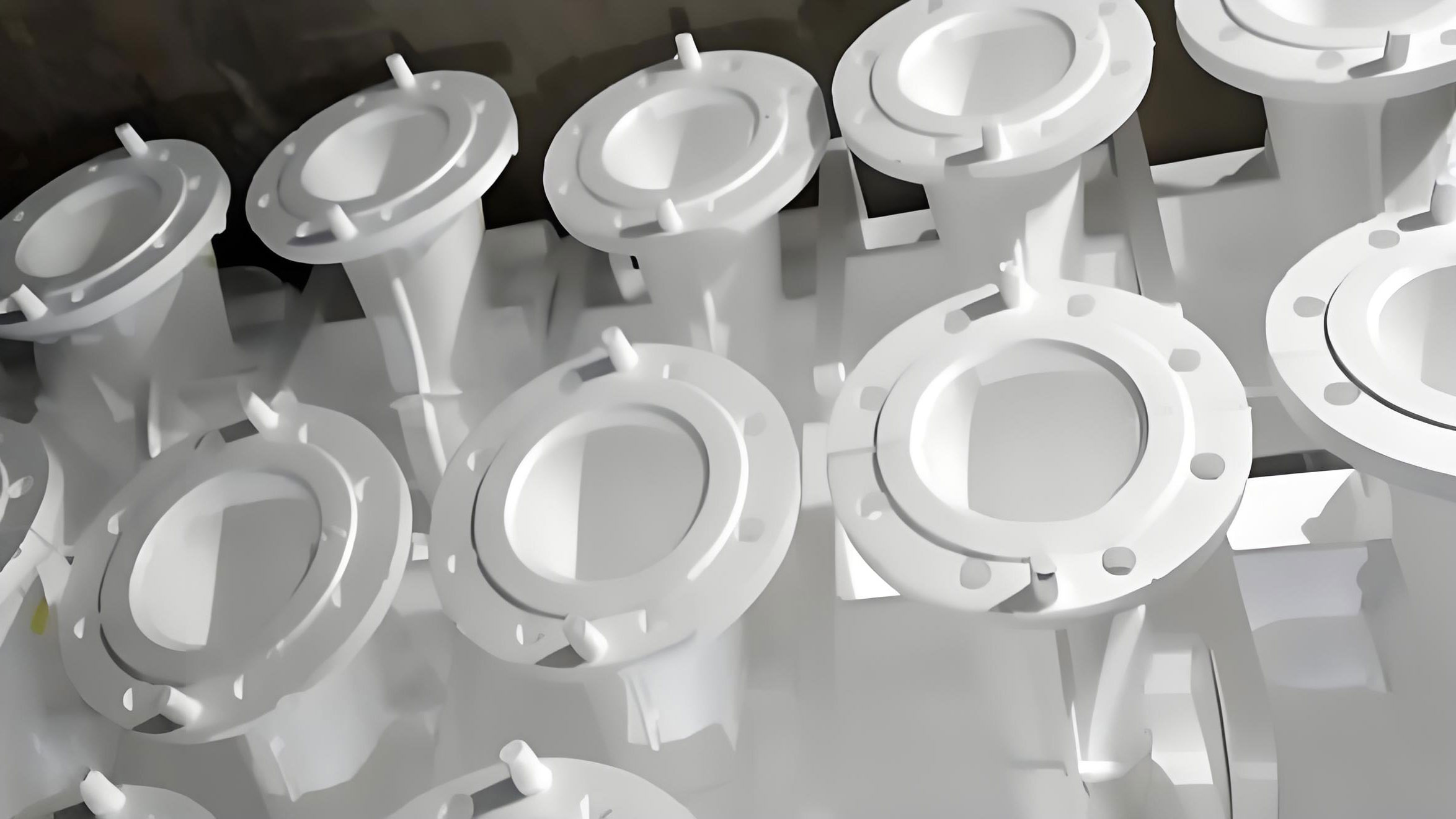
Advanced Lost Foam Casting Process Variants
The traditional lost foam casting process has been ingeniously hybridized with other casting principles to overcome its inherent limitations. These advanced variants represent the forefront of lost foam casting research and application.
Vacuum and Low-Pressure Lost Foam Casting (VLF-LFC)
This hybrid integrates the negative pressure environment of vacuum casting with the controlled filling of low-pressure casting into the lost foam casting sequence. The application of a vacuum to the sand mold enhances the removal of gaseous foam decomposition products, reducing back-pressure and the risk of gas entrapment. Concurrently, low-pressure filling, typically from the bottom of the mold, promotes a tranquil, non-turbulent fill. This combined approach significantly improves the metal’s feeding and filling capacity. For aluminum and magnesium alloys, it has been shown to produce castings with markedly lower porosity, finer microstructures, and superior mechanical properties compared to conventional lost foam casting. The process parameters are critical and interrelated, governing the final quality.
The filling velocity in VLF-LFC can be modeled by considering the pressure differential driving the flow:
$$v_f = \sqrt{\frac{2(P_{low} + \rho g h – P_{vac} – P_{back})}{\rho}}$$
where $v_f$ is the metal front velocity, $P_{low}$ is the applied low pressure, $\rho$ is the metal density, $g$ is gravity, $h$ is the metallostatic head, $P_{vac}$ is the vacuum level in the mold, and $P_{back}$ is the counter-pressure from foam decomposition gases.
| Process Parameter | Primary Influence on Casting | Typical Optimization Goal |
|---|---|---|
| Vacuum Level ($P_{vac}$) | Efficiency of gas evacuation, reduction in porosity. | Maximize (within sand stability limits). |
| Low Pressure ($P_{low}$) | Filling speed, turbulence control, feeding pressure during solidification. | Optimize for smooth, progressive filling. |
| Gas Flow Rate (for pressure) | Responsiveness and stability of the applied low pressure. | Ensure precise pressure tracking. |
| Pouring Temperature | Foam degradation rate, fluidity, final microstructure. | Lower than conventional LFC, but sufficient for complete fill. |
Vibration-Assisted Lost Foam Casting
This technique introduces mechanical or ultrasonic vibration energy into the mold during the filling and/or solidification stages of lost foam casting. The vibration energy acts upon the solidifying metal, promoting dendrite fragmentation, increasing nucleation sites, and improving mass and heat transfer. The result is a consistently refined grain structure, which translates to enhanced mechanical properties—increased tensile strength, yield strength, and elongation. The effectiveness is highly dependent on the vibration parameters.
The vibration energy ($E_v$) introduced into the melt can be conceptually related to the grain size ($d$) through a modified Hall-Petch-type relationship influenced by process parameters:
$$d = k_1 + \frac{k_2}{\sqrt{f \cdot A}}$$
where $d$ is the average grain size, $f$ is the vibration frequency, $A$ is the vibration amplitude, and $k_1$, $k_2$ are material-dependent constants. This illustrates the non-linear and often optimal relationship between vibration input and microstructural refinement.
| Vibration Parameter | Effect on Microstructure & Properties | Common Challenges |
|---|---|---|
| Frequency ($f$) | Higher frequencies often promote finer grains up to an optimal point; beyond which effects may diminish. | Resonance with mold system leading to sand compaction issues. |
| Amplitude ($A$) | Increased amplitude generally enhances grain refinement and degassing; excessive amplitude can cause mold instability. | Maintaining consistent amplitude in large molds. |
| Duration/Timing | Most effective when applied during the initial stages of solidification. | Synchronizing vibration with the thermal field of the casting. |
Expendable Pattern Shell Casting (EPSC)
This process is a sophisticated fusion of lost foam casting and investment shell casting. A robust, ceramic shell is built around the foam pattern via repeated dipping in ceramic slurry and stuccoing. The shell is then fired to burn out the foam, leaving a hollow, precise ceramic mold. This mold can be used for gravity pouring or, more effectively, with vacuum and/or low-pressure assistance (VLF-EPSC). The key advantage is the superior surface finish and dimensional accuracy of a ceramic mold, combined with the design freedom of foam patterns. It effectively eliminates sand-related defects and carbon pickup from the foam, making it suitable for high-integrity steel and superalloy castings.
The shell thickness ($\delta_s$) is critical for mold strength and heat transfer. Its growth per dip cycle can be approximated by:
$$\delta_{s,i} = \delta_{s,i-1} + \alpha \cdot \eta \cdot \tau^{1/2}$$
where $\delta_{s,i}$ is the thickness after the $i$-th dip, $\alpha$ is a slurry property constant, $\eta$ is the slurry viscosity, and $\tau$ is the drainage time. This highlights the process control needed in shell building for lost foam-derived molds.
Simulation and Modeling in Lost Foam Casting
The complexity of the lost foam casting process, involving coupled phenomena of fluid flow, heat transfer, foam decomposition, and gas dynamics, makes it an ideal candidate for computer simulation. Numerical modeling has transitioned from a research tool to an essential component of industrial process design for lost foam casting.
Filling Process Simulation
Simulating the filling stage in lost foam casting is uniquely challenging because it must model the transient replacement of a solid foam by liquid metal, with concurrent gas generation and transport. Modern solvers use Volume-of-Fluid (VOF) or similar methods to track the metal front, coupled with source terms for gas generation from the decomposing foam. The governing equations for fluid flow are the Navier-Stokes equations, modified to account for the presence of the foam and gas phase. A simplified form of the momentum equation with a source term for gas back-pressure is:
$$\rho \left( \frac{\partial \vec{v}}{\partial t} + \vec{v} \cdot \nabla \vec{v} \right) = -\nabla P + \mu \nabla^2 \vec{v} + \rho \vec{g} + S_{gas}$$
where $S_{gas}$ represents the momentum sink due to the counter-flow of decomposition gases. These simulations help visualize metal flow patterns, identify potential sites for cold shuts or mistruns, and optimize gating system design to ensure progressive and complete filling.
Solidification and Cooling Simulation
Following filling, accurate simulation of solidification is crucial for predicting shrinkage defects (porosity, hot tears) and the final microstructure. This involves solving the heat transfer equation:
$$\rho C_p \frac{\partial T}{\partial t} = \nabla \cdot (k \nabla T) + Q_{latent}$$
where $Q_{latent}$ is the latent heat release during phase change. For lost foam casting, the thermal properties of the unbonded sand and the interfacial heat transfer coefficient (IHTC) between the metal and the coating/sand are critical inputs. Simulation results provide temperature gradients, cooling rates, and solidification sequences, allowing engineers to strategically place feeders and chills to promote directional solidification and minimize shrinkage porosity. Furthermore, microstructure models can be coupled to predict grain size and phase distribution based on the computed thermal history.
The Synergy of Simulation and Physical Experimentation
The true power of simulation is realized in its iterative synergy with physical experimentation. A common workflow involves:
- Creating an initial lost foam casting process design based on experience.
- Running comprehensive filling and solidification simulations to predict defect locations.
- Modifying the design (e.g., adjusting sprue size, adding risers, changing pouring temperature) in the virtual environment.
- Re-simulating until the predicted defects are minimized.
- Validating the optimized design with a limited number of physical pours.
This paradigm drastically reduces the traditional “trial-and-error” cost, shortens development cycles, and enhances first-pass yield. It allows for the exploration of “what-if” scenarios that would be prohibitively expensive or time-consuming to test physically, such as the effect of novel alloy compositions or radically different gating designs in lost foam casting.
Future Perspectives and Concluding Remarks
The trajectory of lost foam casting research points towards several key areas of future development:
1. Advanced Pattern Materials: While EPS is standard, research into alternative foam materials with lower gas generation, higher strength, or biodegradable properties is ongoing. Patterns produced by additive manufacturing (3D printing) from polymers or even composite materials will enable unprecedented geometric complexity and integrated functional features (like pre-placed filters or chills) directly within the pattern.
2. Intelligent and Adaptive Process Control: The future of lost foam casting lies in real-time, closed-loop control. Integrating sensors (for temperature, pressure, gas composition) with high-fidelity real-time simulation models can create a “digital twin” of the casting process. This system could dynamically adjust parameters like vacuum level or pouring speed during the pour itself to compensate for variations, ensuring consistent, high-quality output.
3. Multi-Scale and Integrated Computational Materials Engineering (ICME): Simulation will evolve beyond macro-scale defect prediction to fully integrate microstructural and even property prediction. ICME frameworks linking process parameters in lost foam casting to microstructure evolution and final mechanical performance will become standard, enabling true performance-driven design and manufacturing.
4. Sustainability and Circular Economy: Efforts will intensify to improve the environmental footprint of lost foam casting. This includes developing more environmentally friendly coating binders, efficient sand reclamation systems for the unbonded sand, and recycling pathways for spent foam and coating materials.
In conclusion, lost foam casting has matured from a niche process to a versatile and high-potential manufacturing technology. The convergence of hybrid processes like VLF-LFC and EPSC, coupled with the pervasive power of multi-physics simulation, is systematically addressing its historical limitations. The ongoing research, focusing on material innovation, intelligent control, and deep computational integration, promises to further elevate lost foam casting into a cornerstone technology for manufacturing the next generation of complex, high-performance, and sustainable metal components.