
The relentless pursuit of weight reduction in aerospace and aviation industries has cemented magnesium alloys as a material of paramount importance. Their low density, high specific strength, and excellent castability make them ideal candidates for replacing denser aluminum and steel components. This trend is particularly evident in the production of large, complex, and structurally integrated components, where the design freedom of casting is essential. For such applications, especially where dimensional accuracy and surface finish are critical, resin-bonded sand casting, often coupled with counter-gravity filling techniques, has become the predominant manufacturing route for producing high-integrity sand casting parts. However, the inherent high gas evolution and complex chemical composition of resin sands create a highly reactive environment that can readily trigger the violent oxidation and combustion of molten magnesium. This persistent flammability issue during the casting process remains a significant technological bottleneck and a serious safety hazard, limiting the wider adoption of magnesium for critical sand casting parts.
Effectively preventing magnesium combustion requires a two-pronged approach addressing both the smelting and the casting/filling-solidification stages. While extensive research has been conducted on smelting protection, the unique challenges posed during the mold filling and solidification of resin sand casts are less understood. This article synthesizes current knowledge from both fronts, delves into the underlying mechanisms, and highlights the specific complexities and future directions for ensuring the safe production of aerospace-grade magnesium alloy sand casting parts.
Protection During Smelting: Establishing the First Line of Defense
The primary goal during smelting is to create a stable, protective barrier between the molten magnesium and the oxidizing atmosphere (air). Three principal methodologies are employed: flux covering, protective atmospheres, and alloying.
1. Flux Protection
This traditional method involves covering the melt with a layer of low-melting-point inorganic salts. Upon melting, this flux forms a continuous liquid layer that physically isolates the alloy from air. Common fluxes, such as the RJ series, are typically blends of chlorides (e.g., MgCl₂, NaCl, KCl, BaCl₂) and fluorides (e.g., CaF₂). The protective action is primarily physical, though some flux components may participate in surface reactions. The main chemical component, MgCl₂, can also react with water vapor to release HCl, which provides a secondary shielding gas:
$$ \text{MgCl}_2(l) + \text{H}_2\text{O}(g) \rightarrow \text{MgO}(s) + 2\text{HCl}(g) $$
While effective, flux protection has significant drawbacks, including flux entrapment leading to inclusions, corrosive fumes (HCl), accelerated degradation of crucibles and equipment, and environmental concerns from waste disposal. These issues have driven the search for cleaner alternatives.
2. Protective Gas Atmospheres
This cleaner approach involves blanketing the melt surface with a protective gas mixture. The protection mechanism can be inert (non-reactive) or active (reactive film-forming).
Inert Gases: Truly inert gases like Argon (Ar) do not react with magnesium. However, a pure Ar atmosphere only provides a physical barrier and does not promote the formation of a protective surface film. Magnesium vapor can still diffuse and oxidize at the gas-melt interface. Therefore, small amounts of reactive gases like SO₂ or SF₆ are almost always added to Ar to induce the formation of a protective layer.
Reactive Gas Mixtures: These are the industry standard. They work by reacting with the molten magnesium to form a thin, continuous, and adherent surface film that drastically slows down further oxidation. Common gases include:
- SO₂: Forms a protective layer believed to consist of MgO and MgS.
$$ 3\text{Mg}(l) + \text{SO}_2(g) \rightarrow 2\text{MgO}(s) + \text{MgS}(s) $$ - CO₂: Forms a composite layer of MgO and carbon.
$$ 2\text{Mg}(l) + \text{CO}_2(g) \rightarrow 2\text{MgO}(s) + C(s) $$ - SF₆ (Sulfur Hexafluoride): This has been the most effective and widely used gas, typically employed in low concentrations (0.1-1%) mixed with air or CO₂. It forms a dense, protective film composed of MgO and MgF₂.
$$ 2\text{Mg}(l) + \text{SF}_6(g) + \text{O}_2(g) \rightarrow 2\text{MgO}(s) + \text{MgF}_2(s) + \text{SF}_4(g) $$
However, SF₆ is an extremely potent greenhouse gas (Global Warming Potential ~23,900 times that of CO₂), leading to a global push for alternatives. - HFC-134a (1,1,1,2-Tetrafluoroethane): A leading alternative to SF₆. It offers comparable or superior protection efficiency at casting temperatures and has a much lower GWP (~1,430). Its decomposition leads to the formation of a protective MgO/MgF₂ film. A significant advantage reported is its “residual effect,” where the protective film remains effective for a period even after the gas supply is stopped, which is highly beneficial for transfer and pouring operations.
The effectiveness of a gas mixture depends on its composition, flow rate, and the alloy temperature. The protective film’s growth often follows a parabolic rate law, indicating diffusion-controlled kinetics:
$$ x^2 = k_p t $$
where \( x \) is the film thickness, \( k_p \) is the parabolic rate constant, and \( t \) is time. \( k_p \) is highly sensitive to gas composition and temperature.
| Gas System | Typical Concentration | Protective Film | Key Advantages | Major Disadvantages |
|---|---|---|---|---|
| Air / SF₆ | 0.1% – 1% SF₆ | MgO, MgF₂ | Highly effective, established technology | Extreme GHG (SF₆), corrosive byproducts |
| Air / HFC-134a | 0.3% – 1% HFC | MgO, MgF₂ | Good effectiveness, lower GWP than SF₆, residual effect | Still a GHG, cost |
| CO₂ / SF₆ | 0.3% – 0.5% SF₆ | MgO, MgF₂ | Reduced SF₆ usage | Uses SF₆, higher cost than air mix |
| CO₂ / SO₂ | 0.5% – 1% SO₂ | MgO, MgS | Low cost, non-fluorinated | Toxic (SO₂), less effective at high temps, corrosive |
| Pure Argon (Ar) | 100% | None (physical barrier only) | Completely inert | Poor protection alone, allows Mg evaporation |
3. Alloying for Intrinsic Flame Retardancy
This approach modifies the alloy’s composition so that its native oxide scale becomes protective, reducing or eliminating the need for external protection. Effective alloying elements alter the structure, composition, and growth mechanics of the surface oxide.
- Beryllium (Be): A remarkably potent addition (as low as 0.001 wt.%) that dramatically increases the oxidation resistance of Mg-Al alloys like AZ91. Be segregates to the oxide-metal interface, forming a BeO-rich layer that blocks cation (Mg²⁺) diffusion, the primary transport mechanism for oxide growth on pure Mg.
- Calcium (Ca): Adds significant flame retardancy. Ca oxidizes preferentially to form CaO, which integrates into the MgO scale. The CaO-MgO mixture has a higher Pilling-Bedworth Ratio (PBR) and reduced ionic diffusivity, creating a more compact and protective barrier. However, high Ca can adversely affect mechanical properties and castability.
- Rare Earth (RE) Elements: Elements like Yttrium (Y), Cerium (Ce), and Lanthanum (La) are highly effective. They form stable, dense oxides (e.g., Y₂O₃) and often complex mixed oxides (e.g., Y₂O₃-MgO) that grow slowly and adhere well. For instance, Mg-Y-Ce alloys can remain non-flammable in air at 900°C for extended periods. RE elements also provide excellent grain refinement and high-temperature strength, making them doubly beneficial for aerospace sand casting parts.
- Synergistic Additions: Often, combinations of elements yield better results. For example, Ca and RE together can improve both oxidation resistance and high-temperature creep performance. Small Be additions can enhance the effectiveness of other oxide stabilizers like Ca or Si.
The improvement due to alloying can be modeled by considering the change in the parabolic rate constant \( k_p \). The addition of an element ‘X’ that forms a more protective oxide can reduce \( k_p \) by several orders of magnitude, following an relationship such as:
$$ \log(k_p) = A – B \cdot [wt.\% X] $$
where \( A \) and \( B \) are constants for a given system and temperature.
| Element | Typical Addition (wt.%) | Key Mechanism | Impact on Mechanical Properties | Notes |
|---|---|---|---|---|
| Beryllium (Be) | 0.001 – 0.01 | Forms BeO sub-layer, blocks Mg²⁺ diffusion | Minimal effect at low levels | Toxic, requires careful handling |
| Calcium (Ca) | 0.3 – 2.0 | Forms CaO, modifies MgO scale structure & PBR | Can increase high-temp strength but reduce ductility; may hurt castability | Cost-effective, can form intermetallics |
| Yttrium (Y) | 2 – 5 | Forms dense Y₂O₃ and mixed oxides; reduces ionic transport | Significantly improves high-temp strength and creep resistance | Expensive, excellent for high-performance parts |
| Cerium (Ce) / Mischmetal | 1 – 3 | Forms CeO₂, modifies oxide scale adherence and density | Improves strength and creep; good grain refiner | More affordable than pure Y |
The Core Challenge: Protection During Casting and Solidification
While smelting protection is crucial, it does not guarantee safety during the subsequent casting process. The environment inside a mold, especially a resin-bonded sand mold, is radically different from the controlled atmosphere over a melting furnace. During pouring and solidification, the molten alloy interacts directly with the mold cavity atmosphere, which is dynamically generated by the thermal decomposition of the binder (pyrolysis). This is the stage where most foundry fires for magnesium sand casting parts originate. The challenges are multifaceted:
- Dynamic, Uncontrolled Atmosphere: The mold cavity is not sealed. As the hot metal enters, it heats the sand, causing the resin binder to pyrolyze and release a complex mixture of gases (e.g., CO, CO₂, H₂, CH₄, C₂H₆, higher hydrocarbons, and nitrogen compounds from amine catalysts). This gas mixture is rich in both oxidizers (CO₂, H₂O) and fuels (CO, H₂, hydrocarbons).
- High Surface Area & Turbulence: During filling, the metal stream breaks up, creating a large, turbulent surface area ideal for rapid gas-metal reactions.
- Limited Gas Access: It is impractical to maintain a uniform protective gas blanket throughout the complex geometry of a sand mold cavity during filling.
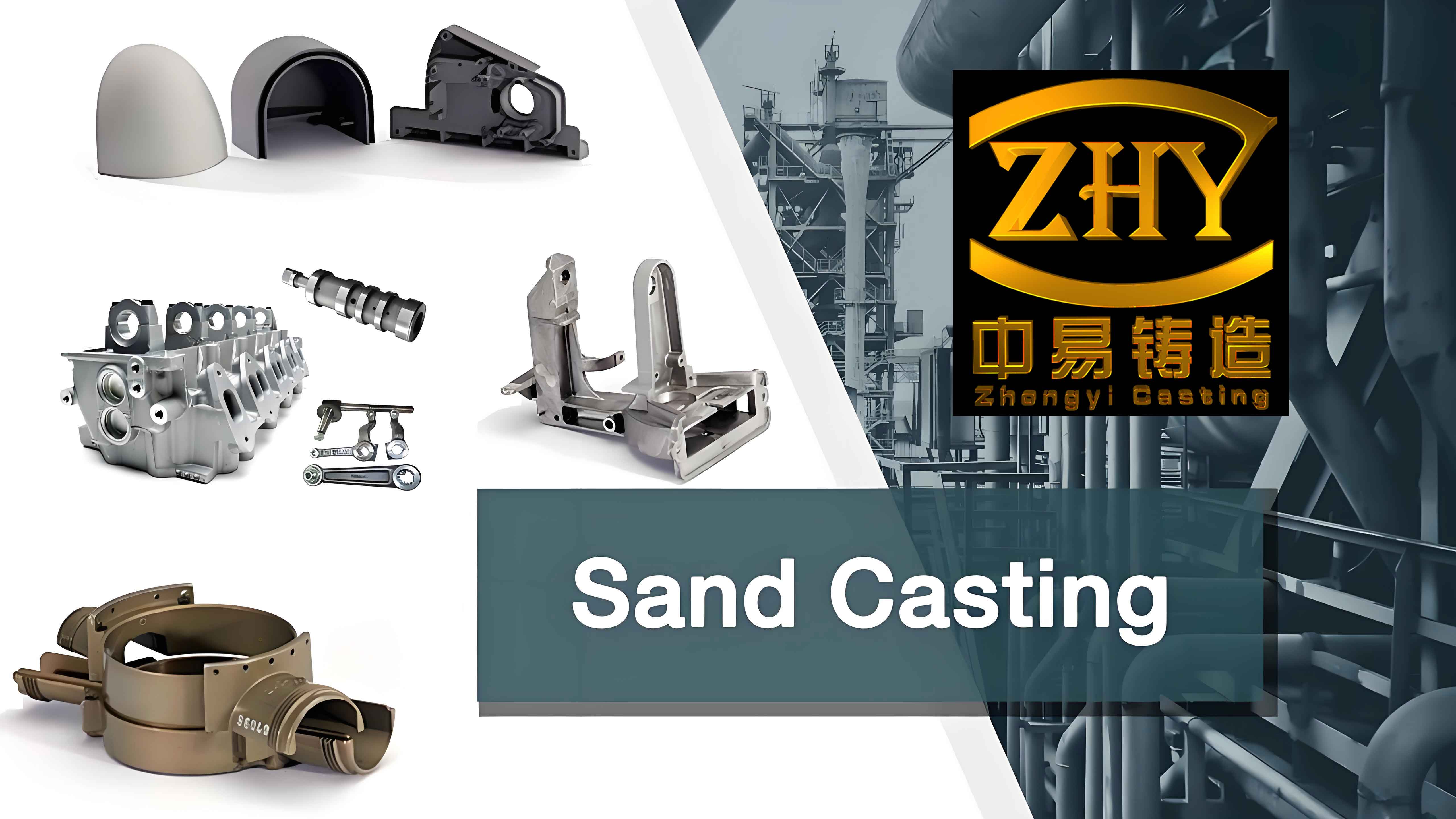
Current industrial practices for casting protection are often adaptations of smelting techniques and have limitations for complex sand casting parts:
- Gassing the Mold Cavity: Attempts to purge the mold with protective gases like CO₂/SF₆ or Ar before pouring are common. However, achieving and maintaining a uniform, oxygen-free atmosphere in a porous sand mold with complex cores is extremely difficult and often ineffective.
- Protective Coatings: Applying flux-based or other reactive coatings to the mold surface can provide localized protection at the metal-mold interface. However, coating integrity, consistency, and potential for melt contamination are concerns.
The fundamental limitation of existing approaches is a lack of deep understanding of the precise ignition mechanism within the resin sand mold environment. The ignition is not merely about the presence of oxygen; it involves complex interactions between the molten alloy (and its oxide film), the specific mix of pyrolytic gases, and the local temperature at the metal front.
Decoding the Ignition Mechanism in Resin Sand Molds
To develop effective countermeasures, we must first understand the adversary. Recent investigations have focused on characterizing the environment and simulating the ignition event.
1. Mold Atmosphere Characterization: Studies using techniques like Fourier-Transform Infrared (FTIR) spectroscopy to analyze gases evolved from heated PEP-SET (a common amine-cured phenolic urethane resin) sand have revealed a specific sequence of gas release. Initially, upon heating, gases like NO (from the amine catalyst), CO, and CO₂ are released. As pyrolysis intensifies, the concentration of these gases peaks and then declines, while the release of hydrocarbons like CH₄ and C₂H⁶ increases significantly. This temporal evolution is critical because the reactivity of molten magnesium varies with different gas mixtures. The partial pressure of oxidants like CO₂ and the presence of catalytic species play decisive roles.
2. Simulating the In-Mold Reaction: A key experimental advancement has been the development of setups that simulate the mold cavity conditions. These systems allow for controlled atmospheres (mixing specific pyrolytic gases) and temperatures, enabling direct observation of the oxidation and ignition behavior of magnesium alloys in environments mimicking a filling sand mold. This moves research away from pure air/SF₆ studies to directly relevant conditions.
3. Oxidation Kinetics in Pyrolytic Atmospheres: Experiments using such setups have shown that the oxidation behavior in a resin-sand atmosphere differs markedly from that in air. For pure magnesium, the oxide film growth in a CO/CO₂/CH₄ mixture may follow a modified rate law initially, but can transition to linear or even breakaway oxidation under certain gas ratios and temperatures, leading to ignition. The oxide morphology is also different, often appearing more porous and non-protective compared to scales formed in protective gas covers.
The ignition can be modeled as a critical event where the heat generated by the oxidation reaction \( (Q_{gen}) \) surpasses the heat dissipated from the melt surface \( (Q_{diss}) \). Ignition occurs when:
$$ Q_{gen} = A \cdot \Delta H_r \cdot r(T, P_{O_x}) > Q_{diss} = h \cdot A \cdot (T_{surface} – T_{mold}) $$
where \( A \) is the surface area, \( \Delta H_r \) is the enthalpy of oxidation, \( r \) is the temperature- and oxidant-partial-pressure-dependent reaction rate, \( h \) is a heat transfer coefficient, and \( T \) are temperatures. In a resin sand mold, \( r(T, P_{O_x}) \) is high due to the elevated temperature of the incoming metal and the presence of reactive gases, while \( Q_{diss} \) can be limited if the metal forms a hot spot or the mold material has low thermal conductivity, making ignition highly probable.
4. Alloy-Specific Behavior: The resistance to ignition varies by alloy system. Mg-Al alloys (e.g., AZ91) have a different oxide scale (containing Al₂O₃) than Mg-RE alloys. The Mg-RE systems generally show superior resistance in these environments due to their more stable and adherent native oxides, aligning with their good performance during smelting. Mg-Zn based alloys exhibit intermediate behavior. This implies that alloy selection for sand casting parts must consider both final mechanical properties and in-mold flammability.
Towards Engineered Solutions for Sand Casting
Armed with a mechanistic understanding, we can propose more scientific and reliable engineering solutions for preventing combustion during the casting of magnesium sand casting parts.
1. Active Mold Atmosphere Control: Instead of simple purging, intelligent control of the mold cavity atmosphere based on the known pyrolysis profile could be developed. This might involve injecting specific gas inhibitors at strategic locations or times during the pour to neutralize the most reactive pyrolytic gases as they are generated.
2. Optimized Gating and Thermal Management (Hot Spot Control): Combustion often initiates at thermal centers (hot spots) where solidification is slowest, and the metal remains hot longest, accelerating reactions. By optimizing gating design, using chills, and employing simulation-driven cooling strategies, we can reduce the duration for which the metal is in a vulnerable, high-temperature state within the mold. Minimizing superheat is also critical. The goal is to design the solidification sequence to avoid creating conditions where \( Q_{gen} > Q_{diss} \).
3. Advanced Mold Coatings and Additives: Developing next-generation mold coatings that act as effective diffusion barriers or that chemically scavenge problematic gases (like oxidizing species) from the mold-metal interface. These coatings could be engineered to decompose in a controlled manner to release protective vapors.
4. Integrated Alloy-Process Design: The ultimate approach is to co-design the alloy and the process. Selecting or developing alloys with high intrinsic ignition resistance (e.g., RE-containing alloys) specifically for sand casting parts, and then tailoring the casting process parameters (pouring temperature, mold gas control, coating) to the specific oxidation characteristics of that alloy.
Conclusion and Future Directions
The journey towards completely safe and reliable production of large, complex magnesium sand casting parts for aerospace applications is ongoing. While robust technologies exist for melt protection during smelting, the casting process itself presents a distinct and formidable set of challenges rooted in the dynamic, gas-evolving nature of resin-bonded sand molds.
The path forward is clear: future research must pivot from empirical adaptations of smelting techniques to a fundamental, mechanism-based understanding of in-mold ignition. This requires:
- Quantitative Modeling: Developing comprehensive kinetic models that integrate mold gas evolution profiles, alloy oxidation kinetics, and heat transfer to predict ignition risk for specific alloy-mold-process combinations.
- Advanced In-situ Diagnostics: Employing sophisticated sensors and imaging techniques to monitor real-time gas composition and metal surface conditions within prototype or transparent molds.
- Material Informatics: Using computational tools to screen for new, cost-effective alloying additions that maximize in-mold flame retardancy while meeting mechanical property targets for sand casting parts.
- Process Innovation: Engineering novel mold materials, binder systems with lower reactivity or beneficial gas release, and closed-loop controlled protective gas delivery systems integrated into the mold.
By addressing the ignition problem at its root within the mold environment, we can transform magnesium sand casting from a process managed with caution to one executed with confidence, fully unlocking the lightweight potential of magnesium alloys for the next generation of aerospace components.