
As a researcher focused on advanced manufacturing techniques, my work often centers on improving foundry processes for critical industrial parts. One such component is the tail roller, a cylindrical part essential for conveyor systems in mining machinery. Traditionally produced using methods like sodium silicate sand casting, these components often suffer from poor collapsibility of the sand core, leading to arduous and time-consuming cleaning operations. In recent years, the lost foam casting process has emerged as a compelling alternative. This study details my first-person investigation into applying and optimizing the lost foam casting process for a tail roller, leveraging advanced Computer-Aided Engineering (CAE) simulation to predict and eliminate solidification defects.
The lost foam casting process, also known as Expendable Pattern Casting (EPC) or Lost Foam Casting (LFC), represents a near-net-shape manufacturing technology. The fundamental principle involves creating a precise replica of the desired part from expandable polystyrene (EPS) foam. This pattern cluster is coated with a refractory ceramic slurry, dried, and then embedded in unbonded, dry sand within a flask. The mold is compacted via vibration. During pouring, molten metal replaces the foam pattern, which vaporizes and decomposes in the controlled environment, often under a slight vacuum to enhance metal flow and pattern degradation. The metal then solidifies to form the final casting, requiring minimal finishing.
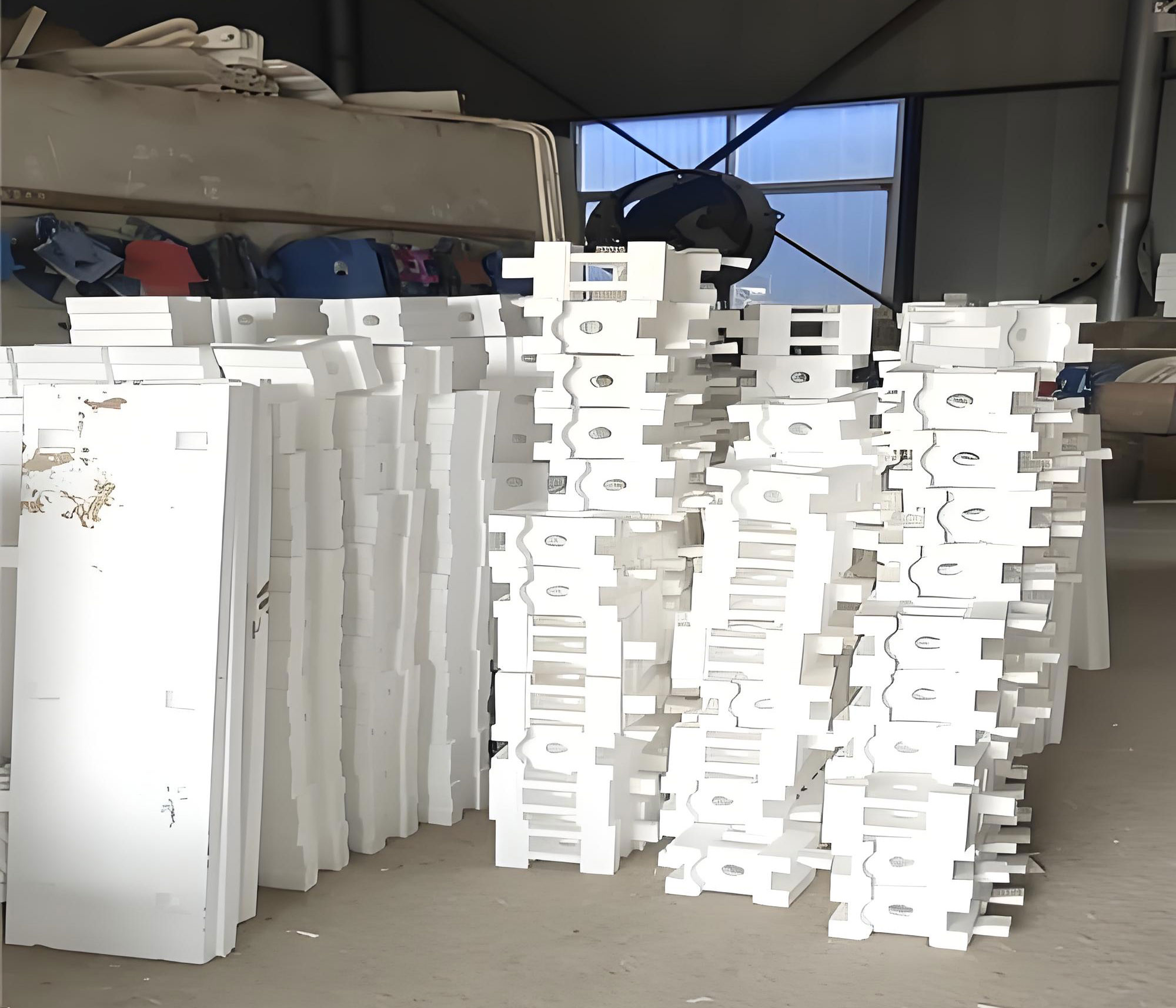
My target component, the tail roller, is typically manufactured from ZG30Mn2 steel. Its geometry is rotational, resembling a thick-walled hollow cylinder with localized thicker sections at the ends where bearing housings or shafts are mounted. A key manufacturing consideration is that these thickest sections are often machined surfaces, meaning additional machining stock is applied, making the overall wall thickness relatively uniform. This characteristic generally favors good castability, but the risk of shrinkage porosity in the heavier sections remains a primary concern in the lost foam casting process.
Methodology: From Digital Model to Virtual Foundry
CAD Modeling and Geometric Analysis
The first step in my analysis was to construct an accurate digital twin of the tail roller. Utilizing Siemens NX software, I employed a feature-based parametric modeling approach. Beginning with defining datum planes and sketches based on the component drawings, I used the revolve command to generate the primary cylindrical body. Subsequent features such as flanges, ribs, and mounting bosses were added parametrically. This 3D solid model served as the exact geometry for all subsequent process design and simulation steps, ensuring fidelity between the virtual and intended physical part.
Theoretical Foundation of Solidification Simulation
The core of this optimization study rests on the numerical simulation of heat transfer and solidification. The governing equation for this transient process is the heat conduction equation with a phase change term (the enthalpy formulation):
$$ \rho c_p \frac{\partial T}{\partial t} = \nabla \cdot (k \nabla T) + \rho L \frac{\partial f_s}{\partial t} $$
where:
- $\rho$ is the density (kg/m³),
- $c_p$ is the specific heat capacity (J/(kg·K)),
- $T$ is the temperature (K),
- $t$ is time (s),
- $k$ is the thermal conductivity (W/(m·K)),
- $L$ is the latent heat of fusion (J/kg),
- $f_s$ is the solid fraction.
The simulation solves this equation numerically across a discretized mesh of the entire system—casting, gating, risers, and mold. The fraction solid $f_s$ is a function of temperature, typically modeled using a Scheil-Gulliver approximation or lever rule for the specific alloy, ZG30Mn2 in this case. The critical output is the thermal gradient and the evolution of liquid fraction, which predicts the location of last-solidifying regions prone to shrinkage defects. The criterion for shrinkage formation is often based on the Niyama criterion or related thermal parameters, where a local value below a critical threshold indicates a high probability of microporosity:
$$ N_y = \frac{G}{\sqrt{\dot{T}}} $$
where $G$ is the temperature gradient (K/m) and $\dot{T}$ is the cooling rate (K/s). A low $N_y$ value signals a risky zone.
Initial Process Design for the Lost Foam Casting Process
For the baseline process design, I established the following parameters for the lost foam casting process:
| Parameter | Value / Description |
|---|---|
| Alloy | ZG30Mn2 Steel |
| Target Pouring Temperature | 1575 °C (Range: 1550–1600 °C) |
| Pattern Material | Expandable Polystyrene (EPS) |
| Mold Medium | Dry, Unbonded Silica Sand |
| Flask Vacuum Pressure | Approx. 0.04 – 0.06 MPa |
The gating system was designed using a choked (pressurized) system approach, with the smallest cross-sectional area at the base of the sprue to control flow rate and minimize turbulence. The system was of a vertical type with a central sprue feeding into a horizontal runner, which then delivered metal to the casting cavity via ingates attached mid-height on both sides of the cylindrical part. The key dimensions for the initial design were calculated based on the principle of constant flow rate:
$$ A_{choke} = \frac{W}{\rho \mu t \sqrt{2gH}} $$
where:
- $A_{choke}$ is the choke area (m²),
- $W$ is the casting weight (kg),
- $\rho$ is the metal density (kg/m³),
- $\mu$ is the discharge coefficient,
- $t$ is the desired filling time (s),
- $g$ is gravitational acceleration (m/s²),
- $H$ is the effective metallostatic head (m).
For feeding, a top cylindrical riser was placed on the upper surface of the casting. Its dimensions were approximated using the modulus method, where the riser modulus $M_r$ (Volume/Surface Area) should be greater than the modulus of the region it feeds $M_c$:
$$ M_r = 1.2 \times M_c $$
The initial riser was a cylinder 70 mm in diameter and 140 mm tall.
Solidification Simulation: Uncovering Deficiencies
I employed Huazhu CAE software, a dedicated casting simulation package, to analyze the solidification sequence of this initial lost foam casting process design. The 3D models of the casting, gating, and riser were meshed into finite volume elements. The material properties for ZG30Mn2, EPS, and sand were assigned from the software’s database. The boundary conditions included convective heat transfer at the mold-air interface and the prescribed pouring temperature.
| Simulation Aspect | Setting |
|---|---|
| Mesh Type | Finite Volume / Finite Difference |
| Thermal Boundary Condition | Convection to ambient (h=10 W/m²K) |
| Initial Mold Temperature | 25 °C (Ambient) |
| Simulation Goal | Full Solidification & Defect Prediction |
The simulation results revealed the following sequence:
- Early Stage (t ≈ 90s): The gating system and the thin lower sections of the casting solidified first.
- Mid Stage (t ≈ 167s): Solidification progressed from the bottom and outer surfaces inward, while the central core and the thicker end sections remained mostly liquid.
- Final Stage (t ≈ 534s): The last regions to solidify were the top of the casting beneath the riser neck and the lower portion of the riser itself.
The defect prediction analysis showed that while the majority of shrinkage porosity was correctly shifted into the top riser, the simulation indicated a risk of minor isolated shrinkage in the upper regions of the casting’s thick sections. More critically, the use of a top riser presented a significant practical drawback for the lost foam casting process: its removal requires additional cutting, grinding, and finishing operations, counteracting one of the key productivity advantages of the LFC method.
Process Optimization Strategy
Based on the simulation insights, the optimization goal was twofold:
- Improve Feeding Efficiency: Ensure directional solidification toward a feeder that effectively compensates for volumetric shrinkage in the critical thick sections.
- Enhance Production Practicality: Design a feeding system that simplifies pattern assembly and, most importantly, allows for easy riser detachment or integration to minimize post-casting cleanup.
My optimized lost foam casting process design incorporated the following key changes:
1. Replacement of Top Riser with Side Riser: A spherical-shaped side riser (or blind riser) was designed to attach to the thick section of the casting. The modulus was recalculated to ensure adequacy. The spherical shape offers a favorable volume-to-surface-area ratio for longer feeding. Its side location means it can be positioned on non-critical areas and is often easier to knock off or designed as a break-off type.
2. Application of Chills: To enforce a stronger directional solidification gradient from the side opposite the riser towards the riser itself, external chills were introduced. In the context of the lost foam casting process, these are typically metallic inserts placed in the sand mold against the foam pattern. For the tail roller, arc-shaped chills were designed to conform to the internal cylindrical surface. The chill’s function is governed by its ability to rapidly extract heat, creating a steep thermal gradient. The heat extraction can be approximated by:
$$ Q_{chill} = h_{metal-chill} \cdot A_{chill} \cdot (T_{melt} – T_{chill}) $$
where $h_{metal-chill}$ is the interfacial heat transfer coefficient, which is very high initially.
3. Refined Gating: The gating was slightly adjusted to ensure smooth, quiescent filling that would not prematurely damage the foam pattern near the newly placed side riser.
| Feature | Initial Process Design | Optimized Process Design |
|---|---|---|
| Riser Type & Location | Top Cylindrical Riser | Spherical Side Riser on thick section |
| Auxiliary Feeding Aid | None | Arc-shaped Internal Chills |
| Expected Solidification Direction | Bottom-up & Center-to-Riser | Chill → Casting → Side Riser |
| Post-Casting Riser Removal | Difficult (Cutting/Grinding) | Easier (Knock-off/Break-off design) |
| Pattern Cluster Complexity | Moderate | Slightly increased (adds riser & chill cavities) |
Simulation Results of the Optimized Lost Foam Casting Process
Running the simulation with the new model yielded a markedly different solidification profile:
Solidification Sequence:
- Rapid Chill Effect (t < 200s): The regions in direct contact with the arc chills solidified extremely quickly, establishing a solid “skin” from that side.
- Progressive Solidification (t ≈ 200-500s): The solidification front progressed uniformly from the chilled area, through the body of the casting, and towards the side riser.
- Final Feeding Stage (t > 500s): The side riser, having the largest modulus and being well-insulated by the surrounding sand, remained liquid longest. The thermal gradient ($G$) was now clearly oriented from the chill to the riser, satisfying the condition for effective feeding: $ \frac{dT}{dx} $ is positive towards the riser. The riser served as a liquid reservoir, feeding the shrinkage in the casting body until the very end of solidification (t ≈ 807s).
Defect Prediction Analysis: The shrinkage porosity prediction map showed a dramatic improvement. The vast majority of the predicted shrinkage volume was now concentrated safely within the side riser body. The casting itself was predicted to be virtually free of major macro-shrinkage. Some isolated, very low-level microporosity indicators remained in computational “hot spots,” but their predicted size and volume were negligible and well within acceptable limits for the component’s service requirements, especially considering subsequent machining of the surfaces.
| Metric | Initial Design Simulation | Optimized Design Simulation |
|---|---|---|
| Major Shrinkage in Casting | Low risk in upper thick section | Effectively eliminated |
| Shrinkage Concentration | In top riser & lower riser neck | Confined to side riser body |
| Thermal Gradient Direction | Less defined | Strongly directional (Chill→Riser) |
| Predicted Casting Soundness | Acceptable, but with cleanup penalty | High, with improved manufacturability |
Discussion and Implications
This simulation-driven study underscores the power of virtual prototyping in the lost foam casting process. The transition from a top riser to a side riser complemented with chills is not merely a geometric change but a fundamental re-engineering of the thermal history within the mold. The chills act as a “thermal switch,” initiating solidification at a predetermined point and forcing the solidus isotherm to move in a controlled manner towards the designated feeder.
For the lost foam casting process, this optimization carries significant practical benefits. First, it enhances the metallurgical quality by ensuring better feeding and reducing the propensity for shrinkage defects in critical zones. Second, and equally important for industrial adoption, it aligns the process design with the economic advantages of LFC. Easy riser removal directly reduces labor time and cost in the cleaning room, improves worker safety by minimizing grinding operations, and contributes to a more streamlined production flow. This makes the optimized lost foam casting process more viable for the batch production of components like the tail roller.
The success of this optimization also highlights the importance of an integrated design approach where the casting geometry, the foam pattern assembly (including risers and gating as part of the pattern cluster), and the mold media (sand and chills) are co-designed based on simulated physics rather than empirical rules alone.
Conclusion
Through a detailed CAD/CAE-based investigation, I have demonstrated a significant optimization of the lost foam casting process for a ZG30Mn2 steel tail roller. The initial process design, while functionally adequate, was found to have limitations in both feeding efficiency and post-casting operational practicality. By employing solidification simulation, I identified the precise thermal behavior and defect-forming tendencies of the initial scheme.
The proposed optimized design, featuring a spherical side riser coupled with strategically placed arc chills, fundamentally redirected the solidification pattern. Simulation results confirmed that this new configuration establishes a well-defined directional solidification path, effectively channeling shrinkage porosity into the side riser and yielding a theoretically sound casting. Furthermore, this optimization offers tangible production benefits by simplifying the riser removal process, thereby enhancing the overall efficiency and economic appeal of the lost foam casting process for such industrial components.
This work exemplifies a modern approach to foundry engineering, where advanced simulation tools are indispensable for developing robust, high-quality, and cost-effective lost foam casting process layouts before any physical pattern is ever produced.