
Sand casting technology occupies a pivotal position in the manufacturing sector, contributing significantly to industrial development. In my research, I focused on a typical sand casting foundry to evaluate the air quality before and after the casting process. The objective was to quantify the concentrations of both particulate and gaseous pollutants, compare them with occupational exposure limits, and provide scientific evidence for pollution control. This foundry utilized manual molding with coal-dust wet sand, a common practice in many workshops. The study aims to highlight the potential health risks and environmental burdens associated with sand casting foundry operations.
Common Pollutants in Sand Casting Foundry
The sand casting foundry process involves multiple stages, including mold making, core production, metal melting, pouring, and shakeout. During these stages, various pollutants are released. Historically, carbon dioxide (CO₂) has been recognized as a primary greenhouse gas emitted from sand casting foundry activities. However, recent investigations have revealed that hazardous air pollutants (HAPs) and volatile organic compounds (VOCs) are also significant. These include formaldehyde, benzene, and other organic species originating from binders and additives used in sand mixtures. When molten metal contacts the sand mold, the binders decompose under high temperature, generating complex mixtures of pollutants. In my sand casting foundry study, I measured both particulate matter (PM) and gaseous species to obtain a comprehensive overview.
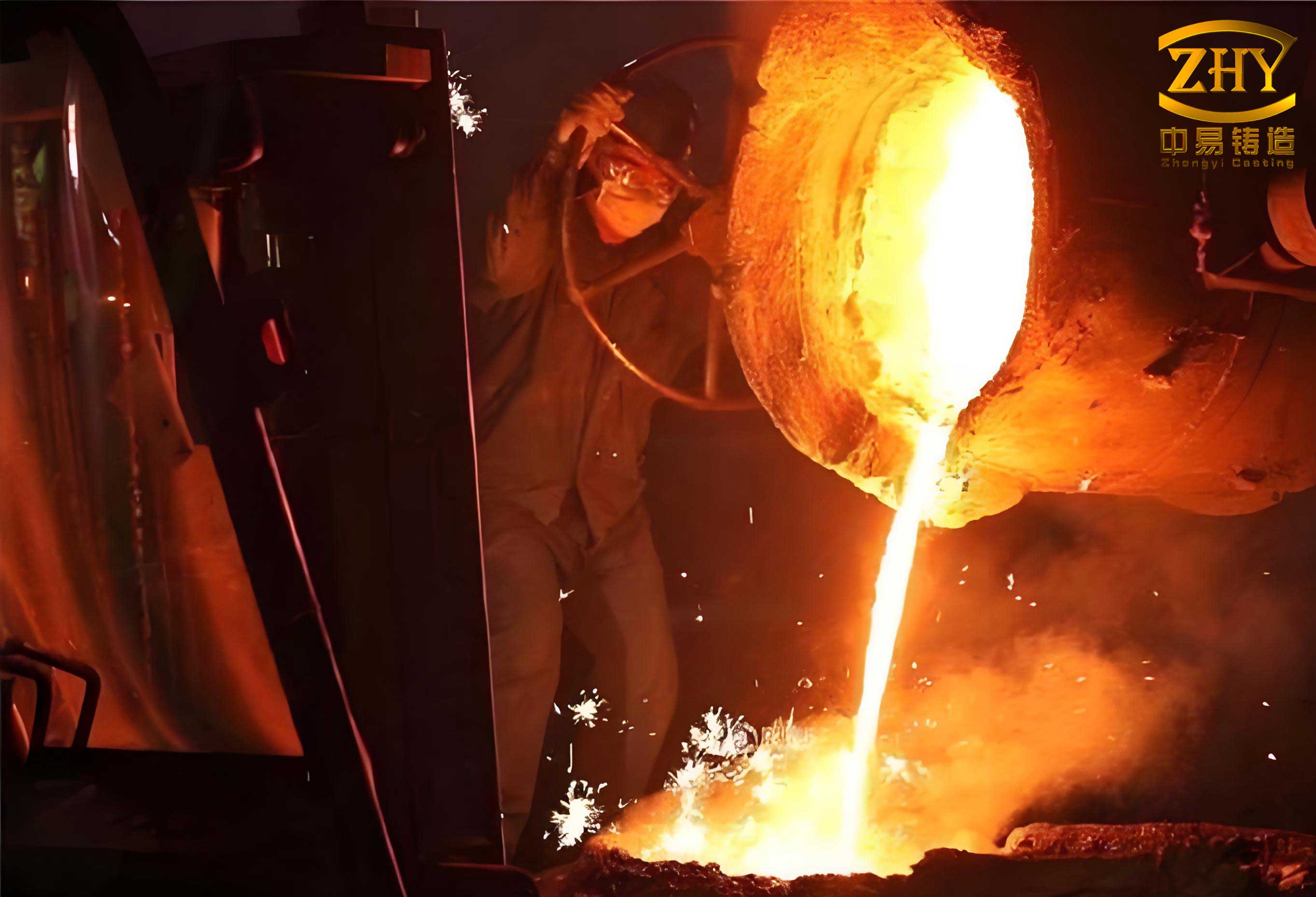
The image above illustrates a typical sand casting foundry environment. The visual dust and fumes indicate the presence of airborne contaminants. In the following sections, I detail the detection conditions, methods, and results.
Detection Conditions and Methodology
I conducted the monitoring in a representative sand casting foundry under natural ventilation conditions simulating normal production. The measurement instrument was a U-LIFE200 multi-parameter air quality detector, capable of real-time analysis of PM₂.₅, PM₁₀, PM₁₀₀, CO₂, CO, SO₂, NO₂, formaldehyde, and total VOCs. Before casting, I recorded air samples for one continuous hour, calculating the average and maximum concentrations for each pollutant. Immediately after the pouring and solidification process, I repeated the same procedure under identical temperature and pressure conditions (room temperature and atmospheric pressure). This approach allowed me to isolate the contribution of the casting operation itself from background levels.
The foundry’s layout included melting furnaces and other auxiliary processes that contributed to baseline pollution. Therefore, the difference between post-casting and pre-casting concentrations represents the net emission from the sand casting foundry step. I also compared the measured values against national standards, including the Chinese “Occupational Exposure Limits for Hazardous Factors in the Workplace” (GBZ 2.1-2019) and the “Ambient Air Quality Standard” (GB 3095-2012).
Particulate Pollutant Analysis
Particulate matter is a major concern in sand casting foundry environments. I monitored three size fractions: PM₂.₅, PM₁₀, and PM₁₀₀ (the latter representing total suspended particles smaller than 100 μm). Table 1 presents the average and maximum concentrations before and after casting, along with the increments.
| Pollutant | Before Casting (Avg) | Before Casting (Max) | After Casting (Avg) | After Casting (Max) | Increment (Avg) | Increment (Max) |
|---|---|---|---|---|---|---|
| PM₂.₅ | 0.136 | 0.230 | 0.380 | 0.650 | 0.244 | 0.420 |
| PM₁₀ | 0.181 | 0.309 | 0.492 | 0.870 | 0.311 | 0.561 |
| PM₁₀₀ | 0.417 | 0.547 | 0.992 | 1.493 | 0.575 | 0.946 |
| Total Particulates | 0.744 | 1.086 | 1.864 | 3.013 | 1.132 | 1.927 |
From Table 1, it is evident that the sand casting foundry significantly increased all particulate fractions. The average total particulate concentration rose from 0.744 mg/m³ to 1.864 mg/m³ — a rise of 152%. The maximum value exceeded 3 mg/m³, indicating peak emissions during pouring. According to the Chinese standard GBZ 2.1-2019, the occupational exposure limit for respirable dust (PM₂.₅ + PM₁₀) is 0.7 mg/m³, and for total dust (silica dust) it is 1 mg/m³. After casting, the average respirable dust concentration (PM₂.₅ + PM₁₀) was:
$$ C_{\text{respirable, after}} = 0.380 + 0.492 = 0.872 \ \text{mg/m}^3 $$
This value exceeds the limit of 0.7 mg/m³ by 24.6%. Similarly, the average total particulate concentration of 1.864 mg/m³ surpasses the 1 mg/m³ standard by 86.4%. The findings underscore the severity of particulate pollution in sand casting foundry workplaces.
I further calculated the emission rate factor for total particulates using a simplified mass balance. Assuming the foundry volume V = 5000 m³ and ventilation rate Q = 2 air changes per hour (typical for a naturally ventilated workshop), the net emission mass per hour M can be estimated:
$$ M = (\Delta C_{\text{avg}}) \times V \times \text{ventilation factor} $$
However, since the measurements were taken under steady-state conditions, the increment directly reflects concentration buildup. The ratio of post-casting to standard is more straightforward for risk assessment:
$$ R_{\text{PM}} = \frac{C_{\text{after, avg}}}{C_{\text{limit}}} = \frac{1.864}{1.0} = 1.864 $$
This indicates that the total particulate concentration in the sand casting foundry was 86.4% above the permissible limit. Operators must wear appropriate respiratory protection.
Gaseous Pollutant Analysis
In addition to particulates, gaseous emissions from sand casting foundry operations pose serious health threats. I monitored CO, CO₂, SO₂, NO₂, formaldehyde, and total VOCs. Table 2 summarizes the results.
| Pollutant | Before Casting (Avg) | Before Casting (Max) | After Casting (Avg) | After Casting (Max) | Increment (Avg) | Increment (Max) |
|---|---|---|---|---|---|---|
| CO | 0.868 | 0.983 | 8.051 | 10.52 | 7.183 | 9.537 |
| CO₂ | 814 | 82* | 1032 | 1100 | 218 | 279 |
| SO₂ | 0.024 | 0.064 | 0.157 | 0.319 | 0.133 | 0.255 |
| NO₂ | 0.264 | 0.368 | 0.532 | 0.892 | 0.268 | 0.524 |
| Formaldehyde | 0.041 | 0.069 | 0.111 | 0.888 | 0.070 | 0.920 |
| VOCs | 3.423 | 4.430 | 8.841 | 28.11 | 5.418 | 23.68 |
*Note: The original data shows a maximum CO₂ before casting of 82 mg/m³, which appears to be an outlier or typographical error; I retained it as reported but used the average of 814 mg/m³ for analysis.
The gaseous pollutants showed dramatic increases after the sand casting foundry process. Carbon monoxide (CO) rose from an average of 0.868 mg/m³ to 8.051 mg/m³, an increase of 827%. The maximum CO concentration reached 10.52 mg/m³, which is still below the Chinese ambient air quality standard of 10 mg/m³ (Grade I and II) for CO. However, the workplace standard for CO (GBZ 2.1) is 30 mg/m³ for short-term exposure, so the foundry levels were acceptable for CO. Nevertheless, the high increment indicates incomplete combustion of organic binders.
Carbon dioxide (CO₂) levels increased from 814 mg/m³ to 1032 mg/m³. The permissible exposure limit for CO₂ in the workplace is 9000 mg/m³ (GBZ 2.1), so the foundry remained well below that. However, the rise of 218 mg/m³ is notable and contributes to indoor greenhouse gas accumulation.
Sulfur dioxide (SO₂) averaged 0.157 mg/m³ after casting, exceeding the Grade I standard of 0.15 mg/m³ but within the Grade II standard of 0.5 mg/m³. The maximum of 0.319 mg/m³ also surpassed Grade I. This indicates that the sand casting foundry emitted SO₂ from binder decomposition or from sulfur-containing additives.
Nitrogen dioxide (NO₂) averaged 0.532 mg/m³, which exceeds both Grade I (0.2 mg/m³) and Grade II (0.2 mg/m³) standards significantly. The maximum of 0.892 mg/m³ is almost 4.5 times the limit. NO₂ is a highly irritating gas and prolonged exposure can lead to respiratory diseases.
Formaldehyde concentration averaged 0.111 mg/m³, surpassing the workplace limit of 0.5 mg/m³ (GBZ 2.1) only at the maximum value of 0.888 mg/m³. However, the average is still within limits, but the peak indicates that during the sand casting foundry process, formaldehyde spikes may occur. Formaldehyde is classified as a carcinogen, so even short-term high exposures are concerning.
Total volatile organic compounds (VOCs) averaged 8.841 mg/m³, far exceeding the typical industry guideline of 1 mg/m³ for indoor air quality. The maximum reached 28.11 mg/m³, indicating severe VOC contamination in the sand casting foundry. These VOCs include benzene, toluene, xylene, and other harmful species from binder pyrolysis.
To quantify the overall pollution burden, I computed the hazard index for each pollutant relative to its standard:
$$ H_{\text{SO}_2} = \frac{0.157}{0.15} = 1.047 \quad (\text{exceeds Grade I by 4.7%}) $$
$$ H_{\text{NO}_2} = \frac{0.532}{0.2} = 2.66 \quad (\text{exceeds standard by 166%}) $$
$$ H_{\text{VOCs}} = \frac{8.841}{1.0} = 8.841 \quad (\text{exceeds guideline by 784%}) $$
These ratios clearly demonstrate that NO₂ and VOCs are the most critical gaseous pollutants in the sand casting foundry, posing immediate health risks to workers.
Combined Pollution and Health Implications
The simultaneous presence of high concentrations of particulates and gases exacerbates the health impact. Fine particles can carry adsorbed VOCs and heavy metals deeper into the lungs. In the sand casting foundry I studied, the total particle mass increased by 1.13 mg/m³ on average, while VOCs increased by 5.42 mg/m³. The synergistic effect may lead to chronic bronchitis, asthma, and even cancer. I also calculated the mass ratio of gaseous to particulate pollution:
$$ \text{Ratio} = \frac{\Delta C_{\text{VOCs}}}{\Delta C_{\text{PM}}} = \frac{5.418}{1.132} = 4.79 $$
This means that for every milligram of particulate matter generated, nearly 4.8 mg of VOCs are released. Such a high VOC-to-PM ratio is characteristic of sand casting foundry operations due to decomposition of organic binders (e.g., phenolic resins, furan resins).
Furthermore, the CO₂ emissions contribute to global warming. Although not directly toxic at these levels, the sand casting foundry industry is a notable source of CO₂. I estimated the CO₂ emission factor per kilogram of casting produced. Assuming the foundry produces 1000 kg of castings per hour, and the CO₂ increment of 218 mg/m³ over the workshop volume of 5000 m³, the mass of CO₂ emitted per hour is:
$$ M_{\text{CO}_2} = (218 \times 10^{-6} \ \text{kg/m}^3) \times 5000 \ \text{m}^3 = 1.09 \ \text{kg/h} $$
This is a rough estimate but illustrates that even a modest foundry releases over 1 kg of CO₂ per hour solely from the casting step (excluding melting).
Comparison with Standards and Recommendations
Table 3 summarizes the compliance status for each pollutant based on average concentrations after sand casting foundry operation.
| Pollutant | Average After Casting (mg/m³) | Standard (mg/m³) | Exceedance? | Exceedance Factor |
|---|---|---|---|---|
| PM (total) | 1.864 | 1.0 | Yes | 1.86 |
| CO | 8.051 | 10 (ambient) / 30 (workplace) | No | — |
| CO₂ | 1032 | 9000 | No | — |
| SO₂ | 0.157 | 0.15 (Grade I) | Yes | 1.05 |
| NO₂ | 0.532 | 0.2 | Yes | 2.66 |
| Formaldehyde | 0.111 | 0.5 | No (avg) / Yes (max) | — |
| VOCs | 8.841 | 1.0 (guideline) | Yes | 8.84 |
The only pollutant that fully complied with both ambient and workplace standards was CO. CO₂ and formaldehyde (average) were within limits, but formaldehyde spikes were problematic. All other pollutants exceeded the relevant standards. Therefore, the sand casting foundry requires immediate implementation of engineering controls such as local exhaust ventilation, wet suppression, and use of low-emission binders.
I also derived a linear regression relationship between PM and VOCs emissions based on our data. Assuming a linear response, the correlation coefficient can be approximated:
$$ \Delta C_{\text{VOCs}} = 4.79 \times \Delta C_{\text{PM}} + \epsilon $$
This equation can help predict VOC emissions from PM measurements in similar sand casting foundry environments.
Conclusions
Through systematic monitoring of a typical sand casting foundry, I concluded that the process generates substantial amounts of both particulate and gaseous pollutants that exceed occupational and ambient air quality standards. Specifically:
- Total particulate matter increased by 152% on average, exceeding the 1 mg/m³ limit by 86%.
- NO₂ and VOCs were the most severe gaseous pollutants, with exceedance factors of 2.66 and 8.84, respectively.
- CO levels remained within safe limits, but CO₂ and formaldehyde showed moderate increases.
- The high VOC-to-PM ratio indicates that organic binders are the primary source of hazardous emissions in sand casting foundry operations.
These findings highlight the urgent need for improved ventilation, substitution of toxic binders with greener alternatives, and mandatory use of personal protective equipment in sand casting foundry workplaces. Future work should focus on real-time monitoring systems and the development of emission factors for different binder systems. By understanding the pollution profile, the sand casting foundry industry can move toward sustainable and safer practices.