
As a practitioner deeply involved in the application of Lost Foam Casting (LFC) for complex, high-load components, I have encountered significant challenges in maintaining the quality and consistency of critical casting parts. This process, while advantageous for intricate geometries, introduces unique failure modes that demand a systematic and scientific approach to mitigation. This article details a comprehensive case study and methodology developed to control defect rates in heavy-duty transmission housings, moving from an initial scrap rate of approximately 8% to a controlled level under 4%. The focus is on the three most prevalent defects: inclusions, slag entrapment, and metal penetration, which together accounted for over 80% of all failures.
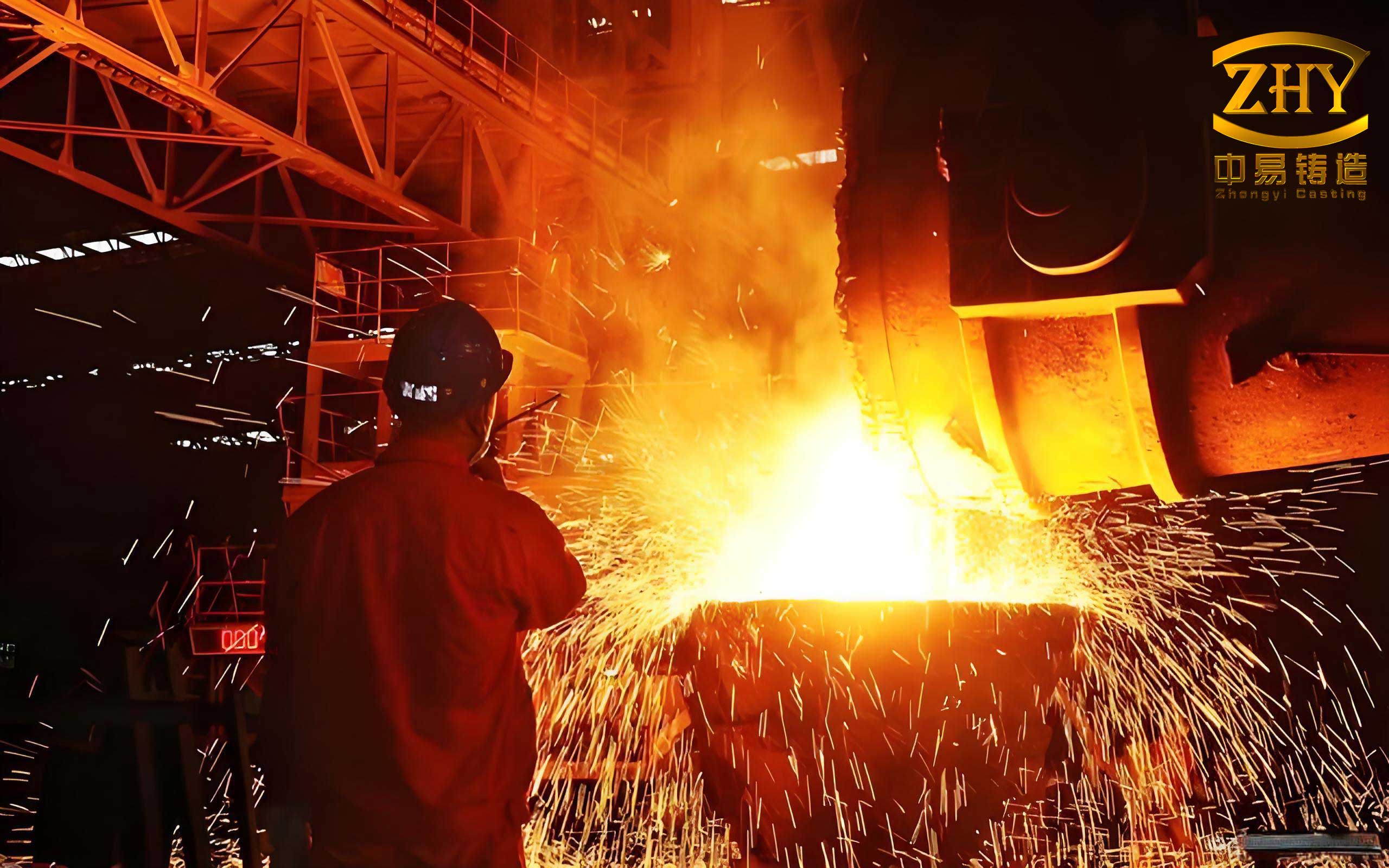
The transmission housing in question is a quintessential example of a demanding casting part. It features a complex structure with significant variation in wall thickness, ranging from 8mm to 48mm. Such geometry makes it an ideal candidate for LFC but also amplifies risks related to foam degradation, mold filling, and sand compaction. The core principle of LFC involves replacing a foam pattern with molten metal. The sequence of events—foam pyrolysis, gaseous and liquid residue evolution, metal front advancement, and solidification—must be meticulously controlled to produce sound casting parts.
The fundamental defects observed can be traced back to disruptions in this sequence. The chemical and physical interactions during pattern decomposition are central to understanding inclusion formation. The foam pattern, typically Expanded Polystyrene (EPS), undergoes thermal degradation upon contact with molten metal. This process can be simplified into key reactions. The primary pyrolysis of EPS generates styrene monomer and other volatile compounds:
$$(C_8H_8)_n \ (polymer) \xrightarrow{\Delta} nC_8H_8 \ (styrene) + \text{other volatiles}$$
Subsequently, in the oxygen-limited environment within the mold, these hydrocarbons can crack and react, potentially forming a carbonaceous residue or interacting with coating materials. The presence of coating material elements (Si, Al, O) in the defects, as confirmed by energy-dispersive X-ray spectroscopy (EDS), points directly to the invasion of the mold cavity by degraded coating or unconsumed pattern residues. The probability of inclusion formation, \(P_i\), can be conceptualized as a function of several process variables:
$$P_i = f(S_c, T_p, v_m, P_v, t_d)$$
where:
\(S_c\) = Coating strength and adhesion integrity.
\(T_p\) = Pattern density and degradation characteristics.
\(v_m\) = Metal front velocity (related to pouring rate and head pressure).
\(P_v\) = Mold cavity vacuum (negative pressure).
\(t_d\) = Pattern dryness and glue joint cure state.
To combat inclusion defects, a multi-pronged strategy targeting these variables was implemented, as summarized in the table below.
| Control Point | Original Parameter | Optimized Parameter/Action | Mechanism & Impact |
|---|---|---|---|
| Pattern Dryness | Post-expansion drying: 8 hrs | Post-expansion drying: 16 hrs; Pre-gluing drying: +8 hrs | Reduces residual moisture and pentane, minimizing steam pressure and potential for explosive degradation that can fracture coating. |
| Glue Joint Integrity | Manual glue application | Automated gluing machine with dedicated fixture | Ensures uniform, continuous, and adequate adhesive application along the entire parting line, eliminating gaps for coating penetration. |
| Mold Cavity Pressure | General guideline of 0.04-0.07 MPa | Strict maintenance protocol for sand screens and fluidization beds; real-time monitoring. | Ensures consistent, sufficient vacuum to swiftly remove pyrolysis gases and liquids, reducing their contact time with the advancing metal and supporting the coating against erosion. |
| Pouring Cup Coating | Ad-hoc cleaning and recoating | Scheduled shot-blasting of iron pouring cups; defined coating thickness check. | Provides a strong, adherent refractory layer on the cup, preventing loose sand or old coating from being washed into the mold during the pour. |
The second major adversary in producing flawless casting parts is slag entrapment. This defect originates not from the foam process itself, but from the metal treatment and handling prior to casting. Slag can form from oxidation products, lining erosion, or inoculant residues. In a gating system without filtration, the dynamic conditions during pouring can easily entrain these less-dense particles into the casting. The application of ceramic foam filters represents a critical, physics-based solution. The efficiency of a filter in capturing particles can be related to its pore morphology and the fluid dynamics. The pressure drop, \(\Delta P\), across a porous ceramic filter can be estimated using a form of the Carmen-Kozeny equation:
$$\Delta P = \frac{150 \mu L v (1-\epsilon)^2}{D_p^2 \epsilon^3}$$
where:
\(\mu\) = Dynamic viscosity of the molten metal.
\(L\) = Filter thickness.
\(v\) = Superficial velocity of metal.
\(\epsilon\) = Filter porosity (volume fraction of voids).
\(D_p\) = Mean pore diameter.
Selecting a filter with an appropriate pore size (10 PPI, or ~2.5 mm average pore diameter) and placing it correctly within the gating system (220mm above the runner) creates a deep-bed filtration effect. It not only mechanically traps larger slag particles but also promotes laminar flow downstream, reducing turbulence that can re-entrain inclusions. This must be coupled with rigorous metal treatment practices.
| Control Point | Original Practice | Optimized Practice | Mechanism & Impact |
|---|---|---|---|
| Filtration | No filter in gating system | Ø70mm, 10 PPI ceramic filter installed in sprue | Provides mechanical and depth filtration, capturing slag and inclusions from the metal stream before it enters the mold cavity. |
| Furnace Slag Removal | Variable, often insufficient | Minimum of 3 slag-offs in the furnace prior to tap | Removes primary oxidation products and refractory particles from the melt source. |
| Ladle Slag Removal & Maintenance | Infrequent ladle relining; minimal slag raking | Mandatory ladle relining every 10 days; minimum of 2 slag-offs in ladle before pouring | Prevents eroded ladle lining material from entering the mold. Fresh slag formed during transfer is removed. |
The third key defect, metal penetration (or “burn-in/on”), is a surface defect where metal infiltrates the spaces between sand grains, creating a rough, mechanically bonded layer. This is distinct from chemical sand-metal reaction. It occurs when the metallostatic pressure exceeds the resistance offered by the sand compact and the gas pressure in the mold. For a given sand size and coating, the critical pressure for penetration, \(P_{crit}\), can be conceptualized as a balance of forces, influenced by the effective “gap” size between grains:
$$P_{crit} \propto \frac{\gamma_{lv} \cos\theta}{r_{eff}} + P_{gas}$$
where:
\(\gamma_{lv}\) = Liquid metal surface tension.
\(\theta\) = Contact angle between metal and coating.
\(r_{eff}\) = Effective radius of the inter-granular channel.
\(P_{gas}\) = Back-pressure from gases in the mold (a function of vacuum and permeability).
In areas with complex geometry, such as deep pockets or reverse drafts on the drag side (cope side) of the casting part, achieving uniform sand compaction is challenging. A locally low sand density increases \(r_{eff}\), drastically reducing \(P_{crit}\). Simultaneously, an excessively high pouring temperature reduces \(\gamma_{lv}\), further facilitating penetration. The strategy, therefore, targets both the sand compaction and the metal properties.
| Control Point | Original Parameter/Practice | Optimized Parameter/Practice | Mechanism & Impact |
|---|---|---|---|
| Geometry Modification | Small radii (e.g., R3-R5) in deep pockets | Increased root fillet radii to R10 in problematic back-draft areas | Reduces sharp thermal concentration and provides a less restrictive path for sand to flow and compact during vibration. |
| Compaction Process | Standard vibration cycle | Added a dedicated secondary vibration with manual sand “prodding” above deep pockets | Ensures sand fully fills and compacts in difficult-to-reach areas, minimizing \(r_{eff}\) and increasing local \(P_{crit}\). |
| Pouring Temperature | First-pour temp ~1520°C | First-pour temp strictly ≤ 1510°C | Increases metal surface tension (\(\gamma_{lv}\)) and reduces the thermal load on the coating, thereby raising the practical \(P_{crit}\). |
The implementation of these targeted measures marked a significant step forward. However, the true stabilization of quality for these high-value casting parts came from the integration of digital process control. LFC is a sequence-dependent process with many manual interventions. Ensuring that every parameter for every mold remains within the optimized window is impossible with periodic checks alone. We transitioned to a system of continuous digital monitoring and logging for critical parameters. This creates a closed-loop of information where cause and effect can be directly correlated.
The system monitors and records: 1) Pattern Dryer Environment: Temperature and humidity profiles over the entire drying cycle for each batch. 2) Pouring Parameters: Exact pouring temperature (via calibrated thermocouple in the launder) and real-time mold cavity negative pressure for every pour. 3) Cycle Times: Key timings in the molding and pouring sequence.
This data allows for the application of statistical process control (SPC). For instance, we can now model the relationship between pouring temperature (\(T_{pour}\)), negative pressure (\(P_{neg}\)), and the incidence of defects (\(D\)) using historical production data. A simplified multiple regression model could take the form:
$$D = \beta_0 + \beta_1 T_{pour} + \beta_2 P_{neg} + \beta_3 (T_{pour} \times P_{neg}) + \epsilon$$
By solving for the coefficients (\(\beta\)), we can identify not just the allowable ranges, but the optimal setpoints that minimize the predicted defect rate \(D\). This transforms the process from one of defect detection to one of defect prevention. An alarm triggers if any parameter drifts outside its control limits, allowing for immediate corrective action before non-conforming casting parts are produced.
The culmination of these efforts—the scientific analysis of defect mechanisms, the targeted mechanical and procedural controls, and the overarching digital governance of the process—yielded a transformative result. Over a sustained production period encompassing tens of thousands of casting parts, the overall scrap rate was consistently maintained below 4%, representing a reduction of over 50% from the initial baseline. The distribution of defects shifted markedly, with inclusions, slag, and penetration being reduced to manageable levels.
This case study underscores that high-quality Lost Foam Casting is not an art but a controllable engineering discipline. The path to reliable casting parts lies in: 1) Understanding the fundamental physics and chemistry of the foam-metal replacement process. 2) Decomposing each major defect into its contributing variables. 3. Implementing countermeasures that directly alter those variables in a quantifiable way. 4. Installing a robust system of digital process control to ensure consistent execution and enable continuous refinement. For complex, safety-critical components like transmission housings, this systematic approach is not merely beneficial; it is essential for achieving the levels of quality and consistency demanded by modern industry.