
In my experience working with steel castings, particularly in the production of railway wheels, surface defects such as tread slag can significantly impact product quality and yield. This article delves into the analysis of tread slag defects in cast steel wheels, focusing on their formation mechanisms and practical prevention measures. Through extensive investigation and process optimization, I have identified key factors contributing to these defects and implemented strategies to mitigate them, ultimately enhancing the reliability of steel castings in demanding applications.
The production of steel castings for railway wheels involves complex metallurgical processes where control over liquid steel cleanliness is paramount. Tread slag defects, characterized by glassy, greenish inclusions on the wheel tread surface, have been a persistent issue, leading to increased scrap rates. By examining the chemical composition of these slags and refining melting practices, I aim to share insights that can benefit broader steel castings manufacturing. The integration of tables and formulas will help summarize critical data and theoretical underpinnings.
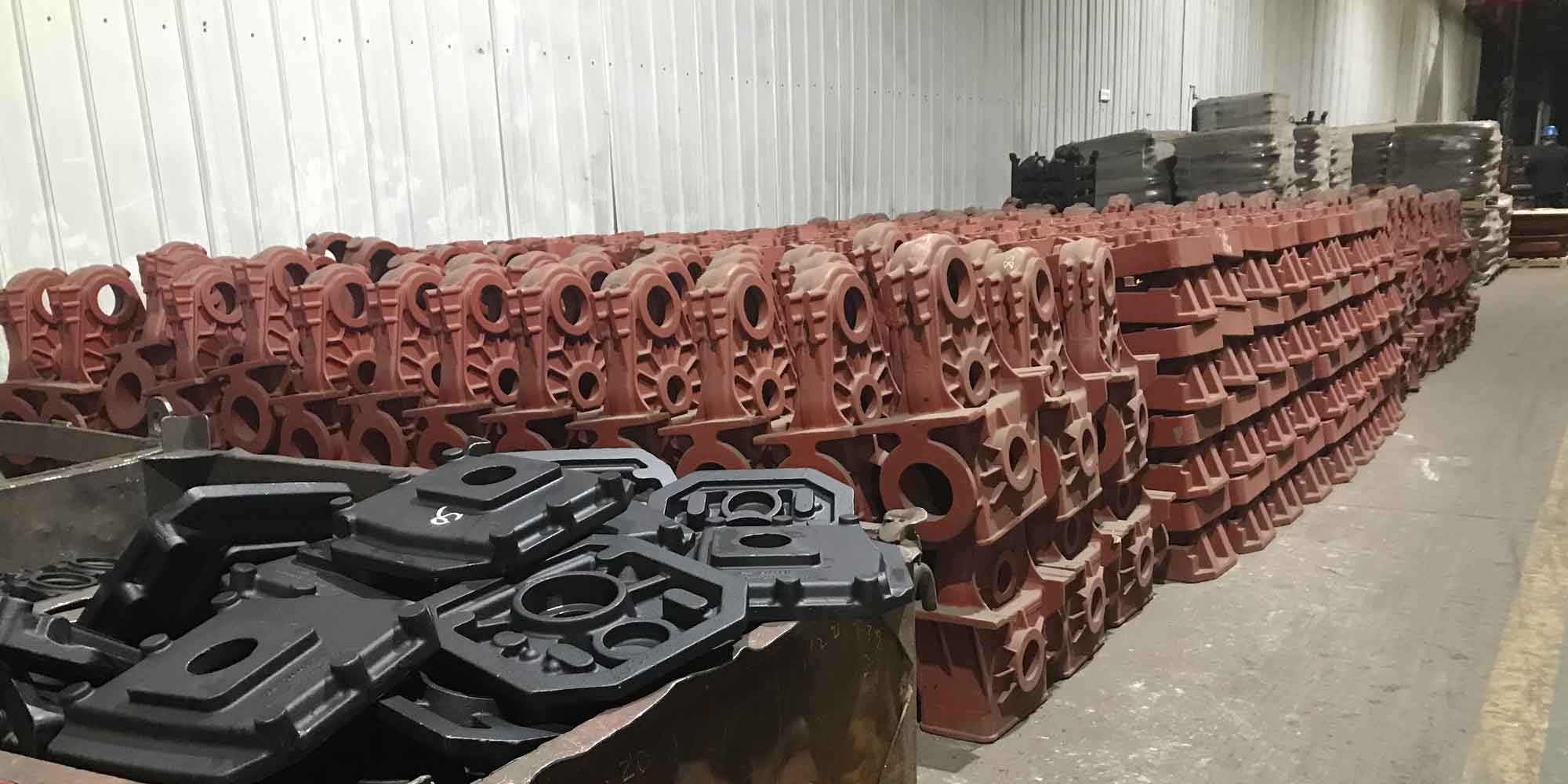
Steel castings for wheels are typically produced using high-carbon steel, with a composition designed for strength and durability. The standard chemical ranges are outlined in Table 1, which serves as a reference for maintaining quality in steel castings.
| Element | Standard Range (wt%) | Target Value (wt%) |
|---|---|---|
| C | 0.67–0.77 | 0.71 |
| Si | ≥0.15 | 0.50 |
| Mn | ≤1.20 | 0.75 |
| P | ≤0.030 | ≤0.030 |
| S | ≤0.040 | ≤0.040 |
| Al | ≤0.060 | 0.035 |
The casting process employs an electric arc furnace for melting, followed by a single-slag method where oxidation slag is tapped without removal. This approach, while reducing gas absorption, can lead to over-oxidation if not controlled. The steel is tapped into a ladle, alloyed with ferromanganese, ferrosilicon, and other additives, then transferred to a bottom-pour ladle for final deoxidation with aluminum before casting into graphite molds. The rapid cooling of graphite promotes solidification but can trap inclusions, affecting steel castings integrity.
Tread slag defects manifest as transparent, glass-like inclusions with colors ranging from light green to dark green, often appearing at higher pouring temperatures (≥1595°C). To understand their origin, I conducted energy-dispersive X-ray spectroscopy (EDS) on slag samples, revealing a composition dominated by Al2O3, SiO2, and MnO, with minor FeO. Table 2 summarizes the EDS results from multiple points, highlighting the consistency in slag chemistry across steel castings.
| Element | Average Weight Percentage (wt%) | Probable Compound |
|---|---|---|
| Al | 6.90 | Al2O3 (15%) |
| Si | 20.12 | SiO2 (47%) |
| Mn | 28.21 | MnO (33%) |
| Fe | 4.33 | FeO (5%) |
| O | 40.44 | — |
This composition aligns with low-melting-point manganese aluminum silicates, which can form during deoxidation. Using the MnO-SiO2-Al2O3 ternary phase diagram, I estimated the melting point of these inclusions to be below 1200°C, making them prone to persist in liquid steel. The formation can be described by reactions such as:
$$ \text{Si} + 2\text{O} \rightarrow \text{SiO}_2 $$
$$ \text{Mn} + \text{O} \rightarrow \text{MnO} $$
$$ \text{Al} + \frac{3}{2}\text{O} \rightarrow \frac{1}{2}\text{Al}_2\text{O}_3 $$
These oxides then combine to form complex slags like manganese aluminum silicate, represented as:
$$ x\text{MnO} \cdot y\text{SiO}_2 \cdot z\text{Al}_2\text{O}_3 $$
where x, y, and z vary based on oxidation levels. In steel castings, excessive oxygen input during melting exacerbates this issue. To quantify the oxidation state, I often use the concept of oxygen potential, defined as:
$$ \Delta G = -RT \ln K $$
where ΔG is the Gibbs free energy change, R is the gas constant, T is temperature, and K is the equilibrium constant for oxidation reactions. Higher oxygen potentials favor oxide formation, increasing slag content in steel castings.
To trace the slag source, I performed simulated defect tests using materials from ladle linings and coatings. However, their compositions differed significantly from tread slag, as shown in Table 3, confirming that internal steelmaking processes are the primary contributor in steel castings.
| Material | Al2O3 (wt%) | SiO2 (wt%) | MnO (wt%) | FeO (wt%) |
|---|---|---|---|---|
| Ladle Lining Residue | 88.14 | 2.96 | 0 | 6.36 |
| Bottom-Pour Ladle Slag | 34.53 | 35.08 | 11.27 | 4.67 |
| Tread Slag (Average) | 15.00 | 47.00 | 33.00 | 5.00 |
The melting operation plays a crucial role. In a typical heat, over-oxidation occurs due to high oxygen blowing intensities during the melting and oxidation phases. For instance, decarburization often exceeds 0.60%, indicating severe oxidation. Silicon and manganese are oxidized early, forming initial slags. When the steel is tapped with slag into the ladle, ferrosilicon addition leads to deoxidation products that react with existing slags, generating low-melting-point compounds. Insufficient holding time in ladles prevents full flotation, allowing slags to be carried into molds during casting, where graphite’s chill effect traps them on the tread surface of steel castings.
Statistical analysis revealed that higher pouring temperatures correlate with increased slag incidence, likely due to enhanced slag fluidity and re-melting of ladle deposits. To address this, I focused on reducing oxygen input during melting. Key measures included optimizing charge carbon to lower initial carbon content, thereby minimizing decarburization needs. The target melt-down carbon was set at 0.95–1.05%, compared to previous averages around 1.23%. This adjustment reduced the required oxygen blowing, as less carbon removal was necessary. The decarburization amount (ΔC) can be expressed as:
$$ \Delta C = C_{\text{initial}} – C_{\text{final}} $$
By controlling ΔC below 0.40%, oxidation severity decreases. Additionally, I enforced a melt-down sampling temperature of 1530–1550°C to ensure uniform carbon distribution and better process control. These changes significantly lowered the oxidation degree, reflected in improved silicon recovery in ladles. Silicon recovery (ηSi) is calculated as:
$$ \eta_{\text{Si}} = \frac{\text{Actual Si content}}{\text{Theoretical Si content}} \times 100\% $$
Post-improvement, ηSi increased from 54% to over 70%, indicating less silicon loss to oxidation. Table 4 contrasts melting parameters before and after optimization, demonstrating the benefits for steel castings quality.
| Parameter | Before Optimization | After Optimization |
|---|---|---|
| Average Melt-Down Carbon (wt%) | 1.23 | 1.05 |
| Average Decarburization (wt%) | 0.60 | 0.36 |
| Silicon Recovery in Ladle (%) | 54 | 72 |
| Tread Slag Defect Rate (%) | 11.34 | 3.34 |
Furthermore, I emphasized the use of foamy slag practices during melting to shield the arc and reduce oxygen ingress. The foamy slag index (FSI) can be approximated as:
$$ \text{FSI} = \frac{\text{Slag viscosity} \times \text{Gas volume}}{\text{Slag density}} $$
Higher FSI values improve thermal efficiency and minimize over-oxidation. By adopting these measures, the formation of low-melting-point slags was curtailed, leading to a drop in tread slag defects from 11.34% to 3.34% in produced steel castings. This improvement underscores the importance of precise oxygen management in steel castings manufacturing.
Another aspect involves ladle practices. Extending holding time in the transfer ladle allows more slag flotation, but production constraints often limit this. Instead, I optimized alloy addition sequences to promote early slag formation and removal. For example, adding manganese early in the process can stabilize oxides and facilitate their aggregation. The Stokes’ law equation describes slag particle flotation:
$$ v = \frac{2(\rho_s – \rho_l) g r^2}{9\eta} $$
where v is flotation velocity, ρs and ρl are slag and steel densities, g is gravity, r is particle radius, and η is viscosity. Increasing particle size through agglomeration enhances flotation, reducing slag entrapment in steel castings.
In conclusion, tread slag defects in steel castings, particularly wheels, stem from over-oxidation during melting, leading to manganese aluminum silicate formation. Through systematic analysis and process refinements, such as controlled oxygen blowing and optimized charge carbon, I have successfully reduced defect rates. These findings highlight the critical need for meticulous oxygen control in steel castings production to ensure high-quality outputs. Future work may explore advanced deoxidation techniques or real-time monitoring systems to further enhance steel cleanliness. The lessons learned are applicable across various steel castings industries, emphasizing the interplay between metallurgy and process engineering in defect prevention.
Overall, the journey to mitigate tread slag has reinforced my belief in data-driven approaches for steel castings improvement. By integrating chemical analysis, thermodynamic principles, and operational tweaks, manufacturers can achieve more reliable steel castings with fewer defects. This holistic strategy not only boosts yield but also strengthens the performance of steel castings in critical applications like railway transportation.