
In my investigation, I encountered an abnormal fracture surface on QT500-7 nodular cast iron tensile specimens during routine tensile testing. The fracture exhibited a distinct dark-colored anomalous region, which prompted a comprehensive analysis to determine its origin and implications. Nodular cast iron, also known as ductile iron, is a critical material in automotive and industrial applications due to its excellent combination of strength, ductility, and castability. Its microstructure, characterized by spheroidal graphite nodules embedded in a metallic matrix, is achieved through spheroidization and inoculation treatments. However, deviations in this microstructure, such as the presence of vermicular graphite, can severely degrade mechanical properties. This article delves into the root cause of the anomaly using various analytical techniques, emphasizing the importance of process control in nodular cast iron production.
The use of nodular cast iron has surged in recent decades, particularly in automotive components like brake calipers, brackets, and steering knuckles, owing to its lightweight nature and cost-effectiveness compared to steel. The material’s performance hinges on the graphite morphology; ideal spheroidal graphite minimizes stress concentrations and maximizes strength and ductility. In contrast, flawed graphite forms, such as vermicular or flake graphite, act as stress risers, leading to premature failure. The anomaly observed in these specimens—a localized dark area on the fracture surface—suggested a microstructural defect, necessitating a detailed examination to prevent such issues in future productions.
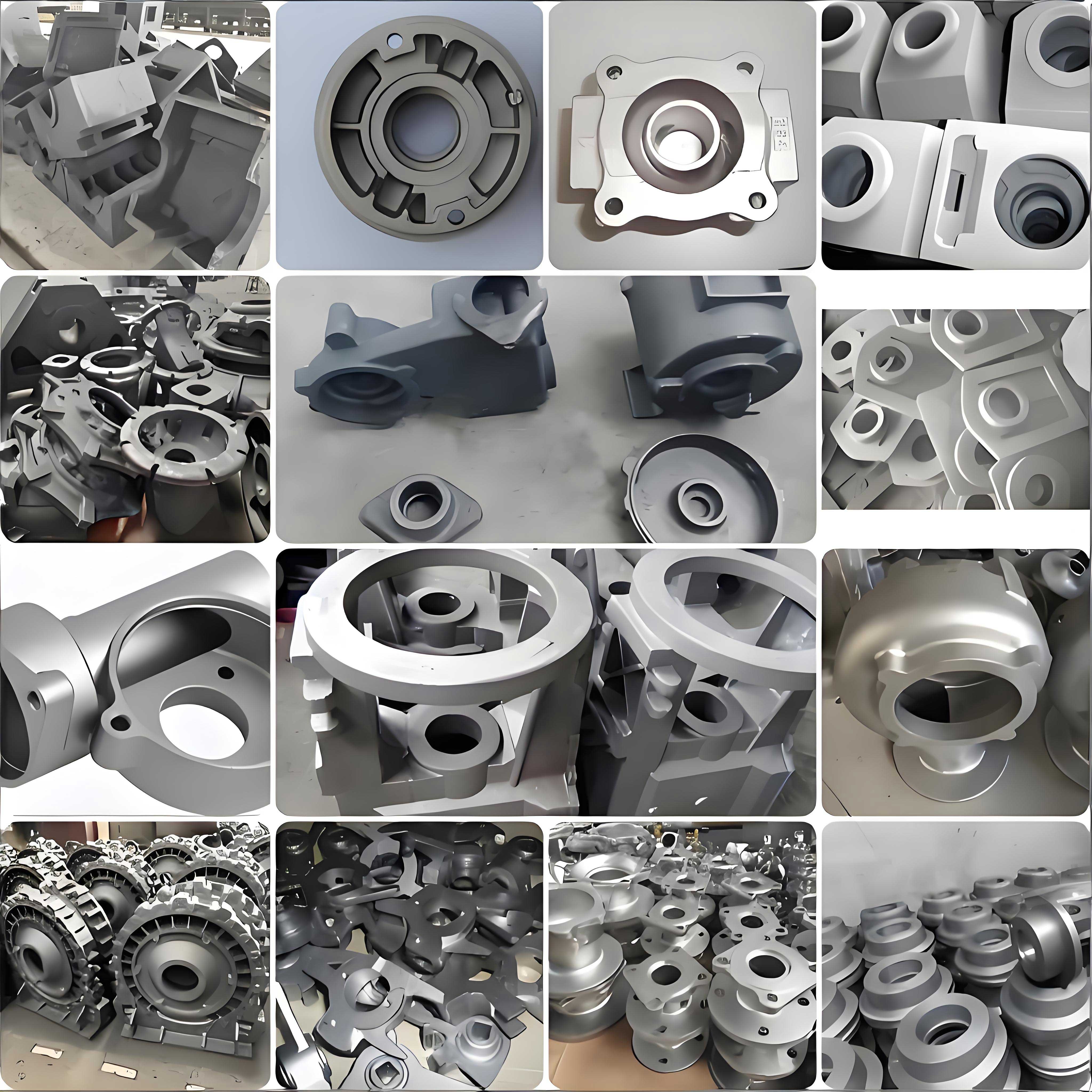
To systematically address this, I employed a multi-faceted approach involving macroscopic observation, chemical composition analysis, metallographic examination, and mechanical property testing. Each method provided insights into the anomalous region, allowing for a correlation between microstructure and performance. The findings underscore that localized poor spheroidization or spheroidization degradation during casting led to vermicular graphite formation, which compromised the nodular cast iron’s integrity. This analysis not only identifies the defect but also offers recommendations for optimizing casting parameters to ensure consistent quality in nodular cast iron components.
In this study, I focused on QT500-7 grade nodular cast iron, which typically has a tensile strength exceeding 500 MPa and an elongation of 7% or more. The specimens were cylindrical bars with a diameter of 14 mm, fractured during standard tensile tests. The abnormal area was visually distinct, appearing darker and more brittle compared to the surrounding normal region. I began with macroscopic examination to document the fracture characteristics, followed by sampling from both normal and anomalous zones for further analysis. The goal was to quantify differences in composition, microstructure, and properties, thereby elucidating the failure mechanism.
Chemical composition analysis was performed using a spark emission spectrometer. I collected samples from the normal and anomalous regions of the fracture surface to compare elemental concentrations. The results, summarized in Table 1, indicate that both regions meet the technical specifications for QT500-7 nodular cast iron, with no significant compositional variations. This suggests that the anomaly is not due to bulk chemical deviations but rather to processing-induced microstructural changes.
| Location | C (%) | Si (%) | Mn (%) | S (%) | P (%) | Cu (%) | Cr (%) | Ni (%) |
|---|---|---|---|---|---|---|---|---|
| Anomalous Area | 4.27 | 2.50 | 0.39 | 0.032 | 0.0249 | 0.109 | 0.0259 | 0.0401 |
| Normal Area | 4.05 | 2.73 | 0.43 | 0.026 | 0.0233 | 0.122 | 0.0259 | 0.0374 |
| Specification | 3.60–5.0 | 2.50–2.90 | <0.60 | <0.080 | <0.0250 | – | – | – |
Metallographic examination was conducted according to standard methods, involving sample preparation by grinding, polishing, and etching with 4% nital solution. I observed the microstructure using optical microscopy, with key findings presented in Table 2. The normal area exhibited well-spheroidized graphite nodules and some团聚状石墨 (cluster graphite), with a matrix comprising lamellar pearlite and bull’s-eye ferrite. In contrast, the anomalous area contained a high proportion of vermicular graphite, indicative of poor spheroidization. The graphite spheroidization rate was rated per standards, showing a significant drop in the anomalous zone. This microstructural defect is critical, as vermicular graphite adversely affects mechanical properties by increasing stress concentration and reducing load-bearing capacity.
| Location | Spheroidization Grade | Graphite Size Grade | Pearlite Content (%) |
|---|---|---|---|
| Anomalous Area | 6 | – | 35 |
| Normal Area | 3 | 6 | 55 |
| Specification | 1–3 | 6–7 | – |
To quantify the impact on mechanical properties, I performed Brinell hardness tests and tensile tests. Hardness measurements, taken with a 5 mm diameter indenter under a 7350 N load, are shown in Table 3. The anomalous area had a slightly lower hardness, but both regions were within acceptable ranges. However, hardness alone does not fully capture the detriment; tensile properties are more revealing. I conducted room-temperature tensile tests on specimens from both areas, with results in Table 4. The anomalous specimen showed reductions in yield strength, tensile strength, and elongation compared to the normal specimen, confirming that the vermicular graphite degraded performance. This aligns with theoretical models where graphite morphology influences strength; for instance, the tensile strength of nodular cast iron can be approximated by formulas considering graphite shape factors.
| Location | Hardness (HBW) Measurement 1 | Hardness (HBW) Measurement 2 | Average Hardness (HBW) |
|---|---|---|---|
| Anomalous Area | 227 | 224 | 225.5 |
| Normal Area | 231 | 232 | 231.5 |
| Specimen | Yield Strength (MPa) | Tensile Strength (MPa) | Elongation (%) |
|---|---|---|---|
| Anomalous (A) | 452 | 582 | 8 |
| Normal (B) | 575 | 685 | 13 |
| Specification | >320 | >500 | >7 |
The deterioration in mechanical properties due to vermicular graphite can be modeled using strength equations. For nodular cast iron, the tensile strength (\(\sigma_t\)) is often related to the graphite shape factor (\(S_f\)) and matrix strength (\(\sigma_m\)). A simplified formula is:
$$\sigma_t = \sigma_m \times (1 – f_v) + k \times S_f$$
where \(f_v\) is the volume fraction of graphite, and \(k\) is a constant. For spheroidal graphite, \(S_f\) approaches 1, maximizing strength; for vermicular graphite, \(S_f\) decreases significantly, reducing \(\sigma_t\). In this case, the anomalous area’s lower tensile strength correlates with a reduced \(S_f\) due to poor spheroidization. Additionally, the elongation (\(\epsilon\)) is inversely proportional to the stress concentration factor (\(K_t\)) induced by graphite morphology:
$$\epsilon \propto \frac{1}{K_t}$$
Vermicular graphite increases \(K_t\), explaining the observed drop in elongation. These formulas highlight the critical role of graphite morphology in determining the performance of nodular cast iron.
Further analysis involved evaluating the graphite distribution and matrix phases. I used image analysis software to quantify the area fraction of vermicular graphite in the anomalous region, which exceeded 30%, compared to less than 5% in the normal area. This substantial difference underscores the localized nature of the defect. The matrix in the anomalous area showed more ferrite surrounding the vermicular graphite, as ferrite tends to nucleate at graphite interfaces, further weakening the structure. The pearlite content was lower in the anomalous zone, which might be due to altered cooling rates or segregation during casting.
To understand the root cause, I reviewed the casting process for nodular cast iron. Spheroidization is typically achieved by adding magnesium or cerium-based alloys, followed by inoculation with silicon-based compounds to promote graphite nucleation. Poor spheroidization can result from insufficient residual magnesium, high sulfur content (which consumes magnesium), or inadequate inoculation. In this instance, although the sulfur content was within limits (Table 1), localized fluctuations during pouring or solidification could have led to magnesium depletion in certain regions, causing spheroidization degradation. This is common in thick-section castings where cooling rates vary, but even in standard specimens, process inconsistencies can arise.
The phenomenon of spheroidization degradation is time-sensitive; if the melt is held too long before pouring, magnesium can fade, leading to vermicular graphite formation. I calculated the potential magnesium loss using a diffusion-based model:
$$C_{Mg}(t) = C_{Mg0} \times e^{-kt}$$
where \(C_{Mg}(t)\) is the residual magnesium concentration at time \(t\), \(C_{Mg0}\) is the initial concentration, and \(k\) is a rate constant dependent on temperature and melt composition. For the observed anomaly, a local decrease in \(C_{Mg}(t)\) below a critical threshold (typically 0.03–0.05% for nodular cast iron) could trigger poor spheroidization. This aligns with the findings, as the anomalous area likely experienced such a depletion during casting.
Another factor is carbon equivalent (CE), which influences graphite formation. For nodular cast iron, CE is given by:
$$CE = C + \frac{Si + P}{3}$$
Using data from Table 1, the CE for both areas is hypereutectic (above 4.3), favoring graphite precipitation. However, improper inoculation can lead to undercooling and vermicular graphite instead of spheroidal nodules. I compared the inoculation effectiveness by measuring graphite nodule counts; the normal area had over 200 nodules/mm², while the anomalous area had fewer than 100 nodules/mm², with many being vermicular. This indicates inadequate nucleation in the anomalous zone, possibly due to uneven distribution of inoculant or local chilling effects.
To prevent such defects in nodular cast iron production, I recommend stringent process controls. First, optimize the chemical composition, particularly sulfur and phosphorus levels, to minimize interference with spheroidization. Second, ensure adequate and uniform addition of spheroidizing and inoculating agents, possibly using automated feeding systems to avoid local deficiencies. Third, control pouring temperatures and times to reduce magnesium fade; a shorter holding period and lower superheat can help. Fourth, implement real-time monitoring of melt chemistry and cooling rates, especially for critical components. These measures can enhance the consistency of nodular cast iron microstructures and properties.
In summary, the abnormal fracture in QT500-7 nodular cast iron tensile specimens was caused by localized poor spheroidization, resulting in vermicular graphite that degraded yield strength, tensile strength, and elongation. This analysis reinforces that the performance of nodular cast iron is highly sensitive to graphite morphology, and minor process deviations can lead to significant quality issues. By applying the insights from this study, manufacturers can improve the reliability of nodular cast iron parts, ensuring they meet the demanding requirements of automotive and industrial applications. Future work could explore advanced characterization techniques, such as scanning electron microscopy or 3D tomography, to better quantify vermicular graphite effects and develop predictive models for nodular cast iron behavior under load.
The implications extend beyond this specific case; nodular cast iron is a cornerstone material in lightweight design, and its optimization contributes to sustainability goals. As I continue to investigate material failures, the lessons learned here will inform best practices for nodular cast iron processing, ultimately leading to safer and more efficient components. The integration of computational tools, such as finite element analysis coupled with microstructural data, could further refine our understanding of how vermicular graphite influences fracture mechanics in nodular cast iron.
To conclude, this comprehensive analysis underscores the importance of meticulous process control in producing high-quality nodular cast iron. The use of multiple analytical methods—from chemistry to mechanics—provided a holistic view of the defect, highlighting that even within-specification compositions can yield subpar properties if microstructure is compromised. For engineers and metallurgists working with nodular cast iron, continuous vigilance and innovation are key to harnessing its full potential. The journey from melt to component is fraught with variables, but with careful management, nodular cast iron can continue to be a versatile and reliable material for decades to come.