
The advent of Lost Foam Casting (LFC) in the 1980s marked a revolutionary step in foundry technology. Recognized globally as the “Casting Technology of the 21st Century” and a “Green Revolution in the Foundry Industry,” this process offers significant advantages over traditional methods. It produces castings with superior surface finish, higher dimensional accuracy, and improved internal density due to formation under a negative pressure vacuum. Furthermore, lost foam casting reduces costs, alleviates worker labor intensity, and contributes to a cleaner production environment. As the industry strives for near-net-shape production, precise forming technologies, and sustainable practices, lost foam casting stands out for its ability to meet complex design demands, particularly for parts with intricate geometries and internal cavities that are challenging for conventional molding. Its potential is vast, but fully realizing the benefits of lost foam casting hinges on overcoming specific process-related defects, with sand adhesion being one of the most common and critical challenges to address for improved yield and profitability.
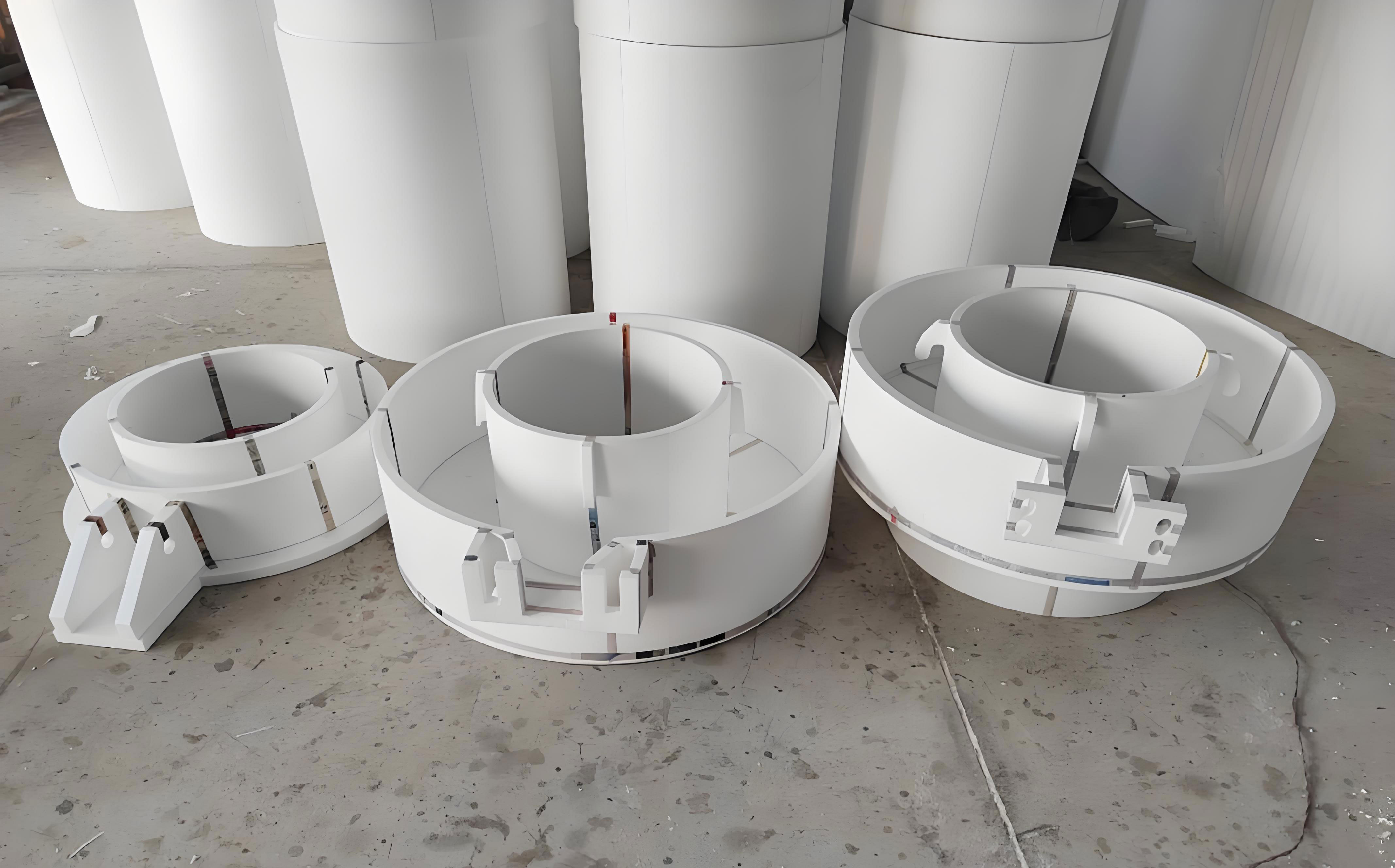
At its core, the lost foam casting process involves coating an expandable polystyrene (EPS) foam pattern with a refractory coating, placing it in a flask, surrounding it with unbonded sand, compacting the sand via vibration, and then pouring molten metal under a vacuum. The metal vaporizes the foam pattern, precisely filling the cavity it leaves behind. The defect known as sand adhesion, or burn-on, occurs when molten metal penetrates the coating and interacts with the base sand, resulting in a layer of sand-metal mixture firmly bonded to the casting surface. This defect manifests in two primary forms, each with distinct root causes within the lost foam casting system.
The first type is Mechanical Penetration Adhesion. This occurs when molten metal physically infiltrates gaps between sand grains. The key enablers in lost foam casting are cracks or fissures in the refractory coating or inadequately compacted sand that offers insufficient resistance. Once the metal solidifies within these interstitial spaces, it mechanically locks the sand grains to the casting surface, often forming a “metal-wrapped-sand” layer. While sometimes removable, it increases cleaning costs and can affect dimensional tolerance. The driving force for this penetration is a combination of metallostatic pressure and the vacuum applied during pouring. The likelihood of mechanical adhesion in lost foam casting can be conceptually related to the pressure differential and the integrity of the barrier. The pressure gradient $\Delta P$ promoting penetration is a function of the metallostatic head $(\rho_m g h)$, the applied vacuum $(P_{vac})$, and any gas back-pressure $(P_g)$ from decomposing foam:
$$\Delta P = \rho_m g h + P_{vac} – P_g$$
Where $\rho_m$ is the metal density, $g$ is gravity, and $h$ is the effective head height. This pressure acts against the capillary resistance of the sand bed and the coating’s mechanical strength.
The second, more severe type is Chemical Adhesion. This happens when molten metal does not just flow between sand grains but reacts chemically with the coating and/or the silica (SiO₂) sand at high temperatures, forming complex, low-melting-point silicates that fuse tenaciously to the casting. This type is extremely difficult to remove. In lost foam casting, the primary causes are:
- Inadequate Coating Refractoriness or Thickness: A coating with insufficient high-temperature resistance or an applied layer that is too thin locally can allow direct metal-sand contact. The coating’s performance is a function of its composition, thickness $(\delta_c)$, and sintering behavior at the pouring temperature $(T_{pour})$.
- Excessive Pouring Temperature or Vacuum: An overly high temperature increases the metal’s fluidity and chemical aggressiveness, while excessive vacuum amplifies the pressure gradient, both forcing metal into microscopic coating imperfections.
Successfully preventing sand adhesion in lost foam casting is not a matter of a single fix but requires a holistic, systems-engineering approach across all process stages. The following technical and managerial measures form an integrated strategy for defect control.
1. Optimizing the Refractory Coating System
The coating is the primary barrier between the molten metal and the sand. Its properties are paramount in lost foam casting.
- Composition and Properties: The coating must exhibit excellent adhesion to the foam pattern, sufficient green and dried strength, low linear shrinkage, and high thermal shock resistance. Common base refractories include flake graphite for iron, and alumina or magnesia-based materials for steel. The binder and suspension system must be optimized to prevent cracking during drying or vibration. The coating’s viscosity must be consistently controlled for uniform application.
- Application and Thickness Control: Coating thickness $(\delta_c)$ is a critical variable. An optimal range (e.g., 1.2-1.5 mm for many iron castings) must be maintained. Too thin a coat risks penetration; too thick a coat is prone to cracking. The relationship between required thickness and thermal load can be considered. The coating must withstand the thermal flux $q$ from the metal:
$$q \propto \frac{T_{pour} – T_{interface}}{\delta_c / k_c}$$
where $k_c$ is the effective thermal conductivity of the coating. A balanced thickness provides the necessary thermal and mechanical barrier.
| Coating Factor | Target/Requirement | Impact on Adhesion |
|---|---|---|
| Refractoriness | Must exceed metal pouring temperature by a wide margin. | Prevents chemical breakdown and reaction. |
| Thickness $(\delta_c)$ | Uniform, within optimal range (e.g., 1.0-1.8 mm). | Provides consistent thermal/mechanical barrier. |
| Permeability | Sufficient to allow pyrolysis gases to escape. | Prevents gas pressure build-up that can rupture coating. |
| Strength | High enough to withstand sand compaction forces. | Prevents cracking during vibration, blocking metal paths. |
2. Controlling Sand and Molding Parameters
The unbonded sand medium and its compaction are fundamental to the lost foam casting process.
- Sand Selection: Grain shape, size, and distribution are key. Rounded or sub-angular sands compact more uniformly than angular sands. A narrow grain distribution (e.g., AFS 25/45 for iron, 45/90 for aluminum) is preferred. For severe cases or specific alloys, alternative sands like olivine or chromite with higher refractory points and lower reactivity than silica can be used.
- Vibration Compaction: The goal is to achieve uniform, high bulk density without damaging the coated pattern. Excessive acceleration or duration can crack the coating. Empirical guidelines suggest:
- Frequency: ~50 Hz
- Amplitude: 0.5-1.5 mm
- Vibration Time: < 60 seconds
- A useful control parameter is the product of vibration acceleration (a) and time (t), often aimed at $a \cdot t \approx 45 \pm 15$ mm (or equivalent unit).
Proper gating and support of the pattern cluster is essential to ensure all sections, especially downward-facing corners and blind cavities, are adequately filled and compacted. Local use of core sand or special facing sand in problematic areas is an effective tactic.
| Sand & Molding Parameter | Typical Setting for Iron Lost Foam Casting | Rationale |
|---|---|---|
| Sand Grain Shape | Rounded to Sub-Angular | Improves flowability and packing density. |
| Sand AFS GFN | 25/45 or 30/50 | Balances permeability and surface finish. |
| Vibration Acceleration | 1.5 – 2.5 g | Ensures compaction without pattern damage. |
| Bulk Density after Vibration | > 1.55 g/cm³ | Indicates sufficient sand grain packing. |
3. Managing Pouring and Vacuum Conditions
The dynamic conditions during metal pour are the final critical control point in lost foam casting.
- Vacuum Level $(P_{vac})$: The applied vacuum must be sufficient to evacuate pattern decomposition gases and solidify the casting but not so high as to draw metal into the coating. Recommended ranges are:
- Steel: 40.0 – 59.0 kPa
- Iron: 26.7 – 53.3 kPa
- Aluminum: 0 – 26.7 kPa
Exceeding these levels, especially for lower-melting-point alloys, is a direct cause of severe mechanical adhesion.
- Pouring Temperature $(T_{pour})$: While lost foam casting typically requires a temperature 30-50°C higher than sand casting to compensate for the heat consumed in vaporizing the foam, excessive temperature is detrimental. Higher temperature lowers metal viscosity $\mu$ and increases its penetration capability. The optimal range for grey iron, for instance, is often between 1420-1470°C. The relationship between penetration depth $(d)$ and process parameters can be modeled by adaptations of Darcy’s law for flow in a porous medium:
$$d \propto \sqrt{\frac{K \cdot \Delta P \cdot t_p}{\mu}}$$
where $K$ is the sand permeability, $\Delta P$ is the pressure differential defined earlier, and $t_p$ is the time the metal remains liquid under pressure.
4. Integrating Pattern, Process, and Gating Design
Prevention starts at the design stage of the lost foam casting process.
- Pattern Quality: A smooth pattern surface finish is crucial. Rough or porous foam surfaces create micro-indentations in the coating that are initiation points for adhesion. The pre-expansion density of the EPS beads must be controlled to achieve a dense, seamless pattern. Minimal use of adhesive at pattern assembly joints, and avoiding its smearing onto critical casting surfaces, prevents local coating weakness.
- Gating and Feeding Design: The gating system must be designed to ensure a smooth, controlled fill to minimize turbulence and dynamic pressure on the coating. The metallostatic head $(h)$ in the gating system should be calculated and minimized where possible to reduce $\Delta P$. Pouring rate must be balanced to match the pattern decomposition rate.
5. Implementing Rigorous Quality Management
Technical solutions must be underpinned by disciplined execution and continuous improvement in a lost foam casting operation.
- Standardized Procedures (SOPs): Detailed work instructions for coating preparation, pattern assembly, sand filling, vibration, and pouring are essential.
- Training and Skill Development: Operators must understand the “why” behind each step, particularly the sensitivity of the lost foam casting process to variations.
- Process Monitoring and Data Recording: Key parameters (coating slurry density/viscosity, drying times/temperatures, sand compactness, vacuum level, pouring temperature/time) must be recorded for every mold or batch.
- Defect Analysis and Corrective Action: A systematic approach to analyzing scrap, such as using Fishbone diagrams or Pareto analysis focused on adhesion defects, is vital. Root causes must be traced back to specific process deviations. Linking quality metrics to process control performance fosters accountability.
| Management System Element | Action in Lost Foam Casting Context | Expected Outcome |
|---|---|---|
| Procedure Control | Establish SOPs for coating, vibration, pouring. | Eliminates variation from operator practice. |
| Parameter Monitoring | Log key variables for every mold/machine cycle. | Creates traceability for defect diagnosis. |
| Preventive Maintenance | Regularly service vibration tables, vacuum pumps, temperature sensors. | Prevents equipment-induced process drift. |
| Corrective Action Loop | Formal review of adhesion defects to update SOPs. | Drives continuous process improvement and lower scrap rates. |
A Systems View: The Interplay of Factors
Ultimately, eliminating adhesion defects in lost foam casting requires viewing the process as an interconnected system. A weakness in one area can be exacerbated by conditions in another. For example, a slightly higher-than-ideal pouring temperature might not cause defects with a perfect coating and optimal vacuum, but could lead to disaster if the coating is thin or the sand loosely compacted. The overall susceptibility to adhesion $(S)$ can be thought of as a function of multiple variables:
$$S_{adhesion} = f \left( \frac{1}{\delta_c \cdot S_c}, \frac{\Delta P}{D_{sand}}, \frac{T_{pour}}{\mu}, \frac{1}{t_{dry}} \right)$$
where $S_c$ is coating strength, $D_{sand}$ is sand bed density, and $t_{dry}$ is coating drying quality. The goal of process control in lost foam casting is to minimize this susceptibility function.
Field results demonstrate the efficacy of this comprehensive approach. Implementations report significant reductions in scrap rates due to sand adhesion—for example, reductions exceeding 6% within a production period—directly translating to improved profitability. The principle that “profit in casting is earned by reducing scrap” is powerfully validated by disciplined lost foam casting practice.
In conclusion, the battle against sand adhesion in lost foam casting is won through meticulous attention to detail across the entire technological chain: from the chemistry of the coating and the physics of sand compaction to the dynamics of metal pouring and the consistency of quality management. By mastering these elements, foundries can reliably produce high-integrity castings free from adhesive defects, fully harnessing the design and economic potential that makes lost foam casting a cornerstone of modern, advanced manufacturing.