
In the field of modern manufacturing, lost foam casting has emerged as a pivotal technology, often hailed as the “casting technology of the 21st century” and a “green revolution in the foundry industry.” This method utilizes expandable polystyrene (EPS) foam patterns that are vaporized during metal pouring, allowing for complex geometries and reduced waste. However, when applied to aluminum alloys, lost foam casting presents unique challenges due to the material’s properties, such as low density and high reactivity. Aluminum alloys are extensively used in sectors like automotive manufacturing for components like engine blocks and intricate thin-walled parts, where performance demands are stringent. Despite the advantages of lost foam casting, including its ability to produce near-net-shape parts with minimal post-processing, the process is plagued by a high defect rate in aluminum castings, leading to significant scrap losses. As a practitioner in this field, I have observed that defects like insufficient pouring, cold shuts, pinholes, shrinkage porosity, surface carbon defects, and surface irregularities are common and often stem from the interplay of factors such as pouring temperature, foam pattern quality, and gas evolution. This article delves into these issues, providing a detailed analysis of their causes and proposing effective control measures based on first-hand experience and research. The goal is to enhance the quality and yield of aluminum alloy lost foam casting, contributing to the advancement of this promising technique.
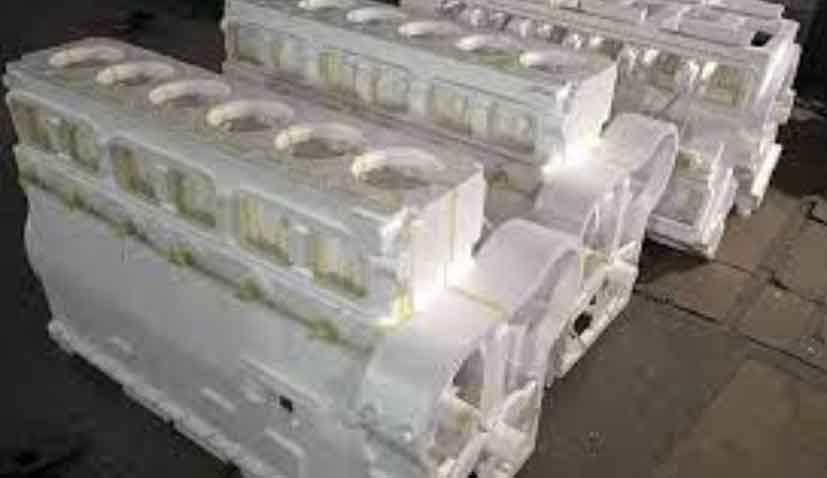
To understand the defects in aluminum alloy lost foam casting, it is essential to grasp the fundamental process differences compared to conventional methods like sand casting or permanent mold casting. In lost foam casting, dry sand is used as the molding material, and a refractory coating is applied to the foam pattern to maintain structural integrity and facilitate gas escape. The process involves heating the metal to a temperature high enough to vaporize the foam pattern—typically between 750°C and 780°C for aluminum alloys—allowing the molten metal to fill the cavity. However, this temperature range is critical; if it is too low, the foam may not fully decompose, leading to incomplete filling, while if it is too high, it can cause excessive gas generation and oxidation. The low density of aluminum, approximately 2.7 g/cm³, makes it susceptible to gas entrapment and reaction with decomposition products, increasing the likelihood of defects. Moreover, the solidification behavior of aluminum in lost foam casting differs from that of ferrous alloys due to its higher thermal conductivity and narrower freezing range, which can exacerbate issues like shrinkage and porosity. The complexity of the part also plays a role; larger components with simpler geometries tend to have fewer defects, whereas thin-walled, intricate parts are more prone to problems. In my work, I have found that controlling process parameters is key to mitigating these issues, and this requires a deep understanding of the underlying physics and chemistry.
The prevalence of defects in aluminum alloy lost foam casting can be attributed to several factors, including the nature of the foam decomposition, metal flow dynamics, and thermal conditions. For instance, during pouring, the foam pattern absorbs heat and decomposes into gaseous and liquid by-products, which can interfere with metal flow and cause defects if not properly managed. The relationship between temperature and gas pressure can be described using ideal gas law principles, where the pressure $P$ generated by decomposed gases is proportional to temperature $T$ and the amount of gas $n$, as given by $P \propto nT$. This pressure, known as backpressure, opposes metal flow and must be minimized to ensure complete filling. Additionally, the cooling rate in lost foam casting is slower than in other methods due to the insulating properties of the sand, leading to longer solidification times and increased risk of gas evolution and shrinkage. The hydrogen solubility in aluminum, which follows Sievert’s law, $S = k \sqrt{P_{H_2}}$, where $S$ is solubility and $P_{H_2}$ is the partial pressure of hydrogen, explains why pinholes form as hydrogen precipitates during cooling. By addressing these fundamental aspects, we can develop more robust solutions for defect reduction in lost foam casting processes.
Common Defects in Aluminum Alloy Lost Foam Casting
In aluminum alloy lost foam casting, several defects frequently occur, each with distinct causes and implications for part quality. Below, I discuss the most prevalent ones, drawing from practical observations and theoretical insights.
Insufficient Pouring and Cold Shuts
Insufficient pouring and cold shuts are among the most common defects in aluminum alloy lost foam casting, particularly for complex thin-walled components. These issues arise primarily from poor metal fluidity during mold filling. The root causes can be traced to two main factors: backpressure from foam decomposition and premature cooling of the metal front. When the molten aluminum enters the mold, the foam pattern decomposes endothermically, releasing gases that create a counter-pressure, hindering flow. This backpressure effect can be modeled using fluid dynamics equations, such as the Bernoulli principle, where the pressure drop $\Delta P$ across the flow path affects velocity $v$: $\Delta P = \frac{1}{2} \rho v^2$, with $\rho$ being the density of the metal. If the metal front cools too quickly—due to the low pouring temperatures typical of aluminum lost foam casting (around 750°C compared to higher temperatures for iron alloys)—its viscosity increases, reducing flowability and leading to incomplete filling or cold shuts where two metal streams fail to fuse properly. In my experience, parts with intricate geometries, such as automotive engine components, are especially vulnerable, as the long flow paths and thin sections exacerbate these effects. To quantify this, the Reynolds number $Re = \frac{\rho v L}{\mu}$, where $L$ is a characteristic length and $\mu$ is dynamic viscosity, can indicate flow regime; low $Re$ values suggest laminar flow prone to defects. Addressing this requires optimizing process parameters to maintain metal fluidity throughout the filling stage.
Pinholes
Pinholes are a persistent defect in aluminum alloy lost foam casting, characterized by small, dispersed holes on the casting surface. They result primarily from gas entrapment, often hydrogen, due to the high pouring temperatures and slow cooling rates. The mechanism involves hydrogen dissolution in the molten aluminum during pouring, followed by precipitation during solidification. According to Sievert’s law, the solubility of hydrogen $S_H$ in aluminum decreases with temperature, leading to gas release as the metal cools: $S_H = k_H \sqrt{P_{H_2}}$, where $k_H$ is a constant dependent on the alloy composition. In lost foam casting, the use of dry sand molds results in slower cooling, prolonging the solidification time and allowing more hydrogen to nucleate into pinholes. Additionally, process irregularities—such as inadequate degassing, improper use of recycled materials with contaminants, or fluctuations in pouring temperature—can worsen this defect. For example, if the pouring temperature exceeds 780°C, aluminum oxidation increases, releasing more hydrogen. In my practice, I have observed that pinholes often accompany slag inclusions, further compromising part integrity. Effective control involves meticulous process control and alloy treatment to minimize gas sources.
Shrinkage Porosity and Cavities
Shrinkage porosity and cavities are defects related to volumetric changes during solidification in aluminum alloy lost foam casting. Unlike ferrous alloys, aluminum has a higher shrinkage rate—typically around 6-7%—making it more susceptible to these issues if the feeding system is inadequate. The defect occurs when the molten metal contracts upon cooling, and insufficient liquid metal is supplied to compensate, leading to voids. The solidification process can be described using the Chvorinov’s rule, where solidification time $t_s$ is proportional to the square of the volume-to-surface area ratio: $t_s = k \left( \frac{V}{A} \right)^2$. In lost foam casting, the design of risers and gating systems is crucial; if the riser metal is too cool or the pressure too low, it fails to feed the casting properly, resulting in shrinkage defects. Aluminum’s tendency towards mushy zone solidification exacerbates this, as dendrites form and trap liquid, creating microporosity. In complex parts like those in automotive applications, this can lead to leakage or reduced mechanical strength. From my work, I have learned that optimizing the riser design and applying pressure during solidification can significantly reduce shrinkage in lost foam casting processes.
Surface Carbon Defects (Wrinkling)
Surface carbon defects, commonly known as wrinkling, occur due to the decomposition products of the polystyrene foam in aluminum alloy lost foam casting. When the pouring temperature is below 750°C, the foam may not fully vaporize, instead forming liquid by-products that condense on the coating and metal interface. These liquids can be absorbed, leading to the formation of carbonaceous films and crystalline carbon, which manifest as wrinkled surfaces. The reaction kinetics can be approximated by Arrhenius equations, where the decomposition rate $k_d$ depends on temperature: $k_d = A e^{-E_a / RT}$, with $A$ as the pre-exponential factor, $E_a$ the activation energy, $R$ the gas constant, and $T$ the temperature. If not controlled, this defect can severely affect the surface quality and dimensional accuracy of castings. In my experience, factors such as foam density, coating quality, and pouring speed play critical roles; for instance, higher-density foam produces more decomposition products, increasing the risk. Preventive measures include using low-density foam patterns and ensuring uniform coating application to facilitate gas escape.
Surface Irregularities
Surface irregularities, such as凹凸现象 (uneven surfaces), are common in aluminum alloy lost foam casting and often stem from mold-related issues. These defects are typically先天性 (inherent) and arise from imperfections in the foam pattern or mold surface, such as uneven venting plugs or damaged templates. For example, if the pattern has poor surface finish or inadequate compaction, it can transfer these defects to the final casting. In my observations, this can be mitigated through rigorous pre-production checks and maintenance of molds. Regular inspection and selection of high-quality patterns from reliable suppliers are essential to minimize such defects in lost foam casting processes.
Other Defects
Additional defects in aluminum alloy lost foam casting include sand sticking, nodules, sand collapse, surface holes, and bead-like surfaces. These issues have diverse causes, such as improper sand compaction, coating failures, or foam bead incompatibility. For instance, sand sticking occurs if the coating is too thin or permeable, allowing metal penetration. While these defects are less frequent, they require tailored solutions, such as optimizing sand properties and coating formulations in lost foam casting.
Control Measures for Defect Reduction
To address the defects in aluminum alloy lost foam casting, several control measures have been developed and implemented in industry practices. Based on my experience, these strategies focus on optimizing process parameters, material selection, and auxiliary techniques. Below, I outline the most effective approaches, supported by theoretical foundations and practical applications.
Refining Aluminum Alloy
Refining the aluminum alloy melt is a critical step in lost foam casting to reduce gas and inclusion content, thereby minimizing defects like pinholes and slag. The process involves degassing and fluxing to remove dissolved hydrogen and non-metallic impurities. For example, rotary degassing with inert gases like argon can reduce hydrogen levels to below 0.1 mL/100g Al. The efficiency of degassing can be modeled using mass transfer equations, such as $\frac{dC}{dt} = -k A (C – C_s)$, where $C$ is gas concentration, $t$ is time, $k$ is mass transfer coefficient, $A$ is interfacial area, and $C_s$ is saturation concentration. In lost foam casting, a well-refined melt improves fluidity and reduces reactivity with foam decomposition products, leading to fewer defects. I have found that implementing automated refining systems consistently enhances casting quality in high-volume production.
Optimizing Pouring Temperature
Controlling pouring temperature is essential in lost foam casting to balance metal fluidity and gas evolution. Aluminum alloys typically require temperatures between 750°C and 780°C; too low, and flow is impeded, causing cold shuts; too high, and excessive gas generation occurs. The relationship between temperature and fluidity can be expressed using viscosity models, such as the Arrhenius equation for viscosity $\mu = \mu_0 e^{E / RT}$, where $\mu_0$ is a constant and $E$ is activation energy. By carefully monitoring and adjusting temperature, we can reduce defects like insufficient pouring and pinholes. In practice, I use thermocouples and control systems to maintain optimal temperatures, ensuring consistent results in lost foam casting.
Coating Control
The coating applied to foam patterns in lost foam casting serves as a barrier between the metal and sand, influencing gas permeability and surface finish. A high-quality coating should be uniform, refractory, and allow gases to escape easily. The coating thickness $\delta_c$ can affect heat transfer and gas flow, with optimal values typically between 0.2 mm and 0.5 mm. The permeability $K$ of the coating can be described by Darcy’s law: $v = \frac{K}{\mu} \frac{\Delta P}{L}$, where $v$ is flow velocity, $\Delta P$ is pressure drop, and $L$ is thickness. In my work, I prioritize coatings with controlled viscosity and adhesion properties to prevent defects like sand sticking and carbon defects in lost foam casting.
Foam Pattern Design
Designing the foam pattern appropriately is vital for successful lost foam casting. Key factors include pattern density, bead fusion, and geometric complexity. Lower-density patterns (e.g., 20-25 g/L) reduce gas generation and backpressure, improving metal flow. The density $\rho_f$ influences the heat required for decomposition, $Q_d = m_f \cdot \Delta H_d$, where $m_f$ is foam mass and $\Delta H_d$ is decomposition enthalpy. For complex parts, simplifying geometries and avoiding sharp corners can minimize flow resistance. I often use CAD software to simulate flow and optimize patterns before production, which has significantly reduced defects in lost foam casting applications.
Application of Pressure
Applying external pressure during solidification in lost foam casting can enhance metal density and reduce shrinkage porosity. The pressure $P_{app}$ helps force liquid metal into voids, following the equation $P_{app} = P_{atm} + \rho g h + P_{add}$, where $P_{atm}$ is atmospheric pressure, $\rho$ is metal density, $g$ is gravity, $h$ is height, and $P_{add}$ is additional pressure. Techniques like pressure-assisted casting involve using pressurized chambers to achieve this. In my experience, this method improves mechanical properties and surface quality in aluminum alloy lost foam casting, especially for critical components.
Mechanical Vibration
Mechanical vibration during solidification is an effective, low-cost method to refine grain structure and reduce defects in lost foam casting. Vibration promotes dendrite fragmentation and homogeneous nucleation, leading to finer microstructures. The vibration frequency $f$ and amplitude $A$ can be optimized using equations like the natural frequency of the system $f_n = \frac{1}{2\pi} \sqrt{\frac{k}{m}}$, where $k$ is stiffness and $m$ is mass. I have implemented vibration tables in production lines, which consistently reduce porosity and improve the integrity of aluminum castings in lost foam processes.
Summary Tables and Formulas
To consolidate the information, I have compiled tables and formulas that summarize key aspects of defects and control measures in aluminum alloy lost foam casting. These tools aid in practical implementation and troubleshooting.
| Defect Type | Primary Causes | Recommended Solutions |
|---|---|---|
| Insufficient Pouring/Cold Shuts | High backpressure, low metal fluidity, rapid cooling | Increase pouring temperature, optimize foam density, use vibration |
| Pinholes | Hydrogen entrapment, high pouring temperature, slow cooling | Refine alloy, control temperature, improve degassing |
| Shrinkage Porosity | Inadequate feeding, high shrinkage rate, poor riser design | Optimize risers, apply pressure, use chills |
| Surface Carbon Defects | Incomplete foam decomposition, low temperature, coating issues | Control pouring parameters, use low-density foam, enhance coating |
| Surface Irregularities | Mold imperfections, poor pattern quality | Inspect and maintain molds, select reliable suppliers |
| Measure | Key Parameters | Impact on Defects |
|---|---|---|
| Alloy Refining | Degassing time, gas flow rate | Reduces pinholes and inclusions |
| Pouring Temperature Control | Temperature range: 750-780°C | Improves fluidity, minimizes gas evolution |
| Coating Optimization | Thickness, permeability, adhesion | Prevents sand sticking and carbon defects |
| Foam Pattern Design | Density, geometry complexity | Reduces backpressure and flow issues |
| Pressure Application | Applied pressure: 0.1-0.5 MPa | Decreases shrinkage and improves density |
| Mechanical Vibration | Frequency: 50-100 Hz, Amplitude: 0.1-0.5 mm | Refines grains, reduces porosity |
In terms of mathematical modeling, several formulas are relevant to lost foam casting processes. For instance, the heat transfer during foam decomposition can be described by the Fourier heat equation: $$\frac{\partial T}{\partial t} = \alpha \nabla^2 T,$$ where $\alpha$ is thermal diffusivity. Similarly, the flow of metal can be analyzed using Navier-Stokes equations: $$\rho \left( \frac{\partial \mathbf{v}}{\partial t} + \mathbf{v} \cdot \nabla \mathbf{v} \right) = -\nabla P + \mu \nabla^2 \mathbf{v} + \mathbf{f},$$ with $\mathbf{v}$ as velocity vector and $\mathbf{f}$ as body forces. These models help in simulating and optimizing lost foam casting parameters to prevent defects.
Conclusion and Future Directions
In conclusion, aluminum alloy lost foam casting is a versatile yet challenging process, with defects arising from complex interactions between material properties and process conditions. Through my involvement in this field, I have seen that measures like alloy refining, temperature control, and vibration can significantly improve quality. However, technological advancements are still needed, particularly in areas like pressure solidification and vibration techniques for lost foam casting. Future research should focus on enhancing foam pattern quality through advanced materials, developing innovative coatings and sands, deepening alloy refinement methods, and exploring automated pressure and vibration systems. By addressing these aspects, we can elevate the performance of aluminum alloy lost foam casting, meeting the growing demands of industries such as automotive and aerospace. The journey toward defect-free castings requires continuous innovation and collaboration, and I am confident that with dedicated efforts, lost foam casting will achieve new heights of efficiency and reliability.