
In recent years, driven by national strategic guidance and the need for improved living standards, pure electric vehicles and hybrid electric vehicles have experienced rapid development. The weight of a vehicle plays a decisive role in the fuel economy of hybrid vehicles and the driving range of pure electric vehicles. It is widely recognized that reducing unsprung mass has a more significant effect on lowering fuel consumption compared to sprung mass. In the design process of powertrain chassis components, to reduce fuel consumption, product engineers often thin down parts as much as possible based on CAE analysis results, such as reducing the wall thickness of a transmission housing in a hybrid model. However, this approach can introduce new issues.
Beyond optimizing product structure, the primary pathway for reducing automotive energy consumption is the use of new lightweight materials. Die-cast aluminum alloys have become a popular material for automotive lightweighting due to their excellent material properties, processing stability, and high specific strength. High-strength, high-toughness aluminum alloy die castings have been in batch application since the 1990s. In recent years, aluminum alloy die castings have gradually replaced iron castings, with their usage increasing annually, and are widely used in automotive transmission housings, engine components, and wheel hubs, among others.
With advancements in automotive industrial technology, most aluminum alloy automotive components are developing towards thinner walls, higher strength, higher quality, and higher reliability. For instance, new die-cast aluminum alloys developed by German companies, such as Magsimal-59, Silafont-36, and Castasil-37, achieve a post-fracture elongation of up to 17% in as-cast standard round bar specimens by controlling iron content, and have been successfully applied in car door manufacturing. Research has shown that adding trace elements like Ti to Al-Si-Mg series alloys can effectively refine grains and significantly enhance tensile and yield strength, while adding Zr or Sr can markedly improve mechanical properties, providing solutions for manufacturing aluminum alloy car bodies and energy-absorbing components.
Currently, the most widely studied and applied aluminum alloys are mainly the Al-Mg, Al-Si, Al-Si-Cu, and Al-Si-Mg series. The transmission housing in question is made of an Al-Si-Cu series die-cast aluminum alloy, grade ADC12.
In this analysis, I will delve into a cracking failure observed in a hybrid vehicle transmission shell casting during road testing. The crack originated at the root of the third thread under a bolt installation surface, a location identified by CAE simulation as a stress concentration zone. Due to vehicle vibration and load, the crack propagated. Given its proximity to the surface, where cracking resistance is lower, the crack preferentially extended toward the surface. Subsequently, the loss of bolt preload led to increased stress at the crack, causing rapid propagation and eventual fracture detachment of the housing section.
To investigate this failure, a comprehensive detection and analysis plan was executed on the cracked housing. The material was ADC12, conforming to JIS H5302-2006, subjected to T1 treatment, and produced via low-pressure casting. Analyses included chemical composition, surface hardness, metallography, scanning electron microscopy (SEM), pinhole degree assessment, and iron inclusion inspection.
| Element | Required | Measured |
|---|---|---|
| Cu | 1.5-3.5 | 1.75 |
| Si | 9.6-12 | 10.63 |
| Mg | ≤0.3 | 0.16 |
| Zn | ≤1.0 | 0.8 |
| Fe | ≤1.3 | 0.83 |
| Mn | ≤0.5 | 0.19 |
| Ni | ≤0.5 | 0.06 |
The chemical composition was within specified limits, as shown in Table 1.
| Parameter | Required (HB) | Measured Values |
|---|---|---|
| Hardness | ≥80 | 108, 109, 109 |
Surface Brinell hardness also met requirements, as indicated in Table 2.
Metallographic examination revealed a microstructure of α-solid solution plus short needle-like eutectic silicon, with some small blocky primary silicon. Iron-based inclusions were minimal and appeared as fine, fragmented blocks, deeming the microstructure acceptable.
However, pinhole degree assessment proved critical. The cracked sample was sectioned along the crack, corroded in 15% NaOH solution for 10 minutes, cleaned with 20% nitric acid solution, rinsed, and rated. Numerous肉眼可见的小孔 were present on the fracture surface. Using the standard for ordinary gravity-cast aluminum alloys (JB/T 7946.3-2017), the required pinhole degree was ≤ Grade 2, but the measured value was Grade 5, indicating severe pinhole defects. Although no specific standard for die-cast aluminum alloy pinholes was found, this result suggests that the pinhole condition in these shell castings is more severe than in typical gravity-cast alloys.
SEM analysis further confirmed the issue. The fracture surface exhibited quasi-cleavage morphology, indicative of an overload-type fracture. The surface was distributed with pore defects of varying sizes, typically around 0.1 mm pinholes, with some areas showing pinhole aggregation into honeycomb-like cavities measuring approximately 1.7 mm × 0.6 mm. These pores displayed clear contours and smooth inner walls, suggesting the presence of hydrogen gas that had not precipitated out from the matrix.
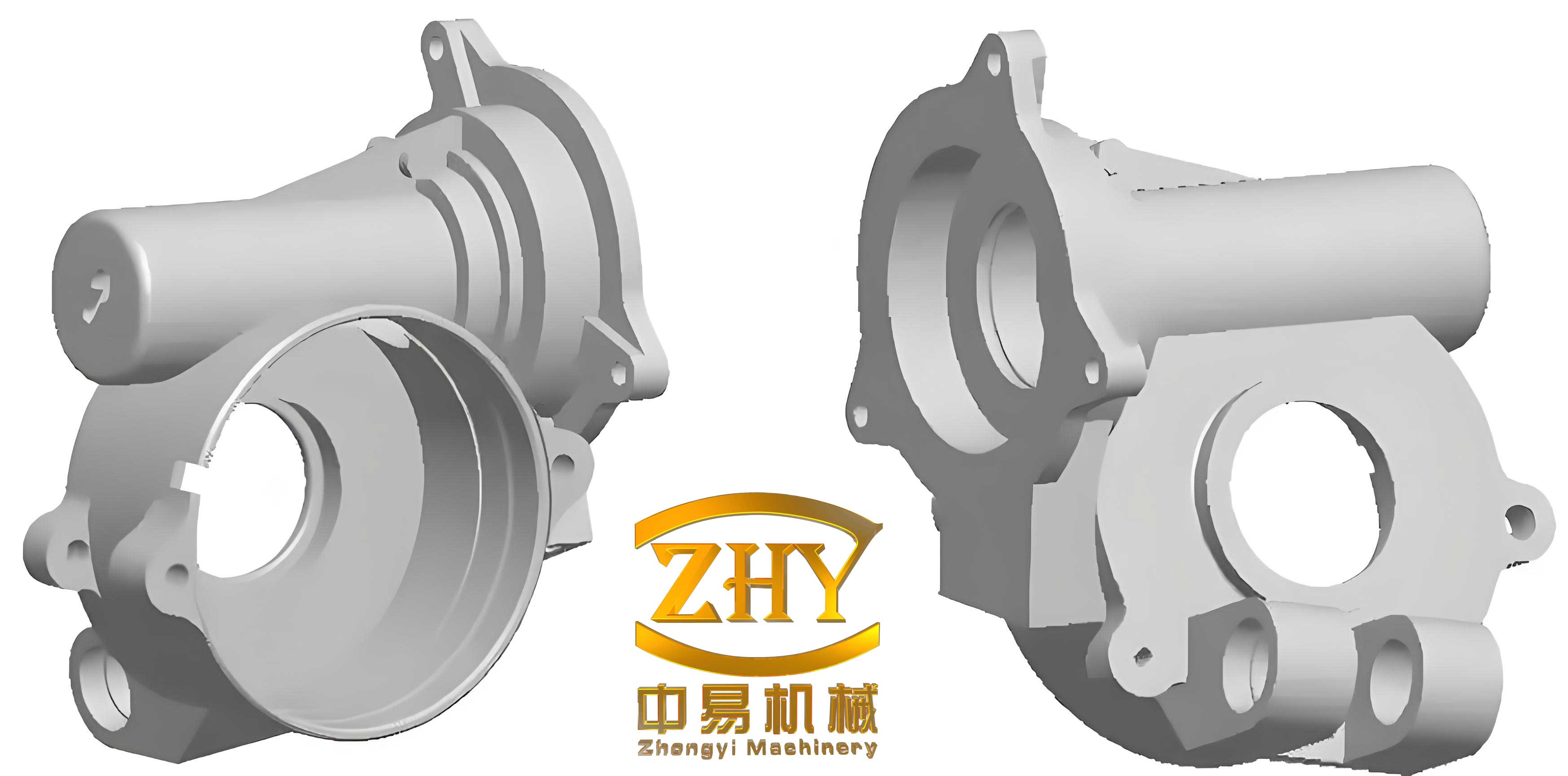
The formation of pinholes in aluminum alloy shell castings is primarily attributed to hydrogen gas entrapment during solidification. During aluminum melting, moisture from raw materials, equipment, auxiliary materials, or air can react with aluminum. The chemical reactions vary with temperature:
Below 250°C:
$$2\text{Al} + 6\text{H}_2\text{O} \rightarrow 2\text{Al(OH)}_3 + 3\text{H}_2 \uparrow$$
Above 400°C:
$$2\text{Al(OH)}_3 \rightarrow \text{Al}_2\text{O}_3 + 3\text{H}_2\text{O}$$
$$2\text{Al} + 3\text{H}_2\text{O} \rightarrow \text{Al}_2\text{O}_3 + 3\text{H}_2 \uparrow$$
The generated hydrogen dissolves into the molten aluminum. At 660°C, the melting point of pure aluminum, the solubility of hydrogen in liquid aluminum is approximately 0.7 cm³/100g, whereas in solid aluminum at the same temperature, it drops sharply to about 0.037 cm³/100g. This significant difference can be expressed as:
$$ S_l(660^\circ\text{C}) = 0.7 \ \text{cm}^3/\text{100g} $$
$$ S_s(660^\circ\text{C}) = 0.037 \ \text{cm}^3/\text{100g} $$
where \( S_l \) is the solubility in liquid and \( S_s \) in solid. The ratio is:
$$ \frac{S_l}{S_s} \approx 19 $$
Thus, hydrogen solubility in liquid aluminum is about 19 times that in solid aluminum at the melting point. During casting of shell castings, as the alloy solidifies, hydrogen solubility decreases, causing hydrogen to precipitate and form bubbles. In thick sections of shell castings, which remain in the liquid-solid two-phase region longer while surrounding thinner sections solidify first, the precipitated hydrogen becomes trapped, leading to pinhole formation. This is why thick regions in shell castings are prone to excessive pinhole defects.
The presence of pinholes compromises the density of the microstructure, reducing mechanical properties. Since thick sections in typical aluminum components like transmission housings are often stress concentration areas, pinholes significantly diminish mechanical performance and reliability life. For shell castings, this is particularly critical as they endure cyclic loads and vibrations.
To mitigate cracking in aluminum alloy transmission shell castings, improvement strategies focus on three aspects: optimizing vehicle layout to reduce stress, enhancing casting processes to minimize pinhole defects, and redesigning the shell structure to improve castability.
First, optimizing the vehicle’s general layout via CAE simulation can lower stress levels at critical points. For instance, increasing the number of mounting bolts from three to four reduced the maximum stress at the mounting location from 149 MPa to 136 MPa, alleviating stress concentration. This adjustment directly benefits the durability of shell castings.
Second, improving the casting process for shell castings is essential to reduce pinhole defects. Extensive research by engineers has shown that adjusting cooling conditions, such as optimizing chill placement, can markedly decrease pinholes in aluminum housings. Other measures include increasing cooling rates, raising solidification pressure, lowering pouring temperatures, and applying sodium modification treatments. These process optimizations enhance the integrity of shell castings.
Third, optimizing the design structure of shell castings improves castability and reduces pinhole formation. In the failed housing, the bolt installation area had a wall thickness of 30 mm, adjacent to a section only about 4 mm thick—a thickness ratio of 7.5. This drastic variation creates a severe wall thickness effect. During solidification, when the thin wall solidifies, the thick section remains mushy, trapping hydrogen and forming pinholes. Redesigning to include transition ribs or gradual thickness changes can reduce this effect, decreasing pinhole propensity and stress concentration, thereby enhancing reliability of shell castings.
To elaborate on the scientific principles, the kinetics of hydrogen precipitation in aluminum shell castings can be described using diffusion equations. The flux of hydrogen \( J \) during solidification is given by Fick’s first law:
$$ J = -D \frac{\partial C}{\partial x} $$
where \( D \) is the diffusion coefficient of hydrogen in aluminum, \( C \) is the hydrogen concentration, and \( x \) is the spatial coordinate. During cooling, the supersaturation of hydrogen drives precipitation, and the rate of bubble formation depends on local solidification time \( t_f \). For a spherical bubble, the growth can be approximated by:
$$ \frac{dr}{dt} = \frac{D}{r} \left( C_l – C_s \right) $$
where \( r \) is the bubble radius, \( C_l \) is the hydrogen concentration in the liquid, and \( C_s \) is the concentration at the bubble interface. In thick sections of shell castings, \( t_f \) is longer, allowing more time for bubble growth and coalescence into larger pores.
Furthermore, the stress concentration factor \( K_t \) at a defect like a pinhole in a shell casting can be estimated for an elliptical pore:
$$ K_t = 1 + 2\sqrt{\frac{a}{\rho}} $$
where \( a \) is the major axis length of the pore, and \( \rho \) is the radius of curvature at the pore tip. This shows how pinholes amplify local stresses, leading to crack initiation. For shell castings under cyclic loading, the fatigue life \( N_f \) can be related to the stress intensity factor range \( \Delta K \) via Paris’ law:
$$ \frac{da}{dN} = C (\Delta K)^m $$
where \( a \) is crack length, \( N \) is cycles, and \( C \) and \( m \) are material constants. Pinholes act as initial cracks, reducing \( N_f \) significantly.
In terms of material science, the Al-Si-Cu system of ADC12 alloy for shell castings involves complex phase transformations. The solubility of silicon and copper affects strengthening mechanisms. The yield strength \( \sigma_y \) can be expressed as:
$$ \sigma_y = \sigma_0 + \Delta\sigma_{\text{precip}} + \Delta\sigma_{\text{dislocation}} $$
where \( \sigma_0 \) is the lattice friction stress, \( \Delta\sigma_{\text{precip}} \) is precipitation strengthening, and \( \Delta\sigma_{\text{dislocation}} \) is dislocation strengthening. Pinholes introduce voids that reduce the effective load-bearing area, lowering \( \sigma_y \).
For process optimization in shell castings, controlling hydrogen content is paramount. The equilibrium hydrogen content \( C_H \) in molten aluminum relates to partial pressure \( P_{H_2} \) by Sieverts’ law:
$$ C_H = K_S \sqrt{P_{H_2}} $$
where \( K_S \) is Sieverts’ constant. Degassing treatments aim to reduce \( P_{H_2} \). Additionally, the solidification rate \( V \) impacts pinhole formation; a critical rate \( V_c \) exists below which pinholes form readily. For shell castings, increasing \( V \) via chills or mold design helps.
Table 3 summarizes key factors affecting pinhole formation in aluminum shell castings:
| Factor | Effect on Pinholes | Optimal Range for Shell Castings |
|---|---|---|
| Hydrogen Content | Directly proportional | < 0.1 ml/100g Al |
| Pouring Temperature | Higher temperature increases solubility | 680-720°C |
| Cooling Rate | Faster cooling reduces pinholes | > 10°C/s in thick sections |
| Solidification Pressure | Higher pressure suppresses bubble formation | > 0.5 MPa for low-pressure casting |
| Alloy Composition (e.g., Si, Cu) | Affects viscosity and solidification range | Si: 9-12%, Cu: 1.5-3.5% for ADC12 |
Regarding structural optimization for shell castings, finite element analysis (FEA) is crucial. The stress \( \sigma \) at a point can be computed from loads \( F \) and geometry. For a bolt mounting area, the stress concentration factor due to thickness transition can be modeled. Redesigning to reduce the thickness ratio \( R_t = t_{\text{thick}} / t_{\text{thin}} \) below 3 is recommended for shell castings. Adding fillets of radius \( R \) reduces stress by a factor \( f(R) \).
In conclusion, through comprehensive analysis, it is evident that excessive pinhole defects caused by casting imperfections are the direct cause of cracking in the aluminum alloy transmission shell casting. The pinholes, resulting from hydrogen entrapment during solidification, severely undermine the mechanical integrity of shell castings, especially in stress-concentrated regions.
The proposed improvements—vehicle layout optimization, casting process enhancement, and structural redesign—collectively address the root causes. By reducing stress levels, minimizing pinhole formation, and improving castability, the reliability of shell castings can be significantly boosted. Future work should involve implementing these measures in prototype shell castings and validating performance through rigorous testing. This case underscores the importance of integrated design, material science, and process control in producing high-quality aluminum shell castings for modern automotive applications.
To further explore the thermodynamics, the Gibbs free energy change \( \Delta G \) for hydrogen bubble formation in shell castings is:
$$ \Delta G = -\frac{4}{3}\pi r^3 \Delta P + 4\pi r^2 \gamma $$
where \( \Delta P \) is the pressure difference driving bubble growth, and \( \gamma \) is the surface tension. Nucleation occurs when \( \Delta G \) reaches a critical value. Process controls aim to alter these parameters to inhibit nucleation in shell castings.
Ultimately, the failure analysis highlights that attention to detail in every stage—from alloy selection and melt treatment to mold design and solidification control—is vital for manufacturing defect-free shell castings. As automotive industries push for lighter and more efficient vehicles, the role of advanced aluminum shell castings will only grow, necessitating continuous improvement in their production and performance.