
In my extensive experience in the metallurgical industry, the production of steel castings is a complex and rigorous process that goes far beyond simple melting of iron. It involves multiple stages such as melting, refining, and various treatments to ensure the quality and performance of the final cast components. The choice of steelmaking process—whether using an Electric Arc Furnace (EAF) or a Medium Frequency (MF) Induction Furnace—plays a critical role in determining the economic and technical outcomes. In this article, I will delve into a detailed comparison of these two prevalent methods, focusing on their operational principles, metallurgical effects, cost implications, and future prospects. Throughout, I will emphasize the importance of optimizing processes for high-quality steel castings, a term I will repeatedly reference to underscore its centrality in this discussion.
The melting and refining procedures for steel castings are stringent, involving steps like oxygen blowing for decarburization, deoxidation, slag refining, and vacuum degassing to remove elements such as carbon and phosphorus. These steps are essential to achieve the desired mechanical properties and integrity in steel castings. My analysis will explore how EAF and MF furnaces handle these tasks, and I will incorporate tables and mathematical formulas to summarize key data and relationships. For instance, the efficiency of element removal can be expressed using formulas like $$[C]_{final} = [C]_{initial} – \Delta C$$, where $\Delta C$ represents the carbon removed during refining. Such formulations help in quantifying process effectiveness.
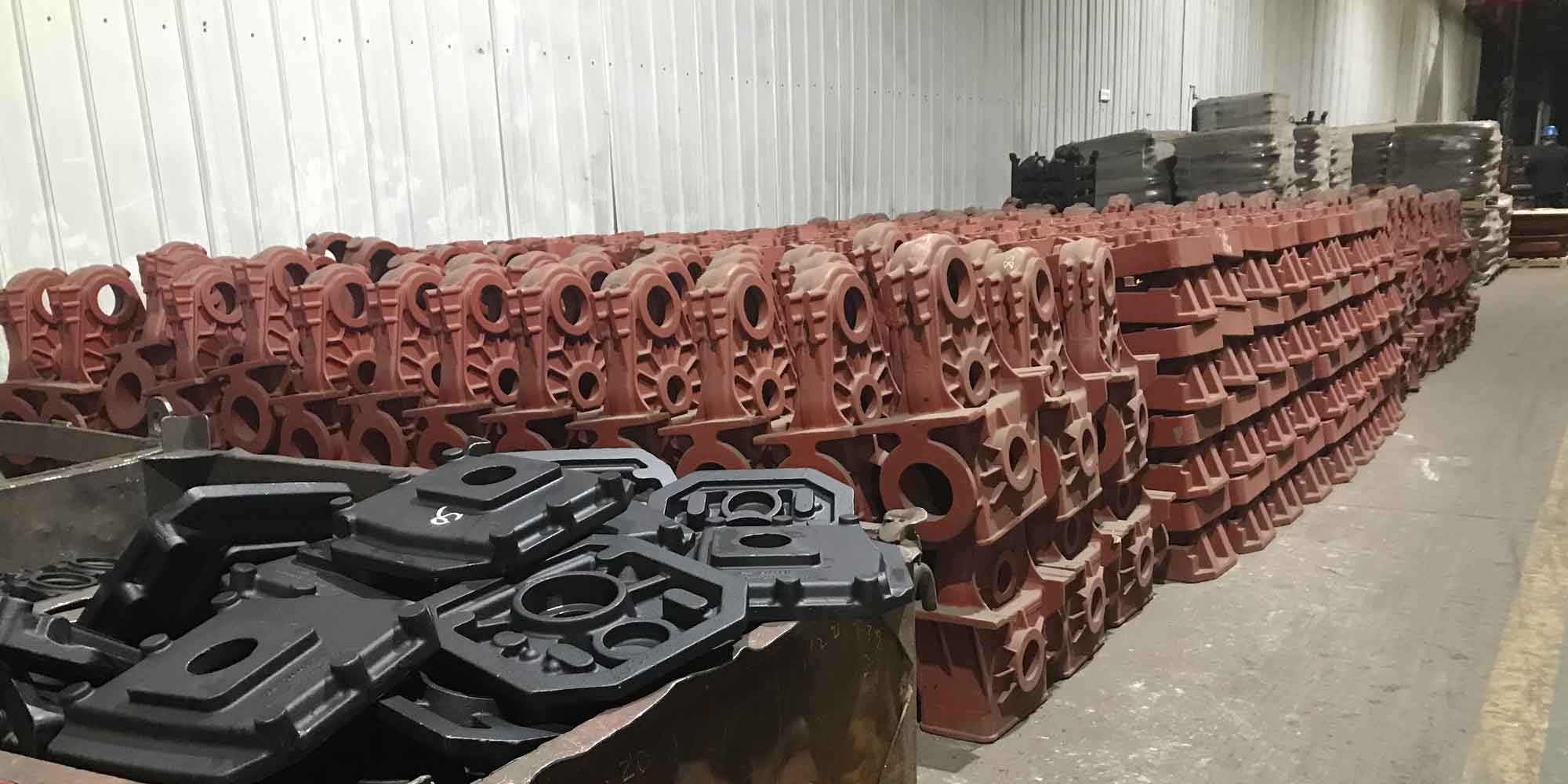
Let me begin with the Electric Arc Furnace (EAF) process, which I have operated in numerous settings. The core principle relies on three-phase electrodes that deliver electrical energy into the furnace, generating high-temperature arcs exceeding 3000°C to melt scrap or other charges. The arcs form between the electrodes and the charge, facilitating rapid melting. Modern EAFs often incorporate oxygen lances at the wall or door to heat cold zones, enhancing melting rates. Additionally, practices like using hot metal as a charge or preheating scrap with waste heat have become common to improve energy efficiency. In my view, this adaptability makes EAFs versatile for various steel castings production needs.
The charging and melting sequence in EAFs has evolved significantly. Traditional methods involved lengthy steps—charging, melting, oxidation, deoxidation, alloying, and casting—but contemporary approaches streamline these. For example, alloying is now frequently performed in a ladle furnace (LF), allowing the EAF to focus on melting and preliminary refining. During melting, processes like early slag formation, increased oxygen usage, and bath homogenization are employed. Decarburization through oxidation and slag removal reduce phosphorus, gases, and inclusions, cutting down tap-to-tap times. Historically, EAF cycles took at least four hours, but with ultra-high power configurations, I have achieved times as low as 70 minutes. This efficiency is crucial for meeting the demands of high-volume steel castings production.
Post-melting, the steel from EAFs typically contains high oxygen levels and may have inconsistent composition and temperature. Here, ladle refining becomes indispensable. In my practice, using a ladle furnace with three-phase electrodes for heating, argon bubbling through porous plugs at the bottom, and alloy additions allows for precise adjustment of chemistry and temperature. Deoxidation through precipitation, such as with aluminum, controls oxygen and sulfur content. The argon stirring also promotes the removal of non-metallic inclusions, which is vital for the integrity of steel castings. The metallurgical outcomes can be summarized with formulas like $$[O]_{after} = [O]_{before} – k \cdot t$$, where $k$ is a rate constant and $t$ is processing time, illustrating the dynamics of deoxidation.
Switching to the Medium Frequency (MF) Induction Furnace, its operation is based on electromagnetic induction. An MF power supply feeds the induction coil around the furnace body, creating an alternating magnetic field in the crucible area. This induces eddy currents in the metal charge, generating heat due to electrical resistance until melting occurs. From my observations, this method minimizes metal evaporation, offers high charge recovery, and produces less fume, reducing environmental impact—a growing concern in steel castings manufacturing. However, the MF furnace primarily serves as a melting unit without inherent refining capabilities, which I will address later.
For steel castings, MF furnaces often use magnesia ramming materials to line the crucible, ensuring durability. Their function is largely limited to melting scrap into liquid steel, with no integrated processes for refining. For instance, when producing stainless steel castings, the quality of the melt heavily depends on the recycled charge material. This limitation necessitates additional steps to achieve the required purity for critical steel castings. In my experience, this has led to the adoption of hybrid systems where MF furnaces are paired with ladle refining furnaces (LRF) to perform reduction and refining, effectively removing oxygen, sulfur, and other impurities.
To better compare these processes, I have compiled data on their metallurgical effects and costs. Below is a table summarizing key parameters for EAF and MF-based routes when producing typical steel castings:
| Parameter | EAF + Ladle Refining | MF + Ladle Refining | MF Alone |
|---|---|---|---|
| Hydrogen (ppm) | ≤ 5 | 8 – 20 | 10 – 25 |
| Oxygen (ppm) | ≤ 50 | 50 – 100 | 80 – 150 |
| Nitrogen (ppm) | ≤ 80 | 80 – 120 | 100 – 200 |
| Sulfur (ppm) | < 100 | 100 – 200 | |
| Phosphorus (ppm) | < 150 | 150 – 300 | |
| Non-metallic Inclusions (ppm) | < 70 | 70 – 150 |
These values highlight the superior refining capability of EAF-based routes, which is essential for high-grade steel castings. The removal of elements can be modeled with equations like $$[S]_{final} = [S]_{initial} \cdot e^{-kt}$$ for desulfurization, where $k$ depends on slag composition and stirring intensity. In contrast, MF alone lacks decarburization, leading to poorer control over phosphorus and gases, making it unsuitable for standalone production of finished steel castings without subsequent treatment.
Regarding application strategies, I often recommend combined setups. Integrating EAF, MF, and refining furnaces—along with ancillary equipment like vacuum degassers or electroslag remelting units—enables flexibility in producing diverse steel grades for castings, from carbon steels to alloy steels for hydroelectric or thermal power applications. The choice of route depends on product requirements, operational convenience, and cost. For standard steel castings with low added value, such as marine or general engineering components, cost control is paramount, and MF-based processes may be preferred if recycled material is available. However, for high-value steel castings like large hydroelectric stainless steel parts or 9Cr steel supercritical turbine casings, a combination of EAF and MF with refining is advantageous to balance quality and cost.
Cost analysis is a critical aspect of my evaluation. Below is a comparative table outlining investment and operational costs for EAF versus MF furnaces in steel castings production:
| Cost Factor | EAF | MF Furnace | Notes |
|---|---|---|---|
| Initial Investment | High (≥ 2 × MF) | Low | Due to larger equipment, higher crane capacity, and doubled dust collection needs. |
| Material Costs | High (electrodes, deoxidizers, expensive refractories) | Low (magnesia ramming material, fewer consumables) | EAF refractories cost ~¥250,000 for 60t lining, lasting 20 heats for stainless; MF costs ~¥70,000 for 30t, lasting 40 heats. |
| Power Consumption | High (≥ 2 × MF) | Low | Influenced by dust collection, cooling water, and arc heating losses. |
| Metal Yield | 92-98% (2-5% loss due to vaporization) | ~99.5% (minimal loss) | For stainless scrap, EAF metal loss costs ≥¥700/ton; MF loss negligible. |
| Electrode Cost Impact | Significant (¥40-100/ton increase per ¥10,000/ton electrode price rise) | None | Electrode prices have surged: high-power electrodes up to ¥100,000/ton, driving EAF costs up. |
The cost dynamics can be expressed mathematically. For example, the total cost per ton of steel castings ($C_{total}$) for EAF can be approximated as $$C_{total} = C_{electrode} \cdot m_{electrode} + C_{power} \cdot E + C_{material} + C_{labor}$$, where $m_{electrode}$ is electrode consumption in kg/ton, $E$ is energy in kWh/ton, and other terms represent material and labor costs. For MF, the equation simplifies due to lower electrode and energy inputs. Recent trends show electrode prices escalating rapidly—e.g., high-power electrodes increasing by 240% in six months—making EAF operations more expensive. This compels producers of steel castings to explore MF-based routes for cost efficiency.
Looking ahead, the market for steel castings is shifting toward high-added-value products. Conventional items like ship castings or standard power plant components face saturated markets and low margins, whereas advanced steel castings for renewable energy or ultra-supercritical applications offer growth potential. In my opinion, adopting hybrid systems that combine MF for melting with EAF and refining for treatment will be key. This allows leveraging recycled material—common in steel castings production—while maintaining quality. For instance, using MF to melt stainless steel scrap and then refining in a ladle furnace can control costs and meet stringent specifications for hydroelectric steel castings.
To quantify future opportunities, consider the demand growth for premium steel castings, which can be modeled with a logistic function: $$D(t) = \frac{L}{1 + e^{-k(t-t_0)}}$$, where $D(t)$ is demand at time $t$, $L$ is the carrying capacity, $k$ is the growth rate, and $t_0$ is the inflection point. This suggests a steady rise in need for advanced processes. Moreover, environmental regulations are pushing for greener steelmaking; MF furnaces, with lower emissions, align well with this trend for sustainable steel castings production.
In conclusion, my analysis underscores that both EAF and MF furnaces have distinct roles in steel castings manufacturing. EAF-based processes offer superior metallurgical control, essential for high-integrity steel castings, but at higher costs driven by electrodes and energy. MF furnaces provide cost advantages, especially when paired with refining, making them suitable for value-driven production. As electrode prices rise, the economic viability of EAF diminishes, incentivizing the integration of MF into production lines. For businesses aiming to compete in high-value steel castings markets, a balanced approach—using MF for melting and EAF with refining for quality assurance—can optimize both cost and performance. Ultimately, the choice hinges on specific product requirements and economic constraints, but the ongoing evolution of these technologies will continue to shape the future of steel castings production.
I hope this detailed exposition, enriched with tables and formulas, provides valuable insights for professionals in the field. The journey toward efficient steel castings production is ongoing, and I am confident that adaptive process strategies will drive success in this dynamic industry.