
The metal casting industry serves as a critical foundation for sectors such as automotive and machinery manufacturing, holding a position of immense economic importance worldwide. Among the various casting methods, sand casting is the most prevalent and widely used due to its low production costs and relatively simple process flow. Statistics indicate that sand casting accounts for approximately 70-80% of total castings produced globally. However, this widespread use comes with a significant environmental cost, primarily concerning air pollution. The process is a notable source of gaseous emissions, which in recent decades have been identified to contain not only well-known greenhouse gases like carbon monoxide and carbon dioxide but also a complex mixture of volatile organic compounds (VOCs) and hazardous air pollutants (HAPs). Studies have shown that emissions from foundries utilizing sand casting can contain over 40 of the 188 HAPs listed by environmental protection agencies, including substances like benzene, toluene, phenol, and formaldehyde.
The primary source of these organic emissions has been traced back to the thermal decomposition, or pyrolysis, of raw materials used in mold and core making. When molten metal is poured into the sand mold, binders (e.g., phenolic resins) and additives (e.g., coal dust) are subjected to intense heat under relatively oxygen-deficient conditions within the mold cavity. This environment triggers complex pyrolytic reactions, breaking down the complex organic molecules in these materials and releasing a vast array of volatile compounds into the foundry atmosphere. The composition of these emissions is heavily dependent on the chemical structure of the raw materials used. Therefore, selecting cleaner raw materials is a fundamental strategy for pollution prevention at the source.
Traditionally, evaluating the emission profiles of new binders or additives required costly and time-consuming pre-production trials in pilot-scale foundries. These trials involve creating molds, performing actual metal pours, and conducting extensive air sampling and analysis around the casting. While providing real-world data, this approach is resource-intensive, suffers from numerous uncontrolled variables (e.g., metal temperature, mold geometry, ventilation), and is impractical for screening a wide variety of new material formulations during the research and development phase. This creates a bottleneck in the development and adoption of cleaner technologies for the sand casting industry.
This is where analytical pyrolysis emerges as a transformative laboratory-scale technique. Analytical pyrolysis allows for the precise simulation of the extreme thermal conditions that sand casting materials experience during metal pouring. By coupling a pyrolysis unit directly to sophisticated analytical instruments like gas chromatography-mass spectrometry (GC-MS), researchers can rapidly generate detailed, quantitative inventories of the VOCs and HAPs produced from a tiny sample of any binder or additive. This paper explores the application of analytical pyrolysis as a fast, accurate, and reliable tool for air pollution control in sand casting, detailing its methodology, validating its correlation with actual casting emissions, and demonstrating its utility in comparing and developing environmentally preferable foundry materials.
The Sand Casting Process and Its Environmental Challenge
To understand the application of analytical pyrolysis, one must first grasp the basic sand casting process and the origin of its emissions. The process begins with the creation of a mold, which is a negative impression of the desired final metal part. This mold is typically made from silica sand mixed with a bonding agent, or binder, to give it strength and retain its shape. For complex internal geometries, separate sand cores are manufactured and placed inside the mold cavity. The most common binders for cores, and often for molds, are synthetic organic resins, such as phenolic urethanes, furan resins, or alkaline phenolics. Additives like coal dust (seacoal) are also frequently added to green sand molds (sand mixed with clay and water) to improve the surface finish of the cast metal by creating a reducing atmosphere at the mold-metal interface.
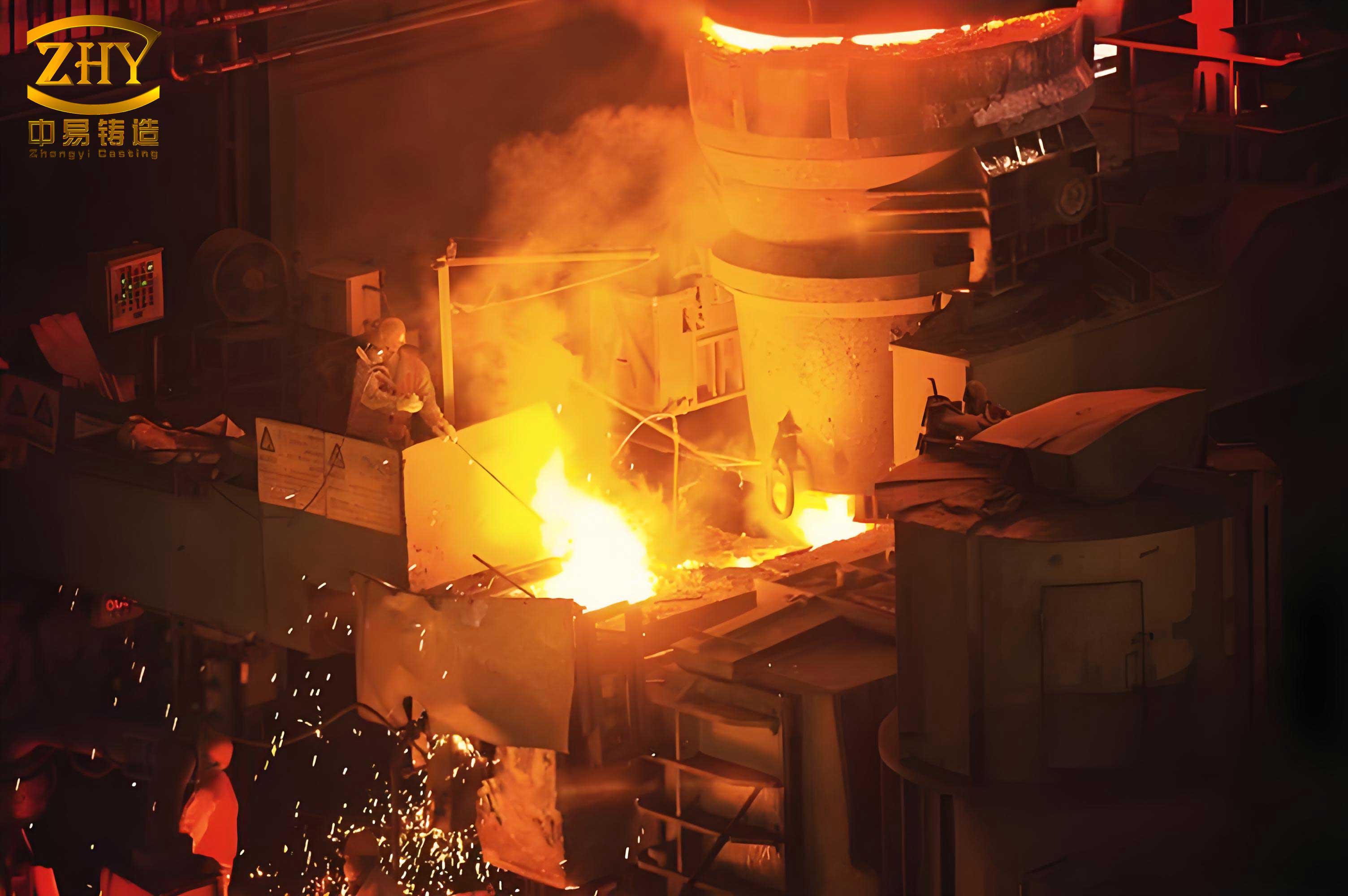
The critical environmental event occurs during the pouring stage. When molten metal, often exceeding 700°C for aluminum and 1400°C for iron, fills the mold, the sand in the immediate vicinity of the metal (the “burn-on” layer) is heated rapidly to temperatures ranging from approximately 600°C to over 1000°C. This heating is extremely rapid, akin to a thermal shock. Under these high-temperature, oxygen-poor conditions inside the mold, the organic components undergo pyrolysis rather than combustion. Pyrolysis is the thermal decomposition of materials in the absence of oxygen, leading to the production of smaller, volatile molecules. The general reaction for an organic binder (represented as a polymer) can be simplified as:
$$ \text{Binder Polymer} \xrightarrow{\Delta, \text{anoxic}} \text{Gases (VOCs/HAPs, CO, CO}_2\text{, CH}_4\text{)} + \text{Tars/Oils} + \text{Char} $$
The gaseous products, a complex cocktail of VOCs and HAPs, migrate through the permeable sand mold and are released into the foundry workspace. Key pollutant classes consistently identified include:
- Monocyclic Aromatics: Benzene, toluene, ethylbenzene, xylenes (BTEX).
- Oxygenated Aromatics: Phenol, cresols (methylphenols).
- Polycyclic Aromatic Compounds (PACs): Naphthalene, methylnaphthalenes, anthracene, phenanthrene.
- Other HAPs: Formaldehyde, acetaldehyde, benzeneamine (aniline).
The emission factor $E_i$ for a specific pollutant $i$ from a sand casting process can be conceptually modeled as a function of the material composition and process parameters:
$$ E_i = f( \sum_{j=1}^{n} (m_j \cdot Y_{i,j}), T_{\text{pour}}, t_{\text{exposure}}, \phi_{\text{sand}} ) $$
where:
- $m_j$ is the mass of raw material $j$ (e.g., binder, additive) in the mold/core,
- $Y_{i,j}$ is the specific yield of pollutant $i$ from material $j$ under the relevant thermal conditions,
- $T_{\text{pour}}$ is the molten metal pouring temperature,
- $t_{\text{exposure}}$ is the time the sand is exposed to high temperature,
- $\phi_{\text{sand}}$ is the permeability/porosity of the sand mold affecting gas transport.
The core challenge for pollution prevention is accurately determining $Y_{i,j}$, the inherent emission potential of a raw material. This is the parameter that analytical pyrolysis is uniquely suited to measure in a controlled and efficient manner.
Analytical Pyrolysis: Methodology and Simulation of Sand Casting Conditions
Analytical pyrolysis is a technique where a small sample is rapidly heated in an inert atmosphere, and the volatile decomposition products are directly transferred to a gas chromatograph for separation and identification. To faithfully simulate the sand casting environment, the pyrolysis parameters must be carefully selected to match the thermal regime experienced by the sand during pouring.
1. Apparatus: A standard analytical pyrolysis system consists of three main components:
- Pyrolyzer: This is the heart of the system. For sand casting simulation, a Curie-point pyrolyzer or a resistively heated micro-furnace pyrolyzer is ideal. In a Curie-point system, the sample is placed on or within a ferromagnetic foil (e.g., iron, nickel, cobalt alloys). When subjected to a high-frequency electromagnetic field, the foil heats inductively to its specific Curie-point temperature—the temperature at which it loses its ferromagnetism—thus providing a very fast and precise final temperature. This rapid heating (milliseconds to reach final temperature) excellently mimics the “thermal shock” of metal pouring in sand casting.
- Interface: A heated transfer line connects the pyrolyzer directly to the inlet of the gas chromatograph. This ensures that all pyrolyzates, including less volatile tars, are transferred without condensation.
- Gas Chromatograph-Mass Spectrometer/Flame Ionization Detector (GC-MS/FID): The complex mixture of gases is separated in the GC column. The FID provides quantitative data for all hydrocarbon compounds, while the MS provides qualitative identification (molecular fingerprint) of individual peaks.
2. Simulating Sand Casting Pyrolysis Conditions: The key to relevant data is setting the right pyrolysis parameters.
- Temperature: The final pyrolysis temperature should correspond to the peak sand temperature near the mold-metal interface. For ferrous sand casting, this can be 900-1100°C. A temperature of 920°C is often chosen as a representative benchmark. The Curie-point of an iron-nickel alloy foil can be engineered to achieve this precisely.
- Heating Rate: This is critical. The heating rate in sand casting is extremely high. A Curie-point pyrolyzer can achieve heating rates exceeding 1000°C per second, effectively simulating the near-instantaneous heating.
- Atmosphere: An inert carrier gas (helium or nitrogen) is used to create an oxygen-deficient environment, replicating the anoxic conditions within the mold.
- Pyrolysis Time: The sample is held at the final temperature for a short duration (typically 2-10 seconds), representing the brief but intense thermal exposure period.
- Sample Preparation: For binders, they should be tested as they are used in practice. This means mixing the liquid binder with silica sand at the typical foundry ratio (e.g., 1-2% binder by weight), curing it, and then crushing the resulting sand mixture into a fine, homogeneous powder for pyrolysis. This accounts for any interactions between the binder and the sand substrate.
The process can be modeled as a first-order kinetic reaction for the decomposition of a material component to a specific volatile product $i$:
$$ \frac{d[V_i]}{dt} = k_i [M] $$
where $[M]$ is the concentration of the decomposable material, and $k_i$ is the temperature-dependent rate constant given by the Arrhenius equation:
$$ k_i = A_i \exp\left(-\frac{E_{a,i}}{RT}\right) $$
In analytical pyrolysis with ultra-fast heating, the temperature $T$ is a function of time $T(t)$, and the total yield $Y_i$ is the integral of the production rate over the pyrolysis time $t_p$:
$$ Y_i \propto \int_{0}^{t_p} k_i(T(t)) [M(t)] \, dt $$
The controlled, reproducible $T(t)$ profile in the pyrolyzer allows for the consistent measurement and comparison of $Y_i$ across different materials.
Validation: Correlation Between Analytical Pyrolysis and Actual Sand Casting Emissions
The ultimate value of analytical pyrolysis rests on its ability to predict real-world emission trends from the sand casting process. Extensive comparative studies have validated this correlation.
Similarity in Emission Composition: The chromatographic profiles (the “fingerprint”) of gases from analytical pyrolysis of standard foundry binders are strikingly similar to those obtained from air sampling during actual metal pours in controlled test foundries. The major emission categories—BTEX, phenolics, and PACs—are consistently the dominant features in both sets of data. For instance, pyrolysis of a traditional phenolic urethane binder shows a large suite of aromatic compounds, with phenol, benzene, and naphthalene derivatives being prominent. This matches the emission inventory from foundries using the same binder.
Quantitative Comparison of Emission Trends: More importantly, analytical pyrolysis accurately predicts the relative changes in emission levels when one binder is substituted for another. This is its most powerful application. Consider the following comparison, which can be summarized in a table showing the relative emission factor ratios for key HAPs.
| Hazardous Air Pollutant (HAP) | Non-Naphthalene Phenolic Binder | Protein-Based (Biopolymer) Binder | ||
|---|---|---|---|---|
| Analytical Pyrolysis Trend | Pilot Foundry Trend | Analytical Pyrolysis Trend | Pilot Foundry Trend | |
| Benzene | ≈ 1.3x (Increase) | ≈ 1.3x (Increase) | ≈ 0.15x | ≈ 0.18x |
| Toluene | ≈ 1.1x | ≈ 1.2x | ≈ 0.3x | ≈ 0.6x |
| Phenol | ≈ 1.0x (Similar) | ≈ 1.0x (Similar) | ≈ 0.01x | ≈ 0.01x |
| Naphthalene | ≈ 0.3x | ≈ 0.5x | ≈ 0.02x | ≈ 0.05x |
| Methylnaphthalenes | ≈ 0.1x – 0.2x | ≈ 0.2x – 0.4x | Not Detected / Trace | Trace |
| Total PACs | Reduction > 50% | Reduction > 50% | Reduction > 95% | Reduction > 90% |
| Total Major HAPs | Slight Increase | Slight Increase | Reduction > 85% | Reduction > 90% |
The data reveals compelling correlations:
- Non-Naphthalene Phenolic Binder: This binder was reformulated to remove naphthalene derivatives from its solvent carrier. Both analytical pyrolysis and foundry trials show the same clear trend: a dramatic reduction (>50%) in total polycyclic aromatic compound (PAC) emissions, particularly naphthalene and methylnaphthalenes. Both methods also agree on a slight increase or similar level for lighter aromatics like benzene and toluene. The pyrolysis data provided an early, accurate signal that the reformulation successfully hit its target of reducing PACs, albeit with a potential trade-off in other VOCs.
- Protein-Based Biopolymer Binder: This represents a more radical shift in chemistry, using animal-derived proteins. Both testing methods concur that this change leads to a profound reduction (>85-90%) in the total emissions of the major aromatic HAPs. The emission profile shifts significantly; pyrolysis reveals that the dominant products become simpler aldehydes (e.g., acetaldehyde) and nitrogen-containing compounds from protein degradation, along with very low levels of benzene and toluene. The pilot foundry data confirmed this overall drastic reduction in aromatic HAPs.
The slight quantitative differences in the ratios (e.g., for toluene from the protein binder) are expected and can be attributed to real-world factors in sand casting not fully captured in pyrolysis, such as gas transport through the sand bed, secondary cracking reactions in the mold, or adsorption/condensation of less volatile compounds onto sand grains. However, the consistent directional trends for every pollutant class validate analytical pyrolysis as an exceptional predictive screening tool.
Applications in Pollution Control and Cleaner Material Development for Sand Casting
The validated correlation establishes analytical pyrolysis as a cornerstone technology for advancing air pollution control in sand casting. Its applications are multifaceted.
1. Rapid Emission Inventory and Fingerprinting: For any new binder, additive, or even a new batch of an existing material, analytical pyrolysis can generate a comprehensive VOC/HAP emission fingerprint within hours. This provides a “chemical safety data sheet” for emissions, identifying not only the major pollutants but also trace components that might be missed in diluted, real-world stack testing. The yield $Y_i$ for each compound can be quantified relative to the sample mass, providing intrinsic emission factors.
2. Comparative Assessment and Screening: This is the primary application. During the development of new “green” binders, researchers can synthesize dozens of slightly different formulations. Using analytical pyrolysis, they can rapidly rank these candidates based on their emission profiles. The goal might be to minimize benzene yield, eliminate specific PACs, or reduce total hydrocarbon mass. The screening can be guided by objective metrics, such as a scoring function $S$:
$$ S = -\sum_{i=1}^{n} w_i \cdot Y_i $$
where $w_i$ is a weighting factor reflecting the relative toxicity or regulatory concern of pollutant $i$, and $Y_i$ is its measured yield from pyrolysis. The formulation with the lowest (most negative) score $S$ represents the cleanest option under the defined criteria.
3. Understanding Pyrolysis Mechanisms and Guiding Synthesis: By studying the pyrolysis products of different binders, chemists can infer the decomposition pathways. For example, if a binder produces large amounts of phenol and formaldehyde upon pyrolysis, it suggests the breakdown of methylene bridges in a phenolic resin. This knowledge can guide the synthesis of more stable polymers or the use of alternative cross-linking agents that yield less toxic fragments upon thermal stress in sand casting. It transforms material development from empirical guesswork to a science-guided process.
4. Quality Control and Supplier Evaluation: Foundries can use analytical pyrolysis to audit incoming raw materials. Variations in the emission fingerprint of a binder from different suppliers, or different batches, can signal changes in formulation or impurities that could lead to unexpected pollution or workplace exposure issues. It serves as a powerful quality assurance tool.
5. Supporting Regulatory Compliance and Pollution Prevention Planning: The detailed emission inventories generated can help foundries proactively understand their Potential to Emit (PTE) and assess the need for, and effectiveness of, add-on air pollution control devices like thermal oxidizers or carbon adsorbers when planning new production lines or material changes in sand casting operations.
Case Study: Systematic Development of a Low-Emission Binder System
A hypothetical but realistic case study illustrates the integrated application. A binder manufacturer aims to develop a new cold-box core binder for sand casting with significantly lower benzene and PAC emissions than the industry-standard phenolic urethane.
Phase 1: Baseline & Target Setting.
- Analytical pyrolysis (920°C, 5s, He) of the standard binder establishes the baseline emission profile, quantifying $Y_{\text{benzene}}$, $Y_{\text{naphthalene}}$, $Y_{\text{total HAPs}}$.
- Targets are set: >70% reduction in benzene, >90% reduction in total PACs.
Phase 2: Formulation Screening.
- Twenty candidate formulations are prepared, varying the phenolic resin type, polyol component, and solvent blend.
- Each formulation is mixed with sand, cured, crushed, and analyzed via analytical pyrolysis.
- The results are summarized in a screening table, allowing rapid visual comparison.
| Formulation ID | Resin Type | Solvent | Benzene Yield (µg/g binder) | Naphthalene Yield (µg/g binder) | Total HAP Score (S) | Rank |
|---|---|---|---|---|---|---|
| STD | Standard Phenolic | Aromatic 100 | 450 | 120 | 0 (Baseline) | – |
| F-01 | Standard Phenolic | Low-Aromatic | 420 | 95 | -12 | 15 |
| F-05 | Modified Phenolic | Ester-based | 280 | 45 | -105 | 8 |
| F-12 | Bio-Phenolic | Ester-based | 180 | 15 | -210 | 3 |
| F-18 | Bio-Phenolic + Additive A | Green Solvent | 110 | < 5 (ND) | -345 | 1 |
| F-20 | Furan Alternative | None | 50 | 8 | -320 | 2 |
Phase 3: Lead Optimization & Validation.
- Lead formulation F-18 is selected for further optimization. Three variations of Additive A concentration are tested via pyrolysis.
- The optimal version (F-18B) achieves: Benzene Yield = 95 µg/g (79% reduction), Naphthalene Yield = Not Detected (>96% reduction).
- F-18B is then subjected to a full pilot foundry trial using iron sand casting. The real emission measurements confirm the trends: 75% reduction in benzene, 98% reduction in naphthalene, and a 70% reduction in total measured HAPs versus the standard process.
- The correlation is confirmed, and the new binder is cleared for commercial scale-up.
This entire R&D cycle, which might take months and significant cost using only pilot foundry trials, can be condensed to a few weeks at a fraction of the cost using analytical pyrolysis for the crucial screening and optimization phases.
Future Directions and Integration
The future of analytical pyrolysis in sand casting pollution control lies in deeper integration and more sophisticated analysis.
1. Advanced Detection: Coupling pyrolysis to comprehensive detection systems like GCxGC-TOFMS (two-dimensional gas chromatography with time-of-flight mass spectrometry) can resolve thousands of compounds, providing an even more complete fingerprint and revealing previously unidentified trace pollutants.
2. Kinetics and Modeling: Performing pyrolysis at multiple heating rates and temperatures allows for the determination of kinetic parameters ($A_i$, $E_{a,i}$) for the formation of key pollutants. This data can feed into computational fluid dynamics (CFD) models of the sand casting process to predict spatial and temporal emission release within a mold, aiding in localized ventilation design.
3. Correlation with Other Properties: Large datasets from pyrolysis can be combined with data on binder tensile strength, bench life, and shakeout properties using multivariate analysis (e.g., Principal Component Analysis – PCA). This helps find the optimal compromise between mechanical performance, cost, and environmental impact for sand casting applications.
$$ \text{PCA Model:} \quad \mathbf{X} = \mathbf{T}\mathbf{P}^T + \mathbf{E} $$
where $\mathbf{X}$ is the data matrix (rows=samples, columns=features like benzene yield, tensile strength, etc.), $\mathbf{T}$ contains scores, $\mathbf{P}$ loadings, and $\mathbf{E}$ residuals. Such models can visualize how different formulations cluster in multi-property space.
4. Standardization: Developing industry-wide standard pyrolysis protocols (temperature, heating rate, sample prep) for sand casting materials would allow for direct comparison of data generated in different laboratories, further accelerating the adoption of cleaner technologies globally.
Conclusion
Analytical pyrolysis has firmly established itself as an indispensable scientific tool for addressing the persistent challenge of air pollution in the sand casting industry. By providing a fast, accurate, and cost-effective means to simulate the pyrolytic heart of the metal pouring process, it delivers critical insights that bridge the gap between laboratory chemistry and full-scale foundry production. Its validated ability to generate detailed emission inventories and, most importantly, to reliably predict the relative environmental performance of different raw materials makes it a cornerstone of pollution prevention strategies. It empowers binder chemists to design for lower emissions, enables foundry engineers to make informed material selections, and provides regulators and researchers with robust data for understanding the industry’s environmental footprint. As the sand casting sector continues its journey towards sustainable manufacturing, analytical pyrolysis will remain a foundational technology, guiding the development and adoption of cleaner materials and processes, ultimately contributing to healthier workplaces and a cleaner environment. The integration of this technique into standard research, development, and quality control protocols represents a pragmatic and powerful step forward for the global foundry industry.