
In our production facility, we specialize in manufacturing gray iron casting components, particularly cylinder blocks for engines. The quality and cost-effectiveness of these gray iron casting parts are critical, as they must meet stringent performance standards while maintaining competitive pricing. Recently, we faced significant challenges with high rejection rates in our gray iron casting process, primarily due to defects such as blowholes and depressions. This article details our journey in addressing these issues through the innovative use of high sulfur nitrogen recarburizer, and how it transformed our gray iron casting operations.
Gray iron casting is a fundamental process in our industry, relying on precise control of molten iron chemistry and solidification behavior. The cylinder blocks we produce are made from HT250 gray iron, which requires a balanced composition to achieve desired mechanical properties. Initially, we used a low sulfur nitrogen recarburizer in our medium-frequency induction furnace melting process. The charge composition included pig iron, scrap steel, returns, alloys, and the recarburizer to adjust carbon content. This approach aimed to reduce costs by increasing scrap steel usage and minimizing pig iron. However, we observed an unacceptably high rejection rate in our gray iron casting outputs, averaging 3.35% over three months, with blowholes and depressions accounting for 78% of these defects. This not only led to substantial quality losses but also posed significant risks to our production schedule.
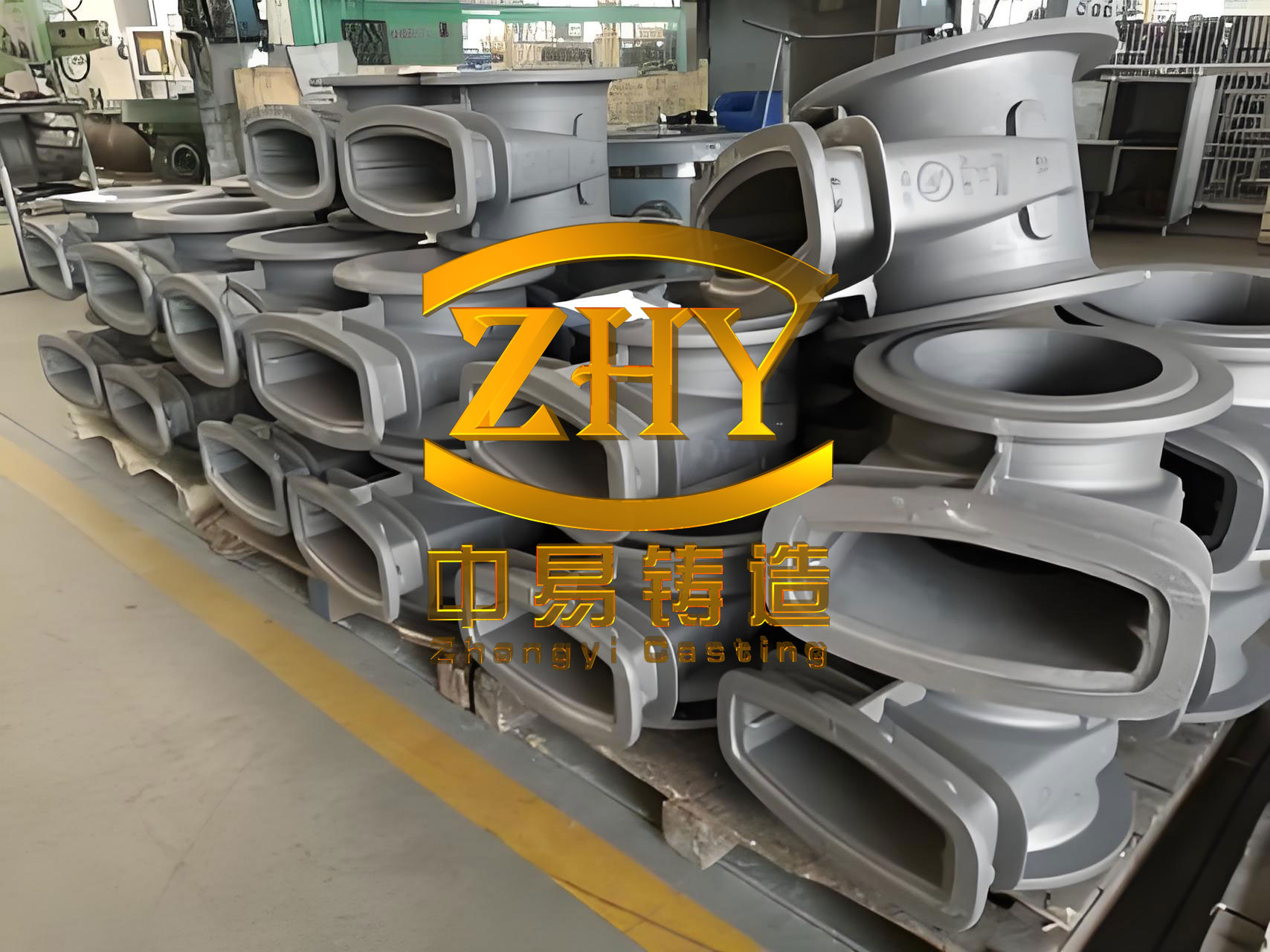
To understand the root causes, we analyzed the defects in detail. Blowholes, often appearing as subcutaneous pores in machined gray iron casting surfaces, are typically caused by gas entrapment during pouring. Factors include aluminum content in the molten iron, moisture from the mold, and rapid solidification. In our case, aluminum levels were within the safe range of 0.005% to 0.01%, and mold moisture was controlled at 2.6% to 3.0%, meeting process specifications. However, we hypothesized that the solidification rate played a key role. The carbon content in our molten iron was relatively low, averaging 3.171%, leading to a carbon equivalent (CE) of about 3.77%. This is calculated using the formula for gray iron casting: $$CE = C + \frac{1}{3}(Si + P)$$ where C, Si, and P are the weight percentages of carbon, silicon, and phosphorus, respectively. A lower CE can accelerate solidification, reducing the time for gases to escape and increasing blowhole susceptibility.
Depressions, on the other hand, occurred at hot spots in the gray iron casting, such as junctions between thin and thick sections. These defects result from volume shrinkage during solidification, compounded by inadequate feeding. With a low CE, the gray iron casting exhibits a hypoeutectic structure, precipitating primary austenite dendrites. This phase consumes liquid iron, causing shrinkage. If the graphite expansion during eutectic solidification is insufficient to compensate, or if fluidity is poor, depressions and shrinkage cavities form. Our data indicated that the low carbon content reduced graphite precipitation and expansion, worsening these issues.
We then explored solutions to enhance fluidity and prolong solidification time in gray iron casting. Increasing carbon content seemed promising, but we needed to maintain tensile strength, which averaged 303 MPa with the low sulfur nitrogen recarburizer. Simply raising carbon could weaken the material. Drawing from metallurgical insights, we considered the role of nitrogen in gray iron casting. Nitrogen is known to refine graphite morphology and strengthen the matrix. Thus, we proposed blending a high sulfur nitrogen recarburizer with our existing low sulfur nitrogen recarburizer. The high sulfur nitrogen recarburizer, derived from calcined petroleum coke, contains elevated levels of sulfur and nitrogen, while the low sulfur nitrogen recarburizer is graphitized, with minimal impurities. By mixing them, we aimed to boost nitrogen content without compromising other properties.
We conducted trials with a 7:3 ratio of high sulfur to low sulfur recarburizer, maintaining a total recarburizer addition of 1.6% to 2.0% of the charge. The recarburizer was added incrementally when about 20% of the charge melted, ensuring dissolution through furnace agitation. Post-inoculation, the carbon content increased to approximately 3.302%, raising the CE to 3.91%. Remarkably, the tensile strength remained steady at around 305 MPa, and hardness averaged 198 HBW. This allowed us to improve fluidity and feeding capacity in gray iron casting without sacrificing performance.
The results were striking. After implementing the blended recarburizer approach, the rejection rate for gray iron casting dropped to an average of 1.96% over five months, with blowholes reduced to 0.65% and depressions virtually eliminated. This represented a 1.39% overall improvement, primarily due to better control of these defects. Table 1 summarizes the rejection rates before and after the change, highlighting the impact on gray iron casting quality.
| Period | Recarburizer Type | Blowhole Rejection Rate (%) | Depression Rejection Rate (%) | Overall Rejection Rate (%) |
|---|---|---|---|---|
| Jan-Mar 2021 | Low Sulfur Nitrogen | 2.28 | 0.34 | 3.35 |
| Apr-Aug 2021 | Blended High/Low Sulfur Nitrogen | 0.65 | 0.00 | 1.96 |
The chemical composition of the molten iron played a crucial role. Table 2 compares the averages before and after the recarburizer change, emphasizing key elements in gray iron casting. Notably, carbon increased by 0.13%, while nitrogen rose significantly due to the high sulfur nitrogen recarburizer.
| Element | With Low Sulfur Nitrogen Recarburizer (wt%) | With Blended Recarburizer (wt%) |
|---|---|---|
| C | 3.171 | 3.302 |
| Si | 1.782 | 1.798 |
| Mn | 0.823 | 0.819 |
| S | 0.073 | 0.077 |
| P | 0.023 | 0.023 |
| Al | 0.008 | 0.009 |
| N (estimated) | 0.0001-0.00015 | 0.006-0.01 |
| Carbon Equivalent (CE) | 3.77 | 3.91 |
The mechanism behind this improvement centers on nitrogen’s influence in gray iron casting. Nitrogen, introduced via the high sulfur nitrogen recarburizer, alters graphite morphology and matrix structure. Research indicates that nitrogen atoms, being smaller than carbon or iron, can dissolve interstitially in ferrite and cementite, causing lattice distortion. This enhances strength through solid solution hardening. Moreover, nitrogen lowers the eutectic transformation temperature, increasing undercooling and promoting finer eutectic cells. The relationship can be expressed using the undercooling parameter in gray iron casting: $$\Delta T = T_e – T_n$$ where $\Delta T$ is undercooling, $T_e$ is equilibrium eutectic temperature, and $T_n$ is actual temperature with nitrogen. Higher undercooling refines microstructure.
Graphite morphology is critical in gray iron casting. Nitrogen shortens graphite flakes, increases curvature, and blunts their tips, reducing stress concentration. This effect minimizes the weakening caused by graphite’s platelet structure. The aspect ratio (length-to-width ratio) of graphite decreases, which improves mechanical properties. We can model this with a simple formula for graphite modification: $$AR_{new} = AR_{old} \times e^{-k[N]}$$ where $AR$ is aspect ratio, $[N]$ is nitrogen content, and $k$ is a constant. This illustrates how nitrogen refines graphite in gray iron casting.
Additionally, nitrogen strengthens the pearlitic matrix in gray iron casting. It increases the carbon solubility in austenite, leading to higher pearlite content and finer lamellar spacing. The Hall-Petch relationship for strength in gray iron casting can be adapted: $$\sigma_y = \sigma_0 + \frac{k_y}{\sqrt{d}} + \beta[N]$$ where $\sigma_y$ is yield strength, $\sigma_0$ is friction stress, $k_y$ is a constant, $d$ is grain size, and $\beta$ is a coefficient for nitrogen’s effect. This shows how nitrogen contributes to matrix strengthening.
To quantify the recarburizer properties, Table 3 presents typical compositions. The high sulfur nitrogen recarburizer has substantially higher sulfur and nitrogen, which are leveraged in our gray iron casting process.
| Component | Low Sulfur Nitrogen Recarburizer (wt%) | High Sulfur Nitrogen Recarburizer (wt%) |
|---|---|---|
| Fixed Carbon | 99.20 | 99.13 |
| Sulfur | 0.04 | 0.45 |
| Nitrogen | 0.011 | 1.15 |
| Ash | 0.31 | 0.43 |
| Volatiles | 0.45 | 0.41 |
| Moisture | 0.02 | 0.026 |
In practice, the blended recarburizer approach enabled us to raise carbon content safely. The increased CE from 3.77% to 3.91% extended solidification time, allowing gases to escape and improving feeding. The fluidity of molten iron in gray iron casting is enhanced by higher carbon, as described by the fluidity index: $$F = A \times e^{B \cdot CE}$$ where $F$ is fluidity, $A$ and $B$ are constants. This reduced blowholes and depressions. Meanwhile, nitrogen’s strengthening effects compensated for any potential strength loss from higher carbon, preserving tensile strength around 300 MPa.
We also monitored microstructure changes in our gray iron casting samples. With the low sulfur nitrogen recarburizer, graphite flakes were longer and sharper, while with the blended recarburizer, they appeared shorter, curved, and blunted. Pearlite was finer, contributing to hardness and wear resistance. These microstructural improvements are vital for gray iron casting durability, especially in engine components like cylinder blocks.
However, caution is necessary in gray iron casting when using high sulfur nitrogen recarburizer. Excessive nitrogen can lead to nitrogen porosity if levels exceed 0.01% to 0.015%. Therefore, we implemented strict quality control for all raw materials, including regular nitrogen checks. The blending ratio is optimized to maintain nitrogen in the beneficial range of 0.006% to 0.01%, ensuring no adverse effects on gray iron casting integrity.
From a production standpoint, this innovation yielded multiple benefits for gray iron casting. Cost savings accrued from lower rejection rates and reduced scrap. The high sulfur nitrogen recarburizer is more economical than graphitized versions, so blending it with low sulfur nitrogen recarburizer cut material costs. Additionally, consistency in gray iron casting quality improved, reducing variability and enhancing customer satisfaction. Our cylinder blocks now meet tighter specifications with fewer defects, supporting engine performance and longevity.
Looking ahead, we continue to refine our gray iron casting processes. Further studies could explore optimal nitrogen levels for different gray iron casting grades, or the synergy between nitrogen and other elements like titanium or boron. We are also investigating real-time monitoring of nitrogen during melting to automate control in gray iron casting. The principles learned here apply broadly to other gray iron casting applications, such as manifolds or housings, where defect reduction is critical.
In summary, the application of high sulfur nitrogen recarburizer in gray iron casting has proven transformative. By blending it with low sulfur nitrogen recarburizer, we elevated nitrogen content, which refined graphite and strengthened the matrix. This allowed us to increase carbon content and carbon equivalent, improving fluidity and feeding without compromising tensile strength. As a result, blowholes and depressions in our gray iron casting were significantly reduced, lowering overall rejection rates. This approach underscores the importance of tailored recarburizer strategies in gray iron casting, balancing chemistry and economics to achieve superior outcomes. For any foundry facing similar challenges in gray iron casting, considering nitrogen’s role through high sulfur nitrogen recarburizer could be a game-changer, driving quality and efficiency in this essential manufacturing domain.