
As an educator in mechanical engineering, I have always sought innovative methods to enhance student learning, particularly in hands-on subjects like metal forming. Sand casting, a fundamental process in manufacturing, often presents challenges in traditional teaching due to safety concerns, resource limitations, and the inability to explore diverse part designs. In recent years, virtual simulation technology has emerged as a transformative tool, offering immersive and interactive experiences that bridge the gap between theory and practice. This article shares my experience in developing and implementing a virtual simulation platform for sand casting education, highlighting its architecture, operational procedures, unique features, and the profound impact it has on student engagement and understanding. Throughout this discussion, I will emphasize the importance of designing and analyzing various sand casting parts to foster a deeper comprehension of the process.
The integration of virtual simulation into engineering curricula aligns with global educational trends, such as China’s Education Informatization 2.0 Action Plan, which advocates for smart learning systems and virtual simulation projects. In metallurgy and manufacturing, virtual simulation has proven effective in simplifying complex processes, and my work focuses on extending this to sand casting. The core objective is to create a platform where students can virtually engage with every step of sand casting, from mold preparation to quality assessment, while experimenting with different sand casting parts and工艺 parameters. This approach not only mitigates risks associated with molten metal handling but also allows for infinite experimentation, which is impossible in physical labs due to cost and time constraints.
To build this virtual simulation platform, my team utilized Unity3D, a powerful game engine that enables realistic 3D modeling and interactive scripting. The platform’s architecture is designed to mimic real-world sand casting workflows, incorporating modules for part selection, process planning, step-by-step operations, and quality analysis. As shown in the flowchart below, the system guides students through a logical sequence: choosing a part from a library, selecting the gating system and parting surface, executing virtual操作, and evaluating the resulting cast part. This structured approach ensures that learners grasp both the procedural and theoretical aspects of producing sand casting parts.
| Module | Description | Key Components |
|---|---|---|
| Part Selection | Students pick from a variety of 3D models of sand casting parts, such as gears, brackets, or housings. | Interactive模具库 with drag-and-drop functionality. |
| Process Planning | Based on part geometry, students decide on gating systems (e.g., sprue, runner, gate) and parting surfaces. | Dropdown menus for parameter selection; real-time feedback on choices. |
| Virtual Operation | Step-by-step simulation of sand casting, including molding, pouring, and cooling. | Tools like shovels, rammers, and molds; physics-based animations. |
| Quality Analysis | Simulation of defects (e.g., shrinkage, porosity) and performance metrics. | Visual indicators; quantitative data on dimensions and strength. |
The operational流程 of the virtual simulation involves 13 detailed steps, each designed to replicate real-world actions. Students interact with the environment using mouse controls, receiving textual prompts to ensure correct execution. For instance, they begin by placing a chosen sand casting part pattern into a flask, followed by filling and compacting sand,修整 surfaces, and assembling the mold. The platform emphasizes critical aspects, such as the importance of proper venting to avoid gas defects, which is often overlooked in traditional demonstrations. By repeating these steps for different sand casting parts, students develop muscle memory and procedural knowledge without physical materials. To illustrate, the fundamental equation for calculating the solidification time of a cast part, based on Chvorinov’s rule, can be introduced:
$$ t = C \left( \frac{V}{A} \right)^n $$
where \( t \) is the solidification time, \( C \) is a constant dependent on mold material and casting conditions, \( V \) is the volume of the sand casting part, \( A \) is its surface area, and \( n \) is an exponent typically around 2. This formula helps students understand how part geometry influences quality, and the virtual platform allows them to test variations in \( V \) and \( A \) for different sand casting parts.
One of the platform’s standout features is its ability to simulate multiple工艺 scenarios for a single sand casting part. For example, a simple gear might be cast with different gating systems, and students can observe how this affects metal flow and defect formation. The quality analysis module provides instant feedback, using metrics like defect density or dimensional accuracy, which can be summarized in tables for comparison. Consider the following table showing hypothetical results for two sand casting parts produced under varying conditions:
| Part Name | Gating System Type | Defect Rate (%) | Dimensional Error (mm) | Simulated Strength (MPa) |
|---|---|---|---|---|
| Gear | Top Gating | 5.2 | ±0.3 | 245 |
| Gear | Bottom Gating | 2.1 | ±0.1 | 260 |
| Bracket | Side Gating | 3.8 | ±0.2 | 230 |
| Bracket | Optimal Custom | 1.5 | ±0.05 | 270 |
Such data-driven insights enable students to reverse-engineer the effects of工艺 choices on the final sand casting parts, fostering critical thinking. Moreover, the platform incorporates interactive elements that make learning engaging; for instance, during the virtual pouring phase, students can adjust parameters like pouring temperature or speed, with outcomes visualized in real-time. The integration of these features has led to several innovations in teaching methodology. First, it seamlessly blends theory with实践, as students can apply concepts from lectures immediately in the virtual lab. Second, it facilitates flipped classrooms, shifting learning autonomy to students who explore sand casting parts at their own pace. Third, it creates a虚实融合 environment where virtual actions have tangible consequences, enhancing experiential learning.
To further elucidate the impact of process variables, let’s consider mathematical models for defect prediction. For porosity caused by gas entrapment, the probability \( P_g \) can be approximated as:
$$ P_g = k \cdot \frac{Q}{v_f} $$
where \( k \) is a material constant, \( Q \) is the gas volume, and \( v_f \) is the flow velocity during pouring. In the simulation, students manipulate \( v_f \) for different sand casting parts and observe changes in \( P_g \), reinforcing theoretical knowledge. Additionally, the platform includes modules for advanced topics, such as thermal analysis during solidification, which governs microstructure and properties of sand casting parts. The heat transfer equation in a sand mold can be expressed as:
$$ \frac{\partial T}{\partial t} = \alpha \nabla^2 T $$
with \( T \) as temperature, \( t \) as time, and \( \alpha \) as thermal diffusivity. While simplified for educational purposes, these equations help students appreciate the science behind producing high-quality sand casting parts.
In terms of implementation, the virtual simulation platform has been deployed in courses like Mechanical Manufacturing Technology for sophomore and junior students. Prior knowledge in subjects like Mechanical Drawing and Metal Technology is assumed, ensuring that learners can focus on applying principles to sand casting parts. The software is lightweight, running on standard PCs, and includes a library of diverse part models to cater to varying interests. For example, students might experiment with complex geometries like engine blocks or simple tools, each presenting unique challenges in gating and riser design. To visualize a typical sand casting part produced through this process, consider the following image that illustrates the intricate details achievable in virtual simulations:
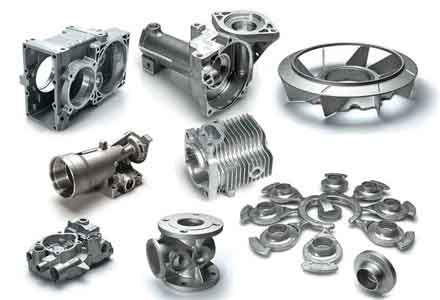
This image exemplifies the fidelity of the virtual environment, where students can inspect sand casting parts from all angles, identifying potential defects like cold shuts or misruns. The platform’s interactivity extends to post-processing steps, such as virtual shakeout and finishing, which are often omitted in traditional labs due to time constraints.
Feedback from students has been overwhelmingly positive, gathered through anonymous surveys. A significant majority reported that the virtual simulation helped them quickly master sand casting procedures and deepened their understanding of metal forming concepts. Many also noted increased趣味性 and enthusiasm for the subject, attributing this to the ability to experiment with various sand casting parts without fear of failure. However, some suggestions for improvement were raised, such as expanding the part library and enhancing operational smoothness, which my team is addressing in updates. These insights underscore the platform’s value in modern engineering education, where virtual tools complement physical实践.
Looking ahead, the potential for扩展 is vast. Currently focused on sand casting, the platform could incorporate other casting methods like investment casting or die casting, each with distinct virtual modules. This would allow students to compare processes for manufacturing different sand casting parts and their alternatives. Additionally, integrating augmented reality (AR) elements could further blur the line between virtual and real, enabling students to overlay simulation data onto physical objects. From a pedagogical perspective, I advocate for dedicated virtual lab sessions in courses like Material Forming Technology, where students complete simulations and submit reports analyzing their chosen sand casting parts. This structured approach ensures that virtual experiences translate into solid competencies.
In conclusion, virtual simulation has revolutionized the teaching of sand casting, offering a safe, flexible, and engaging medium for students to explore the intricacies of producing sand casting parts. Through interactive platforms that combine 3D modeling, real-time feedback, and mathematical analysis, learners gain a holistic understanding of工艺 effects on quality. The use of tables and formulas, as demonstrated throughout this article, enhances the summarization and application of key concepts. As educational technology evolves, such tools will become indispensable in培养 the next generation of engineers, who must be adept at both virtual design and physical fabrication. My experience confirms that when students are empowered to manipulate and analyze sand casting parts in a risk-free environment, their curiosity and mastery flourish, paving the way for innovation in manufacturing education.