
In the realm of manufacturing, the production of high-performance machine tool casting components is critical for ensuring durability, precision, and efficiency in industrial operations. As an engineer specializing in foundry processes, I have extensively explored innovative methods to improve the properties of these castings. One particularly effective approach is the integration of bimetal casting with the full mold (or lost foam) process, which allows for tailored material characteristics in specific zones of a casting. This article delves into the detailed methodology, theoretical underpinnings, and practical outcomes of employing bimetal full mold casting for machine tool casting applications, with a focus on optimizing wear resistance, strength, and cost-effectiveness. Throughout this discussion, I will emphasize the advantages of this hybrid technique for producing complex machine tool casting parts, using extensive data, formulas, and tables to elucidate key points.
The core concept of bimetal casting involves sequentially pouring two different metal alloys into a single mold to create a casting with distinct regional properties. For machine tool casting components, such as stamping dies or guideways, this means embedding a hard, wear-resistant alloy in working surfaces while using a tougher, more ductile material for supporting structures. The full mold process, which utilizes expandable polystyrene (EPS) patterns that vaporize during metal pouring, complements this by offering design flexibility, reduced machining, and minimal distortion. My experience shows that combining these techniques can yield superior machine tool casting products, meeting stringent technical requirements while reducing material waste. In the following sections, I will walk through the entire process, from pattern preparation to quality validation, highlighting how each step contributes to the success of machine tool casting production.
To begin, the design of the foam pattern is paramount. For a typical machine tool casting like a stamping die, the EPS pattern must replicate the final part accurately, accounting for shrinkage and gating needs. I recommend using EPS with a density of approximately 17 kg/m³, as this provides a balance between strength for handling and minimal residue during decomposition. The pattern is assembled from machined or molded EPS sections, bonded with adhesives, and then coated to create a refractory barrier. In my practice, a water-based graphite coating is applied via dipping or brushing, typically in two layers, to prevent sand erosion and control metal flow. The coating thickness, often ranging from 0.2 to 0.5 mm, can be modeled using the following formula for permeability: $$P = \frac{k \cdot \Delta p}{\mu \cdot L}$$ where \(P\) is the permeability, \(k\) is the coating constant, \(\Delta p\) is the pressure drop, \(\mu\) is the gas viscosity, and \(L\) is the coating thickness. This ensures efficient degassing during pouring, crucial for defect-free machine tool casting.
For the molding medium, I prefer cold-cured furan resin sand due to its high dimensional stability and rapid hardening. The sand mixture typically consists of silica sand (50/70 mesh) with 1-1.5% furan resin and a catalyst, which provides adequate strength for the bimetal pouring process. The gating system is designed as an open type to facilitate sequential filling. Based on my trials, the optimal ratio for the gating cross-sectional areas is: $$F_{\text{sprue}} : F_{\text{runner}} : F_{\text{ingate}} = 1 : (1.25 \text{ to } 1.5) : (2 \text{ to } 2.5)$$ This design minimizes turbulence and promotes directional solidification, essential for bimetal bonding in machine tool casting. A schematic of the gating layout, including the positions for the two metal pours, is summarized in Table 1, which outlines key dimensions and parameters.
| Component | Dimensions (mm) | Quantity | Function |
|---|---|---|---|
| Sprue 1 (First Pour) | Ø60 × 600 | 1 | Delivers lower alloy iron |
| Runner 1 | 60 × 80 | 1 | Distributes metal to ingates |
| Ingates (First Pour) | 15 × 65 | 5 | Introduce metal into lower cavity |
| Sprue 2 (Second Pour) | Ø60 × 600 | 1 | Delivers upper iron |
| Runner 2 | 60 × 80 | 1 | Distributes to upper ingates |
| Ingates (Second Pour) | 15 × 65 | 4 | Introduce metal into upper cavity |
The metal selection and melting process are critical for bimetal machine tool casting. In this case, the lower portion of the casting requires high hardness and wear resistance, so I use an HT300 alloy iron enriched with chromium (Cr) and molybdenum (Mo). The upper portion, needing good tensile strength and impact toughness, is standard HT300 iron. The chemical compositions after inoculation with Si-Ba are detailed in Table 2, showing the distinct alloying elements for each pour. These compositions are tailored to achieve desired microstructures; for instance, the Cr and Mo additions promote carbide formation, enhancing abrasion resistance in the machine tool casting working surface.
| Metal Pour | C (%) | Si (%) | Mn (%) | P (%) | S (%) | Cr (%) | Mo (%) |
|---|---|---|---|---|---|---|---|
| First (Lower) | 2.95 | 1.70 | 0.81 | 0.05 | 0.07 | 1.12 | 1.15 |
| Second (Upper) | 3.10 | 1.75 | 0.89 | 0.45 | 0.07 | 0.045 | 0.001 |
The pouring sequence is a delicate operation that defines the bimetal interface quality. I start by pouring the first metal (alloyed HT300) at 1360°C into the mold via Sprue 1. Just before completion—about 2-3 seconds prior—I initiate the second pour of standard HT300 at 1380°C through Sprue 2. The masses are controlled, with the second pour being roughly twice that of the first (e.g., 600 kg vs. 300 kg), to ensure adequate filling and thermal balance. This timing allows for partial mixing at the interface, creating a gradual transition zone that minimizes stress concentrations in the machine tool casting. The heat transfer during this process can be approximated using Fourier’s law: $$q = -k \frac{dT}{dx}$$ where \(q\) is the heat flux, \(k\) is the thermal conductivity of the sand or metal, and \(\frac{dT}{dx}\) is the temperature gradient. Controlling these gradients is vital for preventing cold shuts or cracks in the final machine tool casting component.
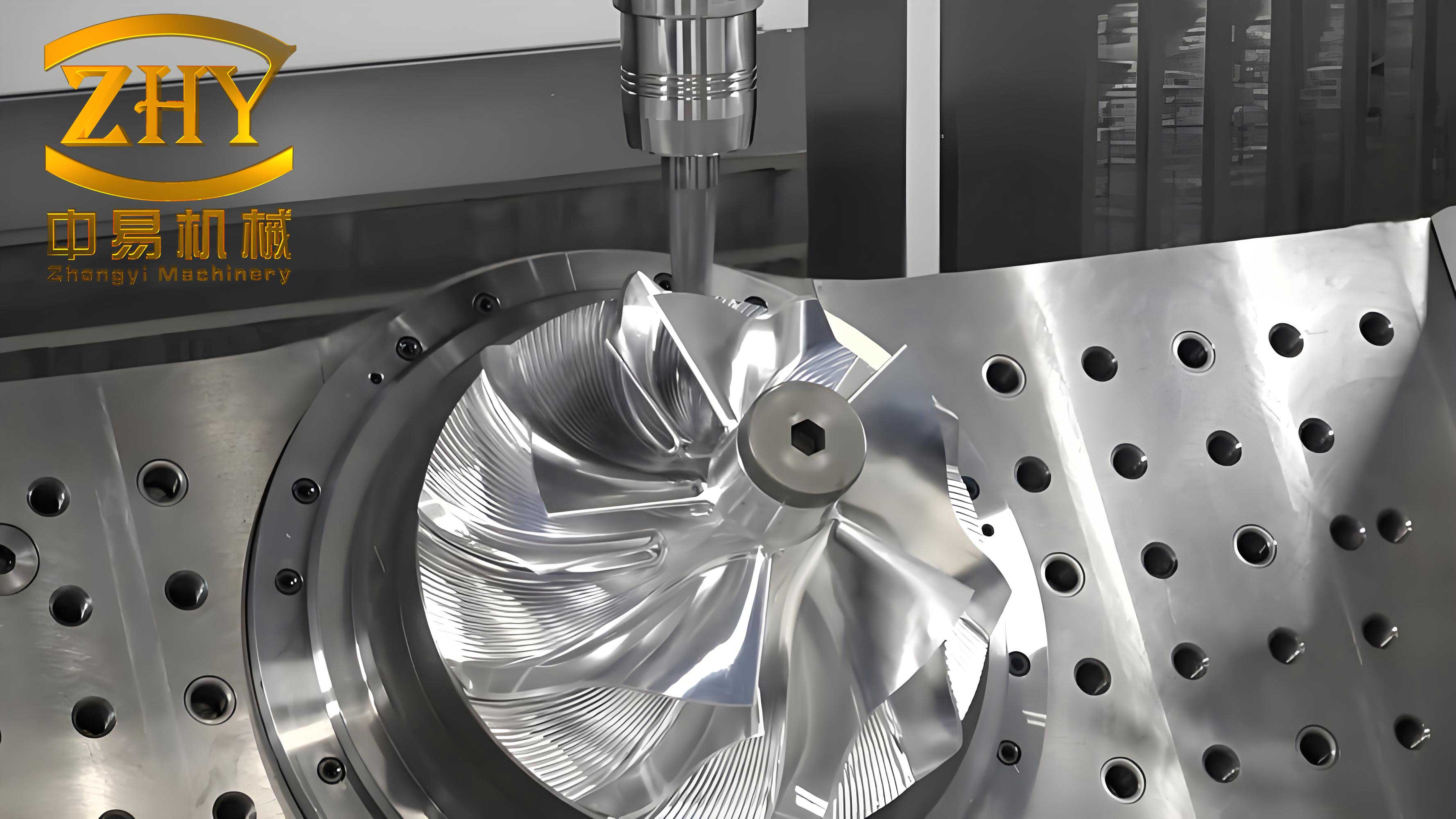
After solidification and cooling, the machine tool casting is extracted, cleaned, and subjected to heat treatment—typically stress relief annealing—to stabilize the microstructure and relieve residual stresses. The resulting casting exhibits a seamless appearance with no visible seams or discoloration at the bimetal junction, confirming the efficacy of the full mold process for such applications. Quality assessment involves hardness testing and tensile strength measurement. For instance, the lower working surface of a stamping die produced via this method shows a Brinell hardness (HBS) of approximately 195, while the upper region measures around 170 HBS. Tensile strength, evaluated using separately cast test bars from the mixed metal zone, exceeds 300 MPa, meeting the requirements for robust machine tool casting parts. These properties stem from the tailored alloy distribution, which I analyze further through microstructural examination.
To quantify the alloy element distribution across the bimetal interface, I often sample points at various distances from the lower surface. The diffusion of Cr and Mo can be modeled using Fick’s second law: $$\frac{\partial C}{\partial t} = D \frac{\partial^2 C}{\partial x^2}$$ where \(C\) is the concentration, \(t\) is time, \(D\) is the diffusion coefficient, and \(x\) is the distance. In practice, the measured concentrations at points A (lower), B (mid), and C (upper) reveal a gradient, as summarized in Table 3. This gradient ensures a gradual property transition, reducing the risk of delamination in service for machine tool casting components.
| Sampling Point | Cr Content (%) | Mo Content (%) | Relative to Point A (Cr) | Relative to Point A (Mo) |
|---|---|---|---|---|
| A (Lower) | 0.76 | 0.93 | 100% | 100% |
| B (Mid) | 0.25 | 0.27 | 32% | 29% |
| C (Upper) | 0.17 | 0.15 | 22% | 16% |
The principles guiding bimetal selection for machine tool casting are rooted in metallurgical compatibility. I always ensure that the two metals have similar solidification ranges, thermal expansion coefficients, and microstructural tendencies. For example, pairing alloyed gray iron with standard gray iron works well because both undergo eutectic transformation, forming graphite and austenite, whereas combining gray iron with carbon steel would lead to mismatched shrinkage and potential failure. The similarity in crystallization behavior minimizes interfacial stresses, a key consideration for long-lasting machine tool casting products. Additionally, the choice of alloying elements like Cr and Mo follows a cost-benefit analysis; they are added only where needed, optimizing resource use. In my projects, I calculate the required alloy percentage based on hardness targets using empirical formulas such as: $$HB = 100 + 20 \cdot \%C + 30 \cdot \%Cr + 25 \cdot \%Mo$$ though actual values vary with processing conditions.
The full mold process offers distinct advantages for bimetal machine tool casting. Unlike conventional sand casting, where metal flows in layers, the full mold technique allows the molten metal to advance in a radial front as the EPS pattern decomposes. This promotes better mixing at the bimetal interface and reduces turbulence, leading to fewer defects. Moreover, the slower cooling rate in full mold casting—due to the insulating effect of the degraded foam—aids in stress relief and enhances the diffusion bonding between the two metals. I often estimate the solidification time using Chvorinov’s rule: $$t = B \left( \frac{V}{A} \right)^n$$ where \(t\) is solidification time, \(B\) is a mold constant, \(V\) is volume, \(A\) is surface area, and \(n\) is an exponent (typically around 2). For complex machine tool casting shapes, this slower solidification is beneficial for achieving sound bimetal junctions.
Expanding on the practical aspects, the gating design for bimetal pours requires careful timing. I use numerical simulations to optimize the pour overlap period, aiming for 2-3 seconds to allow just enough mixing without excessive dilution. The temperature differential—first pour at 1360°C, second at 1380°C—ensures that the initial metal has partially solidified when the second arrives, creating a stable interface. The mass ratio of 2:1 (second to first) is derived from the volume fractions of the casting zones; for a typical machine tool casting with a thick lower section and thinner upper walls, this ratio balances thermal mass and filling dynamics. To generalize, I express this as: $$m_2 / m_1 = \frac{V_2 \cdot \rho_2}{V_1 \cdot \rho_1} \cdot f(T)$$ where \(m\) is mass, \(V\) is volume, \(\rho\) is density, and \(f(T)\) is a temperature correction factor. This approach has consistently yielded high-quality machine tool casting outputs in my foundry trials.
In terms of performance validation, the machine tool casting produced via this bimetal full mold method undergoes rigorous testing. Hardness mapping across the cross-section reveals a smooth gradient, confirming the absence of sharp transitions that could cause stress concentration. Tensile tests on specimens from the interface zone show strengths above 300 MPa, with elongation values suitable for dynamic loads in machine tools. Additionally, microstructural analysis using scanning electron microscopy (SEM) displays a gradual change from carbiderich regions in the lower part to pearlitic matrices in the upper part, affirming the tailored properties. These outcomes underscore the viability of this process for manufacturing durable machine tool casting components like guideways, gears, and dies, where localized wear resistance is paramount.
Looking beyond this specific application, the bimetal full mold technique holds promise for other machine tool casting scenarios. For instance, in large gear castings, the teeth can be made from high-alloy iron for wear resistance, while the web and hub use standard iron for toughness. Similarly, for轧 rolls or火车 wheels, the method can embed hard surfaces on ductile cores. The key is adapting the gating and pouring parameters to the geometry. I often employ computational fluid dynamics (CFD) software to model the flow and solidification, optimizing the process before actual production. This predictive capability reduces trial runs and enhances the reliability of machine tool casting manufacturing.
From a theoretical perspective, the success of bimetal full mold casting for machine tool components hinges on several factors. First, the decomposition of EPS generates gases that must escape through the coating; the pressure buildup can be modeled as: $$P_{\text{gas}} = \frac{nRT}{V}$$ where \(n\) is moles of gas, \(R\) is the gas constant, \(T\) is temperature, and \(V\) is volume. Proper coating permeability prevents blows or porosity. Second, the interfacial bonding between the two metals depends on diffusion and wetting, which are influenced by temperature and time. I approximate the diffusion depth using: $$x = \sqrt{D t}$$ where \(x\) is the depth, \(D\) is the interdiffusion coefficient (around \(10^{-11}\) m²/s for Fe-Cr systems at casting temperatures), and \(t\) is the contact time. For a 2-3 second overlap, this yields a thin mixing zone, ideal for gradual property changes in machine tool casting.
To further illustrate the process economics, I compare the bimetal approach to alternative methods like surface hardening or using monolithic alloys. By concentrating expensive alloys only in critical areas, material costs can be reduced by up to 30% for a typical machine tool casting, while performance meets or exceeds that of fully alloyed parts. Moreover, the full mold process minimizes post-casting machining, as the pattern accuracy yields near-net-shape parts. This synergy makes bimetal full mold casting a compelling choice for high-value machine tool casting production, aligning with industry trends toward sustainability and efficiency.
In conclusion, the integration of bimetal pouring with full mold casting represents a significant advancement for manufacturing high-performance machine tool casting components. My detailed exploration confirms that this hybrid process enables precise control over material properties, reduces costs, and enhances product longevity. Through careful design of patterns, gating, and pouring sequences—buttressed by theoretical models and empirical data—foundries can reliably produce complex machine tool casting parts with tailored characteristics. As demand for durable and efficient machine tools grows, adopting such innovative casting techniques will be pivotal. I encourage further research into optimizing alloy combinations and process parameters to expand the applications of bimetal full mold casting across the manufacturing sector.
To encapsulate the key parameters and outcomes, I provide a comprehensive summary table (Table 4) that covers the entire process chain for bimetal machine tool casting, from material inputs to final properties. This serves as a quick reference for practitioners aiming to implement this technique.
| Aspect | Specification | Typical Range | Impact on Machine Tool Casting |
|---|---|---|---|
| EPS Density | 17 kg/m³ | 15-20 kg/m³ | Balances strength and decomposition |
| Coating Type | Water-based graphite | 0.2-0.5 mm thickness | Controls gas escape and metal flow |
| Molding Sand | Furan resin sand | 50/70 mesh silica | Ensures dimensional accuracy |
| First Pour Temperature | 1360°C | 1350-1380°C | Initiates solidification for interface |
| Second Pour Temperature | 1380°C | 1370-1400°C | Promotes mixing and bonding |
| Pour Overlap Time | 2-3 seconds | 1-4 seconds | Creates gradual transition zone |
| Mass Ratio (Second:First) | 2:1 | 1.5:1 to 3:1 | Balances thermal and filling needs |
| Lower Hardness (HBS) | 195 | 190-220 | Achieves wear resistance |
| Upper Hardness (HBS) | 170 | 160-180 | Provides toughness |
| Tensile Strength | >300 MPa | 300-350 MPa | Meets structural requirements |
Ultimately, the bimetal full mold casting process stands as a testament to the innovation possible in modern foundry practice. By leveraging the strengths of both techniques, we can produce machine tool casting components that excel in demanding environments, driving progress in manufacturing industries worldwide. I remain committed to refining this methodology and sharing insights to advance the field of machine tool casting.