
As a researcher and practitioner in the field of metal casting, I have extensively studied the challenges associated with lost foam casting, particularly for steel casting applications. The lost foam process, known for its flexibility in molding and pouring, offers significant advantages for complex geometries, producing parts with excellent surface finish and dimensional accuracy. However, its adoption in steel casting has been hampered by a critical issue: carburization defects. This defect, where carbon content increases in the final steel casting, compromises mechanical properties such as ductility, toughness, and weldability, leading to component failure. In this article, I will delve into the current research status of carburization defects in lost foam steel casting, exploring mechanisms, types, mitigation strategies, and practical insights. My goal is to provide a detailed, first-hand perspective on how to control this defect and produce qualified steel casting components.
The root cause of carburization in lost foam steel casting lies in the decomposition of the foam pattern during metal pouring. When molten steel interacts with the foam—typically made of expanded polystyrene (EPS) or similar materials—the pattern undergoes thermal degradation, releasing free carbon and hydrocarbons. This decomposition products envelop the steel throughout pouring and solidification, facilitating carbon transfer into the metal. The mass transfer of carbon can be described by a fundamental equation, which I often refer to in my work:
$$ C_w = K_{\Sigma} S (C_E – C_0) \tau \cdot 10^6 $$
In this equation, \( C_w \) represents the carbon content in the steel casting (in %), \( S \) is the contact area between the metal and decomposition products (in m²), \( C_E \) is the carbon content of the decomposition products (in %), \( C_0 \) is the initial carbon content of the molten steel (in %), \( K_{\Sigma} \) is the mass transfer coefficient (in S·m⁻²), and \( \tau \) is the contact time (in seconds). From this, it’s evident that carburization intensifies with a larger concentration difference \( (C_E – C_0) \), greater contact area \( S \), and longer contact time \( \tau \). This equation underscores the complexity of controlling carburization in steel casting, as multiple factors interplay during the process.
Carburization defects in lost foam steel casting are broadly categorized into three types: surface carburization, volume carburization, and localized carburization. Surface carburization occurs when solid carbon adsorbed by the coating layer infiltrates the casting surface during solidification. This results in a thin carburized layer, typically 0.1–0.3 mm thick, with carbon increases ranging from 0.01% to 0.10%. While often manageable through post-processing, it can affect surface-sensitive properties. Volume carburization, on the other hand, is more uniform and arises under steady filling conditions; it correlates directly with the factors in the mass transfer equation. For steel casting with moderate wall thicknesses, this type leads to relatively consistent carbon increases across the component, allowing for compensatory measures in alloy design. The most detrimental form is localized carburization, which happens in thick sections or during turbulent filling, where molten steel entraps solid or liquid pattern residues. This causes severe carbon enrichment in isolated areas, often at hot spots, leading to scrap parts. In my experience, localized carburization poses the greatest risk in steel casting production, as it can result in unpredictable failures.
To address these defects, numerous methods have been developed to reduce carburization in lost foam steel casting. These approaches can be grouped into material modifications, process innovations, and operational controls. Below, I summarize key strategies in a table for clarity:
| Method Category | Specific Technique | Mechanism | Advantages | Challenges |
|---|---|---|---|---|
| Material Modification | Use low-density foam patterns | Reduces carbon content and gas evolution | Lowers overall carburization; improves filling | Increases risk of mold collapse |
| Material Modification | Switch to low-carbon materials (e.g., STMMA, EPM-MAA) | Decreases \( C_E \) in the mass transfer equation | Directly reduces carbon source | Higher cost; may affect pattern strength |
| Material Modification | Design hollow gating systems or cavities | Minimizes foam volume and contact area \( S \) | Effective for simple geometries; reduces carburization | Complex design requirements |
| Process Innovation | Negative-pressure combustion shell casting | Burns foam pattern prior to pouring, eliminating carbon source | Prevents carburization; suitable for thick sections | Limited to simple parts; requires auxiliary equipment |
| Process Innovation | Oxygen-enriched combustion technology | Injects oxygen to promote complete foam combustion | Reduces carbon residues; enhances burning efficiency | Safety concerns; additional operational steps |
| Process Innovation | Carbon removal method (e.g., “排碳法”) | Uses large risers and top pouring with high vacuum to expel decomposition products | Facilitates oxygen access and product removal | Requires optimized gating design |
| Process Innovation | Decarburization factor method (e.g., “去碳因素法”) | Adds oxygen-releasing agents to foam beads during pre-expansion | Supplies oxygen internally; controls carburization | Dosage optimization needed; may affect pattern quality |
| Process Innovation | Filmless sealing process | Removes top film to enhance oxygen supply during pouring | Reduces carbon adsorption; simplifies process | Requires precise vibration and vacuum control |
In my practical involvement with steel casting production, I have observed that process control during pouring is paramount. For instance, in a project involving steel castings for industrial applications, we experimented with different gating designs. When using a top-pouring system, carburization was highly uneven, with carbon content varying from 0.35% to 1.3% in different sections of the steel casting. In contrast, a bottom-pouring system yielded more uniform carburization, with increases limited to 0.03–0.06%. This aligns with the mass transfer equation: bottom pouring promotes laminar flow, reducing \( S \) and \( \tau \) by minimizing turbulence and pattern entrapment. I often emphasize that for steel casting, maintaining steady filling is critical to avoid localized carburization. Turbulent flow, often indicated by mold反击, leads to entrapped gases and pattern residues, exacerbating carbon uptake in thick sections. Such defects not only increase carburization but also promote porosity and shrinkage, as seen in cases where defective areas showed carbon levels significantly above the average.
Based on these experiences, I recommend a multi-faceted approach to mitigate carburization in lost foam steel casting. First, select low-carbon foam materials like copolymers, which reduce \( C_E \) while maintaining adequate strength. Second, design gating systems with hollow structures to decrease foam volume and ensure rapid filling of the sprue, preventing initial反击. Third, adopt bottom pouring whenever possible to enhance filling stability. Fourth, incorporate generous risers at strategic locations; these serve not only for feeding but also for venting decomposition products and diverting high-carbon metal away from the casting body. Fifth, adjust charge materials during melting to pre-reduce carbon content, compensating for anticipated increases. This proactive alloy design is feasible because volume carburization tends to be predictable under controlled conditions. The relationship can be expressed as:
$$ C_{\text{final}} = C_{\text{initial}} + \Delta C $$
where \( \Delta C \) is the carburization increment, which can be estimated from empirical data for a given steel casting geometry and process parameters. By calibrating \( C_{\text{initial}} \), we can achieve final carbon specifications in the steel casting.
To illustrate the impact of these strategies, consider the following table comparing carburization outcomes under different process conditions for a typical steel casting component:
| Process Variable | Setting A: Conventional EPS, Top Pouring | Setting B: Copolymer Foam, Bottom Pouring | Setting C: With Oxygen Enrichment |
|---|---|---|---|
| Foam Material | High-density EPS | Low-carbon copolymer | EPS with additives |
| Gating Design | Top gating | Bottom gating with hollow sprue | Bottom gating |
| Carbon Increase (\( \Delta C \)) | 0.10–0.50% (non-uniform) | 0.02–0.08% (uniform) | 0.01–0.05% (minimal) |
| Defect Occurrence | High localized carburization | Low, mainly volume carburization | Very low |
| Process Complexity | Low | Moderate | High |
Innovative techniques like oxygen-enriched combustion show promise but require careful implementation. In one trial for steel casting production, we applied oxygen injection during pattern ignition, which accelerated foam burnout and reduced carbon residues. However, this added complexity to the setup, necessitating safety protocols for handling high-pressure oxygen. Similarly, the negative-pressure shell method effectively eliminated carburization for simple, thick-walled steel castings by pre-burning the foam, but it proved less effective for intricate geometries due to incomplete combustion in narrow cavities. These experiences highlight that no single method is universally applicable; instead, a tailored combination based on the steel casting design is essential.
The role of vacuum and vibration cannot be overstated in lost foam steel casting. Proper vibration ensures tight sand packing around the pattern, reducing metal penetration risks, while vacuum control influences gas evacuation. In filmless processes, removing the top seal enhances oxygen influx, supporting combustion of decomposition products. This reduces \( C_E \) and \( \tau \) by promoting gaseous expulsion through the vacuum system. I have found that optimizing vibration cycles and vacuum levels—typically between 0.04–0.06 MPa—can significantly curb carburization in steel casting. The dynamics can be modeled using a modified version of the mass transfer equation, incorporating vacuum efficiency \( V_e \):
$$ C_w = K_{\Sigma} S (C_E – C_0) \tau \cdot 10^6 \cdot (1 – V_e) $$
where \( V_e \) ranges from 0 to 1, representing the fraction of decomposition products removed by vacuum. Higher \( V_e \) values, achievable with robust vacuum systems, directly lower \( C_w \).
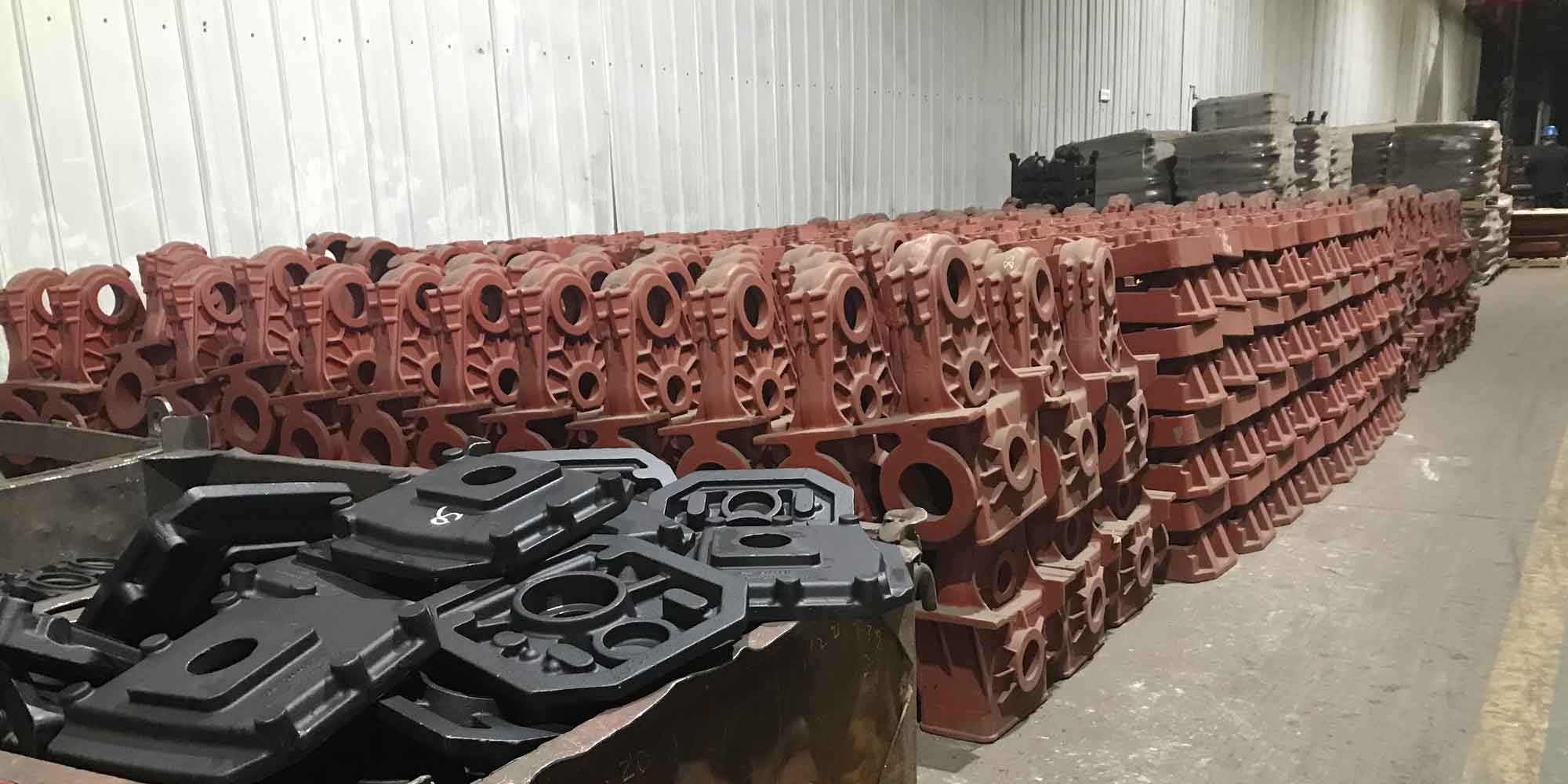
Looking ahead, research trends in lost foam steel casting focus on advanced materials and real-time monitoring. For example, developing bio-based foams with inherently low carbon content could revolutionize the process. Additionally, sensors integrated into molds can track temperature and gas evolution during pouring, enabling adaptive control of vacuum and pouring rates to minimize carburization. Computational fluid dynamics (CFD) simulations are also becoming invaluable for predicting carbon distribution in steel casting, allowing virtual optimization of gating designs before physical trials. I believe that by leveraging these tools, we can push the boundaries of lost foam steel casting, making it more viable for high-performance applications.
In conclusion, carburization defects in lost foam steel casting are a multifaceted challenge rooted in the interaction between molten steel and foam decomposition products. Through a deep understanding of the mass transfer mechanisms and defect types, combined with strategic approaches—from material selection to process innovations like oxygen enrichment and bottom pouring—we can effectively control carburization. My firsthand experience confirms that by implementing rigorous process controls, such as ensuring pattern dryness, using copolymers, and designing stable gating systems, it is possible to produce steel casting components with compliant chemical compositions. The key lies in customizing solutions to the specific geometry and requirements of each steel casting, continuously refining methods based on empirical data. As technology advances, I am optimistic that lost foam casting will overcome these hurdles, expanding its role in the steel casting industry for producing complex, high-quality parts.