
The pursuit of high-integrity castings in lost foam casting is a continuous battle against various defects, with sand inclusion being one of the most persistent and costly challenges. Based on extensive production experience, addressing this defect is rarely about a single magical fix but rather a systematic optimization of the entire process chain. The intrusion of loose sand into the metal stream compromises the structural integrity and surface finish of castings, leading to significant scrap rates, particularly in complex, thin-walled components like gearbox housings and covers. This article consolidates key insights and validated process measures, focusing on practical interventions across critical control points—from the initial pour to the final details of pattern handling. The core philosophy is that robustness in lost foam casting is built on the combined strength of its weakest links: the pouring cup, the coating system, the gating design, and unwavering attention to operational discipline.
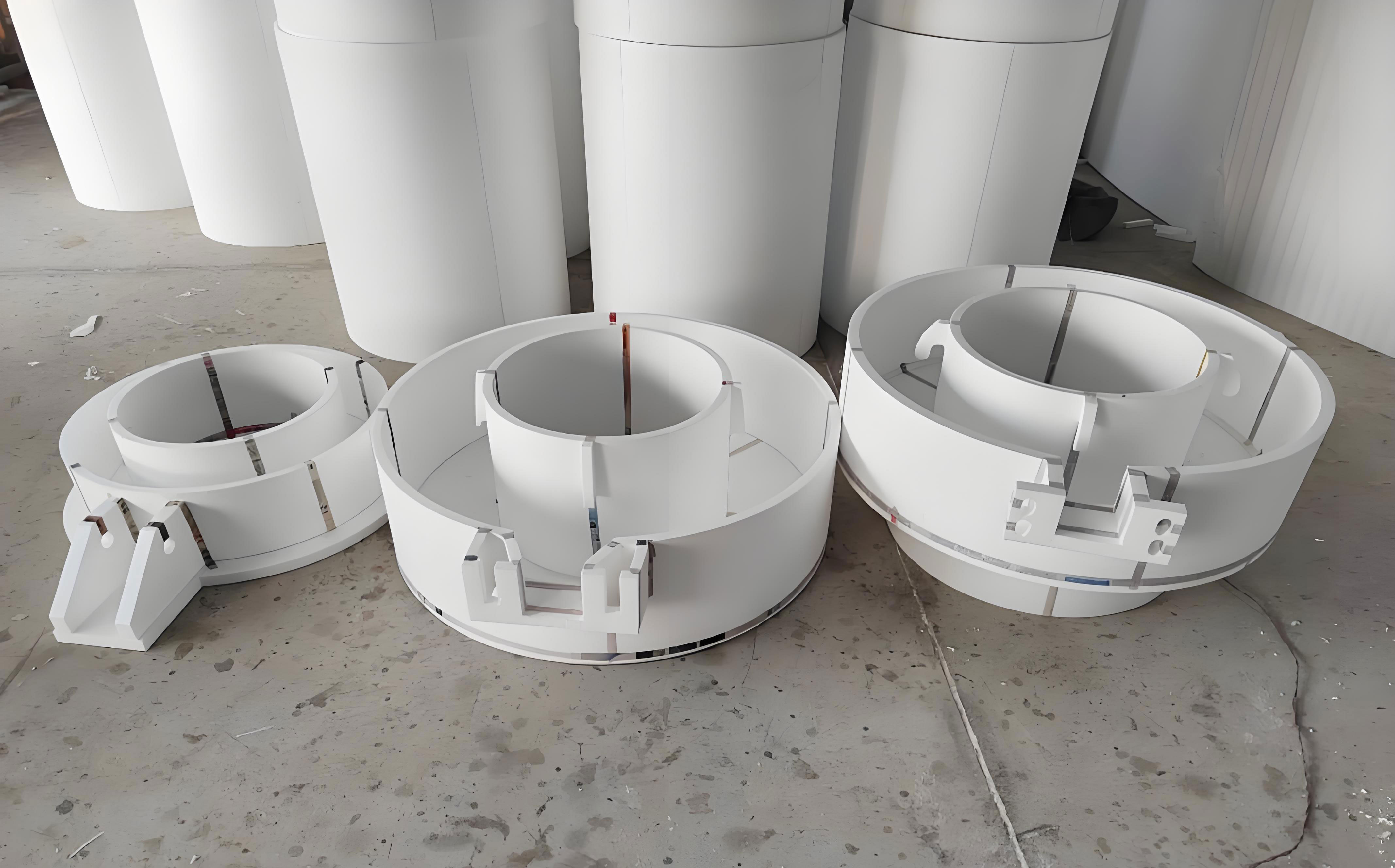
The vulnerability of the lost foam casting process to sand inclusion stems from its fundamental principle: the metal replaces a vaporized foam pattern surrounded by unbonded sand. Any breach in the protective ceramic coating or any point where sand can become entrained in the metal flow becomes a potential failure site. Therefore, the strategy revolves around fortifying barriers and minimizing turbulent energy that can cause erosion.
The Critical Role of the Pouring Cup: The First Line of Defense
It is a common oversight to consider the pouring cup as merely a funnel. In reality, it is the first critical component to withstand the thermal and mechanical shock of the molten metal. A substandard pouring cup acts not as a defender but as a direct gateway for sand into the casting. Instances where cups cracked upon contact with metal, or shortly after, have led to a direct and measurable spike in scrap rates due to inclusions. Sand freely enters through these cracks, carried by the metal stream into the mold cavity.
The key properties are refractory quality (the ability to resist softening and melting) and thermo-mechanical strength (the ability to resist thermal shock and cracking). These are not merely qualitative assessments but can be linked to material composition and performance under stress. The thermal shock resistance, often indicated by parameters like the Modulus of Rupture (MOR) at elevated temperatures, is crucial. A simple model for the thermal stress ($\sigma_{th}$) generated in the cup wall during initial pour can be approximated by:
$$ \sigma_{th} \approx E \cdot \alpha \cdot \Delta T $$
where $E$ is the Young’s modulus of the cup material, $\alpha$ is its coefficient of thermal expansion, and $\Delta T$ is the instantaneous temperature difference between the inner and outer wall upon metal contact. A cup with a lower $E\alpha$ product and higher high-temperature strength will better resist this stress.
Systematic tracking provides undeniable evidence. Monitoring batches of cups with known performance issues against scrap rates reveals a direct correlation. For example, data can be structured as follows:
| Pouring Cup Batch ID | Avg. High-Temp MOR (MPa) | Refractoriness (°C) | Observed Crack Rate During Pour (%) | Corresponding Casting Scrap Rate from Inclusions (%) |
|---|---|---|---|---|
| A (Substandard) | 1.2 | ~1500 | 65 | 3.5 |
| B (Standard) | 2.5 | 1580 | 5 | 1.0 |
| C (Premium) | 3.8 | 1650 | <1 | 0.7 |
The conclusion is straightforward: investing in certified, high-quality pouring cups with guaranteed refractory and strength properties is a non-negotiable first step in controlling sand inclusion in lost foam casting. This is a foundational element of a reliable lost foam casting process.
Fortifying the Ceramic Coating: The Primary Barrier
The ceramic coating applied to the foam pattern is the essential barrier that separates the flowing metal from the loose sand. Its failure under the thermal, chemical, and mechanical load of the pour is the predominant cause of sand inclusions. Therefore, optimizing coating performance is the central pillar of defect prevention in lost foam casting.
Coating performance is a function of three interdependent factors: Refractory Base, Binder System, and Applied Thickness.
1. Refractory Base (The Skeleton): The choice of aggregate (e.g., zircon, fused silica, alumina, mullite) defines the intrinsic refractory ceiling. The aggregate must remain solid and dimensionally stable throughout the pour. For grey iron castings in lost foam casting, alumina-silicate bases like calcined bauxite (high Al$_2$O$_3$ content) are common. The refractoriness under load (RUL) of the aggregate is paramount.
2. Binder System (The Muscle): This includes inorganic binders (like sodium silicate, phosphates) and organic binders (like latex, cellulose). Inorganic binders provide high-temperature strength (“green” strength after drying and “hot” strength during pour), while organics improve coating flexibility and adhesion to the foam. To enhance erosion resistance, the formulation must be skewed towards a higher inorganic binder content. However, this must be balanced to avoid excessive brittleness which can lead to cracking during handling or foam decomposition.
3. Applied Thickness (The Shield): This is often the most directly controllable variable on the production floor. Coating thickness ($d_c$) directly increases the thermal mass and erosion resistance of the barrier. The time ($t_{fail}$) for the metal to penetrate a coating can be crudely modeled as being proportional to the thickness and inversely proportional to the heat flux ($q”$) and erosion rate ($\dot{e}$):
$$ t_{fail} \propto \frac{d_c}{q” + \dot{e}} $$
Thus, for areas of high thermal and mechanical load—especially the entire gating system—increased thickness is critical. A standard practice is to apply extra coating layers (dipping or brushing) specifically on the gating components. For a typical ~50 kg gearbox housing, a gating coating thickness of 1.2-1.5 mm might suffice. For heavier castings (e.g., >80 kg) or those with high metal velocity points, targeting >2.0 mm is necessary. The impact is clear:
| Cast Part (Lost Foam Process) | Single Part Weight (kg) | Standard Gating Coating Thickness (mm) | Enhanced Gating Coating Thickness (mm) | Inclusion Scrap Rate (Standard) | Inclusion Scrap Rate (Enhanced) |
|---|---|---|---|---|---|
| 540 Main Housing | ~45 | 1.2 – 1.5 | N/A (Adequate) | ~1% | ~1% |
| 9150 Main Housing | ~87 | 1.2 – 1.5 | 2.0 – 2.3 | 15% | 1.4% |
| Series Auxiliary Case | ~30 | 1.0 – 1.2 | 2.5 – 3.0 | 8% | ~1% |
This table underscores a fundamental principle in lost foam casting: one-size-fits-all coating specifications are inadequate. The coating strategy must be part-specific, accounting for thermal load and metal dynamics.
Gating Design: Managing Hydraulic Forces
The design of the gating system governs the velocity, pressure, and flow pattern of the metal as it enters the mold. Turbulent, high-velocity flow exerts significantly greater erosive force on the coating. Therefore, gating design in lost foam casting must prioritize minimizing these forces, especially at the point of entry—the ingate.
Ingate Location: The vertical placement of the ingate(s) has a profound effect. A top or middle ingate leads to a falling stream of metal, generating high impact velocity and promoting turbulence. A bottom ingate allows for a more tranquil, upward filling of the mold (like a rising bath), drastically reducing the kinetic energy impinging on the coating. The metal velocity ($v$) at an ingate can be approximated by Torricelli’s law: $v \approx \sqrt{2gh}$, where $h$ is the effective metallostatic head above the ingate. A bottom ingate minimizes this effective $h$ during the critical initial fill, reducing $v$ and thus the erosive power, which scales with $v^2$.
Gating Configuration: While step-gating (multiple ingates at different heights) can improve temperature distribution and reduce shrinkage risks in some conventional casting methods, it introduces complexity and risk in lost foam casting. Each additional ingate is another potential site for coating erosion. If the upper ingates open while the lower parts of the mold are still filling with liquid foam decomposition products, the metal flow can be particularly aggressive. In many cases for lost foam casting of iron castings, a single, well-sized bottom ingate or a well-designed bottom-up fill through multiple ingates connected to a common runner is safer for inclusion control.
| Gating Design for Lost Foam Casting | Ingate Location | Relative Metal Velocity at Ingate | Erosive Force on Coating | Risk of Sand Washing | Typical Application Note |
|---|---|---|---|---|---|
| Design A | Top / Middle of Casting | High | Very High | Very High | Avoid for inclusion-prone parts. |
| Design B | Bottom of Casting | Low | Low | ||
| Design C | Step-Gating (Multiple Levels) | Variable (High at upper gates) | High at upper gates | High | Use with extreme caution; requires exceptional coating strength at all ingates. |
The choice in lost foam casting often involves a trade-off. While a bottom gate is superior for inclusion control, it may lead to thermal gradients unfavorable for feeding. The solution is not to revert to erosive designs but to address the thermal issue through other means, such as strategic use of chills or padding, while maintaining the hydraulically gentle bottom-filling system.
The Crucial Details: Operational Discipline in Lost Foam Casting
Even with perfect materials and designs, the lost foam casting process can fail at the hands of inconsistent execution. Sand inclusion control demands meticulous attention to detail in everyday operations. These are not minor points; they are the essential hygiene factors of the process.
1. Pattern Assembly and Adhesive Application: Excess adhesive at pattern joints, especially around ingate attachments, creates a surface that repels the water-based coating. This results in a locally thin or even bare spot on the foam—a certain failure point. The procedure must mandate careful application and immediate removal of any adhesive squeeze-out to ensure a perfectly adherent coating.
2. Coating Repair and Handling: Coated patterns are fragile. Any handling damage that exposes the white foam (露白) must be repaired with a brush-on slurry of the same coating and re-dried before molding. This is absolutely critical. A checklist for handling coated clusters is vital:
| Checkpoint | Acceptable Standard | Corrective Action if Failed |
|---|---|---|
| Coating Integrity After Transport | No visible foam exposure, especially at edges, ingates, or machined surfaces. | Stop line. Repair with brush-on coating. Dry thoroughly. |
| Ingate & Runner Coating | Full, even coverage with specified minimum thickness. | Additional dipping or brushing required. |
| Pattern Joint Lines | Smooth, coated seam without adhesive lumps. | If poor, reject for rework or careful manual coating. |
3. Molding and Pouring Preparation: The final steps before metal introduction are equally critical. After the flask is filled with sand and compacted, the pouring cup is often covered with a plastic film to prevent sand fall-in. Any sand grains left on top of this film will be washed directly into the sprue with the first metal. A clean pour area is mandatory. Furthermore, the sand compaction around the gating system must be excellent to provide solid mechanical support to the coating.
A comprehensive pre-pour checklist for the lost foam casting operator can prevent most of these issues:
| Pre-Pour Verification Step | Purpose |
|---|---|
| Verify pouring cup is clean, undamaged, and properly seated/sealed on the sprue. | Prevents sand ingress from the top. |
| Ensure pouring cup cover film is perfectly clean and secure. | Prevents sand being introduced at the very start of pour. |
| Visually confirm sprue/gating coating is intact (no cracks from sand compaction). | Ensures primary barrier is sound. |
| Verify flask vibration was adequate (no obvious loose sand near pattern). | Ensures sand provides full support to the pattern/coating. |
Synthesis: A Holistic Process Control Framework for Lost Foam Casting
Solving sand inclusions in lost foam casting is not sequential but simultaneous. It requires viewing the process as an interconnected system. A weakness in one area can negate strengths in others. Therefore, a holistic control framework is necessary.
We can conceptualize the resistance to sand inclusion ($R_{inclusion}$) as a multiplicative function of the strength of each barrier, where failure in any one (a value approaching zero) collapses the overall resistance:
$$ R_{inclusion} \propto (S_{cup}) \cdot (S_{coating}) \cdot (S_{gating}) \cdot (S_{execution}) $$
Here, $S_{cup}$ represents the integrity of the pouring cup, $S_{coating}$ the quality and thickness of the ceramic barrier, $S_{gating}$ the hydraulic gentleness of the design, and $S_{execution}$ the fidelity of operational practices. All must be maintained at a high level.
For process engineers, this translates into a multi-variable optimization problem. When a sand inclusion problem appears, the diagnostic approach must be systematic:
- Material Audit: Check certificates for pouring cup refractory properties and coating slurry composition/batch consistency.
- Coating Inspection: Measure dried coating thickness on gating and critical casting areas. Check for adhesion flaws.
- Design Review: Analyze metal flow simulation (if available) or apply principles of bottom-filling and low velocity to the gating design.
- Process Audit: Observe and verify operator adherence to procedures for gluing, coating repair, flask preparation, and pouring.
Finally, the success of any lost foam casting operation in eliminating sand inclusions hinges on culture—a culture of disciplined precision. Every technician must understand that their specific role, whether in applying adhesive, dipping patterns, or preparing the flask, directly guards against the million tiny grains of sand waiting to ruin a casting. By systematically fortifying each link in the chain—employing robust pouring cups, engineering thick and refractory coatings, designing hydraulically gentle gating, and executing with unwavering attention to detail—the goal of near-zero sand inclusion scrap in lost foam casting becomes an achievable and sustainable reality. This integrated approach transforms lost foam casting from a potentially finicky process into a reliable and high-yield manufacturing method for complex castings.