
The evolution of foundry practices has been significantly marked by the development and maturation of the lost foam casting process. Originating from full mold casting principles, this method has established itself as a cornerstone for producing complex, high-integrity components, particularly within sectors demanding intricate geometries and superior surface finish. As an engineer deeply involved in modern foundry design, I have observed firsthand the transformative impact of this technology. The process’s inherent advantages—ranging from design freedom and environmental compliance to cost-effectiveness—have driven its widespread adoption. This article provides a comprehensive technical examination of the lost foam casting process and delineates the critical engineering design principles essential for establishing efficient, safe, and sustainable production facilities.
The fundamental principle of lost foam casting is elegantly simple yet highly effective. A foam pattern, typically made from expandable polystyrene (EPS) or similar copolymer beads, is fabricated to replicate the final part. This pattern is assembled into clusters, coated with a refractory slurry, and dried. It is then embedded in unbonded, dry sand within a flask. The mold is compacted via vibration, and a vacuum is applied to the sand mass. During pouring, the molten metal vaporizes the foam pattern, precisely occupying the cavity to form the casting upon solidification.
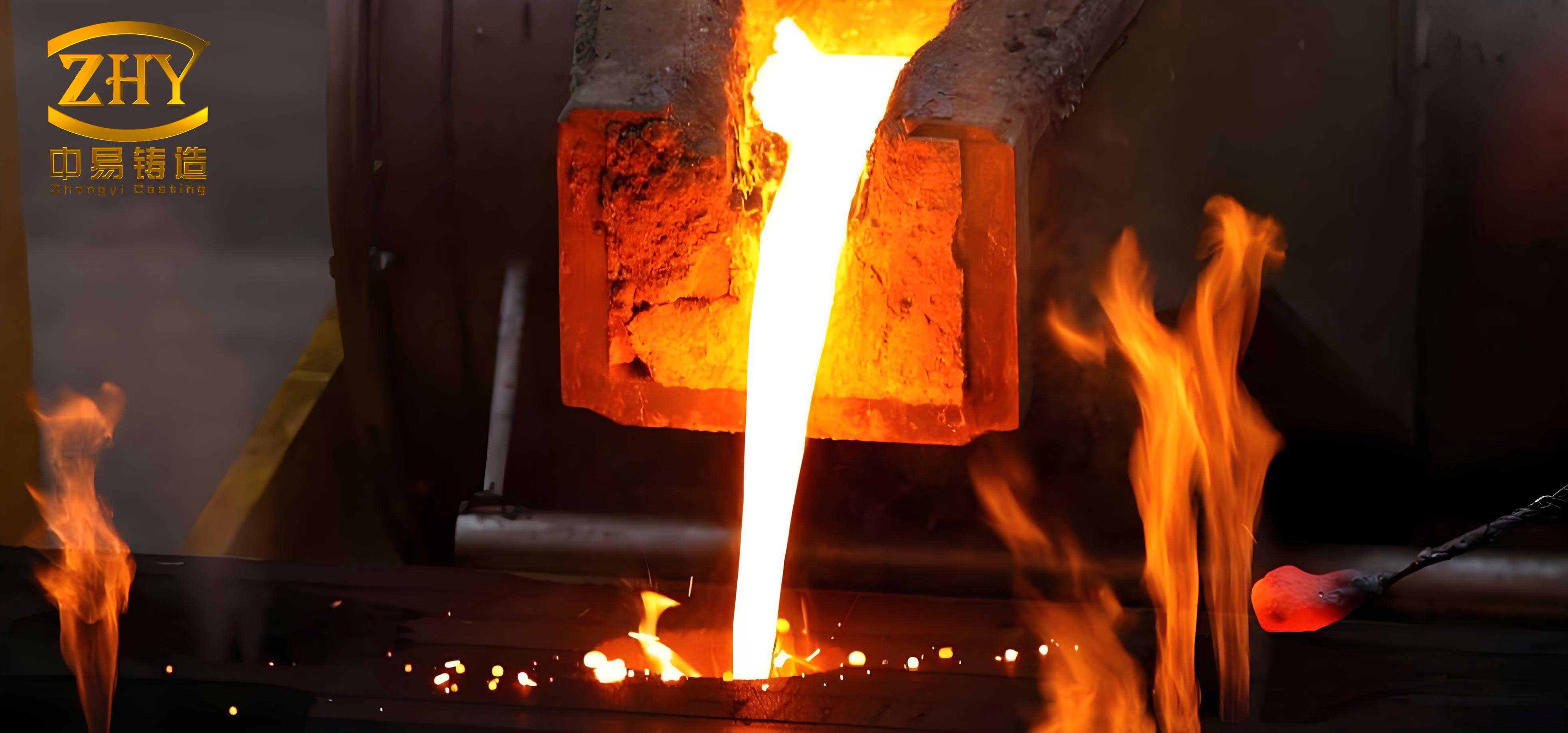
The technical and economic merits of lost foam casting become starkly apparent when compared to conventional green sand molding. The following table summarizes these key differentiators:
| Aspect | Lost Foam Casting | Conventional Green Sand Molding |
|---|---|---|
| Pattern/Core Complexity | Exceptionally high. Complex internal passages are integrated into the foam pattern, eliminating the need for separate sand cores. | Limited by draft angles and core assembly. Complex internal features require separate core making. |
| Environmental Impact | No binders in sand, leading to minimal fumes during pouring. High sand reclamation rates (>90%). | Uses organic binders (e.g., in core making) generating fumes (amines, formaldehyde). Sand reclamation is more complex. |
| Castings Finishing | No parting lines or flash. Minimal draft. Significantly reduces cleaning and machining labor (>50% reduction). | Presence of parting lines, flash, and core fins necessitates substantial cleaning effort. |
| Dimensional Accuracy & Surface Finish | High precision and excellent surface finish due to a single, seamless mold cavity. | Governed by pattern quality, core shifts, and parting line mismatches. |
| Capital Investment | Generally lower, estimated 30-50% less than comparable green sand lines, due to the absence of core shops and simpler sand systems. | Higher investment required for molding lines, core-making machines, and associated systems. |
The operational workflow for lost foam casting is logically segregated into three distinct zones: the White Zone (Pattern Making), the Gray Zone (Pattern Coating), and the Black Zone (Molding & Foundry Operations). A typical process flow is as follows:
White/Gray Zone (Pattern Making & Coating): Bead Pre-expansion → Aging → Pattern Molding (using steam) → Pattern Aging → Cluster Assembly → Refractory Coating → Drying.
Black Zone (Foundry): Cluster Placement → Sand Filling & Compaction → Vacuum Application → Pouring → Cooling → Shakeout → Casting Extraction → Sand Processing & Reclamation.
Material Science and Safety Classification in the White Zone
The White Zone is the heart of the lost foam casting process and presents unique engineering challenges, primarily centered on material handling and fire safety. The selection of foam material is critical and depends on the alloy being cast:
- Expandable Polystyrene (EPS): Suited for non-ferrous alloys, gray iron, and general carbon steels. $$ C_8H_8)_n $$
- Expandable Polymethyl Methacrylate (EPMMA): Used for ductile iron, low-carbon, alloy, and stainless steels. Offers reduced carbon residue. $$ C_5O_2H_8)_n $$
- Styrene-Methyl Methacrylate Copolymer (STMMA): A common choice for gray iron and steel, balancing cost and performance.
These materials are hydrocarbons and their storage and processing dictate the facility’s safety design. According to international building and fire codes (e.g., NFPA, or their regional equivalents), raw, unexpanded beads can be classified as a flammable solid. The storage area for these raw beads often falls under a Class A (or equivalent high-hazard) fire risk category. A fundamental design rule is to limit the storage quantity within the production area to a small percentage of the total floor space (often less than 5%) to prevent the entire White Zone building from being classified at the highest hazard level. The production area itself, where expanded foam is handled, is typically classified as a Class C (or Ordinary Hazard) occupancy. This distinction is crucial for determining construction specifications, fire suppression systems, and insurance costs. Therefore, a primary engineering mandate is the strict physical segregation and volume control of raw bead storage.
Facility Layout and Design Principles for the White Zone
Optimizing the layout of the White Zone is paramount for workflow efficiency and safety. A multi-story building design is frequently the most effective solution. The vertical integration offers several advantages:
- Floor Space Efficiency: Maximizes land use, which is a critical economic factor.
- Gravitational Workflow: Facilitates a logical material flow from raw material intake to finished cluster dispatch.
- Process Isolation: Allows for separation of high-humidity (steam molding) areas from dry (coating) areas.
A proven three-story layout is recommended:
| Floor Level | Primary Functions & Rationale |
|---|---|
| Ground Floor | Houses heavy equipment: bead pre-expanders, steam generators/boilers, and pattern molding machines. This floor must support significant loads, provide drainage for condensate, and have sufficient ceiling height for crane-assisted mold changes on molding machines. |
| Second Floor | Dedicated to pattern coating and drying. This location is ideal as it is above the humid molding area. Dried pattern clusters can be easily transferred to the dispatch area. This floor often serves as the interface point for sending clusters via overhead conveyor to the separate Black Zone building. |
| Third Floor / Roof | Used for pattern aging and cluster assembly. A “sunroom” or climate-controlled aging area can utilize solar gain to aid the aging process, enhancing energy efficiency. The open layout facilitates the assembly of large clusters. |
The linkage between the White Zone and the Black Zone, typically an enclosed conveyor gallery, requires special fire protection consideration, such as fire-rated walls or deluge sprinkler systems, to prevent fire spread between buildings of different occupancy classes.
Engineering the Black Zone: Molding and Sand Systems
The Black Zone in lost foam casting shares similarities with traditional foundries but has distinct requirements for molding and sand handling. Its fire hazard classification is significantly lower, typically Class D (or low-hazard industrial), leading to reduced construction and insurance costs—a key financial incentive for segregating it from the White Zone.
1. Molding Line Design: The core of the molding process is the compaction table. The dynamics of sand flow and compaction around the fragile foam cluster are critical. The process can be modeled by considering the acceleration and frequency of vibration to achieve uniform density ($\rho_s$) without pattern distortion. The required compaction force relates to the sand’s dynamic properties. Furthermore, the applied vacuum ($P_{vac}$) is not merely for removing pyrolysis gases but is essential for mold rigidity. The pressure differential ($\Delta P$) between atmospheric pressure and the vacuum provides the consolidating stress on the sand, giving the unbonded sand mass its “hardness” or tensile strength ($\sigma_t$), which can be approximated for a compacted granular material under suction. The vacuum system must be designed with sufficient capacity and strategically located vacuum points to ensure rapid and uniform application across all flasks on the line. $$ \Delta P = P_{atm} – P_{vac} $$ The effective stress enhancing mold strength is proportional to this pressure differential.
2. Sand Reclamation and Cooling System: This is arguably the most specialized subsystem in the lost foam casting Black Zone. The sand is unbonded and dry, but it exits the shakeout process at a very high temperature, often between 150-250°C, having absorbed heat from the solidified casting. Efficient cooling is non-negotiable for maintaining process stability and sand quality. The sand system is a closed-loop:
Shakeout → Magnetic Separation → Primary Screening → Intensive Cooling → Temperature Stabilization → Storage → Return to Molding.
The cooling stage often employs a combination of methods:
- Air Cooling (Fluidized Bed or Cascade): Sand is fluidized or cascaded in a stream of ambient or chilled air. The heat transfer ($Q$) can be estimated by: $$ Q = \dot{m}_s \cdot c_{p,s} \cdot (T_{in} – T_{out}) $$ where $\dot{m}_s$ is the sand mass flow rate, $c_{p,s}$ is the specific heat of sand, and $T_{in}$ and $T_{out}$ are the sand inlet and target outlet temperatures.
- Water-Cooled Screens or Mixers: A controlled, minimal amount of water is evaporated in contact with hot sand, providing very efficient evaporative cooling. The key is precise metering to avoid adding moisture to the “dry” sand system.
An advanced, automated lost foam casting line integrates the molding and sand reclamation into a tight, often rectangular or circular, loop to minimize sand transfer distances and heat loss to the environment.
Integrated Plant Design and Future Directions
The successful engineering of a lost foam casting facility hinges on a holistic approach that balances process requirements with safety, cost, and future adaptability. The primary strategic decision is the separation of the White and Black Zones into distinct buildings. This separation yields substantial benefits in fire protection compliance, lower insurance premiums for the larger Black Zone, and operational flexibility (e.g., the White Zone can produce patterns for multiple molding lines).
Key integrated design principles include:
- Centralized Utility Corridors: Plan for shared trenches or overhead utility racks for electricity, compressed air, vacuum lines, and cooling water between the zones.
- Environmental Control: The White Zone requires controlled humidity and temperature for pattern stability. The Black Zone requires robust dust collection at shakeout and sand transfer points, and effective fume extraction at the pouring station to handle pyrolysis products.
- Automation and Industry 4.0: While the Black Zone is often highly automated, the White Zone remains labor-intensive in many installations. The next frontier for lost foam casting engineering is the integration of robotics and AI vision systems for tasks like cluster assembly, coating inspection, and cluster loading into flasks. This will drive consistency and further reduce costs.
In conclusion, lost foam casting is a sophisticated and economically compelling process whose full potential is unlocked through meticulous engineering design. By respecting the distinct material hazards in the pattern-making stage, leveraging smart facility layout, and applying precise engineering to the molding and sand cooling systems, a lost foam casting plant can achieve remarkable levels of productivity, quality, and sustainability. The continuous drive towards greater automation and process control will ensure that lost foam casting remains a vital and evolving technology in the advanced manufacturing landscape.