
In my extensive involvement with vocational and applied education, particularly through evaluating and developing practical teaching systems, I have come to recognize that effective education must embrace all students without exception. The challenge lies in adapting rigid structures to meet individualized learning demands, which hinges on the instructor’s methodological flexibility. This principle is paramount in technical disciplines such as manufacturing, where hands-on experience is indispensable. Here, I elaborate on a holistic approach to practical teaching, focusing on sand casting parts production as a case study, integrating pedagogical strategies, management protocols, and innovative tool design to foster an optimized learning environment.
From a communication studies perspective, the construction of a practical teaching system involves transmitting technical knowledge while ensuring interactive and adaptive learning processes. The goal is to move beyond one-size-fits-all models, creating pathways that cater to diverse student aptitudes. In sand casting parts manufacturing, this means designing training modules that range from basic skill acquisition to advanced problem-solving, allowing each learner to progress at their own pace. The core philosophy is that every student, regardless of initial proficiency, can master the intricacies of producing high-quality sand casting parts through tailored practice.
To operationalize this, a stratified and classified selection of practical teaching forms is essential. For instance, foundational sessions might involve simple mold-making for small sand casting parts, while advanced modules could tackle complex multi-part assemblies or alloy-specific techniques. This hierarchy ensures that learning is scaffolded, building confidence and competence incrementally. The flexibility inherent in such a system allows instructors to adjust content dynamically based on real-time feedback, ensuring that no student is left behind. In my experience, this adaptive approach significantly enhances engagement and outcomes in sand casting parts fabrication courses.
Central to this system is the rigorous management of practical teaching activities. Drawing from organizational management theories like systems engineering, I advocate for clearly defined protocols that standardize processes without stifling creativity. For sand casting parts training, this entails developing comprehensive documents outlining objectives, syllabi, implementation plans, and assessment criteria. Below is a summary table of key components in a managed practical teaching framework for sand casting parts production:
| Component | Description | Example for Sand Casting Parts |
|---|---|---|
| Teaching Objectives | Specific skills and knowledge to be acquired | Ability to design molds for diverse sand casting parts; understanding of material properties |
| Teaching Plan | Sequential schedule of activities and milestones | Week 1: Basic mold-making; Week 4: Advanced gating system design for sand casting parts |
| Practice Syllabus | Detailed outline of hands-on tasks and resources | Includes exercises on creating sand casting parts like gears, housings, or engine blocks |
| Supporting Documents | Guidelines, safety protocols, and equipment manuals | Manuals for sand mixers, furnaces; checklists for inspecting sand casting parts |
| Assessment and Evaluation | Methods to measure student performance and provide feedback | Rubrics based on dimensional accuracy, surface finish, and integrity of sand casting parts |
Such structured management ensures that practical training in sand casting parts production is consistent, safe, and aligned with industry standards. Moreover, it facilitates continuous improvement through regular reviews and updates based on technological advancements and student feedback.
Transitioning to the specific context of sand casting, it is a versatile method for producing metal components, widely used for steel, iron, and non-ferrous alloys. The process involves creating molds from sand, into which molten metal is poured to form sand casting parts. Due to its cost-effectiveness and adaptability, sand casting remains fundamental in foundries, making it a critical skill in vocational training. In practice sessions, students learn to manufacture various sand casting parts, from simple brackets to complex mechanical assemblies, mastering techniques like pattern-making, molding, and finishing.
A key element in this training is the sand box or flask, which holds the sand mold during preparation and pouring. Designing an effective sand box is crucial for producing precise sand casting parts, as it influences mold stability, ease of handling, and overall training efficiency. Based on my work in developing training tools, I have focused on creating aluminum alloy sand boxes that balance durability, cost, and pedagogical value. The design prioritizes parameters that facilitate the production of small to medium-sized sand casting parts, suitable for educational settings.
The design process begins with defining requirements: the sand box must be lightweight for student use, robust to withstand repeated cycles, and economical for mass deployment. Using aluminum alloy ZL101A, known for its favorable properties, I derived dimensions through iterative calculations. For instance, the volume of a standard box can be expressed as $$ V = L \times W \times H $$ where \( L \), \( W \), and \( H \) are length, width, and height, respectively. For a box measuring 260 mm × 200 mm × 80 mm, the volume is $$ V = 0.26 \, \text{m} \times 0.2 \, \text{m} \times 0.08 \, \text{m} = 0.00416 \, \text{m}^3 $$. Given the density \( \rho = 2.7 \times 10^3 \, \text{kg/m}^3 \), the mass is $$ m = \rho \times V = 2.7 \times 10^3 \times 0.00416 = 11.232 \, \text{kg} $$. Adjusting for design features like walls and a底板, the net weight per set is approximately 8.9 kg, with material usage around 10 kg per set.
Cost analysis is vital for scalability. The material cost per set can be calculated using $$ C_m = m \times P $$ where \( P \) is the price per unit mass. With \( P = 14,000 \, \text{USD/ton} = 14 \, \text{USD/kg} \), $$ C_m = 10 \, \text{kg} \times 14 \, \text{USD/kg} = 140 \, \text{USD} $$. Adding fabrication expenses of about 2000 USD for a batch of 40 sets, the per-set cost remains low, ensuring accessibility for institutions. This affordability enables widespread use in training programs focused on sand casting parts production.
To summarize the design specifications and performance metrics, the following table provides a detailed overview:
| Parameter | Value | Description |
|---|---|---|
| Material | ZL101A Aluminum Alloy | Chosen for its strength, lightweight, and cost-effectiveness in producing sand casting parts |
| Density (\( \rho \)) | \( 2.7 \times 10^3 \, \text{kg/m}^3 \) | Ensures manageable weight for students handling sand casting parts molds |
| Tensile Strength (\( \sigma_b \)) | ≥ 195 MPa | Provides durability during repeated use in sand casting parts fabrication |
| Box Dimensions (L × W × H) | 260 mm × 200 mm × 80 mm | Optimized for training-scale sand casting parts, allowing molds up to 180 mm × 120 mm |
| Baseplate Dimensions | 350 mm × 250 mm × 15 mm | Supports stability during molding and pouring for sand casting parts |
| Wall Thickness | 10 mm | Balances strength and material efficiency in sand casting parts training |
| Max Mold Area for Sand Casting Parts | 180 mm × 120 mm | Sufficient for educational projects involving various sand casting parts |
| Weight per Set (Two Boxes + Base) | ~8.9 kg | Light enough for student manipulation while working on sand casting parts |
| Material Cost per Set | ~140 USD | Economical for institutional budgets, promoting scalable sand casting parts training |
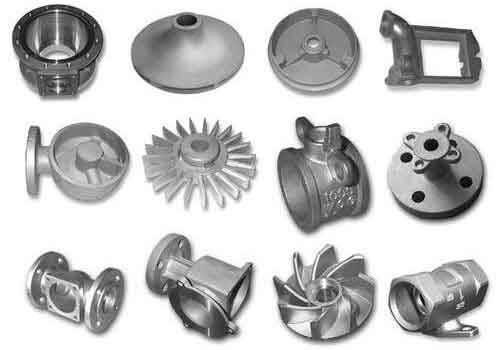
The effectiveness of this sand box design is evident in its application. During practical sessions, students use these boxes to create molds for diverse sand casting parts, such as gears, valves, or custom prototypes. The boxes facilitate easy assembly and disassembly, allowing learners to focus on techniques like ramming, venting, and gating system design. Over multiple training cycles involving thousands of participants, the aluminum alloy sand boxes have proven reliable, enhancing the quality and consistency of sand casting parts produced in educational settings. To illustrate a typical training scenario involving sand casting parts, consider the following image that showcases the process:
Beyond tool design, the pedagogical integration of such equipment is critical. In a “3+1” training model—three years of theoretical and practical instruction followed by one year of industry internship—sand casting parts production serves as a core competency. I have collaborated with teams comprising industry experts, academic staff, and alumni to develop specialized syllabi, such as a实训 course outline and internship guidelines, all centered on mastering sand casting parts manufacturing. These documents emphasize hands-on projects where students design, mold, and evaluate sand casting parts, fostering a deep understanding of process variables like sand composition, moisture content, and pouring temperature.
Assessment strategies are equally important. Rather than relying solely on final products, continuous evaluation is employed, using formulas to quantify performance. For example, the dimensional accuracy of a sand casting part can be assessed through a tolerance index $$ T = \frac{1}{n} \sum_{i=1}^{n} \left| \frac{d_i – D_i}{D_i} \right| $$ where \( d_i \) is the measured dimension, \( D_i \) is the target dimension, and \( n \) is the number of critical features. A lower \( T \) value indicates higher precision in sand casting parts. Similarly, defect rates in sand casting parts, such as porosity or misruns, can be tracked using statistical process control charts, enabling real-time feedback and corrective actions.
To further optimize training, I advocate for iterative refinement based on data analytics. By collecting metrics on student performance, tool wear, and sand casting parts quality, instructors can identify patterns and adjust teaching methods. For instance, if data shows that students struggle with achieving smooth surfaces on sand casting parts, additional modules on finishing techniques can be introduced. This dynamic approach ensures that the practical teaching system remains responsive and effective.
In terms of broader educational implications, the construction of a practical teaching system for sand casting parts production exemplifies how technical training can be democratized. By combining flexible pedagogy, rigorous management, and affordable tools, institutions can cater to all students, from beginners to advanced learners. The key is to maintain a balance between standardization for quality assurance and customization for individual growth. As I have observed, this leads to higher graduation rates, better employment outcomes, and innovation in sand casting parts design among graduates.
Looking ahead, emerging technologies like simulation software and additive manufacturing can complement hands-on sand casting training. Virtual labs allow students to experiment with mold designs for sand casting parts risk-free, while 3D-printed patterns can accelerate prototyping. However, the tactile experience of working with physical sand boxes remains irreplaceable for developing manual skills and intuition. Therefore, a blended approach, where digital tools enhance traditional practice, is ideal for future-proofing sand casting parts education.
In conclusion, building a robust practical teaching system for sand casting parts manufacturing requires a multifaceted strategy that addresses instructional flexibility, managerial rigor, and resource innovation. Through my experiences, I have seen how such systems transform vocational education, enabling every student to excel in producing high-quality sand casting parts. By continually refining these elements based on feedback and industry trends, educators can pave the way for sustainable skill development, ultimately contributing to a skilled workforce capable of advancing manufacturing sectors worldwide. The journey involves constant learning and adaptation, but the rewards—in terms of student success and technological progress—are profound and enduring.