
In modern industrial production, visual measurement has become a widely adopted non-contact method for quality control and dimensional analysis. Compared to traditional measurement techniques, non-contact approaches offer significant advantages, including higher detection accuracy, convenience in operation, and improved efficiency. These benefits are particularly crucial for applications where direct measurement using conventional tools is challenging or impossible. Visual measurement is now extensively applied across various sectors, such as automotive, electronics, electrical, mechanical manufacturing, pharmaceuticals, packaging, and sorting. Its applications span quality inspection, digital 3D reconstruction, position/angle measurement, and feature/character recognition. Not only can visual measurement be used for online, real-time inspection of components and workpieces, but it also provides a foundational condition for intelligent equipment manufacturing. This review focuses on the inspection of sand casting parts, discussing the significance of high-precision detection, summarizing current machine vision systems, analyzing their strengths and weaknesses, and offering insights into future trends.
The measurement of sand mold internal contours is typically categorized into contact and non-contact methods. Contact measurement involves manual use of measuring tools, often through point-to-point dimensional checks. This approach tends to have large errors, low precision, and risks damaging the freshly molded sand molds. In contrast, non-contact measurement avoids direct contact with fragile sand molds, thereby enhancing accuracy. Consequently, it has gradually replaced manual contact methods, becoming a hotspot for both industry and academic research. This shift is driven by the growing demand for precision in manufacturing sand casting parts, where even minor deviations can affect final product quality.
Various non-contact measurement techniques exist, including acoustic, electromagnetic, and optical methods. Acoustic measurement is immune to environmental and electromagnetic interference, cost-effective, high-precision, and suitable for large working gaps, offering unique advantages in coordinate measurement. However, it is susceptible to factors like sound velocity and environmental medium, cannot perform continuous scanning, and involves complex circuitry. Electromagnetic measurement can detect precise and complex surfaces but is limited to non-metallic materials and highly influenced by temperature. Electronic theodolite coordinate methods provide high accuracy and long-distance measurement capabilities, yet they require expensive systems and stable, low-temperature environments. Holographic interferometry can measure rough surfaces with high 3D modeling accuracy, but it is prone to environmental influences and lacks stability. Industrial CT methods offer flexibility but entail significant setup costs. Compared to these, optical measurement methods enable long-distance measurement with high precision, low cost, and fewer influencing factors, aligning with mainstream manufacturing needs. Thus, optical measurement is poised to be a primary research direction in academia.
Current optical inspection trends focus on laser scanning technology and machine vision techniques, including CCD image measurement and structured light measurement. Based on a review of related research, these methods have achieved varying degrees of success in measuring geometric parameters of sand molds, with some even enabling defect detection on sand molds or castings. Laser scanning technology generally falls into two categories: laser triangulation and time-of-flight methods. Both involve emitting laser light onto the object surface, reflecting it back to a CCD sensor, and using principles like triangulation or time measurements to obtain point cloud data. This data is then reconstructed into 3D shapes via algorithms such as NURBS surface interpolation or CAD modeling, allowing visualization of dimensional features. Laser triangulation offers large depth of field (300–500 mm) and broad range but lower accuracy (2–3 mm), making it suitable for close-range measurement. However, when dealing with high-temperature workpieces, such as in the production of sand casting parts, the strong absorption of laser light by hot surfaces can lead to data loss and significant measurement errors. Existing systems often fail to address this issue effectively.
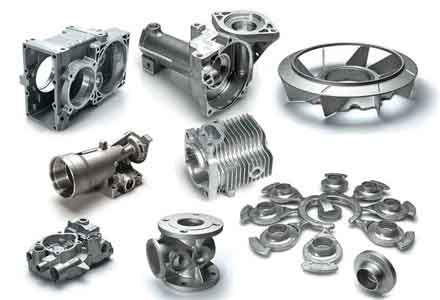
Machine vision inspection, particularly using single-camera (monocular) systems, has garnered attention for its simplicity and cost-effectiveness. To achieve high-precision non-contact measurement with cameras, a linear model is often employed, involving optical calibration, imaging, distortion correction, and measurement. For instance, a camera mathematical model based on image pixel coordinates and 3D world coordinates can be established. Using custom templates, visual measurement experiments can extract features via sub-pixel corner detection methods. Linear analysis of template segments, without considering optical distortion, has shown good linearity within certain object distance ranges. Such systems, developed on platforms like OpenCV with CCD cameras and laser projectors, have demonstrated accuracy in measuring workpiece widths. However, monocular vision systems are inherently limited to 2D measurements, unable to capture 3D data directly. As sand casting parts become increasingly complex and irregular, 2D measurement may fall short of future requirements.
To summarize the current landscape, I present a table comparing different non-contact measurement methods for sand mold and casting inspection:
| Method | Principles | Advantages | Disadvantages | Suitability for Sand Casting Parts |
|---|---|---|---|---|
| Acoustic Measurement | Uses sound waves for distance calculation | Immune to EMI, cost-effective, high precision | Affected by medium, no continuous scan, complex circuit | Moderate; useful for internal voids but limited by environment |
| Electromagnetic Measurement | Based on electromagnetic field interactions | Precise for complex surfaces | Non-metallic only, temperature-sensitive | Low; not suitable for metallic castings |
| Electronic Theodolite | Angular measurements for coordinates | High accuracy, long-distance | Expensive, requires stable conditions | High for large parts but costly |
| Holographic Interferometry | Interference patterns for 3D reconstruction | High 3D accuracy, works on rough surfaces | Environmentally sensitive, unstable | Moderate; good for detail but impractical online |
| Industrial CT | X-ray tomography for internal structures | Flexible, detailed internal inspection | High cost, complex setup | High for defects but not for routine size checks |
| Laser Scanning (Triangulation) | Laser triangulation for point clouds | Large depth, fast, non-contact | Low accuracy, issues with high temps | Moderate; struggles with hot sand casting parts |
| Machine Vision (Monocular) | Camera-based 2D/3D via algorithms | Low cost, high precision, adaptable | Limited to 2D without stereo, requires calibration | High for surface features; evolving for 3D |
From this comparison, machine vision emerges as a promising direction due to its balance of cost, accuracy, and adaptability. In the context of sand casting parts, vision systems can be deployed for online inspection, detecting geometric parameters and surface defects. For example, systems have been developed for real-time surface defect detection in continuous casting processes, using array CCDs and algorithms like similarity and texture analysis to classify cracks and porosity. Improved fuzzy pattern recognition algorithms have also shown good results in defect classification. However, challenges remain, such as occlusion in sand mold internal contours and the need for real-time error correction in machining centers.
Mathematically, the core of monocular vision measurement often relies on a pinhole camera model. The relationship between 3D world coordinates $(X_w, Y_w, Z_w)$ and 2D image coordinates $(u, v)$ can be expressed as:
$$ s \begin{bmatrix} u \\ v \\ 1 \end{bmatrix} = \mathbf{A} [\mathbf{R} | \mathbf{t}] \begin{bmatrix} X_w \\ Y_w \\ Z_w \\ 1 \end{bmatrix} $$
where $s$ is a scaling factor, $\mathbf{A}$ is the intrinsic camera matrix, $\mathbf{R}$ is the rotation matrix, and $\mathbf{t}$ is the translation vector. For linear models, this simplifies to a mapping that can be calibrated using known points. In practice, distortion correction is added to account for lens imperfections, often modeled as:
$$ u_{\text{corrected}} = u + (u – u_0) [k_1 r^2 + k_2 r^4 + k_3 r^6] + p_1 (r^2 + 2(u – u_0)^2) + 2p_2 (u – u_0)(v – v_0) $$
$$ v_{\text{corrected}} = v + (v – v_0) [k_1 r^2 + k_2 r^4 + k_3 r^6] + 2p_1 (u – u_0)(v – v_0) + p_2 (r^2 + 2(v – v_0)^2) $$
with $r^2 = (u – u_0)^2 + (v – v_0)^2$, where $(u_0, v_0)$ is the principal point, $k_i$ are radial distortion coefficients, and $p_i$ are tangential distortion coefficients. These equations underpin many vision systems for inspecting sand casting parts, enabling precise measurements when properly calibrated.
Looking at recent advancements, researchers have explored integrating multiple sensors or combining vision with other techniques. For instance, structured light projection can enhance 3D capabilities by projecting patterns onto objects and analyzing deformations. The phase-shifting method is commonly used, where the intensity $I(x,y)$ at a point is given by:
$$ I(x,y) = A(x,y) + B(x,y) \cos[\phi(x,y) + \delta] $$
Here, $A$ is background intensity, $B$ is modulation, $\phi$ is the phase to be solved, and $\delta$ is the phase shift. By capturing multiple images with different shifts, the 3D shape can be reconstructed. This approach is particularly useful for complex geometries in sand casting parts, as it provides dense point clouds without physical contact.
Despite progress, several limitations persist in current technologies. First, monocular vision systems are inherently 2D, requiring additional setups like stereo cameras or structured light for 3D data. Second, environmental factors—such as lighting variations, dust, and temperature—can degrade measurement accuracy. In sand casting environments, these issues are exacerbated by high temperatures and particulate matter. Third, real-time integration with machining centers is lacking; most systems operate offline, preventing immediate error correction during production. This isolation limits the potential for closed-loop control in manufacturing sand casting parts.
To address these challenges, future trends point toward increased automation, higher precision, and intelligent systems. The integration of artificial intelligence (AI) and deep learning into vision systems is a key direction. For example, convolutional neural networks (CNNs) can be trained to detect defects or measure dimensions directly from images, improving robustness against noise and variations. A typical CNN loss function for regression tasks might be:
$$ \mathcal{L} = \frac{1}{N} \sum_{i=1}^{N} (y_i – \hat{y}_i)^2 $$
where $y_i$ is the true dimension, $\hat{y}_i$ is the predicted value, and $N$ is the number of samples. By leveraging large datasets of sand casting parts, such models can achieve high accuracy even in challenging conditions.
Moreover, multi-sensor fusion is gaining traction, combining vision with thermal or spectral data to handle high-temperature workpieces. For instance, infrared cameras can complement visible-light cameras to mitigate laser absorption issues in hot castings. The fusion process can be formulated as a Bayesian estimation problem:
$$ P(\mathbf{x} | \mathbf{z}) = \frac{P(\mathbf{z} | \mathbf{x}) P(\mathbf{x})}{P(\mathbf{z})} $$
where $\mathbf{x}$ is the state (e.g., true dimensions), $\mathbf{z}$ is the measurement from multiple sensors, and $P(\cdot)$ denotes probability. This allows for more reliable measurements across varying conditions.
Another promising area is the development of online, inline inspection systems that are directly integrated into production lines. Such systems can provide real-time feedback, enabling adaptive machining and reducing scrap rates. For sand casting, this means continuous monitoring of mold dimensions during fabrication, ensuring that each batch of sand casting parts meets specifications. The economic impact is significant, as it minimizes post-casting machining and rework.
In terms of algorithmic improvements, advanced feature extraction and matching techniques are essential. For sand molds with intricate internal contours, methods like scale-invariant feature transform (SIFT) or speeded-up robust features (SURF) can be employed to handle occlusions and variations. The SIFT descriptor, for example, computes gradient magnitudes and orientations in localized regions, creating a robust representation for matching even under partial visibility.
To quantify the performance of different vision systems, I propose a framework based on key metrics. The table below summarizes these metrics for typical inspection tasks involving sand casting parts:
| Metric | Description | Typical Range for Sand Casting | Importance |
|---|---|---|---|
| Accuracy | Closeness to true value | ±0.1 mm to ±0.5 mm | Critical for fit and function |
| Precision | Repeatability of measurements | Standard deviation < 0.05 mm | Ensures consistency |
| Speed | Time per inspection | Few seconds per part | Vital for high-volume production |
| Robustness | Resistance to environmental noise | High tolerance to dust/temp | Key for industrial settings |
| Cost | System and maintenance expenses | Low to moderate | Drives adoption in SMEs |
These metrics highlight the trade-offs involved in selecting an inspection method. For instance, while laser scanning may offer speed, its accuracy might not suffice for precision-critical sand casting parts. Machine vision, with proper calibration, can achieve better accuracy but may require more computational resources.
Looking ahead, the evolution of machine vision will likely involve more sophisticated 3D techniques, such as photogrammetry and depth sensing via time-of-flight cameras. Photogrammetry uses multiple images from different angles to reconstruct 3D models, based on triangulation principles. The fundamental equation for a point correspondence between two images is:
$$ \mathbf{x}_2^T \mathbf{F} \mathbf{x}_1 = 0 $$
where $\mathbf{x}_1$ and $\mathbf{x}_2$ are homogeneous image coordinates, and $\mathbf{F}$ is the fundamental matrix. This allows for dense 3D modeling of complex castings, useful for digital twins and virtual inspections.
Furthermore, the rise of Industry 4.0 and the Internet of Things (IoT) will facilitate the connectivity of vision systems with other factory equipment. Data from inspections can be fed into cloud platforms for analytics, predictive maintenance, and quality trend analysis. For sand casting parts, this means a holistic approach where measurement data influences upstream processes like mold design and sand composition.
In conclusion, machine vision-based inspection methods hold immense potential for advancing the quality control of sand molds and castings. While current technologies, particularly monocular systems, have demonstrated utility, they face limitations in 3D capability, environmental robustness, and real-time integration. Future advancements will likely focus on AI-enhanced algorithms, multi-sensor fusion, and seamless integration into smart manufacturing lines. As the demand for high-precision sand casting parts grows, continued research and innovation in machine vision will be essential to meet industry standards and drive efficiency. The journey from manual measurement to intelligent, automated inspection represents a significant leap forward, promising to reduce costs, improve accuracy, and enhance the overall manufacturing ecosystem for cast components.