
In the field of precision machining, the quality of machine tools, especially precision grinding machines, is evaluated based on two key aspects: the accuracy achieved during final inspection and the intrinsic quality, which includes precision retention and service life. The former is reflected in factory tests, while the latter often emerges only after extended use by customers, leading to its frequent neglect. For critical castings such as beds and tables in grinding machines, properties like strength, hardness, internal stress, wear resistance, and machinability not only affect the realization of accuracy but also significantly impact intrinsic quality. Using ordinary gray cast iron, or even high-strength inoculated cast iron or wear-resistant cast iron, fails to comprehensively meet these performance requirements. This underscores the urgent need for developing high-quality cast iron with superior comprehensive properties for machine tool casting applications.
The gap in research and production of high-quality cast iron is substantial. While efforts in wear-resistant cast irons like high-phosphorus, phosphorus-copper-titanium, vanadium-titanium, and boron cast irons have been made, these materials often exhibit poor machinability, non-uniform microstructure, high sensitivity to section thickness, internal stresses, and inferior casting properties. For instance, comparative tests on scraping machinability showed that HT200 gray cast iron, low-boron cast iron (0.014% B), high-phosphorus cast iron, and boron cast iron (0.032% B) had scraping time ratios of 1:1.2:2:3.2, highlighting the challenges. Therefore, merely focusing on high strength or wear resistance is insufficient; the suitability for machine tool casting must be holistically assessed based on comprehensive performance.
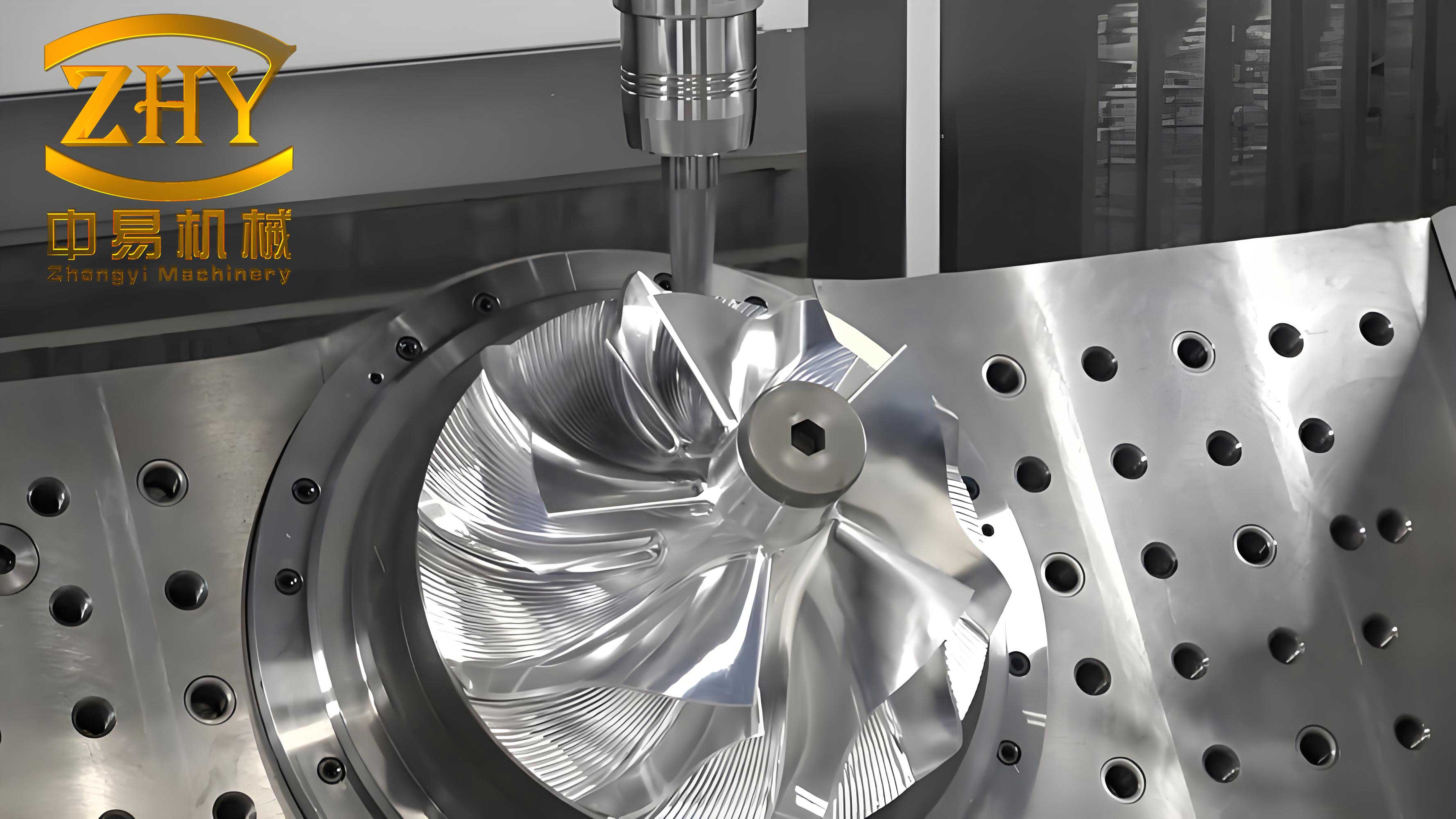
This article explores the development of high-quality cast iron, emphasizing its critical role in enhancing the intrinsic quality of machine tool casting. I will discuss the historical evolution of such materials, key technical requirements, and practical measures for implementation, incorporating tables and formulas to summarize essential data. The goal is to provide a detailed framework for advancing machine tool casting through improved metallurgical practices.
Overview of High-Quality Cast Iron: The Case of Mechanite
Mechanite cast iron, developed in the 1920s, represents a pioneering approach to producing high-quality cast iron through controlled inoculation. Unlike conventional cast irons that rely solely on compositional adjustments or alloying for specific properties, Mechanite emphasizes microstructure control via inoculation. Over nearly six decades, it has evolved into a comprehensive series with multiple grades, tailored for diverse engineering applications, including machine tool casting. The key advancement lies in the use of complex inoculants that refine graphite morphology and distribution, enhance matrix uniformity, and improve overall performance.
The development of Mechanite can be summarized in several phases. Initially, inoculation involved adding 1–3% Mg-Si or Ca-Si alloys to low-carbon-equivalent white iron to promote graphite formation. Later, composite inoculants containing elements like Mg, Ni, Ca, and Si were introduced, achieving tensile strengths exceeding 28 kgf/mm². By the 1960s, the understanding of micro-alloying effects led to the proliferation of complex inoculants with multiple trace elements, such as Ca, Si, Al, Sr, Ba, and rare earths, each designed to optimize specific properties like section sensitivity, wear resistance, and machinability. This evolution underscores the importance of inoculation technology in producing high-quality cast iron for machine tool casting.
The current Mechanite series, as classified by international standards, includes several grades for general engineering applications. For machine tool casting, grades like GB300 are particularly relevant due to their high strength, good toughness, excellent wear resistance, low section sensitivity, and favorable machinability. Table 1 summarizes key properties of selected Mechanite grades relevant to machine tool casting.
| Grade | Tensile Strength (N/mm²) | Hardness (HB) | Elastic Modulus (N/mm²) | Typical Applications |
|---|---|---|---|---|
| GM400 | 400 | 200–250 | 135,000 | High-integrity castings, replacing steel |
| GB300 | 300 | 190–230 | 124,000–135,000 | Machine tool beds with slideways |
| GO275 | 275 | 180–220 | 117,000–128,000 | Pressure-resistant components |
| GD250 | 250 | 170–210 | 110,000–120,000 | General machine parts |
The performance improvements in modern Mechanite are attributed to several factors: advanced inoculation mechanisms, precise control of composition and melting processes, high-quality raw materials, improved melting equipment, and the use of composite inoculants. For machine tool casting, achieving uniform hardness across large castings, such as beds with guideways longer than 3 meters, where hardness variation is limited to HB 5–10, is a testament to its superiority. This uniformity is crucial for precision retention in machine tool casting applications.
Technical Requirements for Developing High-Quality Cast Iron for Machine Tool Casting
Developing high-quality cast iron for machine tool casting necessitates meeting stringent technical requirements. Based on my analysis, the following aspects are critical:
1. High Molten Metal Temperature: Achieving a pouring temperature above 1450°C is essential to eliminate the genetic effects of pig iron, such as coarse graphite, and to promote dense microstructure with fine, uniformly distributed graphite. Research indicates that overheating above 1470°C enhances inoculation effectiveness. The relationship between temperature and graphite refinement can be expressed as:
$$ G_s = k \cdot e^{-E_a/(R T)} $$
where \( G_s \) is graphite size, \( k \) is a constant, \( E_a \) is activation energy, \( R \) is gas constant, and \( T \) is temperature in Kelvin. Higher temperatures reduce \( G_s \), improving properties for machine tool casting.
2. Controlled Melting Process: Minimizing oxidation losses during melting is vital. Targets include Mn loss ≤ 15%, Si loss ≤ 10%, and FeO in slag ≤ 3%. Excessive oxidation counteracts inoculation effects. The oxidation rate can be modeled as:
$$ \frac{d[O]}{dt} = -k_o \cdot [O] \cdot [C] $$
where \( [O] \) and \( [C] \) are oxygen and carbon concentrations, and \( k_o \) is a rate constant. Proper furnace operation reduces \( k_o \), preserving inoculant efficiency.
3. Precise Composition Control: Tight control of carbon, silicon, and manganese within ±0.2% ensures consistent properties. The carbon equivalent (CE) formula is key:
$$ CE = \%C + \frac{1}{3}(\%Si + \%P) $$
For machine tool casting, CE typically ranges from 3.2 to 3.8 to balance strength and castability. Table 2 outlines target compositions for high-quality cast iron.
| Element | Target Range (%) | Influence on Machine Tool Casting |
|---|---|---|
| Carbon (C) | 2.8–3.4 | Controls graphite formation and strength |
| Silicon (Si) | 1.5–2.5 | Promotes graphitization, affects hardness |
| Manganese (Mn) | 0.6–1.2 | Stabilizes pearlite, enhances strength |
| Phosphorus (P) | < 0.15 | Reduces brittleness, improves fluidity |
| Sulfur (S) | < 0.12 | Minimizes inoculation interference |
4. Use of Composite Inoculants: Modern inoculants for machine tool casting contain multiple trace elements to refine microstructure, reduce section sensitivity, and delay fade. A typical composite inoculant might include Ca, Si, Al, Sr, Ba, Bi, and rare earths. The effectiveness of inoculation can be quantified by the fade time \( t_f \):
$$ t_f = A \cdot [I]^{n} $$
where \( [I] \) is inoculant concentration, and \( A \) and \( n \) are constants dependent on composition. For machine tool casting, optimizing \( [I] \) ensures prolonged effectiveness during pouring.
5. Low Casting Removal Temperature: Cooling castings in molds to below 520°C before shakeout reduces internal stresses and improves uniformity, which is critical for large machine tool casting components like beds.
Practical Measures for Implementing High-Quality Cast Iron Production
To achieve the above technical requirements, several practical measures must be adopted in production for machine tool casting:
1. Stable Raw Materials: Using high-quality pig iron with minimal composition fluctuations and increasing steel scrap usage to reduce genetic effects are essential. The charge ratio should include 30–50% steel scrap for optimal results in machine tool casting.
2. Accurate Charge Control: Implementing electronic weighing systems with regular calibration ensures precise charge ratios. The charge calculation can be expressed as:
$$ W_i = \rho_i \cdot V_i $$
where \( W_i \) is weight of material \( i \), \( \rho_i \) is density, and \( V_i \) is volume. Consistency here directly impacts melt composition for machine tool casting.
3. High-Quality Coke: Foundry coke with fixed carbon content > 90% is crucial for attaining high metal temperatures. The coke-to-iron ratio should be maintained around 1:8 to balance temperature and oxidation. The heat balance equation in cupola melting is:
$$ Q_{in} = Q_{out} + Q_{loss} $$
where \( Q_{in} \) is heat from coke combustion, \( Q_{out} \) is heat transferred to metal, and \( Q_{loss} \) is heat losses. Optimizing this ratio improves efficiency for machine tool casting production.
4. Advanced Melting Equipment: While electric furnaces offer better control, cupolas remain cost-effective for machine tool casting. Modern cupolas with dual-row tuyeres and water-cooling can increase metal temperature by 45–60°C while reducing coke consumption by 20–30%. The melting rate \( \dot{m} \) can be modeled as:
$$ \dot{m} = C \cdot \frac{A_t \cdot v_g}{T_m} $$
where \( A_t \) is tuyere area, \( v_g \) is blast velocity, \( T_m \) is melting temperature, and \( C \) is a constant. Proper design enhances performance for machine tool casting.
5. Process Enhancements: Techniques like oxygen enrichment (2% O₂ increases temperature by 30–50°C), hot blast (400°C blast raises temperature by 60–80°C), and dehumidified blast (humidity < 8 g/m³) significantly improve melting conditions. The effect of humidity on temperature drop \( \Delta T \) is approximately:
$$ \Delta T = \alpha \cdot H $$
where \( H \) is humidity in g/m³, and \( \alpha \) is a coefficient (~2°C per g/m³). Controlling these parameters is vital for high-quality machine tool casting.
6. Inoculation Practice: Selecting appropriate composite inoculants tailored for machine tool casting is key. Inoculant addition typically ranges from 0.2% to 0.8% of metal weight, with late addition during tapping to minimize fade. The inoculation effect on tensile strength \( \sigma_t \) can be estimated as:
$$ \sigma_t = \sigma_0 + \beta \cdot [I] $$
where \( \sigma_0 \) is base strength, and \( \beta \) is a strengthening coefficient. For machine tool casting, optimizing \( [I] \) ensures desired properties.
Performance Evaluation and Future Directions
The comprehensive performance of high-quality cast iron for machine tool casting can be evaluated through mechanical testing, microstructure analysis, and operational trials. Key metrics include tensile strength, hardness uniformity, wear resistance, and machinability. For instance, wear volume \( V_w \) in sliding applications can be correlated with hardness \( H \) and load \( L \):
$$ V_w = k_w \cdot \frac{L}{H} $$
where \( k_w \) is a wear coefficient. Lower \( V_w \) indicates better wear resistance, crucial for machine tool casting components like guideways.
Future research should focus on developing new inoculant systems, improving melting efficiency with alternative fuels, and integrating digital control for real-time composition adjustment. The use of simulation tools to predict microstructure evolution during solidification can further optimize machine tool casting quality. Additionally, sustainability aspects, such as recycling and energy reduction, will play an increasing role in advancing machine tool casting technologies.
In conclusion, the development of high-quality cast iron is paramount for enhancing the intrinsic quality and competitiveness of machine tools. By adhering to stringent technical requirements and implementing practical measures, manufacturers can produce castings with superior comprehensive properties, ensuring long-term precision and durability in machine tool casting applications. This holistic approach not only addresses current gaps but also paves the way for innovation in the foundry industry, ultimately contributing to the advancement of global manufacturing standards.