
In the pursuit of advancing power generation efficiency, the development of materials capable of withstanding extreme temperatures and pressures is paramount. As a part of this endeavor, we focused on the trial manufacture of CB2 steel casting, a 9%–12%Cr heat-resistant steel designed for use in 620°C ultra-supercritical steam turbines. The demand for such high-performance steel castings stems from their superior high-temperature strength, creep resistance, and low thermal expansion coefficients, which are critical for components like valve bodies and cylinder casings in advanced power plants. This article details our comprehensive approach, from defining chemical composition to final performance testing, all conducted from a first-person perspective as we navigated the challenges of producing this advanced steel casting. Throughout this process, the term “steel casting” is emphasized to underscore the material’s form and application, as it represents a cornerstone of modern heavy industrial manufacturing.
The technical specifications for CB2 steel casting, designated as GX13CrMoCoVNbNB9-2-1 (equivalent to ZG13Cr9Mo2Co1NiVNbNB domestically), set stringent requirements for chemical composition and mechanical properties. Based on our extensive experience in producing 9%–12%Cr heat-resistant steel castings for ultra-supercritical turbines, we adjusted the control ranges for key elements to optimize manufacturability and performance. The target chemical composition is summarized in Table 1, which includes adjustments such as increasing Mn, Cr, and Mo minima while reducing harmful elements like P. This tailored approach ensures that the steel casting meets the rigorous demands of high-temperature service.
| Element | Control Range (wt%) |
|---|---|
| C | 0.11–0.14 |
| Si | 0.20–0.30 |
| Mn | 0.85–0.95 |
| Cr | 9.20–9.45 |
| Ni | 0.10–0.20 |
| Mo | 1.45–1.60 |
| Co | 0.90–1.10 |
| V | 0.20–0.23 |
| Nb | 0.05–0.08 |
| B | 0.008–0.011 |
| N | 0.015–0.022 |
| Altot | ≤0.010 |
| S | ≤0.010 |
| P | ≤0.010 |
The mechanical performance requirements for this steel casting are equally demanding, as outlined in Tables 2, 3, and 4. Room-temperature properties include a yield strength (Rp0.2) of at least 500 MPa, tensile strength (Rm) between 630 and 750 MPa, elongation (A5) above 15%, reduction of area (Z) over 40%, and Charpy impact energy (AK) averaging ≥30 J with a minimum of 24 J. High-temperature yield strength must exceed specified values at 550°C, 600°C, 620°C, and 650°C, while stress-rupture strength at 620°C requires a minimum of 100 hours under 170 MPa stress. These targets guide our entire manufacturing process, ensuring the steel casting’s reliability in service.
| Temperature (°C) | Yield Strength Requirement (MPa) |
|---|---|
| 550 | ≥325 |
| 600 | ≥275 |
| 620 | ≥245 |
| 650 | ≥200 |
| Property | Requirement |
|---|---|
| Rp0.2 (MPa) | ≥500 |
| Rm (MPa) | 630–750 |
| A5 (%) | ≥15 |
| Z (%) | ≥40 |
| AK (J) | ≥30 (avg), min 24 |
| Temperature (°C) | Stress (MPa) | Requirement |
|---|---|---|
| 620 | 170 | Rupture time ≥100 h |
To achieve these specifications, we developed a meticulous smelting process, leveraging our facility’s capabilities. The process flow, illustrated in Figure 1, involves electric arc furnace (EAF) oxidation followed by LF-LFV refining and argon-protected pouring. In the EAF stage, we used a charge mix of heavy scrap steel (35–45%), light scrap steel (30–40%), and steel chips (20–25%), all selected for low residual elements like Ni, Sn, and Cu. The oxidation phase aimed for a decarburization of over 0.40% at temperatures above 1,570°C, with phosphorus reduced to ≤0.003% before slag removal. This step is critical for refining the steel casting’s purity, as impurities can degrade high-temperature performance. The reaction kinetics can be described by equations such as the decarburization rate: $$ \frac{d[C]}{dt} = k \cdot (P_{O_2} – P_{CO}) $$ where [C] is carbon concentration, k is a rate constant, and P denotes partial pressures. By controlling oxygen injection and slag composition, we optimized this process for the steel casting.
During LF refining, we maintained a reducing atmosphere with calcium-silicon and carbon additions for diffusion deoxidation. Key parameters included a slag layer thickness of 200–350 mm, a reduction time exceeding 40 minutes, and precise temperature control. Alloy adjustments were made under ideal arc burial conditions to prevent nitrogen pickup, which is crucial for the steel casting’s nitrogen content specification. The vacuum degassing phase, conducted at ≤133 Pa for ≥30 minutes, removed dissolved gases like hydrogen and oxygen, enhancing the steel casting’s soundness. Final composition tweaks involved adding ferro-titanium and rare earth elements to modify inclusions, followed by boron adjustment to the target range. The entire smelting sequence ensured a homogeneous and clean steel casting melt, ready for pouring.
For pouring, we employed argon shielding through the gating system and mold cavity to minimize oxidation. The pouring temperature was controlled between 1,570°C and 1,580°C, based on thermal calculations to prevent defects like shrinkage or porosity in the steel casting. The heat transfer during solidification can be modeled using Fourier’s law: $$ q = -k \nabla T $$ where q is heat flux, k is thermal conductivity, and ∇T is the temperature gradient. By pre-heating the mold to 150–200°C and using chromite sand facing, we managed cooling rates to achieve a fine microstructure in the steel casting.
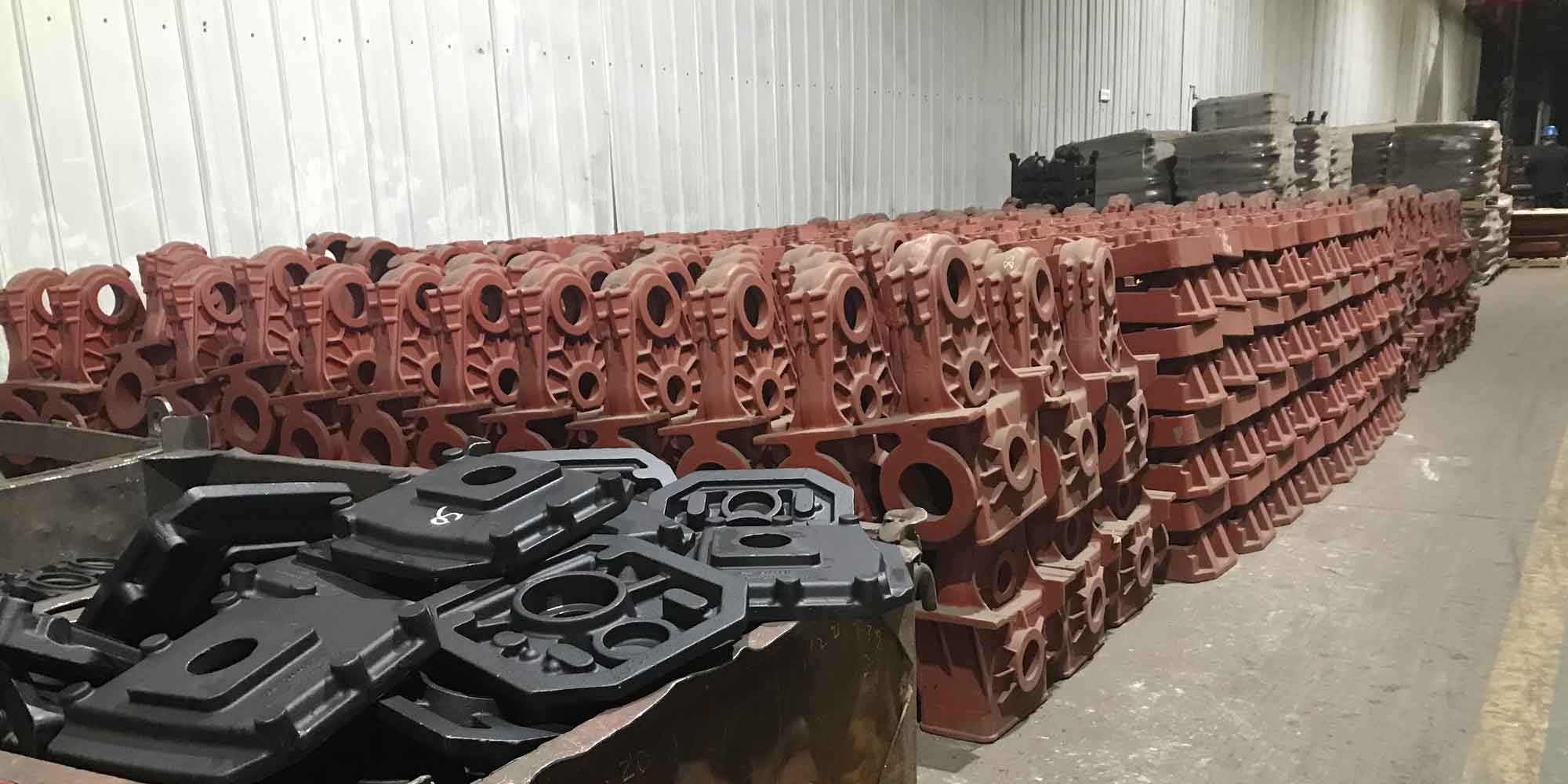
To simulate actual component conditions, we designed equivalent test blocks with dimensions of 500 mm × 300 mm × 300 mm, representing a wall thickness of 300 mm typical for turbine casings. Each block, weighing approximately 400 kg, included attached test coupons for mechanical evaluation. Using Experto-ViewCAST simulation software, we optimized the risering design—a cylindrical insulated riser of Φ400 mm × 500 mm—to ensure shrinkage defects were confined to the riser, as confirmed by numerical analysis. The gating system was designed based on modulus methods, expressed as: $$ M = \frac{V}{A} $$ where M is the modulus, V is volume, and A is cooling surface area. This approach guaranteed soundness in the steel casting test blocks, which were produced five per mold with ester-cured sodium silicate sand molds. After cutting the risers, the blocks exhibited clean surfaces, ready for heat treatment.
The heat treatment process is vital for developing the desired martensitic microstructure in the steel casting. Based on recommended practices and our experience, we implemented a curve comprising normalizing at 1,100–1,130°C followed by forced air cooling to below 50°C, and tempering at 740–750°C. The phase transformation during normalizing can be described by the Avrami equation for austenitization: $$ X = 1 – \exp(-kt^n) $$ where X is the transformed fraction, k and n are constants, and t is time. By heating at 80°C/h to 680–730°C before accelerating, we minimized thermal stresses. The tempering step relieved residual stresses and precipitated secondary carbides, enhancing toughness and creep resistance in the steel casting. This dual treatment balanced strength and ductility, key for high-temperature applications.
After heat treatment, we conducted extensive testing on the attached coupons. Chemical analysis, shown in Table 5, confirmed compliance with the control ranges, including low levels of harmful elements like P and S. The results validated our smelting adjustments, with all elements within specified tolerances for the steel casting.
| Element | Result (wt%) |
|---|---|
| C | 0.13 |
| Si | 0.26 |
| Mn | 0.88 |
| P | 0.009 |
| S | 0.002 |
| Cr | 9.36 |
| Ni | 0.12 |
| Mo | 1.44 |
| Co | 1.07 |
| V | 0.22 |
| Nb | 0.06 |
| B | 0.011 |
| N | 0.013 |
| Altot | <0.01 |
| Sn | 0.005 |
| Cu | 0.06 |
Mechanical testing results, summarized in Table 6, exceeded all requirements. Room-temperature yield strength reached 543 MPa, tensile strength 693 MPa, elongation 17.9%, reduction of area 60.2%, and impact energy averaged over 30 J. High-temperature tests showed yield strengths of 399 MPa at 550°C, 330 MPa at 600°C, 302 MPa at 620°C, and 258 MPa at 650°C, all above the specified minima. Stress-rupture tests at 620°C under 170 MPa yielded times of 147, 136, and 161 hours, surpassing the 100-hour threshold. These outcomes demonstrate the steel casting’s robustness for ultra-supercritical service.
| Temperature (°C) | Rp0.2 (MPa) | Rm (MPa) | A5 (%) | Z (%) | AK (J) |
|---|---|---|---|---|---|
| Room | 543 | 693 | 17.9 | 60.2 | 32, 51, 45 |
| 550 | 399 | 426 | 17.2 | 67.8 | – |
| 600 | 330 | 339 | 19.2 | 74.2 | – |
| 620 | 302 | 319 | 19.2 | 78.9 | – |
| 650 | 258 | 267 | 21.8 | 83.3 | – |
The success of this trial manufacture highlights the importance of integrated process control in producing high-quality steel castings. From smelting to heat treatment, each step was optimized based on theoretical principles and empirical data. For instance, the effect of alloying elements on creep strength can be approximated by Larson-Miller parameter calculations: $$ P = T(\log t + C) $$ where P is the parameter, T is temperature in Kelvin, t is time, and C is a material constant. By tailoring composition and processing, we achieved a steel casting with balanced properties. This experience provides a valuable reference for scaling up production of CB2 steel castings for commercial turbines, contributing to the advancement of ultra-supercritical power technology.
In conclusion, our first-person journey in developing CB2 steel casting for 620°C ultra-supercritical steam turbines involved meticulous planning and execution. By adjusting chemical composition, refining smelting practices, designing representative test blocks, and applying precise heat treatment, we produced a steel casting that meets all technical specifications. The mechanical and high-temperature performance results confirm its suitability for demanding applications. This work underscores the critical role of steel castings in modern energy infrastructure and offers a roadmap for future innovations in heat-resistant alloy development. As we move forward, these insights will aid in the mass production of reliable steel castings, supporting global efforts toward efficient and sustainable power generation.