
In the pursuit of advanced lightweight structural materials, magnesium alloys have consistently occupied a position of significant interest due to their exceptional strength-to-weight ratio. My research focuses on overcoming the inherent limitations of conventional magnesium alloys, particularly their inadequate high-temperature strength and creep resistance, which restrict their use in demanding sectors like aerospace and defense. Among the various alloying systems, those based on the Mg-Gd (Gadolinium) system have emerged as exceptionally promising due to the substantial solid solubility of Gd in magnesium at elevated temperatures and its potent age-hardening response. This study systematically investigates the role of Gd content within the Mg-Gd-Y system, employing a manufacturing route critical for large-scale components: sand casting services. The use of sand casting services is essential for producing near-net-shape, complex components where the cost of permanent molds is prohibitive or the geometry is unsuitable for die casting. However, the slower cooling rates inherent to sand casting services significantly influence solidification microstructure compared to metal mold casting, warranting dedicated study. This work presents my findings on how varying Gd additions affect the as-cast microstructure, room-temperature tensile properties, and fracture behavior of sand-cast Mg-Gd-Y-Zr alloys, with a commercial WE54 alloy included for benchmark comparison.
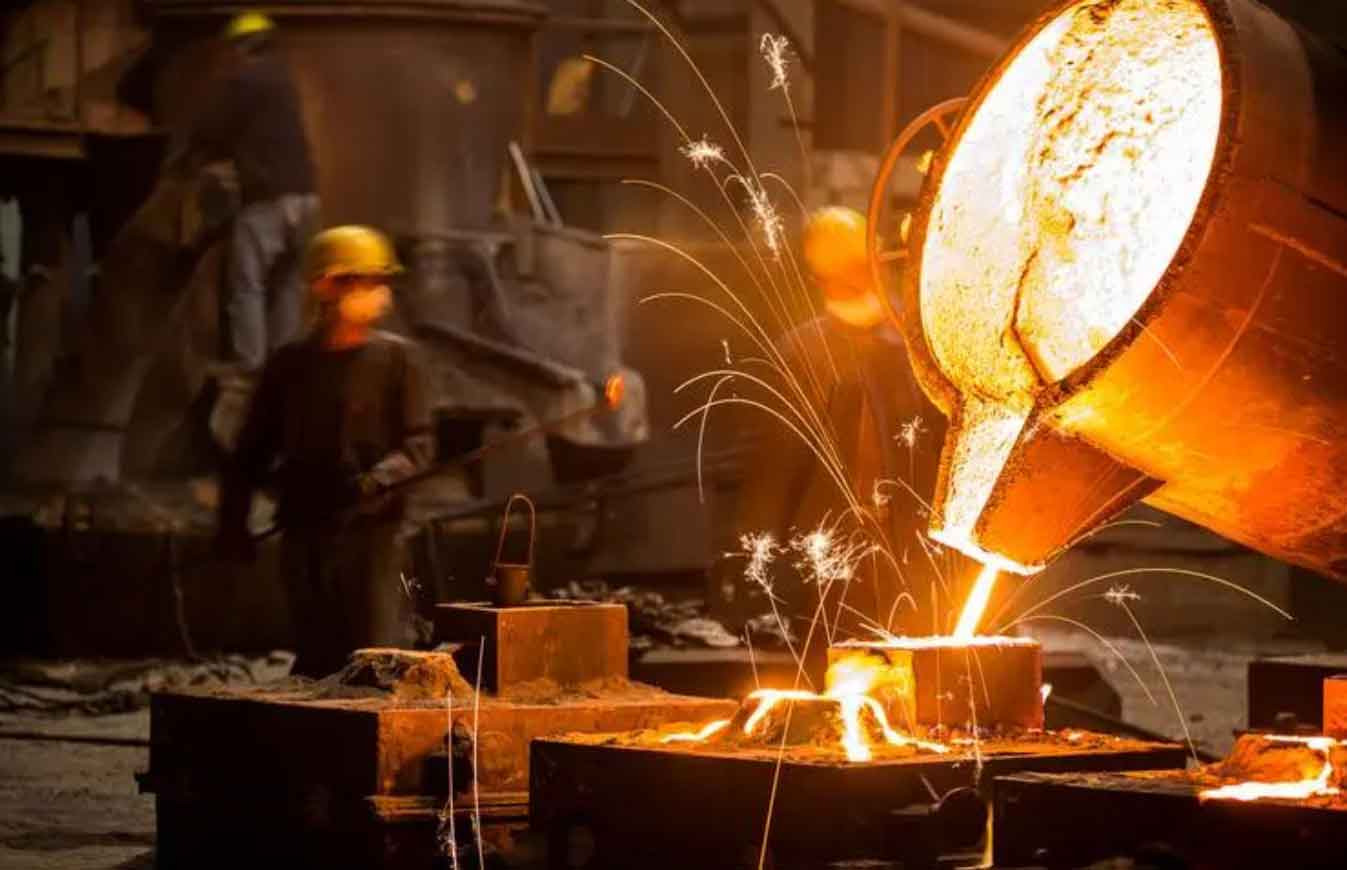
The experimental alloys were designed with varying Gd content while maintaining a nominally constant Y and Zr addition. The alloys are designated here as GW94, GW74, and GW54, where the numerals approximate the weight percentages of Gd and Y, respectively. A commercial WE54 alloy was also processed under identical conditions for performance comparison. All alloys were prepared using high-purity raw materials. The melting and alloying were conducted under a protective flux and gas atmosphere to prevent excessive oxidation. The critical step, central to this investigation, was the use of sand casting services for solidification. The molten alloy was poured into pre-prepared sand molds to produce single-cast tensile bars. This method, typical of industrial sand casting services, results in a lower cooling rate, influencing grain size and phase distribution. The chemical compositions of the final castings, verified by analysis, are summarized in Table 1.
| Alloy Designation | Gd | Y | Nd | Zr | Mg |
|---|---|---|---|---|---|
| GW94 | 9.53 | 4.22 | – | 0.50 | Bal. |
| GW74 | 7.06 | 4.12 | – | 0.36 | Bal. |
| GW54 | 3.85 | 3.78 | – | 0.55 | Bal. |
| WE54 | 1.93 | 5.10 | 1.84 | 0.50 | Bal. |
Microstructural characterization was performed using optical microscopy (OM) and scanning electron microscopy (SEM) coupled with energy-dispersive X-ray spectroscopy (EDS). Samples were sectioned from the gauge portion of the cast bars. For quantitative analysis, the average grain size (d) was determined using the linear intercept method, applying the standard conversion:
$$ d = 1.74 \bar{L} $$
where $\bar{L}$ is the mean linear intercept length. Over 300 grains were measured for each alloy to ensure statistical reliability. The volume fraction of secondary phases was assessed using image analysis software on multiple micrographs. Room-temperature tensile tests were conducted on machined specimens according to standard specifications, with a constant initial strain rate of $1 \times 10^{-3} s^{-1}$. Three valid tests per condition ensured data reproducibility.
The microstructures of the as-cast alloys are predominantly composed of α-Mg equiaxed dendrites, with secondary phases distributed along the inter-dendritic regions and grain boundaries. The most striking observation is the systematic change in the amount and morphology of these secondary phases with increasing Gd content. The GW54 alloy (lower Gd) exhibits isolated, island-like eutectic compounds at the grain boundaries. As the Gd content increases to 7 wt.% in GW74, these phases become more continuous, forming narrow, interconnected ligaments. In the GW94 alloy (highest Gd), the eutectic phase forms an extensive, nearly continuous network enveloping the α-Mg grains. This evolution is a direct consequence of the increased total rare-earth (RE) content, which alters the solidification path and the volume of the last-to-freeze eutectic liquid. The identity of these phases, confirmed by EDS analysis, is primarily the cubic $\text{Mg}_{24}(\text{Gd,Y})_5$ phase. Isolated blocky particles, identified as the $\text{Mg}_5(\text{Gd,Y})$ phase with an fcc structure, were also occasionally observed adjacent to the $\text{Mg}_{24}(\text{Gd,Y})_5$ phase. Furthermore, Zr-rich cores were detected within the grains, acting as potent heterogeneous nucleation sites during solidification. The volume fractions of these constituents are quantified in Table 2.
| Alloy | Avg. Grain Size (μm) | Vol.% $\text{Mg}_{24}(\text{Gd,Y})_5$ | Vol.% $\text{Mg}_5(\text{Gd,Y})$ | Notable Features |
|---|---|---|---|---|
| GW94 | 109 ± 15 | 7.25 | 0.21 | Semi-continuous eutectic network |
| GW74 | 157 ± 22 | 3.36 | 0.20 | Interconnected ligaments, larger grains |
| GW54 | 104 ± 12 | 1.50 | 0.20 | Isolated island-like eutectic |
| WE54 | 105 ± 14 | *Approx. 7-8 | – | Lamellar eutectic, contains $\text{Mg}_{12}\text{Nd}$ |
*The WE54 alloy contains a similar total phase fraction but with a different phase mixture and morphology.
The grain size data reveals an important aspect of sand casting services: the generally coarser microstructure compared to permanent mold casting. The notably larger grain size in GW74 (157 μm) is attributed to its lower Zr content (0.36 wt.%), underscoring Zr’s crucial role as a grain refiner in magnesium alloys processed via sand casting services. Gd content itself showed no consistent, direct grain-refining effect within this study’s parameters.
In contrast, the WE54 alloy displayed a distinctly different eutectic morphology. Instead of the massive, divorced eutectic found in the Mg-Gd-Y alloys, WE54 exhibited a finer, lamellar structure of alternating α-Mg and intermetallic phases (identified as $\text{Mg}_{24}(\text{Y,Nd})_5$ and $\text{Mg}_{12}\text{Nd}$) at the grain boundaries. This structural difference, stemming from its different RE composition (Y and Nd vs. Gd and Y) and associated phase equilibria, has profound implications for mechanical behavior.
The room-temperature tensile properties of the sand-cast alloys are summarized in Table 3 and shown graphically in the stress-strain curves. A clear and significant trend is observed: both ultimate tensile strength (UTS) and yield strength (YS) increase monotonically with Gd content, while elongation to failure (EL) decreases.
| Alloy | Ultimate Tensile Strength (MPa) | Yield Strength (MPa) | Elongation (%) |
|---|---|---|---|
| GW94 | 213.7 ± 5.2 | 156.0 ± 3.8 | 1.29 ± 0.15 |
| GW74 | 186.3 ± 4.1 | 136.2 ± 3.1 | 1.65 ± 0.20 |
| GW54 | 186.0 ± 3.9 | 128.9 ± 2.9 | 2.10 ± 0.18 |
| WE54 | 198.5 ± 4.5 | 142.5 ± 3.5 | 3.41 ± 0.25 |
The strengthening effect is directly correlated with the increasing volume fraction of the hard, brittle $\text{Mg}_{24}(\text{Gd,Y})_5$ phase (Table 2). This phase acts as a potent strengthener by impeding dislocation glide. The relationship between strength increase ($\Delta \sigma_{phase}$) and secondary phase fraction ($f$) can be conceptually framed through a simple strengthening model, often approximated for particle strengthening:
$$ \Delta \sigma_{phase} \propto \sqrt{f} $$
While this simplified model does not account for phase morphology and size distribution, the trend is clear: higher Gd leads to more $\text{Mg}_{24}(\text{Gd,Y})_5$, leading to higher strength. The GW94 alloy achieved the highest strengths, with UTS and YS of 213.7 MPa and 156.0 MPa, respectively. However, this came at a severe cost to ductility, with an elongation of only 1.29%. It is noteworthy that the strength increase from GW54 to GW74 was marginal (especially for UTS), which can be attributed to the counteracting effect of the significantly larger grain size in GW74. The Hall-Petch relationship describes the grain boundary strengthening contribution:
$$ \sigma_y = \sigma_0 + k_y d^{-1/2} $$
where $\sigma_0$ is the friction stress, $k_y$ is the strengthening coefficient, and $d$ is the grain diameter. The coarser grains in GW74 ($d^{-1/2} \approx 0.080$) compared to GW54 ($d^{-1/2} \approx 0.098$) reduced the grain boundary strengthening contribution, partially offsetting the gain from the increased second-phase fraction.
The WE54 alloy presented an interesting case. Despite having a lower total RE content than GW94, it exhibited a superior combination of strength and ductility. Its strength was intermediate between GW74 and GW94, but its elongation (3.41%) was markedly higher than any of the Mg-Gd-Y alloys. This enhanced ductility is strongly linked to its lamellar eutectic microstructure. The fine, alternating soft (α-Mg) and hard (intermetallic) layers at the grain boundaries can better accommodate plastic strain through interface sliding and constrained deformation of the soft layers, delaying crack initiation compared to the thick, monolithic, and brittle eutectic networks in the high-Gd alloys.
Fractographic analysis confirmed the tensile behavior. The fracture surfaces of the GW94, GW74, and GW54 alloys were dominated by cleavage facets and micro-cracks associated with the secondary phases. The fracture mode was quasi-cleavage. Secondary cracks frequently initiated at the sharp corners of the blocky $\text{Mg}_5(\text{Gd,Y})$ particles or at the interface between the $\text{Mg}_{24}(\text{Gd,Y})_5$ phase and the matrix, propagating through the brittle eutectic network. As Gd content increased, the increased connectivity and amount of this brittle network provided easier paths for crack propagation, leading to the observed reduction in elongation. In contrast, the WE54 alloy’s fracture surface exhibited a mixed morphology with shallower cleavage facets, more tear ridges, and evidence of localized micro-void coalescence, indicating a somewhat greater degree of plastic deformation prior to fracture, consistent with its higher measured ductility.
The implications of this research for component manufacturing using sand casting services are substantial. The choice of Gd content in Mg-Gd-Y alloys involves a direct trade-off between strength and castability (in terms of feeding and hot tearing resistance) as well as final ductility. For applications where maximum as-cast strength is the overriding concern and minimal machining or subsequent hot working is required, a higher Gd alloy like GW94 might be specified for sand casting services. However, designers and engineers utilizing sand casting services must account for the extremely low ductility in the as-cast state. For components requiring better toughness or those that will undergo significant thermo-mechanical processing (like forging or extrusion) after casting, a lower Gd variant like GW54 or a WE-series alloy might be more appropriate despite its lower initial strength. The slower cooling of sand casting services amplifies the formation of coarse, continuous grain boundary networks in high-RE alloys, making post-casting homogenization heat treatments even more critical to dissolve these phases and restore workability before further processing.
In conclusion, my investigation into sand-cast Mg-Gd-Y alloys reveals that Gd content is a powerful microstructural governor. Increasing Gd from approximately 4 to 9 wt.% dramatically increases the volume fraction of the grain-boundary $\text{Mg}_{24}(\text{Gd,Y})_5$ phase in the as-cast condition, leading to a significant enhancement in room-temperature strength but a severe deterioration in ductility. The GW94 alloy exhibited the highest strength (UTS ~214 MPa, YS ~156 MPa) but the lowest elongation (~1.3%). The mechanical properties are not solely a function of Gd content but are also modulated by grain size, which is independently controlled by Zr addition—a critical consideration for sand casting services where inherent cooling rates are low. The WE54 alloy, with its different RE system, demonstrated that a lamellar eutectic morphology can provide a better strength-ductility balance in the as-cast state compared to the divorced, massive eutectic of Mg-Gd-Y alloys. All alloys fractured via a quasi-cleavage mechanism. This work underscores the importance of integrated alloy design and process selection; optimizing for sand casting services requires balancing composition to manage second-phase formation under slow cooling to achieve the desired performance in the final cast component.