
In my extensive research and practical experience in foundry engineering, I have focused on the casting processes for critical automotive components, particularly those involving sand casting parts. Sand casting is a fundamental method for producing complex geometries, such as reducer box bases, which are essential in vehicle transmission systems. These sand casting parts must exhibit high strength, durability, and precision to withstand harsh operational conditions. This article delves into the detailed sand casting process for a reducer box base, emphasizing process optimization and fault diagnosis. Through this first-person perspective, I aim to share insights from my work, integrating theoretical principles with practical applications to enhance the quality and reliability of sand casting parts. The reducer box base, as a key sand casting part, serves as a sturdy foundation for supporting internal gears and bearings, ensuring efficient power transmission and load distribution. My study highlights the importance of meticulous process design in achieving defect-free sand casting parts, which are vital for automotive safety and performance.
The automotive industry relies heavily on sand casting parts for components like reducer boxes due to the method’s adaptability and cost-effectiveness. Sand casting allows for the production of intricate shapes with relatively low tooling costs, making it ideal for medium to high-volume production of sand casting parts. In my analysis, I have explored various casting techniques, but sand casting remains predominant for such applications because of its ability to handle diverse alloys, including cast iron and cast aluminum, commonly used for reducer box bases. These sand casting parts often feature thin walls and complex external structures, necessitating careful process planning to avoid defects. My research involves comparing different sand casting approaches to identify the most suitable method for producing high-quality sand casting parts, with a focus on the reducer box base. The goal is to optimize every step—from pattern making to pouring—to ensure that these sand casting parts meet stringent automotive standards. Through this work, I emphasize how advancements in sand casting technology can lead to more efficient and reliable sand casting parts, contributing to overall vehicle longevity.
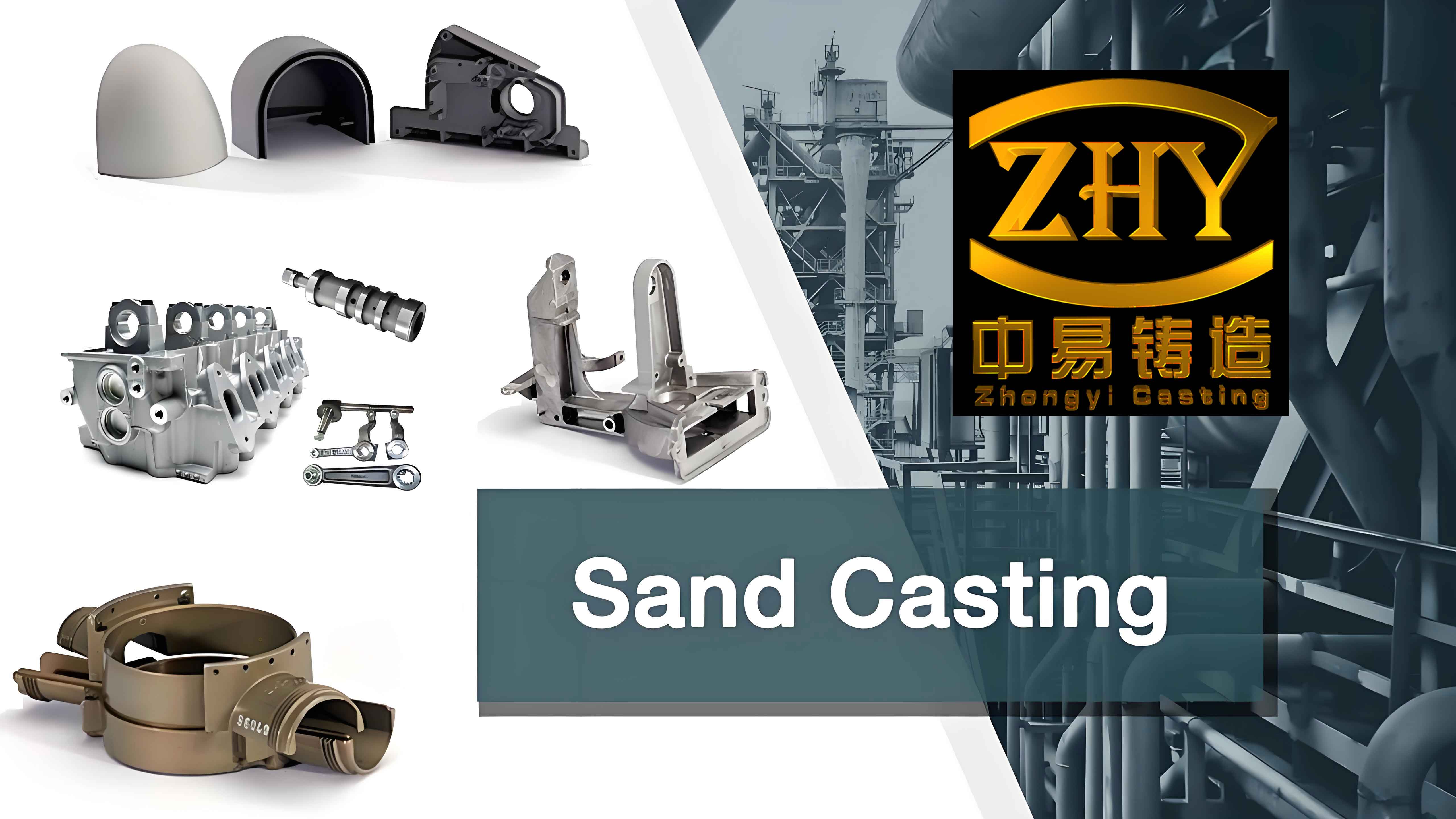
To establish a robust casting process for the reducer box base, I began by evaluating the fundamental structure and production requirements. The reducer box base is a critical sand casting part that must provide mechanical stability and resistance to wear and corrosion. In sand casting, the process typically involves several sequential steps, each influencing the final quality of the sand casting parts. I have summarized the key stages in the sand casting process for such components in the table below, which outlines the workflow from design to finishing. This systematic approach is crucial for producing consistent sand casting parts, as any deviation can lead to defects that compromise performance.
| Step in Sand Casting Process | Description | Importance for Sand Casting Parts |
|---|---|---|
| Pattern Making | Creating a replica of the final part, often from wood or metal, to form the mold cavity. | Determines the accuracy and surface finish of sand casting parts. |
| Mold Preparation | Using sand mixtures to create the mold around the pattern, including core placement for internal features. | Ensures proper shape and integrity of sand casting parts during pouring. |
| Core Making | Fabricating separate sand cores to define internal cavities, such as oil passages in the reducer box base. | Critical for achieving complex geometries in sand casting parts without defects. |
| Melting and Pouring | Heating metal to liquid state and pouring it into the mold through a gating system. | Affects the filling behavior and solidification of sand casting parts. |
| Cooling and Shakeout | Allowing the casting to solidify and then removing it from the mold. | Influences the mechanical properties and residual stresses in sand casting parts. |
| Cleaning and Finishing | Removing excess material, such as gates and flashes, and inspecting for defects. | Enhances the appearance and functionality of sand casting parts. |
In my work, I adopted a two-box molding process with the opening facing upward for the reducer box base, as it facilitates core placement and adjustment, ensuring dimensional accuracy for these sand casting parts. This approach is particularly beneficial for sand casting parts with thin walls, as it minimizes distortion and improves surface quality. Additionally, I implemented a bottom gating system to achieve smooth pouring, which is essential for preventing turbulence and slag inclusion in sand casting parts. The design of the gating system involves precise calculations to optimize fluid flow and temperature distribution during casting. For instance, I used mathematical formulas to determine key parameters like pouring time and riser dimensions, which directly impact the quality of sand casting parts. Below, I present a detailed analysis of these calculations, emphasizing their relevance to producing defect-free sand casting parts.
The gating system design is paramount for successful sand casting parts. I focused on three critical aspects: sprue height, pouring time, and choke area. First, the sprue height must provide sufficient metallostatic pressure to fill the mold completely, especially for sand casting parts with remote sections. Based on empirical studies, I calculated the minimum required pressure head using the formula:
$$ P_M \geq U \cdot \tan \omega $$
where \( P_M \) is the minimum residual pressure head, \( U \) is the distance from the pouring point to the farthest point of the sand casting part, and \( \omega \) is the pressure angle, typically taken as \( 6^\circ \). For the reducer box base, with \( U = 1100 \, \text{mm} \), the calculation yields \( P_M \geq 110 \, \text{mm} \). In practice, I set it to \( 150 \, \text{mm} \) by using a taller sand box to ensure adequate pressure for these sand casting parts. This adjustment helps prevent cold shuts and misruns in sand casting parts, which are common defects in thin-walled sections.
Second, pouring time significantly affects the filling behavior of sand casting parts. An optimal pouring time ensures uniform metal flow and proper venting of gases from the mold. I employed the following formula to estimate the pouring time for sand casting parts weighing less than 10 tons:
$$ t = S_2 \sqrt[3]{\gamma \cdot G} $$
Here, \( t \) is the pouring time in seconds, \( S_2 \) is a constant coefficient (typically 2 for sand casting parts), \( \gamma \) is the average wall thickness of the sand casting part in millimeters, and \( G \) is the total pouring weight in kilograms. For the reducer box base, with \( \gamma = 20 \, \text{mm} \) and \( G = 500 \, \text{kg} \), the calculated pouring time is approximately \( 60 \, \text{s} \). This time frame allows for controlled filling, reducing the risk of defects in sand casting parts. To validate this, I computed the liquid metal rise rate using \( V = C / t \), where \( C \) is the height of the pouring point. Comparing this rate with literature recommendations confirmed its suitability for producing high-quality sand casting parts.
Third, the choke area in the gating system regulates metal flow to prevent turbulent entry into the mold cavity. For sand casting parts, a well-designed choke minimizes oxidation and slag entrapment. I determined the choke cross-sectional area using the equation:
$$ S_{\text{choke}} = \frac{G}{0.31 \mu_1 t \sqrt{H_p}} $$
In this equation, \( S_{\text{choke}} \) is the choke area in square centimeters, \( \mu_1 \) is the flow loss coefficient from the sprue to the choke section, and \( H_p \) is the effective pressure head at the choke, derived from \( H_p = H_0 – P^2 / 2C \), where \( H_0 \) is the metal head above the choke, \( P \) is the height from the choke to the mold cavity top, and \( C \) is the total height of the sand casting part. For the reducer box base, with bottom gating, \( P = C \), leading to \( S_{\text{choke}} = 26 \, \text{cm}^2 \). This area ensures laminar flow, which is crucial for the integrity of sand casting parts. Moreover, the total cross-sectional area of the ingates was calculated using:
$$ S_{\text{ingate}} = \frac{\mu_1 \sqrt{H_2}}{\mu_2 K H_0} S_{\text{choke}} $$
where \( \mu_2 = 0.5 \) and \( K = 0.25 \) to \( 0.5 \) are empirical coefficients, and \( H_2 \) is the distance between two layers of ingates. These calculations underscore the precision required in designing gating systems for sand casting parts, as even minor errors can lead to defective sand casting parts.
Beyond the gating system, core design plays a pivotal role in shaping the internal features of sand casting parts. For the reducer box base, I segmented the core into blocks to facilitate placement and adjustment within the mold. This segmentation is especially important for sand casting parts with complex internal geometries, such as oil channels and bearing seats. The core structure must withstand the erosive forces of molten metal while maintaining dimensional accuracy. In my practice, I used sand mixtures with appropriate binders to enhance core strength, ensuring that these sand casting parts achieve precise internal cavities. The table below compares different core materials and their properties for sand casting parts, highlighting how material selection impacts the final quality of sand casting parts.
| Core Material Type | Strength | Permeability | Application in Sand Casting Parts |
|---|---|---|---|
| Silica Sand with Clay Binder | Moderate | High | Suitable for general sand casting parts with simple cores. |
| Resin-Coated Sand | High | Moderate | Ideal for complex sand casting parts requiring precise cores. |
| Shell Sand | Very High | Low | Used for high-precision sand casting parts with thin walls. |
Metal pattern design is another critical aspect of producing sand casting parts. Patterns must be durable and accurate to withstand repeated use in mold making. For the reducer box base, I designed hollow metal patterns with internal reinforcement ribs to reduce weight while maintaining stiffness. The wall thickness of the pattern was calculated using the empirical formula:
$$ \gamma = \beta (1 + 0.008D) $$
where \( \gamma \) is the wall thickness in millimeters, \( D \) is the average dimension of the pattern in millimeters, and \( \beta \) is an experience coefficient, typically 5 for cast iron patterns. For the reducer box base pattern, with \( D = 500 \, \text{mm} \), the calculated thickness is \( \gamma \approx 10 \, \text{mm} \). I standardized it to 10 mm for manufacturing ease. The reinforcement ribs were spaced at 240 mm intervals, with a thickness of 10 mm (0.8 to 1.0 times the wall thickness) to prevent deformation during molding. This design approach ensures that patterns produce consistent molds for sand casting parts, minimizing variations that could lead to defects. Additionally, I used aluminum for complex pattern attachments, such as bearing seat blocks, due to its machinability, which allows for fine adjustments to achieve tight tolerances in sand casting parts.
Fault diagnosis is essential for improving the yield of sand casting parts. Common defects in sand casting parts, such as gas porosity and sand inclusion, can severely impact performance. In my research, I analyzed these defects systematically to develop preventive strategies. Gas porosity, characterized by spherical or elongated voids in sand casting parts, often results from entrapped air or gases released during pouring. The formation of gas porosity in sand casting parts can be attributed to several factors, including improper gating design, low mold permeability, and excessive moisture in sand mixtures. To quantify the risk, I considered the gas solubility in molten metals, which follows Henry’s law:
$$ C = k_H P $$
where \( C \) is the concentration of dissolved gas, \( k_H \) is Henry’s constant, and \( P \) is the partial pressure of the gas. During solidification of sand casting parts, a decrease in solubility leads to gas precipitation, forming pores. Preventing gas porosity in sand casting parts involves optimizing the gating system to promote smooth flow, using vent holes in molds, and controlling sand moisture content. In my practice, I implemented these measures, resulting in a significant reduction in defective sand casting parts.
Sand inclusion, another prevalent defect in sand casting parts, occurs when loose sand grains are embedded in the casting surface or interior. This defect weakens sand casting parts and can cause failure under load. The primary causes include inadequate sand strength, improper mold handling, and erosion from turbulent metal flow. To address this, I focused on enhancing sand compaction and using coatings to improve surface hardness of molds. The table below summarizes common defects in sand casting parts, their causes, and preventive actions based on my experience.
| Defect Type in Sand Casting Parts | Common Causes | Preventive Measures |
|---|---|---|
| Gas Porosity | High gas content in metal, poor venting, moist sand. | Use degassing agents, improve mold permeability, dry sand properly. |
| Sand Inclusion | Low sand strength, turbulent pouring, mold erosion. | Increase sand compaction, apply mold coatings, design smooth gating. |
| Shrinkage Cavities | Inadequate feeding, rapid solidification. | Optimize riser design, use chills to control cooling. |
| Cold Shuts | Low pouring temperature, slow filling. | Raise pouring temperature, accelerate pouring rate. |
| Misruns | Insufficient metal fluidity, narrow gating. | Enlarge gating channels, preheat molds. |
In addition to these defects, I investigated thermal stresses in sand casting parts during solidification, which can lead to cracking. The stress development can be modeled using the Fourier heat equation and thermoelasticity principles. For a simplified analysis, consider the one-dimensional heat transfer during cooling of sand casting parts:
$$ \frac{\partial T}{\partial t} = \alpha \frac{\partial^2 T}{\partial x^2} $$
where \( T \) is temperature, \( t \) is time, \( \alpha \) is thermal diffusivity, and \( x \) is the spatial coordinate. Differential cooling rates in sand casting parts generate stresses that may exceed the material’s strength, causing cracks. To mitigate this, I employed controlled cooling methods, such as insulating certain mold sections, to achieve uniform solidification in sand casting parts. This approach is particularly important for thick-walled sand casting parts, where thermal gradients are pronounced.
My research also encompassed the economic aspects of producing sand casting parts. Cost-effectiveness is crucial in automotive applications, and sand casting offers advantages in terms of material utilization and tooling expenses. I conducted a comparative analysis of sand casting versus other methods, such as die casting and investment casting, for manufacturing sand casting parts like reducer box bases. The results indicated that sand casting is more suitable for medium-volume production due to lower initial costs and flexibility in design changes. However, achieving high quality in sand casting parts requires ongoing process refinement, which I addressed through statistical process control (SPC). By monitoring key parameters like pouring temperature and sand properties, I reduced variability and improved consistency in sand casting parts.
Looking forward, advancements in simulation software offer new opportunities for optimizing sand casting parts. Computational fluid dynamics (CFD) and finite element analysis (FEA) can predict mold filling, solidification patterns, and stress distributions in sand casting parts before physical trials. In my work, I utilized such tools to simulate the pouring process for the reducer box base, identifying potential defect zones and adjusting the gating design accordingly. This proactive approach minimizes trial-and-error, saving time and resources while enhancing the reliability of sand casting parts. Furthermore, additive manufacturing technologies are emerging for creating complex sand molds and cores, enabling more intricate designs for sand casting parts. I explored these innovations, recognizing their potential to revolutionize the production of high-performance sand casting parts for the automotive sector.
In conclusion, my study underscores the importance of a holistic approach to sand casting process design and fault diagnosis for critical components like the reducer box base. By integrating detailed calculations, material science, and defect analysis, I have developed methodologies to produce high-quality sand casting parts consistently. The use of bottom gating systems, optimized core segmentation, and robust pattern design has proven effective in minimizing defects in sand casting parts. Moreover, continuous monitoring and preventive measures are essential for maintaining the integrity of sand casting parts throughout their lifecycle. As the demand for durable and efficient automotive components grows, refining sand casting techniques will remain vital for manufacturing reliable sand casting parts. Through this research, I aim to contribute to the broader knowledge base on sand casting, fostering innovation and quality improvement in the production of sand casting parts for various industrial applications.