
As a manufacturing engineer specializing in aerospace foundry processes, I have extensively investigated the challenges associated with producing complex magnesium alloy sand casting parts for aero-engine applications. The focus of this research is on a specific oil distributing sleeve, a critical sand casting part that exhibited recurring metallurgical defects during initial production trials. This article details my first-person analysis, methodological improvements, and validation results, aiming to provide a robust framework for enhancing the quality of similar sand casting parts. Throughout this discussion, I will emphasize the importance of process control in sand casting parts, utilizing tables and formulas to summarize key concepts and data.
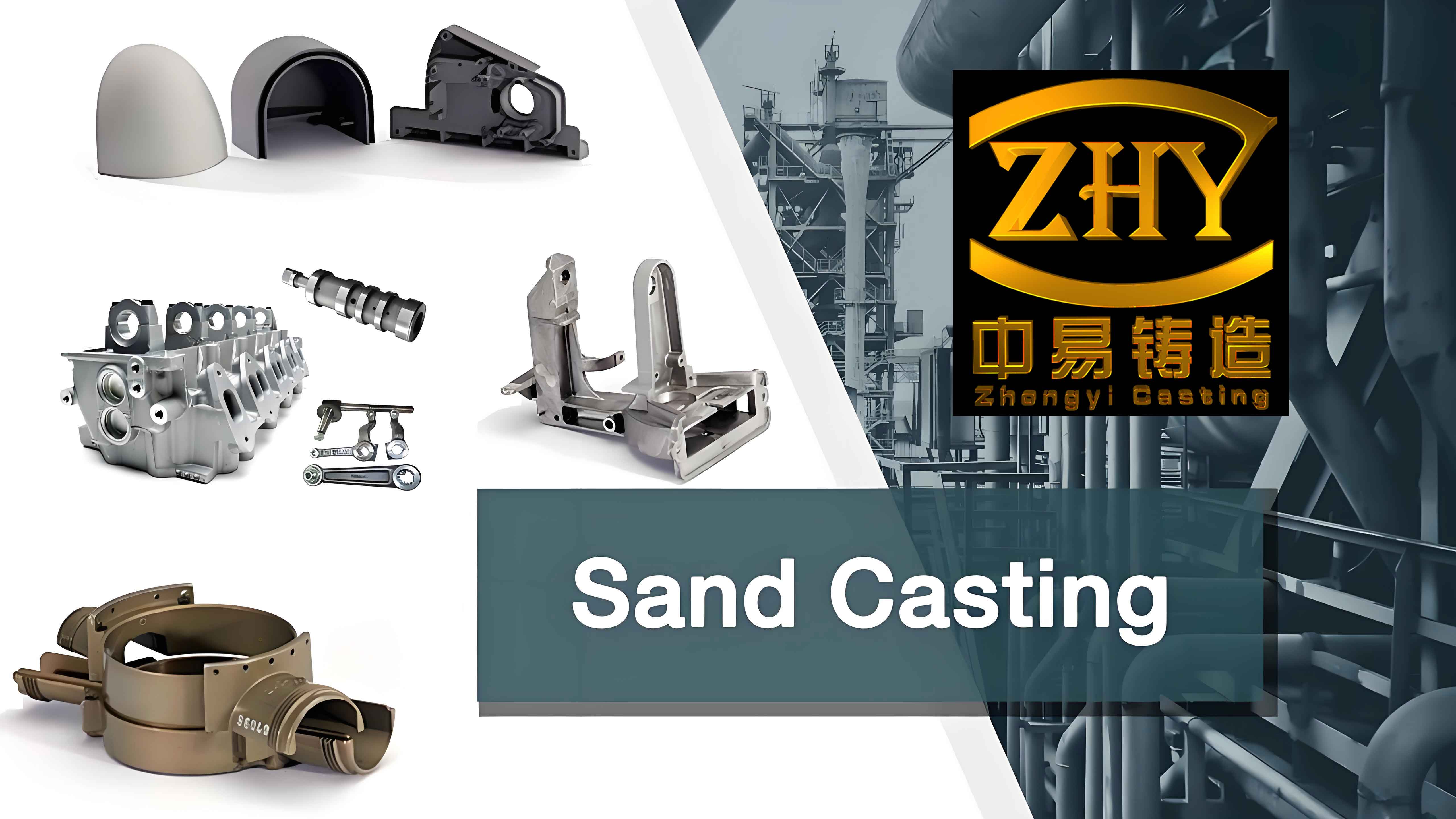
The oil distributing sleeve is a long, cylindrical sand casting part made from ZM6 magnesium alloy, featuring intricate surface geometries. Such sand casting parts are notoriously difficult to assure due to their non-destructively untestable regions post-casting. Initial batches revealed severe internal defects—slag inclusions, gas porosity, and shrinkage cavities—leading to high rejection rates. My investigation began with a thorough review of the existing sand casting process, which employed a bottom-gating system with a serpentine runner to promote tranquil mold filling, a common practice for magnesium alloy sand casting parts. However, the inherent properties of magnesium alloys, such as high oxidation tendency and specific solidification characteristics, demanded a more nuanced approach.
To systematically address these issues, I first analyzed the root causes of each defect type. Gas porosity in sand casting parts often stems from entrapped air or evolved gases from the mold. The initial bottom-gating system, while generally stable, involved long flow paths that could induce turbulence if parameters were suboptimal. The velocity of molten metal entering the mold cavity is critical; excessive velocity leads to turbulence and gas entrainment. This can be described by the Bernoulli-derived equation for fluid flow in a gating system:
$$v = \frac{Q}{A} = \frac{\sqrt{2gh}}{1 + \sum K_i}$$
where \(v\) is the flow velocity at the ingate, \(Q\) is the volumetric flow rate, \(A\) is the cross-sectional area, \(g\) is gravitational acceleration, \(h\) is the effective sprue height, and \(\sum K_i\) represents the sum of loss coefficients due to friction and changes in geometry (e.g., in serpentine runners). For magnesium alloys, maintaining \(v\) below a critical threshold (typically 0.5-0.8 m/s) is essential to prevent oxide formation and gas pickup. The initial design likely exceeded this, contributing to defects.
Slag inclusions in these sand casting parts originated from oxide dross formed during pouring and flow through the runners. Magnesium’s high reactivity necessitates exceptional slag control. The filtration efficiency of a gating system can be modeled by considering the capture of particles. The probability \(P\) of a particle of diameter \(d_p\) being trapped by a filter with pore size \(d_f\) can be approximated by:
$$P = 1 – \exp\left(-\frac{\alpha L d_p}{d_f^2}\right)$$
where \(\alpha\) is a constant dependent on fluid dynamics and filter geometry, and \(L\) is the filter thickness. The original system had only one filter at the sprue base; this was insufficient for the long runner path, allowing oxides to reach the mold cavity.
Shrinkage cavities, the third major defect in these sand casting parts, are a result of inadequate feeding during solidification. The solidification time \(t_s\) for a sand casting part can be estimated using Chvorinov’s rule:
$$t_s = B \left(\frac{V}{A}\right)^n$$
where \(V\) is the volume, \(A\) is the surface area, \(B\) is a mold constant, and \(n\) is an exponent (usually ~2). For the sleeve’s thick sections and remote areas from feeders, \(t_s\) was shorter than the feeding time, causing voids. The thermal gradient \(G\) and solidification rate \(R\) govern feeding efficiency; shrinkage occurs when the feeding path length exceeds the critical distance \(L_c\) given by:
$$L_c = \frac{\Delta T_f}{G} \cdot \frac{\beta}{\rho}$$
where \(\Delta T_f\) is the freezing range, \(\beta\) is the solidification shrinkage coefficient, and \(\rho\) is density. The original risers and chilling were insufficient to maintain the required \(G\) over the entire length of this sand casting part.
Based on this analysis, I implemented a multi-faceted improvement plan for the sand casting process. The modifications centered on the gating system, chilling strategy, and pouring technique. The following table summarizes the key changes made to the process for producing these high-integrity sand casting parts:
| Process Element | Initial State | Improved State | Rationale & Impact |
|---|---|---|---|
| Gating System Filters | Single filter at sprue base | Additional filters in serpentine runners (total 4) | Enhances slag capture probability \(P\); reduces oxide inclusion in sand casting parts. |
| Chill Design & Material | 5 annular aluminum chills | Iron chills for main body; added aluminum chills at hot spots | Increases heat extraction rate \(q” = k \cdot G\) (where \(k\) is thermal conductivity); iron chills provide higher \(k\), promoting directional solidification. |
| Core Material | Sand core | ZM6 magnesium alloy core | Reduces thermal resistance, improving cooling uniformity in internal sections of the sand casting part. |
| Riser Size & Insulation | Standard risers | Enlarged risers with ceramic fiber insulation | Increases feeding range \(L_c\) by reducing modulus \(V/A\) of riser, extending liquid feed time \(t_f\). |
| Pouring Orientation | Vertical pouring | Tilted pouring (45°-50° from vertical) | Lowers effective \(h\) in flow equation, reducing \(v\) and turbulence; minimizes gas entrainment in sand casting parts. |
| Mold Drying & Handling | Standard drying cycle | Extended drying with controlled post-dry interval | Reduces mold gas evolution \(V_{gas} = \int \phi(t) dt\), where \(\phi\) is gas generation rate, preventing gas porosity. |
The tilted pouring technique was particularly crucial for these sand casting parts. By orienting the mold at an angle, the metal enters the cavity along a more gradual path, which can be analyzed using modified flow equations. The effective head height becomes \(h’ = h \cdot \sin(\theta)\), where \(\theta\) is the tilt angle. Substituting into the velocity equation:
$$v’ = \frac{\sqrt{2g h \sin(\theta)}}{1 + \sum K_i}$$
For \(\theta = 50^\circ\), \(\sin(50^\circ) \approx 0.766\), thus \(v’\) is reduced by about 13% compared to vertical pouring, significantly lowering turbulence intensity. This simple geometric adjustment proved highly effective in eliminating gas defects in the sand casting parts.
To quantify the thermal management improvements, I modeled the chilling effect. The heat flux \(q”\) extracted by a chill is given by:
$$q” = h_c (T_m – T_c)$$
where \(h_c\) is the interfacial heat transfer coefficient, \(T_m\) is the metal temperature, and \(T_c\) is the chill temperature. Iron chills have a higher \(h_c\) (approximately 1000-2000 W/m²·K) compared to aluminum (500-1000 W/m²·K), leading to faster cooling. The solidification front velocity \(R\) near a chill can be approximated by:
$$R = \frac{q”}{\rho L_f}$$
where \(L_f\) is the latent heat of fusion. Higher \(R\) promotes finer microstructure and reduces shrinkage susceptibility. By strategically placing iron chills along the sleeve length and aluminum chills at local hot spots (like the mid-span boss), I achieved a controlled thermal gradient \(G\) exceeding 10 K/cm, which is necessary for sound sand casting parts.
The feeding system was enhanced by applying insulating sleeves to the risers. This reduces the riser’s cooling rate, effectively increasing its feeding efficiency. The feeding capacity \(V_{feed}\) of a riser can be expressed as:
$$V_{feed} = \eta \cdot V_r \cdot \beta_s$$
where \(\eta\) is the feeding efficiency factor (0.1-0.2 for uninsulated, up to 0.4 for insulated), \(V_r\) is the riser volume, and \(\beta_s\) is the solidification shrinkage fraction (~0.04 for ZM6). By enlarging the risers and adding insulation, \(V_{feed}\) was increased by over 100%, ensuring adequate liquid metal supply to the entire sand casting part during solidification.
After implementing these changes, I conducted a validation trial. Two casts were produced from the same melt (Heat #1) and sectioned for evaluation. Radiographic inspection showed complete elimination of slag and gas porosity, but a small shrinkage cavity persisted at the inner surface of the mid-span boss. This indicated that while the improvements were largely successful, the feeding in that specific region remained marginal. I analyzed this using the feeding distance concept. For a cylindrical sand casting part like the sleeve, the maximum feeding distance \(L_{max}\) from a riser is given by:
$$L_{max} = C \cdot \sqrt{T} – D$$
where \(T\) is the section thickness, and \(C\) and \(D\) are material constants. For ZM6 in sand molds, \(C \approx 20\) mm¹/² and \(D \approx 10\) mm. For the boss region with \(T = 15\) mm, \(L_{max} \approx 20\sqrt{15} – 10 \approx 67\) mm. The actual distance from the nearest effective chill/riser was about 70 mm, explaining the residual shrinkage. To address this, I introduced an additional procedural tweak: during pouring, once the metal level reached one-third of the riser height, the mold was gradually rotated back to vertical position. This minimized the adverse effect of tilt on feeding pressure while retaining the filling benefits. The feeding pressure head \(P_f\) is given by:
$$P_f = \rho g h_f$$
where \(h_f\) is the height of liquid metal above the point being fed. Tilting reduces \(h_f\) locally; returning to vertical restores it, enhancing feeding in the final stages. Combined with the insulated risers, this eliminated the shrinkage defect in subsequent trials.
A full-scale production verification was then performed with eight sand casting parts from Heat #2. Two were destructively tested, and six were machined. The results were meticulously documented. The table below presents a comparative summary of defect incidence before and after process optimization for these critical sand casting parts:
| Defect Type | Initial Process (Heat #1, 2 parts) | Intermediate Improvement (Heat #1, 2 parts) | Final Optimized Process (Heat #2, 8 parts) | Remarks |
|---|---|---|---|---|
| Slag Inclusions | Severe, widespread | None detected | None detected in all parts | Additional filters and tilted pouring eliminated slag in sand casting parts. |
| Gas Porosity | Significant internal porosity | None detected | None detected in all parts | Reduced flow velocity \(v’\) and mold drying control resolved gas issues in sand casting parts. |
| Shrinkage Cavities | Large cavity at mid-boss | Small cavity at mid-boss | None detected in all parts | Enhanced chilling, insulated risers, and pour sequence eliminated shrinkage in sand casting parts. |
| Overall Acceptance Rate | ~0% (all rejected) | 50% (shrinkage persistent) | 100% (all passed machining) | Final process yields high-integrity sand casting parts consistently. |
The success of this optimization highlights several general principles for producing reliable sand casting parts, especially for aerospace magnesium alloys. First, the gating system must be designed not just for fill time but for minimal turbulence and maximum slag capture. The use of multiple filters in long runners is crucial for sand casting parts prone to oxidation. Second, thermal management through strategic chilling is non-negotiable for dimensional control and soundness. The choice of chill material and placement must be based on thermal analysis to ensure adequate gradients. Third, pouring techniques like tilting can offer simple yet powerful solutions for defect reduction in sand casting parts, though their interaction with feeding must be managed. Finally, process discipline—such as controlled mold drying and precise pour sequences—is as important as design in achieving quality sand casting parts.
To further generalize these findings, I developed a set of heuristic formulas for designing processes for similar cylindrical sand casting parts. The recommended gating velocity \(v_{opt}\) for magnesium sand casting parts can be derived from Reynolds number considerations to stay in laminar flow regime:
$$v_{opt} \leq \frac{Re_c \cdot \nu}{D_h}$$
where \(Re_c\) is the critical Reynolds number (~2000 for transition), \(\nu\) is the kinematic viscosity of molten ZM6 (~1.5×10⁻⁶ m²/s), and \(D_h\) is the hydraulic diameter of the ingate. For typical ingates of 10 mm diameter, \(v_{opt} \leq 0.3\) m/s, which aligns with my empirical results.
The required riser volume \(V_r\) for such sand casting parts can be estimated using the modulus method:
$$M_r = 1.2 \cdot M_c$$
$$V_r = \frac{M_r \cdot A_r}{f}$$
where \(M_r\) is the riser modulus, \(M_c\) is the casting modulus (volume/surface area of the section being fed), \(A_r\) is the riser surface area, and \(f\) is a shape factor. For the sleeve, \(M_c\) was 0.8 cm, leading to \(M_r = 0.96\) cm, and with insulation, the required \(V_r\) was reduced by 30% compared to standard methods, demonstrating efficiency.
In conclusion, my hands-on research demonstrates that a systematic, analytically grounded approach can resolve complex quality issues in sand casting parts. The integration of fluid dynamics, heat transfer, and solidification principles into practical process modifications resulted in a robust manufacturing route for the oil distributing sleeve. These methodologies are directly applicable to other aerospace sand casting parts, particularly those made from reactive alloys with demanding integrity requirements. The key takeaway is that every aspect of the sand casting process—from gating design to pour technique—must be optimized in concert to produce defect-free sand casting parts. Continuous monitoring and minor adjustments, such as the tilt-return sequence, can yield significant improvements, underscoring the dynamic nature of foundry engineering for high-performance sand casting parts.
Future work could involve implementing real-time process monitoring sensors to further refine parameters for individual sand casting parts, potentially using machine learning models to predict defect formation based on thermal and flow data. However, the current results establish a strong foundation for quality assurance in the production of critical aero-engine sand casting parts, ensuring reliability and performance in service.