
In my extensive experience with lost foam casting, also known as expendable pattern casting (EPC), the persistent issue of carbon slag defects has been a significant challenge. These defects, characterized by surface imperfections and inclusions, often arise from the decomposition of foam patterns during metal pouring. Traditionally, in conventional cavity sand casting, the overflow slag collecting riser is employed to trap inferior iron at the end of the filling process, ensuring cleaner metal in the cast part. Studies have shown that this method effectively eliminates slag and gas holes on the top surfaces of castings, reduces machining allowances, and yields good results. However, when I attempted to transplant this process to lost foam casting, the outcomes were not always ideal, leading me to delve deeper into its applicability and limitations in EPC.
The slag collecting riser, which I refer to more accurately as a “slag block” in the context of lost foam casting, primarily serves to collect dirty and cold iron at the front end of the filling process, rather than providing significant feeding or shrinkage compensation. In EPC, the dynamic nature of metal flow, influenced by the gradual disappearance of the foam pattern, complicates the effectiveness of such blocks. Based on my observations, different foundries use slag blocks of varying specifications, typically with heights ranging from 80 mm to 120 mm, constrained by the height of the flask, and widths that differ based on individual process design philosophies. This variability highlights the lack of standardization and the need for a more scientific approach in lost foam casting applications.
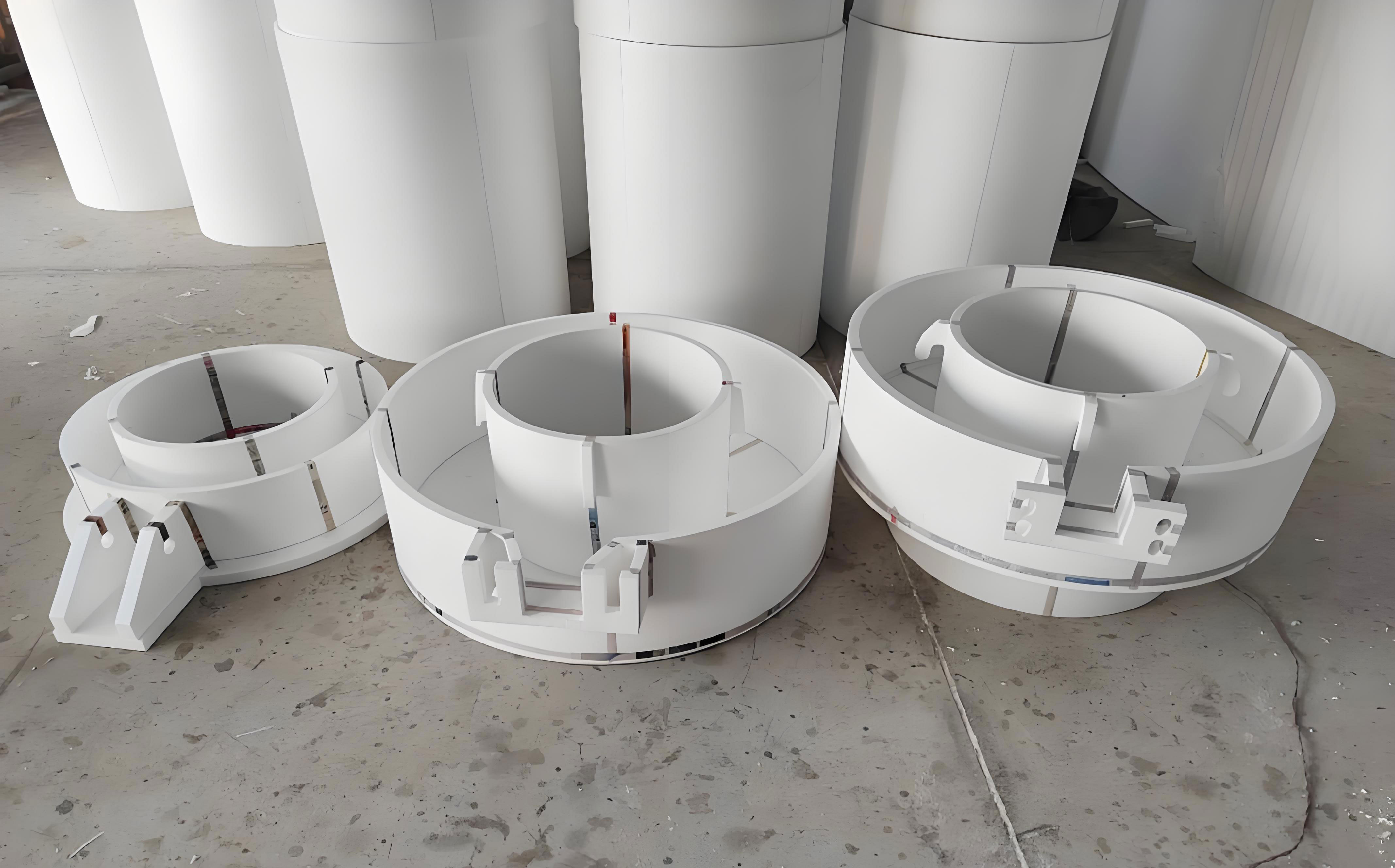
In theory, slag and gases, being lighter than molten metal, should float to the surface. With a bottom-gating system, such as the bottom-pouring shower-type gating commonly used in lost foam casting, metal fills the mold from the bottom upward. When the metal reaches the top of the cavity, if a slag block is installed, the initial dirty and cold iron should flow into it, thereby being removed during cleaning and ensuring the integrity of the casting. For small castings weighing less than 500 kg, I have seen some success with this approach, resulting in surfaces free of carbon slag, inclusions, or coating fragments, and dense microstructures after machining. However, in many cases, dissecting these slag blocks revealed that they did not contain the expected amount of slag; instead, they were often dense and defect-free, indicating that the slag collection was incomplete. This inconsistency prompted me to analyze the underlying reasons for the limited effectiveness of slag blocks in EPC.
One key factor I identified is the viscous friction of the molten metal. As slag floats on the iron surface, the high static pressure and dynamic filling pressure press it firmly against the interface between the casting and the coating. In areas with slag blocks, surface slag can enter the block, but in other regions, slag particles lack sufficient driving force for lateral transfer due to resistance from metal friction and pressure. This can be modeled using a force balance equation for slag particles. Consider a slag particle subjected to buoyancy force, gravitational force, static pressure force, dynamic pressure force, and frictional force. The net force determining its movement can be expressed as:
$$ F_{net} = F_{buoyancy} – F_{gravity} – F_{friction} + F_{static} + F_{dynamic} $$
where \( F_{buoyancy} = \rho_{metal} g V \), \( F_{gravity} = \rho_{slag} g V \), \( F_{friction} = \mu v \), \( F_{static} = P_{static} A \), and \( F_{dynamic} = \frac{1}{2} \rho_{metal} v^2 C_d A \). Here, \( \rho \) denotes density, \( g \) is gravity, \( V \) is volume, \( \mu \) is the friction coefficient, \( v \) is velocity, \( P \) is pressure, \( A \) is cross-sectional area, and \( C_d \) is the drag coefficient. In practice, for slag particles in lost foam casting, the frictional force often dominates, preventing effective entry into slag blocks unless the blocks are optimally positioned and sized.
Another critical aspect is the influence of metal flow dynamics in lost foam casting. The flow is three-dimensional and turbulent, affected by the pattern’s decomposition, gas pressure changes, and obstacles like sand cores. This turbulence can exacerbate slag entrapment rather than facilitating its removal. Research indicates that if the filling speed is too low, the foam decomposition rate exceeds the metal advance rate, altering the decomposition mode and increasing the formation of carbonaceous residues, thereby worsening carbon slag defects. To quantify this, the Reynolds number (Re) can be used to assess flow conditions:
$$ Re = \frac{\rho v L}{\mu} $$
where \( L \) is a characteristic length. In EPC, high Re values indicate turbulence, which hinders slag flotation. Additionally, the energy equation for metal flow can be considered:
$$ \frac{\partial}{\partial t} \left( \rho E \right) + \nabla \cdot \left( \mathbf{v} (\rho E + p) \right) = \nabla \cdot \left( k \nabla T \right) + S_h $$
where \( E \) is total energy, \( \mathbf{v} \) is velocity vector, \( p \) is pressure, \( k \) is thermal conductivity, \( T \) is temperature, and \( S_h \) represents heat sources from foam decomposition. This equation highlights how temperature and flow variations in lost foam casting affect slag behavior.
To illustrate the variability in slag block designs and their impacts, I have compiled data from various applications in lost foam casting. The table below summarizes different slag block specifications and their observed effectiveness in reducing carbon slag defects:
| Slag Block Type | Height (mm) | Width (mm) | Weight (kg) | Effectiveness in Slag Removal | Common Defects Observed |
|---|---|---|---|---|---|
| Type A (Traditional) | 100 | 50 | 3.0 | Low to Moderate | Carbon slag, shrinkage porosity |
| Type B (Optimized) | 80 | 40 | 1.2 | Moderate | Reduced slag, minor shrinkage |
| Type C (Large) | 120 | 60 | 4.0 | Moderate to High | Shrinkage cavities, surface defects |
| Type D (Small) | 90 | 30 | 1.0 | Low | Carbon slag, incomplete filling |
As shown in the table, larger slag blocks may trap more slag but can lead to shrinkage defects due to delayed solidification, while smaller blocks might be insufficient for effective collection. In my practice, I optimized a slag block from an initial weight of 3 kg to 1.2 kg by reducing its dimensions, which not only saved approximately 1.5 tons of iron per day in a production scenario but also minimized defects like shrinkage holes and depressions. The improved design featured a narrower neck that sealed faster during solidification, preventing reverse feeding from the casting to the block. The economic impact can be calculated as follows: daily savings in iron = 800 blocks × (3.0 – 1.2) kg = 1440 kg, and with a melting energy cost of $300 per ton, this translates to about $432 saved daily. This highlights the importance of precise sizing in lost foam casting processes.
Beyond slag blocks, I have found that carbon slag defects in EPC are inherently linked to the foam pattern material and gating system design. The pattern’s carbon content, density, and decomposition behavior play crucial roles. For instance, lower-density foam patterns tend to produce fewer carbon defects because they decompose more completely into gaseous products. The relationship between pattern density and defect severity can be expressed using a linear regression model:
$$ D_{slag} = \alpha \rho_{foam} + \beta $$
where \( D_{slag} \) is the defect severity index, \( \rho_{foam} \) is the foam density, and \( \alpha \) and \( \beta \) are constants derived from empirical data in lost foam casting. Additionally, the gating system parameters, such as pouring temperature, velocity, and gate arrangement, are paramount. A high pouring temperature promotes better foam gasification, reducing residue formation. The filling time \( t_f \) can be estimated as:
$$ t_f = \frac{V_{mold}}{Q} $$
where \( V_{mold} \) is the mold volume and \( Q \) is the flow rate. In EPC, a rapid filling rate ensures that the metal front consistently contacts the decomposing foam, minimizing carbon entrapment. Furthermore, coating and sand permeability affect the escape of decomposition gases; higher permeability reduces the tendency for slag formation. The permeability \( k_p \) can be modeled as:
$$ k_p = \frac{C d^2 \phi^3}{(1-\phi)^2} $$
where \( d \) is grain size, \( \phi \) is porosity, and \( C \) is a constant. Optimizing these factors is more effective than relying solely on slag blocks in lost foam casting.
In conclusion, my analysis confirms that the slag collecting riser process, when transplanted to lost foam casting, has limited effectiveness due to the unique dynamics of EPC, such as metal flow friction and turbulence. While slag blocks can aid in collecting some front-end impurities, they are not a comprehensive solution for carbon slag defects. Instead, I advocate for a holistic approach that focuses on optimizing process parameters, including foam material selection, gating system design, pouring conditions, and coating properties. For example, implementing a high-speed, bottom-gating system with controlled temperature can significantly reduce defects without excessive reliance on slag blocks. The table below summarizes key parameters and their optimal ranges for minimizing carbon slag in lost foam casting:
| Parameter | Recommended Range for EPC | Impact on Carbon Slag Defects |
|---|---|---|
| Foam Density (g/cm³) | 0.015 – 0.025 | Lower density reduces carbon residues |
| Pouring Temperature (°C) | 1420 – 1500 for iron | Higher temperature improves gasification |
| Filling Velocity (m/s) | 0.5 – 1.5 | Faster filling minimizes decomposition issues |
| Coating Permeability | High (e.g., coarse aggregates) | Enhances gas escape, reduces slag |
| Slag Block Size | Height: 80-100 mm, Width: 30-50 mm | Balances slag collection and solidification |
Ultimately, the principles of lost foam casting require continuous research to master the fundamental mechanisms. By prioritizing parameter optimization over traditional methods, foundries can achieve better quality castings with fewer defects. In my work, this approach has proven more reliable than merely adopting industry experiences without critical evaluation, underscoring the need for innovation in EPC technologies.