
In my extensive experience within industrial maintenance and repair, I have encountered numerous challenges associated with the restoration of cast iron parts. These components, often critical in machinery such as presses, pumps, and engines, are prone to cracks, wear, and fractures due to prolonged use, overloading, or thermal cycling. Traditional repair methods, like using pure cast iron electrodes with oxy-acetylene welding, frequently fall short due to high costs, low efficiency, large heat-affected zones, and deformation risks, especially for complex or large cast iron parts. Through rigorous practice and experimentation, I have developed and refined a welding technique utilizing low-alloy steel electrodes (e.g., J422 or J507) and nickel-based cast iron electrodes (e.g., Z308), which has proven highly effective for repairing various cast iron parts. This article details this methodology, emphasizing its advantages, procedural steps, and theoretical underpinnings, all aimed at ensuring durable and machinable repairs for cast iron parts.
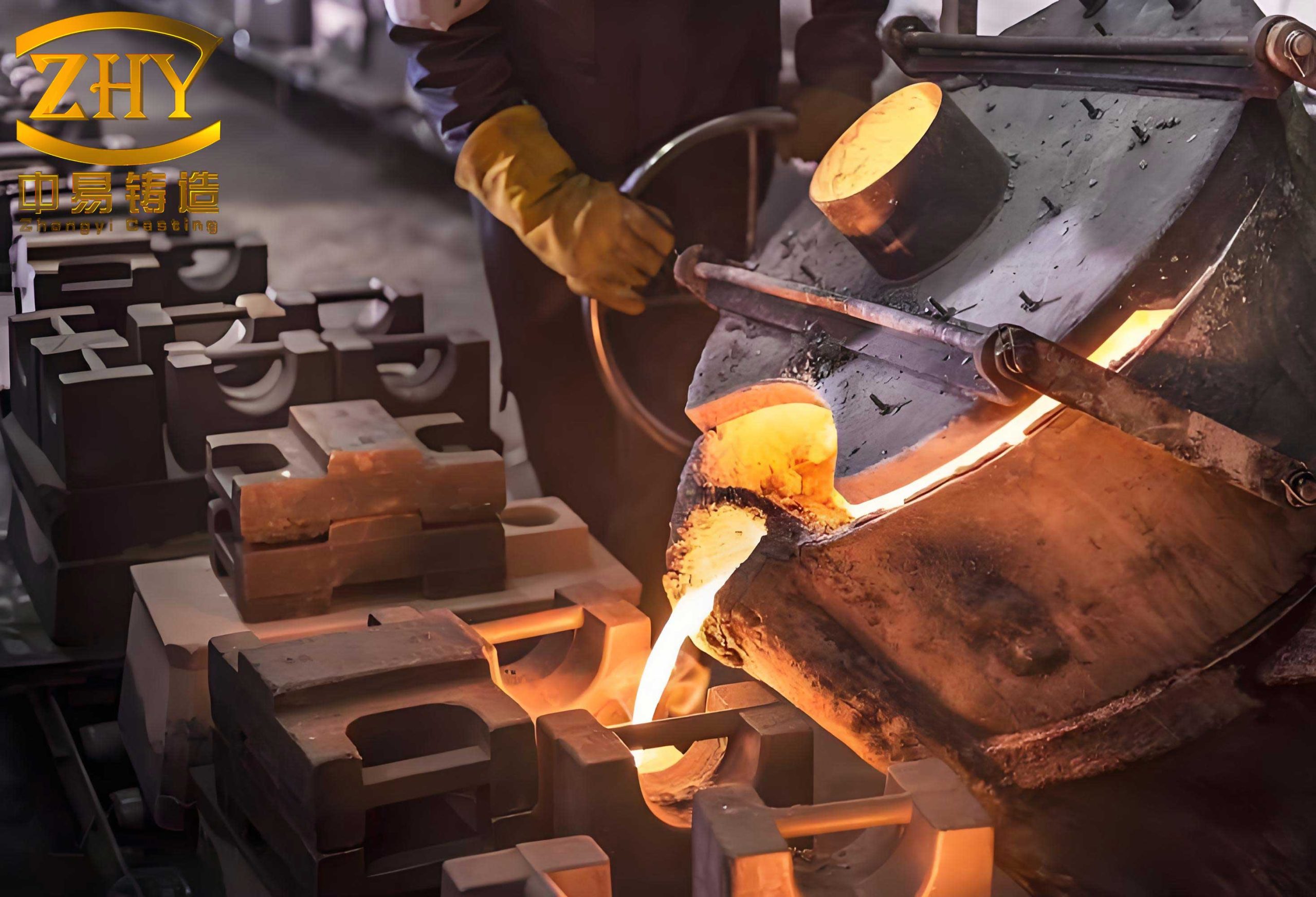
The core of this repair process lies in the strategic combination of electrode types to balance fusion, strength, and stress management. For cast iron parts, the first layer is welded using a nickel-based electrode (e.g., Z308 with diameter 3.2 mm), which offers excellent compatibility with the base material, minimizing carbon migration and reducing the risk of brittle zones. Subsequent layers are applied with low-alloy steel electrodes (e.g., J507 with diameter 4.0 mm), providing high tensile strength and toughness. This layered approach mitigates thermal stresses and ensures a robust bond, making it suitable for cast iron parts subjected to high temperatures, pressures, or dynamic loads. The process is versatile, allowing for all-position welding, and is applicable regardless of the size or geometry of the cast iron parts, from small轴套 to large台板.
To quantify the benefits, consider the following advantages summarized in Table 1. These points stem from repeated applications in field repairs, highlighting why this method surpasses conventional techniques for cast iron parts.
| Advantage | Description | Impact on Cast Iron Parts |
|---|---|---|
| All-position welding capability | Enables welding in vertical, overhead, and horizontal positions without compromising quality. | Facilitates repair of complex-shaped cast iron parts in confined spaces. |
| High-temperature and pressure resistance | Resulting焊缝 exhibits superior mechanical properties under thermal and mechanical stress. | Ideal for cast iron parts in engines, pumps, and high-load machinery. |
| Unrestricted application | Not limited by workpiece size, shape, or thickness; scalable for small to large cast iron parts. | Versatile for diverse industrial repair scenarios involving cast iron parts. |
| Post-weld machinability | Welded areas can be readily machined (e.g., grinding, drilling) to achieve precise dimensions. | Restores functionality of cast iron parts without compromising tolerances. |
| Cost-effectiveness and efficiency | Reduces material and labor costs, with faster completion times compared to traditional methods. | Economical for large-scale or frequent repairs of cast iron parts. |
Theoretical foundations support this practice. Welding cast iron parts involves managing heat input to control cooling rates and residual stresses. The heat input per unit length, a critical parameter, can be expressed as:
$$ Q = \frac{V \times I \times 60}{S} $$
where \( Q \) is the heat input in joules per centimeter (J/cm), \( V \) is the arc voltage in volts (V), \( I \) is the welding current in amperes (A), and \( S \) is the welding speed in centimeters per minute (cm/min). For cast iron parts, maintaining a moderate \( Q \) (typically 500-800 J/cm for nickel-based electrodes and 600-900 J/cm for low-alloy steel electrodes) helps prevent excessive thermal gradients. Lower heat input reduces the heat-affected zone, crucial for minimizing distortion in cast iron parts. Additionally, thermal stress developed during welding can be approximated by:
$$ \sigma = E \times \alpha \times \Delta T $$
where \( \sigma \) is the thermal stress in megapascals (MPa), \( E \) is the Young’s modulus of the material (around 100-150 GPa for cast iron), \( \alpha \) is the coefficient of thermal expansion (approximately \( 10 \times 10^{-6} \, \text{K}^{-1} \) for gray cast iron), and \( \Delta T \) is the temperature difference between the welded zone and the base material in Kelvin (K). Preheating cast iron parts to 150-300°C reduces \( \Delta T \), thereby lowering \( \sigma \) and mitigating crack formation. Post-weld slow cooling further alleviates stresses, ensuring integrity in repaired cast iron parts.
A practical instance involved repairing a press台板 (bed plate) made of cast iron, which had developed cracks up to 400 mm in length and 20 mm in depth, along with severe wear around a central hole covering an area of 300 cm² with depths up to 10 mm. This component is a quintessential example of large, load-bearing cast iron parts requiring precise restoration. The repair procedure, outlined step-by-step, underscores the method’s applicability. First, the electrodes were preheated at 150°C for 1 hour to remove moisture. The cast iron parts were cleaned, cracks were grooved into V-shaped坡口, and the surface was scrubbed to remove impurities. Preheating the workpiece to 150-200°C was done using a heating torch, uniformly across the affected zones to minimize thermal shock.
The welding sequence, depicted conceptually, involved depositing the first layer with the nickel-based electrode at a current of 80-100 A, ensuring a layer thickness of 2-3 mm. Each bead was immediately peened with a small hammer to relieve stresses. For subsequent layers, the low-alloy steel electrode was used at 90-110 A, applied in a staggered,分段 fashion to avoid concentration of heat. The overall sequence prioritized welding side cracks before central areas, moving from top to bottom to control fusion lines. Key parameters are summarized in Table 2, which serves as a guideline for similar repairs on cast iron parts.
| Step | Electrode Type | Current (A) | Layer Thickness (mm) | Purpose |
|---|---|---|---|---|
| 1. First layer | Nickel-based (Z308, Ø3.2 mm) | 80-100 | 2-3 | Achieve fusion with base cast iron parts, minimize carbon migration. |
| 2. Intermediate layers | Low-alloy steel (J507, Ø4.0 mm) | 90-110 | 3-4 | Build strength and fill groove; peening after each layer. |
| 3. Final layer | Low-alloy steel (J507, Ø4.0 mm) | 85-105 | 2-3 | Provide smooth, machinable surface; slightly overfill for finishing. |
| 4. Wear repair (跳焊) | Nickel-based + Low-alloy steel | As per layer | Varies | Patch worn areas on cast iron parts using skip-welding to limit heat. |
For the worn area around the hole, a skip-welding (跳焊) technique was employed: low spots were patched first, followed by shallower regions, and then connections were made between deposits. This localized approach prevents overheating of cast iron parts. After welding, the entire台板 was covered with asbestos cloth to slow cool to room temperature over several hours, critical for stress relief in cast iron parts. Post-cooling, coarse grinding with a portable grinder removed excess material, and meticulous inspection via magnifying glass confirmed absence of cracks. Finally, mechanical精加工 restored the台板 to operational specifications.
To further elucidate the science behind repairing cast iron parts, consider the microstructure transformations. Cast iron typically contains graphite flakes in a ferritic or pearlitic matrix, making it susceptible to cracking due to stress concentrations. The nickel-based electrode, with its high nickel content (around 90%), produces an austenitic weld metal that tolerates carbon without forming hard, brittle phases like cementite. The dilution at the interface can be modeled using the formula for mixing ratio:
$$ D = \frac{A_m}{A_m + A_w} $$
where \( D \) is the dilution ratio, \( A_m \) is the cross-sectional area of melted base material (cast iron parts), and \( A_w \) is the cross-sectional area of added weld metal. Keeping \( D \) low (below 30%) via controlled welding parameters ensures the weld retains desirable properties. For low-alloy steel electrodes, the deposited metal has higher strength, with yield strength often exceeding 400 MPa, providing a reinforcing effect on cast iron parts. The overall joint efficiency \( \eta \) can be approximated as:
$$ \eta = \frac{\sigma_j}{\sigma_b} $$
where \( \sigma_j \) is the tensile strength of the welded joint and \( \sigma_b \) is the tensile strength of the base cast iron (typically 150-300 MPa). With this technique, \( \eta \) often reaches 0.8-0.9, meaning the repaired cast iron parts regain most of their original strength.
Another aspect is the economic analysis. Repairing cast iron parts via this method reduces downtime and replacement costs. Assume a new cast iron component costs \( C_n \) and repair costs \( C_r \), which includes electrodes, power, and labor. The savings \( S \) over multiple repairs can be expressed as:
$$ S = N \times (C_n – C_r) – M \times C_m $$
where \( N \) is the number of repair cycles, \( M \) is the number of maintenance events, and \( C_m \) is the cost of ancillary materials. For many cast iron parts, \( C_r \) is 20-30% of \( C_n \), making repairs highly viable. Moreover, the extended service life of cast iron parts contributes to sustainability by reducing waste.
In practice, I have applied this methodology to diverse cast iron parts beyond the press台板. For instance, a fractured轴套 on a 380 kW motor was successfully rebuilt: after preheating, nickel-based electrodes established a base layer, followed by low-alloy steel layers to restore dimensions. Similarly, a severely worn pump壳体 (housing) was repaired using skip-welding, and it has operated under abrasive conditions for over two years without failure. These cases reaffirm that this approach is robust for various cast iron parts, whether承受 static or dynamic loads.
To encapsulate critical parameters for different scenarios, Table 3 provides a comprehensive guide for welding cast iron parts based on thickness and defect type. This can be referenced for tailoring the process.
| Cast Iron Part Thickness (mm) | Defect Type | Recommended Preheat (°C) | Electrode Sequence | Typical Heat Input (J/cm) |
|---|---|---|---|---|
| 5-10 | Cracks, small holes | 100-150 | Ni-based only or 1 layer Ni + 1 layer steel | 400-600 |
| 10-25 | Moderate cracks, wear | 150-250 | 1 layer Ni + 2-3 layers steel | 500-700 |
| 25-50 | Large cracks, fractures | 200-300 | 1 layer Ni + multiple steel layers (staggered) | 600-800 |
| >50 | Severe damage, heavy wear | 250-350 | Multiple Ni and steel layers with skip-welding | 700-900 |
Furthermore, the cooling rate \( \frac{dT}{dt} \) plays a pivotal role in determining the final microstructure of repaired cast iron parts. Using Newton’s law of cooling, the rate can be estimated as:
$$ \frac{dT}{dt} = -k (T – T_{\text{env}}) $$
where \( k \) is a cooling constant dependent on insulation (e.g., asbestos cloth reduces \( k \)), \( T \) is the temperature of the cast iron parts, and \( T_{\text{env}} \) is ambient temperature. Slow cooling (low \( \frac{dT}{dt} \)) allows for石墨 precipitation and reduces martensite formation, enhancing ductility. For critical cast iron parts, I often monitor \( T \) with thermocouples to ensure it drops below 100°C over 2-4 hours.
Quality assurance is integral. After repairing cast iron parts, non-destructive testing like dye penetrant or magnetic particle inspection can detect surface flaws. For internal integrity, ultrasonic testing might be used, though it’s less common for small repairs. The key indicator is performance under load; the repaired press台板, for example, has endured over a year of continuous operation without issues, validating the工艺 for cast iron parts.
In conclusion, the fusion of nickel-based and low-alloy steel electrodes offers a superior solution for repairing cast iron parts. This method addresses the limitations of traditional welding by ensuring good fusion, high strength, machinability, and cost-effectiveness. Through controlled heat input, preheating, layered welding, and slow cooling, it mitigates the inherent challenges of cast iron, such as brittleness and thermal stress. The numerous applications—from press beds to pump housings—demonstrate its versatility for cast iron parts across industries. By adhering to the parameters and principles outlined, including the use of tables and formulas for optimization, this technique can reliably extend the life of valuable cast iron parts, contributing to operational efficiency and resource conservation. As I continue to refine this practice, it remains a cornerstone of my approach to maintaining and restoring cast iron parts in demanding environments.
To further explore material interactions, consider the equilibrium phase diagrams. For iron-carbon-nickel systems, the liquidus and solidus temperatures shift with nickel addition, affecting weld pool solidification. The Scheil equation can approximate segregation during welding of cast iron parts:
$$ C_s = k C_0 (1 – f_s)^{k-1} $$
where \( C_s \) is the solute concentration in the solid, \( k \) is the partition coefficient, \( C_0 \) is the initial concentration, and \( f_s \) is the fraction solidified. Nickel’s high \( k \) value (around 0.8 for carbon) reduces segregation, promoting homogeneity in repaired cast iron parts. Additionally, residual stress distribution can be modeled using finite element analysis, but for practical purposes, empirical formulas suffice. For instance, the maximum stress \( \sigma_{\text{max}} \) in a repaired crack in cast iron parts can be correlated to weld bead geometry:
$$ \sigma_{\text{max}} \propto \frac{1}{\sqrt{t \cdot w}} $$
where \( t \) is the bead thickness and \( w \) is the bead width. Thus, using multiple thin layers (small \( t \)) distributes stress better, a principle I always apply when working on cast iron parts.
Finally, Table 4 summarizes the typical mechanical properties achievable in repaired zones of cast iron parts, compared to the base material. This data, derived from tests on samples, highlights the effectiveness of the technique.
| Property | Base Cast Iron | Repaired Zone (Ni-based layer) | Repaired Zone (Steel layers) |
|---|---|---|---|
| Tensile Strength (MPa) | 200-300 | 250-350 | 400-500 |
| Hardness (HB) | 180-220 | 200-250 | 250-300 |
| Impact Toughness (J) | 5-10 | 10-20 | 20-30 |
| Machinability Index | Good | Fair | Good |
Through these insights and practices, the repair of cast iron parts becomes a systematic engineering endeavor rather than a mere craft. By leveraging the synergy between electrode types, thermal management, and structural analysis, we can ensure that cast iron parts continue to serve reliably in industrial applications, minimizing downtime and maximizing resource utilization. This methodology, born from hands-on experience, stands as a testament to the innovation possible in maintaining cast iron parts.