
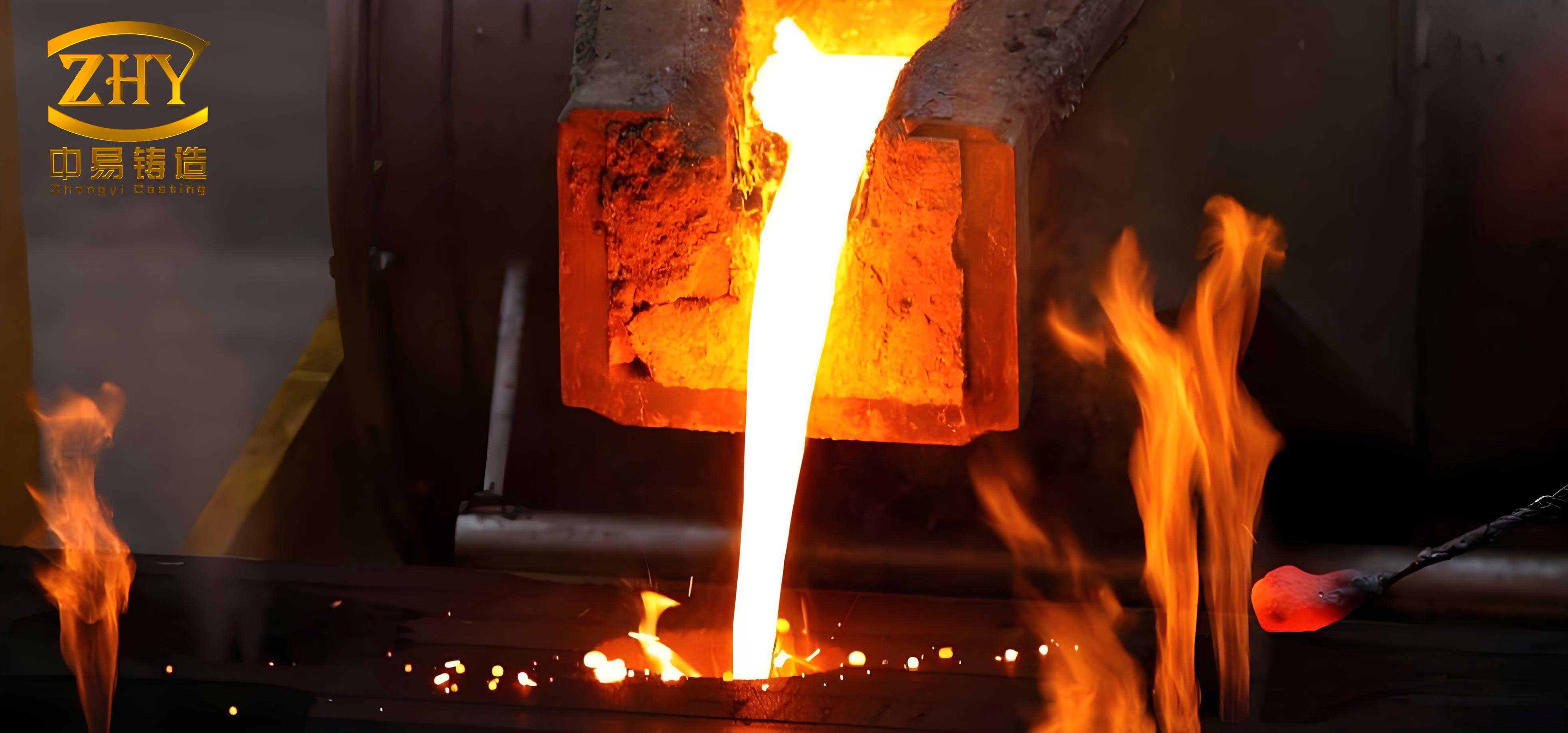
As an engineer deeply involved in the development of lost foam casting processes, I have observed its growing adoption within the automotive industry for producing complex aluminum alloy components such as engine blocks, cylinder heads, transmission housings, and intake manifolds. The process offers distinct advantages in dimensional accuracy and surface finish. However, the widespread implementation, particularly for aluminum alloys, faces significant challenges. The process is inherently complex, involving numerous interacting variables from pattern making to pouring and solidification. Inadequate production equipment and auxiliary materials often fail to meet stringent process requirements, leading to a range of defects that can be difficult to resolve. Through extensive experimentation and process refinement, I have systematically analyzed the root causes of common defects in aluminum lost foam casting and developed corresponding mitigation strategies. The following discussion details these findings, emphasizing the critical process parameters and their interrelationships.
The lost foam casting process for aluminum alloys fundamentally differs from conventional sand casting. It employs expendable polystyrene (EPS) or similar foam patterns coated with a refractory coating and embedded in unbonded, dry sand. The mold is then subjected to a vacuum to enhance rigidity before molten metal is poured, causing the foam pattern to thermally degrade and be replaced by the metal. This unique mechanism introduces specific challenges:
- High Thermal Demand: The vaporization of the foam pattern absorbs a substantial amount of heat from the molten metal, necessitating higher superheating and pouring temperatures compared to green sand casting. This exacerbates aluminum’s tendency to oxidize and absorb hydrogen.
- Gas Generation: The decomposition of the foam pattern generates voluminous gases (primarily hydrocarbons and carbon) that must escape through the coating and sand bed to prevent defects.
- Precise Process Control: Every stage—from bead pre-expansion and pattern molding to coating application, sand filling, and pouring—requires precise control. Variability in any parameter can manifest as a casting defect.
The primary defects encountered can be categorized and their governing physics described mathematically. A central relationship involves the gas volume produced by the pattern, which must be managed to prevent blowholes or mold collapse. The total gas volume $V_{gas}$ generated at pouring temperature can be modeled as:
$$
V_{gas}(T_p) = m_{pattern} \cdot \left( \frac{R T_p}{P} \right) \cdot \sum \alpha_i
$$
where $m_{pattern}$ is the mass of the foam pattern, $R$ is the universal gas constant, $T_p$ is the metal pouring temperature, $P$ is the local pressure in the mold, and $\alpha_i$ represents the molar yield coefficients of various gaseous decomposition products (styrene, benzene, hydrogen, etc.). The pressure $P$ is influenced by the applied vacuum and the gas permeability of the coating-sand system.
1. Surface Porosity, Slag Inclusions, and Gas Holes
These are among the most prevalent defects in aluminum lost foam casting. Surface pinholes appear as small, dispersed cavities on the casting surface, often caused by hydrogen precipitation during solidification. Slag holes contain non-metallic inclusions and have a more irregular shape. Subsurface blowholes are larger, smooth-walled cavities formed by trapped decomposition gases or air.
Root Causes:
1. Hydrogen Pickup: Aluminum melt readily reacts with moisture from inadequately dried tools, refractories, or sand, forming dissolved hydrogen: $2Al_{(l)} + 3H_2O_{(g/v)} \rightarrow Al_2O_3_{(s)} + 6[H]_{(in\ melt)}$. Upon solidification, hydrogen solubility drops sharply, leading to precipitation and pinhole formation.
2. Oxide/Slag Entrainment: Turbulent filling, especially from improper gating design, folds surface oxides into the melt. The foam degradation products can also form carbonaceous slag.
3. Insufficient Gas Evacuation: High pattern density, low coating/sand permeability, or insufficient vacuum can trap pattern decomposition gases.
4. Process Lapses: Inadequate melt treatment (degassing, fluxing), poor pouring practice introducing air, or use of wet/chilled charge materials.
Mitigation Strategies: A multi-pronged approach is essential, as summarized in Table 1.
| Defect Type | Primary Cause | Corrective Actions |
|---|---|---|
| Hydrogen Pinholes | High $[H]$ in melt | Thorough degassing (rotary, lance). Use of dry, preheated tools and charge. Control sand moisture <1%. |
| Oxide/Slag Inclusions | Turbulent filling, poor filtration | Design gating for laminar flow. Use ceramic foam filters in gating system. Proper slag removal before pouring. |
| Gas Blowholes | Trapped pattern gases | Optimize pattern density (18-22 g/L for EPS). Ensure high coating permeability and full drying. Apply adequate and stable vacuum (0.3-0.5 bar typical). |
| General Porosity | Low pouring temperature/speed | Increase superheat to compensate for pattern vaporization heat loss. Use pressurized/tapered gating to maintain fill velocity. |
The critical pouring temperature $T_{pour}^{crit}$ to avoid premature metal freeze and ensure complete pattern replacement while minimizing gas generation is a key parameter. It can be estimated by balancing the heat required to vaporize the pattern and heat the gases with the available superheat in the metal:
$$
\rho_m C_{p,m} (T_{pour}^{crit} – T_{liquidus}) V_{metal} \approx m_{pattern} \left[ L_{vap} + C_{p,gas}(T_{gas}^{exit} – T_{room}) \right] + Q_{loss}
$$
where $\rho_m$, $C_{p,m}$ are metal density and specific heat, $V_{metal}$ is the volume of metal in the gate/runner at the flow front, $L_{vap}$ is the effective heat of vaporization for the foam, and $Q_{loss}$ accounts for heat loss to the coating and sand.
2. Sand Inclusions, Burn-on, and Veining
These defects involve the mechanical or chemical incorporation of mold material into the casting surface.
Sand Inclusions/Erosion: Loose sand grains are washed into the metal stream due to insufficient mold compaction, low coating strength, or excessively high flow velocity.
Burn-on/Penetration: Metal infiltrates into the sand matrix through cracks or pores in the coating. This is promoted by high pouring temperature, high metallostatic pressure, or a coating with low hot strength or improper thickness.
Veining: Fine, vein-like ridges on the casting surface caused by thermal expansion of sand grains cracking the coating, allowing minute metal penetration.
Mitigation Strategies: The core solution lies in creating a robust and stable mold-metal interface. The key parameters are sand compaction and coating integrity. The permeability $K$ of the sand bed, while necessary for venting gases, must be balanced against its tendency to allow penetration. The critical pressure for metal penetration $P_{crit}$ can be described by:
$$
P_{crit} \approx \frac{2 \gamma_{lv} \cos \theta}{r_{pore}}
$$
where $\gamma_{lv}$ is the liquid metal’s surface tension, $\theta$ is the contact angle with the coating, and $r_{pore}$ is the effective pore radius in the coating. A high-quality, well-applied coating minimizes $r_{pore}$ and increases $P_{crit}$. Furthermore, ensuring uniform and adequate vibration during sand filling achieves a high bulk density, reducing inter-grain voids. Optimal sand properties (AFS GFN, shape) are crucial.
| Defect | Root Cause | Preventive Measures |
|---|---|---|
| Sand Inclusions | Poor mold compaction, high velocity | Optimize vibration parameters (frequency, amplitude, time). Use angular sand for better locking. Reduce flow velocity via larger gating. |
| Burn-on / Penetration | Coating failure, high temperature/pressure | Apply uniform coating with adequate thickness (0.5-1.5 mm). Use coatings with high refractoriness and hot strength. Control pouring temperature. |
| Veining | Thermal sand expansion cracking coating | Use low-expansion sands (e.g., chromite, zircon). Add inert fines to silica sand to reduce expansion. Ensure coating flexibility to accommodate minor expansion. |
3. Shrinkage Porosity and Cavities
Aluminum alloys have a significant solidification shrinkage range (typically 3.5-8%). In lost foam casting, the cooling conditions and the thermal sink effect of the decomposing pattern can create unfavorable thermal gradients, leading to shrinkage defects.
Shrinkage Cavity: A macroscopic, concentrated void usually in the last-to-freeze hot spots (e.g., isolated heavy sections).
Shrinkage Porosity (Microshrinkage): A network of tiny, interconnected pores in mushy zones, often revealed only by X-ray or machining.
Root Cause Analysis: The fundamental issue is inadequate feeding. The feeding efficiency in lost foam casting can be lower than in conventional casting because the exothermic reaction from the foam is limited compared to an insulating feeder sleeve. The pressure head in the feeder, $P_{feeder}$, is critical:
$$
P_{feeder} = \rho g h – \Delta P_{flow} – \Delta P_{foam}
$$
where $\rho g h$ is the metallostatic pressure, $\Delta P_{flow}$ is the pressure drop due to metal flow resistance in the gating/feeding paths, and $\Delta P_{foam}$ is an additional pressure loss unique to lost foam casting, caused by the back-pressure from gas generation in the foam pattern. If the total pressure in the feeder falls below the threshold needed to push metal into the solidifying interdendritic regions, porosity forms.
Mitigation Strategies: The focus is on directional solidification towards the feeder. This is achieved through:
1. Strategic Feeder Placement & Sizing: Using modulus calculations ($M = \frac{Volume}{Cooling\ Surface\ Area}$) to ensure feeders have a larger modulus than the casting section they feed.
2. Chill Application: Placing external chills (iron, graphite) on heavy sections adjacent to feeders to create a steep thermal gradient.
3. Gating for Thermal Control: Designing the gating system to establish a controlled temperature gradient across the casting. Pouring through the feeder itself is often beneficial.
4. Alloy Modification: For susceptible alloys, careful use of grain refiners (e.g., Al-Ti-B) and eutectic modifiers (e.g., Sr for Al-Si alloys) can reduce the size and connectivity of porosity.
The solidification time $t_f$ of a section, crucial for feeder design, is given by Chvorinov’s rule:
$$
t_f = B \cdot \left( \frac{V}{A} \right)^n = B \cdot M^n
$$
where $B$ is the mold constant (heavily influenced by sand type, coating, and vacuum in lost foam casting), $V$ is volume, $A$ is cooling surface area, $M$ is the geometric modulus, and $n$ is an exponent typically close to 2.
4. Mold Collapse (Kick-in or Cave-in)
This catastrophic defect results in an incomplete or severely distorted casting. It occurs when the unsupported sand wall collapses before the metal fully replaces the foam pattern.
Mechanism: The foam pattern provides structural support to the sand mold. During pouring, as the metal front advances, it vaporizes the foam. If the metal front velocity $v_{metal}$ is too slow, or the foam degradation rate is too high, a large, unsupported sand cavity forms ahead of the metal. If the sand’s shear strength, enhanced by vacuum, is exceeded, collapse occurs.
Causal Factors:
– Excessively low pouring temperature or speed.
– Very high pattern density, requiring excessive heat for vaporization and slowing the metal front.
– Insufficient or lost vacuum, drastically reducing sand shear strength.
– Poor sand compaction, especially in deep, narrow cavities.
The condition for stability can be framed as requiring the metal fill time $t_{fill}$ to be less than the critical time $t_{crit}$ for sand arch failure:
$$
t_{fill} = \frac{V_{cavity}}{A_{gate} \cdot v_{metal}} < t_{crit} \propto \frac{\tau_{sand}(P_{vac})}{\rho_{sand} \cdot g \cdot f(geometry)}
$$
where $\tau_{sand}$ is the shear strength of the sand under the applied vacuum $P_{vac}$, $\rho_{sand}$ is sand density, and $f(geometry)$ is a function of the unsupported sand span and depth.
Prevention: Ensure a robust, fast fill. Increase pouring temperature and gate cross-sectional area. Use patterns with optimal, uniform low density. Maintain constant, adequate vacuum throughout pouring. For complex geometries, consider strategic use of internal support structures ( ceramic rods) within the foam pattern during assembly.
5. Cold Shut, Mistrun, and Double Skin
These are filling-related defects where the molten metal fails to fuse completely.
Cold Shut: A seam-like discontinuity where two metal streams meet but fail to fuse due to insufficient thermal energy.
Mistrun: The casting is incomplete; metal fails to fill the entire mold cavity.
Double Skin: A unique defect where a thin solidified shell forms prematurely, often on vertical walls, and is not remelted by the subsequent metal flow, creating a internal bifurcation.
Analysis: All three defects stem from heat loss issues exacerbated by the lost foam process. The decomposing foam cools the metal front. For a metal stream of diameter $d$, the heat loss rate per unit length can be approximated as:
$$
\dot{Q}_{loss} \approx h \cdot \pi d \cdot (T_{metal} – T_{foam}) + \dot{m}_{foam} \cdot L_{vap}
$$
where $h$ is an effective heat transfer coefficient and $\dot{m}_{foam}$ is the mass rate of foam vaporization. If the total heat loss causes the metal temperature to drop below the liquidus before streams meet or the cavity is filled, cold shuts or mistruns occur. Double skin specifically arises from a combination of high heat extraction on a vertical wall and a pressure imbalance. High local vacuum can draw metal up the coating-wall rapidly, where it freezes as a thin shell. If the bulk metal rising in the cavity’s center is slower or cooler, it cannot remelt this shell.
Mitigation:
1. Increase pouring temperature and speed to counteract heat loss.
2. Modify gating to direct hotter metal to thin sections and promote progressive bottom-up filling.
3. For double skin, reduce the vacuum level slightly during the initial fill stage to slow the metal climb on the walls, allowing the central flow to keep pace. Optimize pattern orientation in the flask.
4. Improve coating permeability to allow faster gas escape, reducing the cooling effect of trapped gases.
6. Carbon Defects (Fold, Wrinkle, Lustrous Carbon)
These appear as shiny, carbon-rich films or folds on the casting surface, often with a wrinkled texture. They are a hallmark defect of lost foam casting due to the pyrolysis of the hydrocarbon pattern.
Formation Mechanism: Under the high temperature of the molten metal, the foam (e.g., EPS) decomposes. In the temperature range of ~400-700°C, it melts into a viscous liquid tar. If this liquid is not fully vaporized and swept out by the advancing metal, it can be pushed into the coating-metal interface. In the reducing atmosphere, it cracks to form solid, laminar carbon deposits on the casting surface.
The formation is favored by:
– High pattern density (more mass to decompose).
– Low pouring temperature (incomplete vaporization).
– Slow fill rate (allows time for tar formation and deposition).
– Low coating permeability (traps tars).
– High carbon equivalent of the pattern material.
A simplified condition to avoid significant carbon defect formation is to ensure the pattern degradation is predominantly gaseous. This requires the local heat flux $q”$ from the metal to be high enough:
$$
q” \cdot t_{residence} > \rho_{foam} \cdot \left[ C_p (T_{vap} – T_{room}) + L_{vap} \right] \cdot \delta
$$
where $t_{residence}$ is the time the metal front is in contact with a foam layer of thickness $\delta$, and $T_{vap}$ is the effective vaporization temperature.
Solutions: Use low-density patterns (consistent with handling strength). Maximize pouring temperature and velocity. Employ coatings with high permeability and potential catalytic properties to crack tars. Consider alternative pattern materials like Polymethyl Methacrylate (PMMA) or co-polymers, which produce less carbonaceous residue, though they have different gas generation profiles.
7. Pattern-Related Surface Defects
The quality of the foam pattern is directly imprinted onto the casting.
Pearl Grain Texture: The casting surface shows the outlines of the original foam beads. This is due to poor bead fusion during pattern molding, caused by insufficient steam pressure/time, low pre-expansion bead density, or aged beads with depleted blowing agent.
Surface Buckle/Indentation: Localized depressions from pattern damage or from internal voids in the foam pattern itself.
Net Cracks (“Alligator Skin”): A fine, crack-like pattern on the casting from cracks in the foam pattern, often from improper drying or handling of the coated pattern.
Prevention: This requires strict control of the foam processing line:
– Precise control of pre-expansion to achieve target bead density.
– Optimal steam molding cycles (pressure, time, cooling) to ensure complete fusion without swelling or collapse.
– Careful handling of patterns after demolding.
– Proper drying of the refractory coating at controlled temperature and humidity to avoid cracking.
– Regular maintenance and calibration of pattern molding tools to ensure vents and seals are functioning.
| Defect Category | Key Contributing Factors | Essential Control Measures |
|---|---|---|
| Porosity & Gas | Melt hydrogen, oxide entrapment, trapped pattern gases | Melt degassing & treatment. Laminar gating. Optimized pattern density & coating permeability. Stable vacuum. |
| Shrinkage Defects | Poor thermal gradient, inadequate feeding pressure | Feeder design using modulus method. Use of chills. Gating for thermal control. |
| Mold Filling Defects (Cold shut, Mistrun, Collapse) | Insufficient superheat, slow fill, high gas back-pressure | Increased pouring temp/speed. Optimized gating design. Maintain mold strength (vacuum, compaction). |
| Surface Defects (Burn-on, Carbon, Pattern texture) | Coating failure, pattern decomposition physics, poor bead fusion | High-quality coating application. Control of pattern density/material. Optimal foam molding process parameters. |
8. Integrated Process Control and Concluding Remarks
Success in aluminum lost foam casting hinges on viewing the process as an integrated system. A defect often has multiple, interrelated causes. For instance, reducing pattern density to minimize carbon defects might increase the risk of pattern damage leading to sand inclusions. Lowering pouring temperature to reduce metal oxidation might promote cold shuts and mold collapse.
Therefore, a holistic approach is mandatory:
1. Robust Process Design: Each component geometry demands a tailored process design—gating, feeding, pattern orientation, coating selection—based on solidification simulation and empirical knowledge.
2. Material Control: Strict specifications for alloy composition, charge materials, foam beads, binder, coating ingredients, and sand are non-negotiable.
3. Parameter Discipline: Establishing, monitoring, and controlling critical process parameters (bead density, coating thickness & dryness, sand compaction, vacuum level, pouring temperature & speed) within narrow windows.
4. Equipment Suitability: Investing in capable and consistent equipment—precise pattern molding machines, controlled coating lines, efficient sand handling and vibration systems, reliable vacuum pumps, and well-maintained melting and pouring furnaces—is a fundamental prerequisite.
In conclusion, the lost foam casting process for aluminum alloys presents a unique set of challenges stemming from the interaction of the vaporizing pattern with the molten metal. Defects such as porosity, shrinkage, filling irregularities, and carbonaceous surface flaws are common but manageable. Their mitigation requires a deep understanding of the underlying physical principles—heat transfer, fluid flow, gas dynamics, and solidification. By applying systematic analysis, employing mathematical models to guide parameter selection, and enforcing rigorous control over every step from bead to finished casting, high-quality aluminum components can be reliably produced. The future of lost foam casting lies in further refining these controls, developing advanced materials (coatings, patterns), and integrating real-time process monitoring to make this promising technology more robust and widespread.