
In my extensive experience within the foundry industry, the production of high-quality gray iron casting components is fundamental to numerous engineering applications, from automotive parts to machinery bases. However, achieving defect-free gray iron casting is often challenged by specific imperfections such as chill (white iron) at edges, slag inclusions, and gas porosity, particularly in complex geometries. This article delves into these common issues, presenting effective, hands-on strategies derived from practical shop-floor interventions. The focus remains squarely on gray iron casting, a material prized for its excellent machinability, damping capacity, and cost-effectiveness, yet sensitive to process variations.
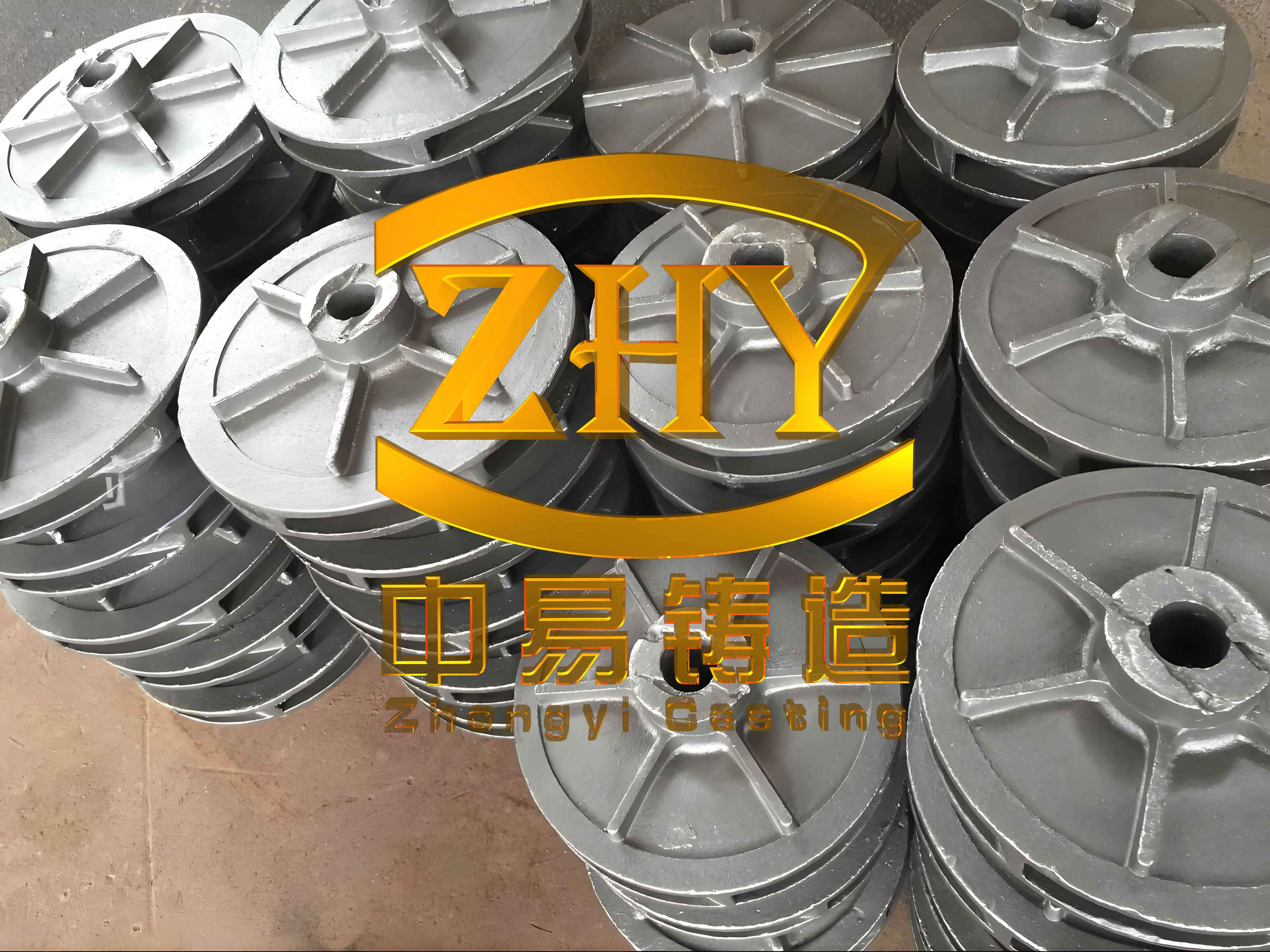
The journey of perfecting a gray iron casting begins with understanding its solidification behavior. The formation of graphite flakes, which imparts the characteristic gray fracture and properties, is highly sensitive to cooling rate and composition. When the cooling rate is too high, as in thin sections or sharp corners, carbon may remain in solution to form cementite (Fe3C), leading to hard, unmachinable white iron structures. This phenomenon, known as chill, is a frequent adversary in thin-wall gray iron casting production. Similarly, oxidation during pouring can lead to slag defects on upper surfaces, while inadequate mold venting or core gases can trap porosity within the casting body. Each defect type requires a tailored approach, grounded in metallurgical principles and practical feasibility.
Combating Chill Formation in Thin-Wall Gray Iron Castings
My work frequently involves thin-section gray iron castings, such as those for small electric motor housings. Even with nominally correct chemical composition, the interplay of pouring speed and mold geometry can induce localized rapid cooling, resulting in chill at edges and corners. This not only hampers machining but can lead to outright rejection of the gray iron casting. To counter this, I have implemented and validated three straightforward, highly effective techniques.
The first method addresses the root cause: excessive cooling rate at specific locations. After molding, I identify areas prone to chill—typically edges and reinforced sections. Using a vent wire with a diameter selected based on wall thickness (commonly 1.5–2 mm for sections under 5 mm), I puncture the mold at these points to a depth of 15–20 mm. The number of vents is proportional to the area of risk. The raised sand is then smoothed. During pouring, the initial, cooler stream of iron enters these vents. Under the pressure of subsequent metal, this iron forms small projections. Critically, their cooling sequence changes: the tip cools fastest, forming white iron, the mid-section shows mottled structure, and the root remains gray iron. This sacrificial projection effectively acts as a thermal sink, modifying the cooling curve for the actual casting corner and preventing chill formation in the gray iron casting itself. The governing principle can be related to the heat extraction rate. The local solidification time $t_f$ can be approximated by Chvorinov’s rule:
$$ t_f = B \left( \frac{V}{A} \right)^n $$
where $V$ is volume, $A$ is surface area, $B$ is a mold constant, and $n$ is an exponent (typically ~2). By creating a vent projection, we effectively increase the local $V/A$ ratio for the critical corner, thereby increasing $t_f$ and promoting graphite precipitation over cementite formation.
The second method involves inoculation within the ladle. Prior to tapping, I place small pieces of scrap steel wire (approximately 0.5–1.0% of the anticipated ladle weight) into the empty ladle. As the iron stream fills the ladle, it melts and dissolves the wire. This practice introduces subtle heterogenous nucleation sites and provides a mild chilling effect that can refine the graphite structure, increasing the tendency for gray iron formation even in faster-cooling sections of the subsequent gray iron casting.
The third technique is a targeted late inoculation. Just before pouring, I place a small amount of finely crushed ferrosilicon (75% Si) into the bottom of the sprue cup. The quantity is typically 0.1–0.2% of the casting weight. As the iron flows through, it entrains and dissolves the powder, providing a potent, immediate inoculation effect. This surge of silicon at the moment of filling significantly undercools the liquid for graphite nucleation, effectively suppressing chill in thin sections. The efficacy of inoculation can be conceptualized through the influence of silicon on the critical cooling rate for white iron formation. The carbon equivalent (CE) is a key parameter for gray iron casting:
$$ CE = C + \frac{1}{3}(Si + P) $$
While CE must be controlled to avoid other issues, the instantaneous silicon boost from inoculation locally alters the solidification path, favoring the stable Fe-C-Graphite system over the metastable Fe-Fe3C system. The following table summarizes these three anti-chill measures for thin-wall gray iron casting.
| Method | Procedure | Key Mechanism | Advantages for Gray Iron Casting |
|---|---|---|---|
| Vent Wire Pricking | Prick mold at chill-prone areas with 1.5-2mm wire to 15-20mm depth. | Creates sacrificial thermal mass; alters local V/A ratio and cooling rate. | Direct, physical intervention; highly reliable for specific geometries. |
| Ladle Addition of Scrap Wire | Add ~0.5-1.0% scrap steel wire to empty ladle before tap. | Provides nucleation sites and mild thermal effect during ladle filling. | Simple, integrates into existing tapping practice; provides bulk treatment. |
| Sprue Base Inoculation | Place 0.1-0.2% FeSi powder (75% Si) in sprue base before pour. | Delivers potent, late-stage inoculation at the point of fill. | Highly efficient use of inoculant; excellent for last-moment correction. |
These methods, while simple, have proven remarkably effective in ensuring the machinability and integrity of thin-wall gray iron casting components, transforming a recurring quality issue into a controlled process variable.
Eliminating Slag Inclusions in Expendable Pattern Castings of Gray Iron
Another significant challenge in gray iron casting, particularly for large, heavy-section components like automotive stamping dies produced via the expendable pattern (full mold) process, is the formation of slag pits or inclusions on the upper surfaces. In one project involving such castings with an average wall thickness of 60-80 mm, we encountered widespread slag defects on the cope surfaces, despite what seemed like appropriate gating and melting practice. The defects manifested as shallow pits, 3-5 mm in diameter and 1-2 mm deep, clustered in large areas, severely marring the surface finish of the gray iron casting.
Analysis pointed to oxidation as the primary culprit. The original process used a relatively high pouring temperature (1380-1420°C) and a chemistry with moderate manganese (Mn ~0.6%) and lower silicon (Si ~1.8%). At these high temperatures, elements like iron and manganese oxidize readily. The reaction for manganese oxidation, a key contributor to slag formation, is:
$$ 2Mn + O_2 \rightarrow 2MnO $$
Simultaneously, iron oxidizes: $2Fe + O_2 \rightarrow 2FeO$. In the melt, these oxides can combine with silica (SiO2) from the refractory or pattern decomposition to form complex manganese silicates (e.g., MnO·SiO2) which have a low melting point and float to the top surface. With thick sections cooling slowly, this slag layer has ample time to form and adhere to the solidifying metal skin of the gray iron casting. The key to prevention lies in minimizing oxide formation and creating a more protective slag layer.
The corrective actions we implemented were multi-fold. First, we adjusted the base chemistry: we reduced the manganese content to approximately 0.4% and increased the silicon content to around 2.2%. This served a dual purpose. Lower manganese directly reduces the source material for MnO formation. Higher silicon increases fluidity at a given temperature and, more importantly, promotes the formation of a more viscous, protective silicate-rich layer on the melt surface that hinders further oxidation. The enhanced protective layer can be thought of as a barrier, with its effectiveness related to its viscosity and coverage. Secondly, we significantly lowered the pouring temperature to 1320-1350°C. This reduces the thermodynamic driving force for oxidation, as the free energy of oxide formation, while still negative, is less favorable at lower temperatures, and it decreases the fluidity of the formed slag, making it less likely to penetrate the metal surface. The impact of these changes is summarized in the table below, highlighting the shift in process parameters for this specific heavy-section gray iron casting application.
| Process Parameter | Original Condition | Corrected Condition | Metallurgical Rationale for Gray Iron Casting |
|---|---|---|---|
| Pouring Temperature | 1380 – 1420 °C | 1320 – 1350 °C | Reduces oxidation kinetics and slag fluidity. |
| Silicon Content (Si) | ~1.8% | ~2.2% | Promotes protective, viscous silicate surface layer. |
| Manganese Content (Mn) | ~0.6% | ~0.4% | Directly reduces source for low-m.p. MnO·SiO2 slag. |
| Resulting Slag Character | Fluid, penetrative Mn-silicates | Viscous, protective Si-rich layer | Prevents adhesion and pitting on the gray iron casting surface. |
This combination of compositional tweaking and thermal control proved decisive. Subsequent casts showed a dramatic reduction, and eventual elimination, of the slag pit defects, yielding gray iron casting components with the required clean, sound surface for minimal finishing. It underscores that for gray iron casting, especially in slow-cooling heavy sections, controlling melt surface chemistry is as crucial as controlling bulk composition.
Analysis and Eradication of Gas Porosity in Diesel Engine Cylinder Blocks
Gas porosity represents a pernicious internal defect that can compromise the pressure integrity and mechanical strength of a gray iron casting. A case in point was the production of diesel engine cylinder blocks, a critical gray iron casting weighing several hundred kilograms. A sudden spike in machining scrap due to the discovery of porosity, particularly in the camshaft bore region, threatened production schedules. A systematic investigation was launched to pinpoint the source of the gas.
Initial non-destructive examination (X-ray radiography) of defective blocks revealed a distribution of small, spherical pores, typically 1-3 mm in diameter, scattered through the side walls. This indicated a generalized gas evolution problem rather than a localized leak. The likely sources of gas in a green sand molding process for such a complex gray iron casting are numerous: moisture from insufficiently dried cores or mold repairs, decomposition of organic binders, and oxidation of contaminants like rust. The core assembly for a cylinder block often includes intricate oil gallery and water jacket cores, which can act as sealed chambers if their venting paths are blocked.
The primary suspect was the core assembly for the side galleries and the small cores used for sealing various process holes. These cores, often made with organic binders, must be thoroughly dried to drive off residual moisture and cure the binder. Inadequate drying leaves moisture that turns to steam upon contact with molten iron. The pressure generated by this steam, $P_{steam}$, at the iron temperature ($T_{Fe} \approx 1400K$) can be estimated from the ideal gas law and is substantial enough to force gas into the solidifying metal. Furthermore, the small iron plates used as seals for core prints were found to have surface rust (Fe2O3·nH2O). When heated, rust decomposes, releasing water vapor and even oxygen:
$$ 2Fe_2O_3 \rightarrow 4FeO + O_2 \quad \text{(at high temperature)} $$
The released gases can easily be trapped in the lower sections of the mold where the metal pressure during filling might not be sufficient to force them out through the sand. The location of the porosity in the camshaft side wall, which was in the drag side of the vertically poured gray iron casting, supported this hypothesis—gases generated there had the longest path to escape upwards.
The corrective actions were correspondingly comprehensive. First, we overhauled the core drying process. We instituted strict temperature-time profiles and introduced more reliable pyrometric measurement for the core ovens to ensure the core body reached and maintained a temperature sufficient to drive off both free and chemically bound moisture. The target was to reduce the residual moisture content to below 0.5%. Secondly, we mandated and enforced meticulous cleaning of all metal inserts, chills, and core plate seals to remove any trace of rust or oil before assembly. Thirdly, we redesigned the venting pathways for complex core assemblies, ensuring that no blind cavities existed. For critical core sections, we added supplemental vent channels using wax strings or perforated core prints that would burn out during pouring. The relationship between gas pressure and its potential to cause porosity can be framed by considering the pressure balance at the liquid metal front. For a pore to nucleate and grow, the local total gas pressure $P_{gas}$ must exceed the sum of metallostatic pressure $P_m$, atmospheric pressure $P_a$, and the capillary pressure $P_\sigma$ due to surface tension:
$$ P_{gas} > P_m + P_a + P_\sigma = \rho g h + P_a + \frac{2\sigma}{r} $$
where $\rho$ is metal density, $g$ is gravity, $h$ is height of metal above the point, $\sigma$ is surface tension, and $r$ is the pore radius. By eliminating major gas sources (reducing $P_{gas}$) and improving venting (providing an escape path), we prevent this inequality from being satisfied, thereby safeguarding the gray iron casting from porosity. The root causes and implemented solutions are consolidated in the following table.
| Category of Cause | Specific Source | Corrective Action | Impact on Gray Iron Casting Quality |
|---|---|---|---|
| Core/Mold Gases | Insufficiently dried cores & repairs; blocked vent channels. | Strict control of drying cycles; redesign of venting systems for all core assemblies. | Dramatically reduces volume of water vapor and binder pyrolysis gases. |
| Contaminant Gases | Rust (Fe2O3·nH2O) on iron seal plates and inserts. | Mandatory abrasive cleaning or shot blasting of all metallic inserts before molding. | Eliminates a potent source of localized water vapor and oxygen gas. |
| Process Gating | Potential for air entrapment in complex drag sections. | Optimized gating to ensure progressive, turbulent-free filling; use of foam vent plugs. | Minimizes air entrainment and provides escape routes for displaced air. |
Implementing these measures required discipline across the molding and core-making departments, but the results were unequivocal. The rate of porosity-related scrappage for the cylinder block gray iron casting fell to negligible levels, restoring production efficiency and ensuring the structural reliability of this vital engine component. This experience reinforces that vigilance against gas sources is paramount, especially for large, intricate gray iron castings where the pathways for gas escape are long and tortuous.
Integrative Principles for Robust Gray Iron Casting Production
Reflecting on these distinct defect scenarios—chill, slag, and porosity—a unifying theme emerges for successful gray iron casting production: the necessity of a holistic view that integrates metallurgy, thermodynamics, and process engineering. Each defect stems from a disequilibrium during the transient events of pouring and solidification. The prevention strategies all work by either modifying the driving force (e.g., reducing cooling rate or oxidation potential) or providing an alternative, harmless pathway for the disruptive energy or material (e.g., venting heat via a prick or venting gas via channels).
For instance, the effectiveness of both the vent pricking method for chill and the improved core venting for porosity can be conceptually linked to the fundamental equation for diffusion or flow. The flux $J$ of a quantity (heat or mass) is often proportional to a driving force and inversely proportional to resistance. In simplified form for heat transfer (Fourier’s law) and gas flow (Darcy’s law for porous media):
$$ J_q = -k \nabla T \quad \text{(Heat flux)} $$
$$ v = -\frac{\kappa}{\mu} \nabla P \quad \text{(Gas velocity in sand)} $$
where $k$ is thermal conductivity, $\nabla T$ is temperature gradient, $\kappa$ is sand permeability, $\mu$ is gas viscosity, and $\nabla P$ is pressure gradient. By creating artificial vents (increasing effective $\kappa$ or providing a low-resistance path), we manage these fluxes to protect the gray iron casting. Similarly, the chemical approaches for slag control manipulate the thermodynamic activities of elements to favor benign reactions.
The pursuit of excellence in gray iron casting is an ongoing endeavor. As geometries become more complex and performance demands increase, the foundational practices described here must be complemented by advanced simulation tools for solidification and gas flow. However, the core principle remains: understanding the physical and chemical genesis of defects allows for the design of simple, robust countermeasures. Whether it’s a thin-wall housing, a massive die, or a high-integrity engine block, each gray iron casting project benefits from this problem-solving mindset, ensuring that the final product reliably meets its intended service life and function.