
The quest for efficient and environmentally friendly casting processes has driven the widespread adoption of lost foam casting. Compared to traditional sand casting methods, this technology offers significant advantages, including a wide application range, high production efficiency, excellent dimensional accuracy of castings, lower production costs, and is recognized as a green revolution within the foundry industry. The core to achieving high-quality castings in this process lies in the coating applied to the expandable polystyrene (EPS) pattern. The performance of this coating directly dictates the surface finish and internal soundness of the final metal part, leading to the industry adage that “the coating is the mold.”
Despite the long history of research into lost foam casting, optimizing the coating formulation remains a critical challenge. Common defects such as carbon inclusions, slag entrapment, burn-on, gas porosity, surface folds, and microstructure shrinkage often originate from inadequate coating properties. These issues are frequently encountered when using imported or self-prepared coatings that are not optimally designed for specific metal alloys and local material availability. Therefore, developing a cost-effective, high-performance, and environmentally sound water-based coating tailored for cast iron applications is of paramount importance. This research focuses on the systematic formulation and evaluation of such a coating, leveraging domestically available raw materials to enhance the reliability and economics of the lost foam casting process.
Fundamentals of Lost Foam Casting and Coating Requirements
In the lost foam casting process, a foam pattern is coated with a refractory slurry, embedded in unbonded sand, and then molten metal is poured directly onto it. The metal vaporizes the foam, progressively replacing the pattern cavity to form the casting. The coating serves multiple critical functions: it provides a barrier between the molten metal and the sand, ensuring a smooth casting surface; it must allow the gaseous decomposition products of the foam to escape through its permeability; it must possess sufficient strength to withstand handling and sand compaction; and it must resist thermal shock and chemical attack from the molten iron.
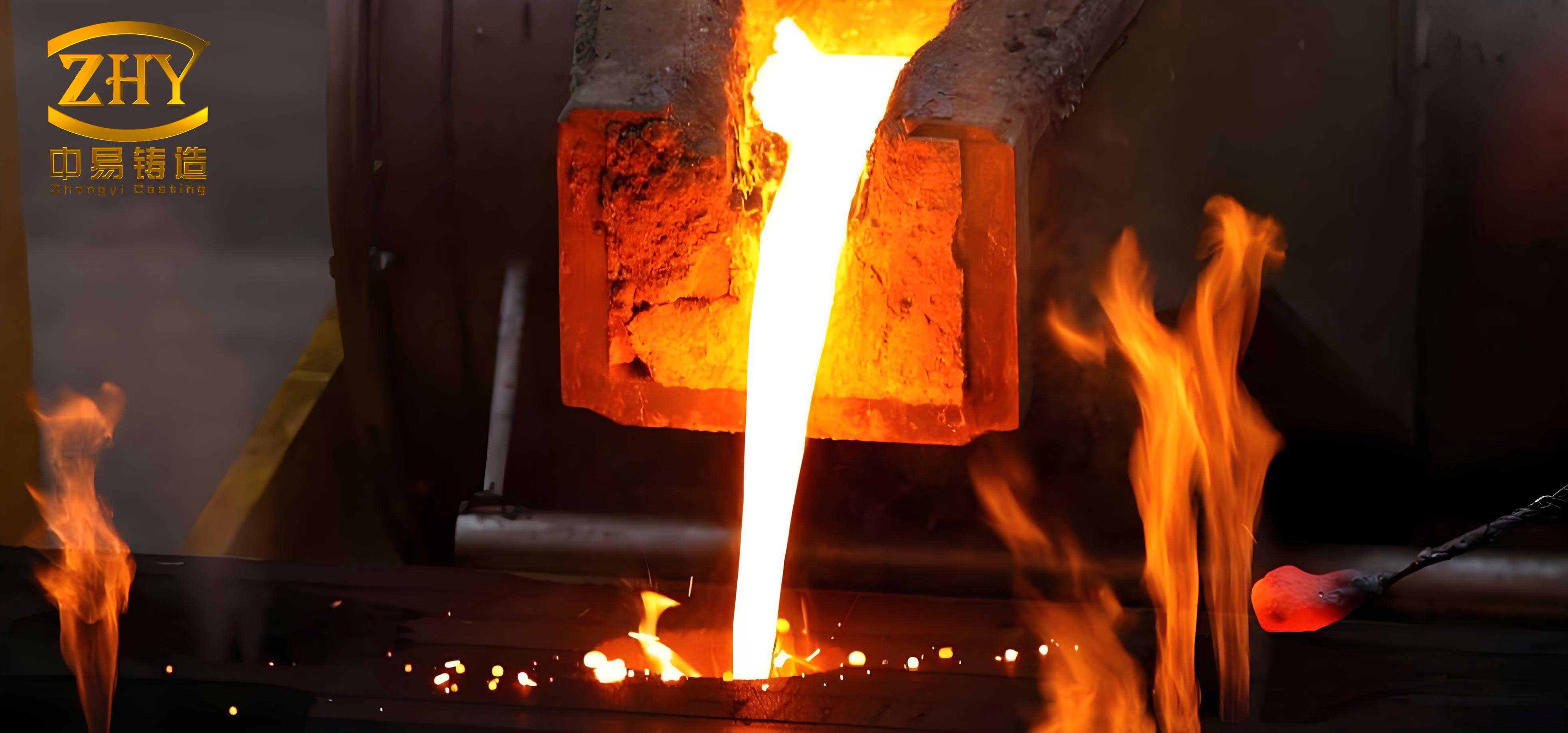
The performance requirements for a lost foam casting coating are thus multifaceted and can be quantified through several key parameters:
- Rheological Properties: Including viscosity, density, and brushability, which affect application uniformity.
- Suspension Stability: The ability to keep refractory particles homogeneously dispersed in the carrier liquid.
- Gas Permeability and Gas Evolution: The coating must be permeable to foam pyrolysis gases while itself generating minimal gas upon contact with molten metal to prevent gas defects.
- Adhesion and Green Strength: The ability to adhere to the EPS pattern and maintain integrity during handling.
- High-Temperature Properties: Including refractoriness, sintering behavior, and thermal shock resistance to prevent cracking and metal penetration.
Failure in any of these areas can lead to casting defects, underscoring the need for a balanced formulation.
Experimental Methodology: Materials and Characterization
Raw Material Selection and Pretreatment
The coating is a complex composite system comprising several functional components:
- Refractory Aggregates: The primary solid phase providing thermal resistance. A composite blend was chosen:
- Main Aggregates: Alumina spar powder (a neutral, cost-effective aggregate with good thermal stability and anti-burn-on properties) and talc powder (to influence solidification and metal fluidity).
- Auxiliary Aggregates: Kaolin (improves bonding, plasticity, and sintering) and cryolite powder (adsorbs carbon from decomposing foam, reducing surface fold defects).
- Binder System: A composite of fast-drying silica sol (inorganic binder) and Polyvinyl Alcohol (PVA) solution (organic binder) was used to provide strength across different temperature ranges.
- Suspension System: A combination of sodium lignosulfonate (anionic dispersant) and pre-gelatinized attapulgite clay (thixotropic agent) was employed to ensure suspension stability.
- Carrier and Additives: Water was used as the carrier. Additives included T-80 as a surfactant, n-butanol as a defoamer, and Fe2O3 as an oxidizing agent.
Pretreatment involved preparing a 10 wt% attapulgite slurry and a 5 wt% PVA aqueous solution.
Coating Preparation and Performance Testing
All coatings were prepared using a standardized procedure: dry milling of refractory aggregates, followed by wet ball milling with all liquid and powder components for 4-6 hours, and final homogenization using a colloid mill. The slurry density was adjusted to a Baume degree of 65-70 (approximately 1.5-1.7 g/cm³) before testing. The key performance metrics and their test methods are summarized below:
| Performance Metric | Test Method / Equipment | Description / Calculation |
|---|---|---|
| Density | Graduated cylinder & balance | Mass per unit volume of the slurry. |
| 24-hour Suspension Rate | Sedimentation in a graduated cylinder | Percentage of sediment volume after 24h static settling. |
| Brushability Index (M) | Rotational Viscometer (at 10 & 100 rpm) | $$M = \frac{\eta_{10}}{\eta_{100}}$$ Higher M indicates better brushing performance (less shear-thinning). |
| Gas Evolution | GET-III Gas Evolution Tester | Volume of gas (mL) released per gram of dried coating at high temperature. |
| Coating (Green) Strength | Sand Abrasion Test | Mass of sand (grams) dropped onto a dried coating film required to expose the substrate. |
| Coating Adherence | Weight Gain of Dipped EPS Sample | Mass difference of an EPS plate before and after dipping. Qualitative assessment of sagging. |
| High-Temperature Crack Resistance | Furnace exposure at 1200°C | Visual inspection of cracks after thermal shock; rated on a scale from I (no cracks) to IV (severe cracks >1mm). |
Systematic Optimization of Coating Formulation
Phase 1: Optimization of Refractory Aggregate Composition
Initial trials focused on determining the optimal ratio of the four refractory aggregates, keeping the total aggregate content at 100% and other additives constant. The goal was to find a blend that offered a balanced set of properties suitable for cast iron in lost foam casting. Three pre-trials with varying ratios of the main aggregates (alumina spar and talc) were conducted.
| Trial ID | Aggregate Composition (wt%) | Density (g/cm³) | Brushability Index (M) | Coating Strength (g) | 24h Susp. (%) | Gas Evolution (mL/g) | Adherence Grade | Crack Resistance Grade |
|---|---|---|---|---|---|---|---|---|
| 1 | 30% Alumina Spar, 50% Talc, 15% Kaolin, 5% Cryolite | 1.72 | 6.3 | 712.6 | 93 | 137 | I | III |
| 2 | 40% Alumina Spar, 40% Talc, 15% Kaolin, 5% Cryolite | 1.58 | 7.4 | 656.2 | 95 | 105 | II | II |
| 3 | 50% Alumina Spar, 30% Talc, 15% Kaolin, 5% Cryolite | 1.46 | 8.1 | 583.4 | 97 | 79 | II | I |
Analysis revealed a clear trend: increasing the proportion of lower-density alumina spar at the expense of higher-density talc progressively improved suspension stability, brushability, and high-temperature crack resistance while reducing gas evolution. Although Trial 3 showed slightly lower green strength and adherence compared to Trial 1, its overall performance profile—particularly the excellent crack resistance (Grade I) and low gas evolution—was deemed most suitable for high-quality lost foam casting of iron. Therefore, the aggregate composition of 50% alumina spar, 30% talc, 15% kaolin, and 5% cryolite was selected as the base for further optimization of the binder and suspension systems.
Phase 2: Orthogonal Optimization of Binder and Suspension Agent Content
With the refractory aggregate ratio fixed, a four-factor, three-level L9(3^4) orthogonal array was designed to determine the optimal amounts of the composite binder (silica sol, PVA) and composite suspension agent (sodium lignosulfonate, attapulgite). The factors and levels are shown below.
| Factor | Level 1 (wt%) | Level 2 (wt%) | Level 3 (wt%) |
|---|---|---|---|
| A: Fast-Drying Silica Sol | 4 | 5 | 6 |
| B: PVA | 2 | 2.5 | 3 |
| C: Sodium Lignosulfonate | 4 | 5 | 6 |
| D: Attapulgite | 1 | 2 | 3 |
The orthogonal experiments were conducted, and the results for the five key response variables were recorded. For statistical analysis, qualitative grades for adherence and crack resistance were converted to numerical scores (Adherence: I=1, II=2, III=3; Crack Resistance: I=1, II=2, III=3, IV=4). Range analysis (R-value calculation) was then performed on each response to determine the primary and secondary order of influencing factors and to identify the optimal level for each factor for a given property.
| Response Variable | Optimal Level Combination | Primary Influencing Factor (Highest R) | Order of Influence (Descending R) |
|---|---|---|---|
| Brushability (Maximize M) | A2 B3 C3 D2 | D (Attapulgite) | D > A > C > B |
| Gas Evolution (Minimize mL/g) | A1 B1 C3 D2 | B (PVA) | B > A > D > C |
| Coating Strength (Maximize g) | A2 B1 C3 D2 | A (Silica Sol) | A > D > C > B |
| Adherence (Minimize Score) | A1 B1 C1 D1 | B (PVA) | B > A = D > C |
| Crack Resistance (Minimize Score) | A1 B1 C1 D3 | A (Silica Sol) | A > D > C > B |
The range analysis provides crucial insights for formulating a lost foam casting coating. For instance, attapulgite content is the most significant factor controlling brushability, likely due to its strong influence on thixotropy. PVA content primarily governs gas evolution, as organic binders decompose at high temperatures. Coating strength and high-temperature crack resistance are predominantly controlled by the inorganic silica sol binder, which forms a strong ceramic bond upon sintering. A holistic analysis, prioritizing the critical needs for cast iron lost foam casting (where strength, low gas evolution, and thermal shock resistance are paramount over extreme brushability), led to the selection of the A2B1C3D2 combination. This corresponds to: 5% silica sol, 2% PVA, 6% sodium lignosulfonate, and 2% attapulgite (all percentages relative to the total refractory aggregate mass).
Final Optimized Formulation and Performance Benchmarking
Integrating the findings from both optimization phases yields the complete, optimized formulation for a water-based lost foam coating for cast iron.
| Component Category | Material | Optimal Content (wt%)* |
|---|---|---|
| Refractory Aggregate | Alumina Spar Powder | 50 |
| Talc Powder | 30 | |
| Kaolin | 15 | |
| Cryolite Powder | 5 | |
| Binder System | Fast-Drying Silica Sol | 5 |
| Polyvinyl Alcohol (PVA) | 2 | |
| Suspension System | Sodium Lignosulfonate | 6 |
| Attapulgite | 2 | |
| Additives | Surfactant (T-80), Defoamer (n-butanol), Oxidizer (Fe₂O₃) | As required |
| Carrier | Water | To adjust Baume degree to 65-70 |
*Percentages for binders, suspenders, and additives are relative to the total mass of refractory aggregate (100%).
The performance of this optimized coating was rigorously tested and compared against a commercially available, widely used coating for cast iron lost foam casting (designated here as XYSS-110). Both coatings were adjusted to the same Baume degree for a fair comparison.
| Performance Property | Optimized Coating | Commercial Coating (XYSS-110) |
|---|---|---|
| Density (g/cm³) | 1.55 | 1.80 |
| Gas Evolution (mL/g) | 20.1 | 24.5 |
| 24h Suspension Rate (%) | 97 | 98 |
| Brushability Index (M) | 10.2 | 15.7 |
| Coating Strength (g) | 875 | 1053 |
| Adherence Grade | I | I |
| High-Temperature Crack Resistance | I | I |
| Estimated Cost per Metric Ton | 2,570 units | 3,300 units |
The results demonstrate that the developed coating meets or exceeds critical requirements for lost foam casting. It shows superior performance in low gas evolution, which is vital for preventing gas-related defects in castings. While its brushability and green strength are slightly lower than the commercial benchmark, they are well within the acceptable operational range. Most importantly, it matches the commercial product in the crucial areas of adherence and high-temperature crack resistance (both Grade I). Furthermore, a significant cost advantage of approximately 22% is achieved, making this optimized formulation a compelling solution for enhancing the economics and reliability of cast iron lost foam casting operations.
Microstructural Analysis of the Coating
To understand the fundamental reasons behind the coating’s good performance, especially its thermal properties, the microstructure of a dried coating layer was examined using scanning electron microscopy (SEM). The analysis reveals a uniformly distributed composite structure. The refractory particles (appearing as brighter, rounded features) are embedded within a continuous matrix formed by the binders and suspending agents. A key observation is the presence of a fine, interconnected network of pores and concave structures (appearing as dark areas) distributed throughout the coating.
This micro-porosity is not a flaw but a critical design feature for lost foam casting coatings. It provides essential pathways for the rapid escape of gaseous decomposition products generated when the molten metal vaporizes the underlying EPS foam. Without sufficient permeability, these gases would be trapped, leading to turbulence during metal filling and potentially causing defects like gas porosity, puffing, or incomplete filling. The uniform distribution of these pores, a result of the optimized formulation and milling process, ensures consistent and adequate gas venting across the entire coating surface. This microstructural characteristic directly contributes to the coating’s ability to facilitate stable mold filling and produce sound castings in the lost foam casting process, effectively preventing surface blows and carbon defects.
Conclusions and Implications for Lost Foam Casting
This systematic investigation successfully developed and characterized a high-performance, cost-effective water-based coating specifically for cast iron lost foam casting applications. The key findings are as follows:
- The optimal refractory aggregate blend for balancing suspension, thermal stability, and defect prevention consists of 50% alumina spar, 30% talc, 15% kaolin, and 5% cryolite.
- Orthogonal experiment design and range analysis identified the primary controlling factors for key coating properties in the lost foam casting process: attapulgite content for brushability, PVA for gas evolution, and silica sol for both green strength and high-temperature crack resistance.
- The finalized optimal formulation includes 5% silica sol, 2% PVA, 6% sodium lignosulfonate, and 2% attapulgite (relative to aggregate mass), delivering a balanced suite of properties.
- The developed coating exhibits excellent comprehensive performance, particularly in low gas evolution (20.1 mL/g) and high-temperature crack resistance (Grade I), matching or surpassing a commercial benchmark in critical areas while achieving a significant material cost reduction of over 20%.
- Microstructural analysis confirms that the coating possesses a uniform structure with beneficial micro-porosity, which is essential for providing the permeability needed to vent foam pyrolysis gases during the lost foam casting process, thereby ensuring casting soundness.
This research demonstrates a practical methodology for formulating and optimizing lost foam casting coatings based on local material availability and specific alloy requirements. The resulting coating provides a reliable, economical solution that can help foundries improve the quality and yield of cast iron components produced via the lost foam casting process, contributing to the broader adoption and advancement of this efficient and sustainable casting technology.