
In the field of advanced foundry technology, lost foam casting has gained significant attention due to its ability to produce complex and high-precision castings with minimal post-processing. This method is particularly valuable for manufacturing high manganese steel casting components, such as wear-resistant parts for mining and construction equipment, where surface quality and dimensional accuracy are critical. However, the performance of lost foam casting heavily relies on the coating applied to the foam pattern, which must exhibit excellent refractory properties, good adhesion, and appropriate permeability to prevent defects like penetration and sticking. Traditional coatings, including water-based alumina or zircon-based systems, often fall short in terms of cost-effectiveness or compatibility with high manganese steel casting, leading to issues such as severe sand adhesion in thick sections or thermal hotspots. Similarly, alcohol-based magnesia coatings with polyvinyl butyral (PVB) binders may suffer from low strength or foaming problems when binder content is increased. Therefore, there is a pressing need to develop a novel coating that addresses these limitations while maintaining economic viability. In this study, we focus on formulating an alcohol-base coating specifically tailored for high manganese steel casting in lost foam applications, utilizing high-chromium corundum as the primary refractory aggregate. Through systematic experimentation and performance evaluation, we aim to establish an optimal composition that ensures superior casting quality and broad applicability.
The core innovation of our research lies in the selection of high-chromium corundum as the refractory aggregate. This material is a by-product from ferrochromium production, processed into a fine powder with a particle size of approximately 200 mesh. Its chemical composition typically includes over 85% Al2O3 and more than 10% Cr2O3, granting it a high melting point ranging from 1830°C to 2000°C, a density of 3.68 g/cm3, a Mohs hardness of 9, and a thermal expansion coefficient about half that of quartz. Moreover, its thermal conductivity is roughly double that of quartz, making it an ideal neutral material that resists chemical reactions with molten high manganese steel casting alloys. The cost advantage is substantial, as high-chromium corundum is approximately one-third the price of conventional alumina or zircon flour, thereby enhancing the economic appeal of the coating. For the binder system, we employ phenolic resin due to its excellent thermal stability and moderate cost, combined with PVB, which acts as both a suspending agent and a secondary binder. The synergy between phenolic resin and PVB improves coating strength and reduces cracking tendencies. Additionally, lithium-based bentonite is used as a suspending agent, pre-gelled with a small amount of water and then dispersed in industrial ethanol to form a paste. Minor additives include surfactants, defoamers like n-octanol, and Fe2O3 as a flux to promote easy peeling of the coating after casting and prevent metal penetration.
The formulation of the alcohol-base coating involves a precise mixing sequence to ensure homogeneity and optimal performance. The process begins with combining lithium-based bentonite, additives, PVB, and phenolic resin in ethanol solvent, followed by the gradual addition of high-chromium corundum powder and Fe2O3. The mixture is ball-milled for 30 to 60 minutes to achieve thorough dispersion, after which additional ethanol is introduced, and milling continues for another 15 to 20 minutes before discharge. This methodology ensures that all components are uniformly integrated, resulting in a stable coating slurry suitable for application via brushing, dipping, spraying, or flowing techniques on foam patterns for high manganese steel casting. To determine the optimal composition, we designed an orthogonal experiment with four factors and three levels, as summarized in Table 1. The factors include the mass percentages of phenolic resin (A), PVB (B), bentonite (C), and Fe2O3 (D), each varied to assess their impact on key coating properties: suspension stability, permeability, and coating strength. This experimental approach allows for efficient identification of the most influential parameters and their ideal combinations.
| Factor | Level 1 | Level 2 | Level 3 |
|---|---|---|---|
| A: Phenolic Resin | 1 | 2 | 3 |
| B: PVB | 0.3 | 0.4 | 0.5 |
| C: Bentonite | 1 | 2 | 3 |
| D: Fe2O3 | 2 | 3 | 4 |
The performance of the coating was evaluated using standardized testing methods to ensure reliability and comparability. Suspension stability was measured via a sedimentation method, where 100 mL of coating slurry is allowed to stand for 24 hours, and the volume percentage of the settled sediment is recorded. Permeability was assessed on an STZ direct permeability tester using standardized sand specimens; the dry coating permeability is calculated based on the airflow rate through the coated layer, as detailed in foundational literature. Coating strength was quantified by a sand abrasion test: a coated glass plate is subjected to sand falling from a viscosity cup until the coating is worn away to expose the glass, with the total mass of sand used serving as an indicator of surface strength. High-temperature crack resistance was examined by coating a 50 mm diameter sodium silicate sand core with a 2 mm thick layer, drying it, and then rapidly heating it to 1200°C for 2 minutes in a furnace, followed by visual inspection for cracks. Thixotropy, a critical property for application behavior, was characterized using an NDJ-1 rotational viscometer to plot the apparent viscosity against time under constant shear rate, yielding a thixotropy curve. The thixotropy index (S) is computed from the viscosity readings at 30 seconds (S) and 10 minutes (S′) using the formula:
$$ S = \frac{(S – S’) \times 100}{S} $$
This index reflects the coating’s ability to flow during application while resisting sagging, with higher values indicating better thixotropic behavior. Other properties, such as density and pH, were measured according to established procedures to ensure comprehensive evaluation.
The orthogonal experiment results, presented in Table 2, reveal the influence of each factor on the coating properties. By analyzing the main effects and interactions, we identified the optimal combination as A2B2C3D3, corresponding to 2% phenolic resin, 0.4% PVB, 3% bentonite, and 4% Fe2O3. This formulation maximizes suspension stability, permeability, and coating strength simultaneously, making it the preferred recipe for high manganese steel casting applications. The suspension stability achieved with this combination exceeds 95%, indicating excellent particle suspension and reduced settling during storage. Permeability values are sufficiently high to allow gas escape during the lost foam process, preventing blows or porosity in the final high manganese steel casting. Coating strength is enhanced, ensuring that the layer remains intact during handling and pouring, which is crucial for maintaining pattern integrity and dimensional accuracy.
| Experiment Scheme | Suspension Stability (%) | Permeability | Coating Strength (g) | pH Value |
|---|---|---|---|---|
| A1B1C1D1 | 88.2 | 1.27 | 900 | 10 |
| A1B2C2D2 | 89.6 | 1.27 | 840 | 9 |
| A1B3C3D3 | 91.0 | 1.62 | 1080 | 8 |
| A2B1C2D3 | 89.0 | 1.58 | 1450 | 10 |
| A2B2C3D1 | 90.7 | 1.30 | 1380 | 9 |
| A2B3C1D2 | 90.0 | 1.15 | 1240 | 8 |
| A3B1C3D2 | 88.3 | 1.11 | 920 | 10 |
| A3B2C2D3 | 86.0 | 1.10 | 985 | 9 |
| A3B3C1D1 | 82.3 | 0.69 | 1060 | 9 |
Upon establishing the optimal formulation, we conducted extensive testing to evaluate its overall performance in lost foam casting for high manganese steel casting. The coating demonstrated excellent application characteristics, including good brushing, dipping, spraying, and flowing properties, allowing for uniform coverage on complex foam patterns without drips or runs. This is attributed to its high thixotropy, as evidenced by the thixotropy curve comparison with a reference alcohol-based magnesia coating from literature. As shown in Figure 1, our coating exhibits a steeper decline in apparent viscosity over time under shear, indicating superior shear-thinning behavior that facilitates easy application while minimizing sagging. The calculated thixotropy index for our coating is 66.6, compared to 61.5 for the reference coating, both well above the minimum requirement of 20 for practical use. This enhanced thixotropy ensures that the coating levels smoothly on vertical surfaces, a critical factor for producing defect-free high manganese steel casting components with intricate geometries.
The physical and chemical properties of the optimized coating are summarized in Table 3, alongside those of the literature-recommended alcohol-based magnesia coating. Our coating achieves a suspension stability of 96.3%, significantly higher than the 90.0% of the reference, ensuring minimal settling and consistent slurry quality during prolonged use. The density is comparable at approximately 1.81 g/cm3, suitable for forming a dense barrier against metal penetration. Permeability is markedly improved, with a value of 1.70 versus 0.71, which enhances gas evacuation during the decomposition of the foam pattern, reducing the risk of casting defects in high manganese steel casting. Coating strength, measured as 1024 g in the sand abrasion test, is nearly double that of the reference coating (593 g), providing robust protection against erosion by molten metal. High-temperature crack resistance is rated as Grade 1 for both coatings, indicating no visible cracking after rapid heating, but our formulation maintains this performance with higher strength and better suspension. The pH value of 10 reflects a slightly alkaline nature, which is compatible with the basic characteristics of high manganese steel, minimizing chemical interactions that could lead to burn-on or slag formation.
| Property | Optimized Coating | Reference Coating |
|---|---|---|
| Suspension Stability (%) | 96.3 | 90.0 |
| Density (g/cm3) | 1.81 | 1.82 |
| Permeability | 1.70 | 0.71 |
| Coating Strength (g) | 1024 | 593 |
| Thixotropy Index | 66.6 | 61.5 |
| High-Temperature Crack Resistance | Grade 1 | Grade 1 |
| pH Value | 10 | 9 |
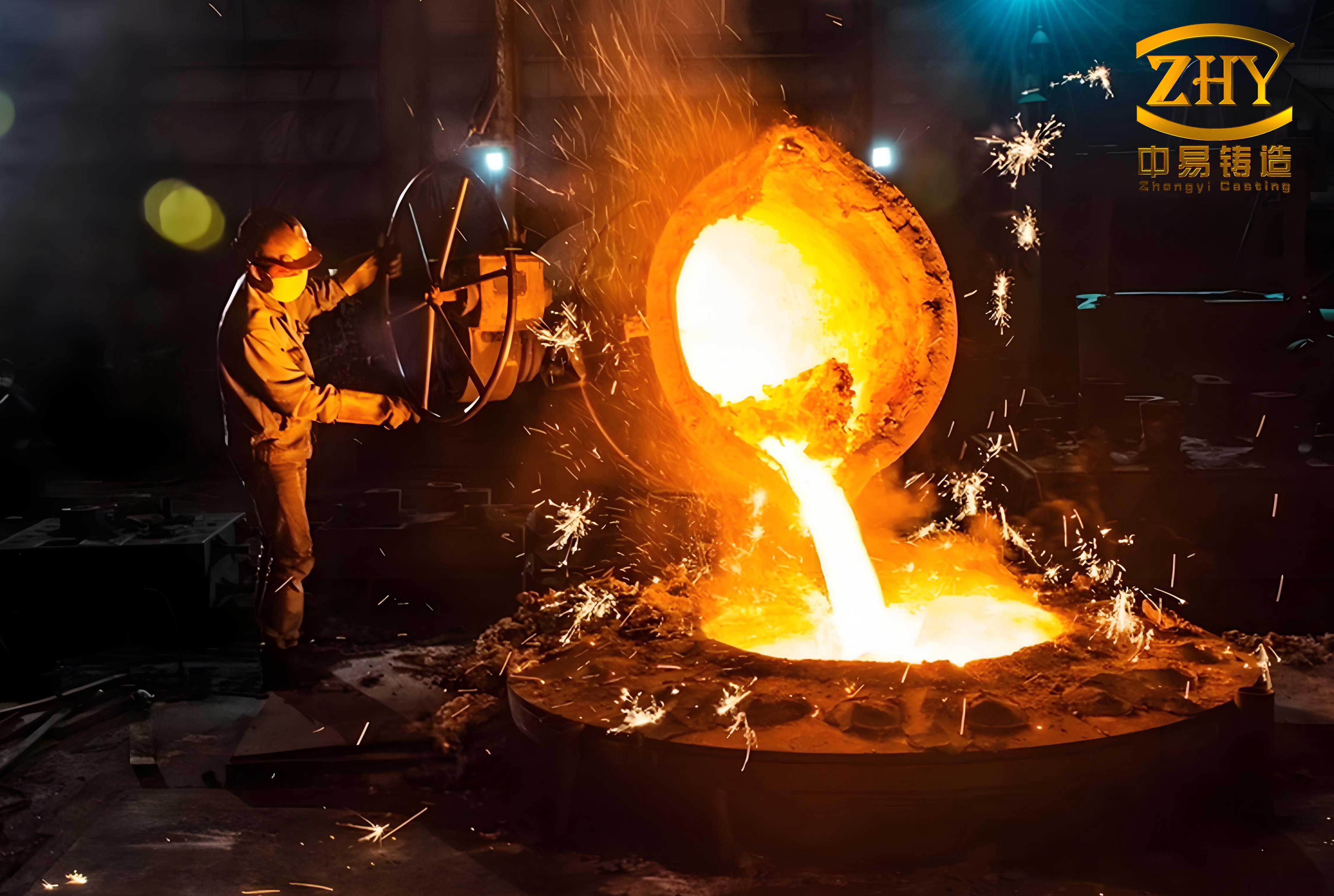
To validate the practical efficacy of the developed coating, we conducted production trials at an industrial foundry, focusing on high manganese steel casting parts such as ball mill liners, crusher jaw plates, and excavator teeth. These components are典型 examples of wear-resistant applications where surface integrity is paramount. The coating was applied using various methods—brushing for small patterns, dipping for medium-sized ones, and flowing for large patterns—all of which yielded uniform layers without defects. The castings, with weights up to 270 kg and section thicknesses reaching 120 mm, were produced using the lost foam process. After shakeout, the high manganese steel casting surfaces were smooth, clean, and free of adhesive sand, with sharp edges and high dimensional accuracy. The coating sintered layer peeled off in flakes, facilitating easy cleaning and reducing labor costs. This successful outcome underscores the coating’s ability to withstand the high temperatures and aggressive nature of molten high manganese steel, ensuring quality castings without the stickiness or penetration issues associated with conventional coatings.
The superior performance of our alcohol-base coating can be attributed to the synergistic effects of its components. High-chromium corundum, with its high refractoriness and neutral chemical behavior, provides a stable barrier against the intense heat and chemical activity of high manganese steel casting alloys. The combination of phenolic resin and PVB enhances bonding strength without causing foaming, as PVB’s dual role as a binder and suspending agent improves cohesion while maintaining flexibility. Lithium-based bentonite ensures adequate suspension and thixotropy, preventing sedimentation and enabling easy application. The addition of Fe2O3 promotes sintering at high temperatures, leading to a coherent layer that readily detaches after cooling. Economically, the use of low-cost high-chromium corundum reduces material expenses by about two-thirds compared to alumina or zircon-based systems, making this coating highly attractive for foundries specializing in high manganese steel casting. Furthermore, the alcohol-base formulation offers faster drying times compared to water-based coatings, increasing production efficiency in lost foam operations.
In addition to its primary application for high manganese steel casting, the developed coating shows promise for other steel alloys, including carbon steels, due to its neutral refractory properties and robust performance. This versatility expands its potential market and utility in various foundry sectors. Future work could explore further optimization through advanced statistical methods like response surface methodology, or investigate the incorporation of nanotechnology to enhance thermal insulation or erosion resistance. Long-term durability studies under cyclic heating conditions could also provide insights into coating degradation mechanisms, guiding improvements for extended service life. However, based on our current findings, this alcohol-base coating represents a significant advancement in lost foam casting technology, particularly for demanding applications involving high manganese steel casting.
In conclusion, the development of an alcohol-base coating utilizing high-chromium corundum as the refractory aggregate has successfully addressed the limitations of existing coatings for lost foam casting of high manganese steel components. Through orthogonal experimentation, we identified an optimal composition that delivers exceptional suspension stability, permeability, coating strength, and thixotropy, all critical for producing high-quality castings. Production trials confirmed its effectiveness, with castings exhibiting excellent surface finish, dimensional accuracy, and easy shakeout. The cost-effectiveness of the coating, stemming from the use of economical raw materials, further enhances its value for widespread adoption in foundries. This research contributes to the advancement of lost foam casting processes, offering a reliable solution for manufacturing high-performance high manganese steel casting parts across various industries.