
In modern sand casting foundry operations, the production of large thin-walled iron castings presents persistent challenges related to uneven solidification rates at geometric hot spots, which frequently lead to shrinkage porosity and shrinkage cavities. These defects critically compromise casting quality and service performance. To address these issues, external chills—metallic inserts placed at specific locations within the mold—are widely employed to accelerate local cooling rates and optimize feeding conditions. The external chill technique has become a key technological solution for controlling solidification sequences in complex castings. However, the effectiveness of this approach depends heavily on the performance of the coating applied to both the sand mold and the chill surface. The coating serves as a critical barrier between the molten metal and the chill, and must simultaneously exhibit excellent refractory properties, thermal stability, strong adhesion to both sand and metal surfaces, rapid drying capability, and easy peelability for efficient cleaning and chill recovery.
Traditional water-based coatings suffer from slow drying rates, high moisture absorption tendencies, and a propensity to increase gas porosity defects, along with poor storage stability. Although conventional alcohol-based coatings offer rapid drying advantages, they often exhibit insufficient adhesion balance between sand surfaces and metallic chill surfaces. The core challenge in developing a coating that performs well on both sand molds and metal chills lies in optimizing its adhesion, thermal stability, rheological behavior, and sintering characteristics. The coating must simultaneously “grip” the sand particles and “bond” firmly to the metal surface.
To overcome these challenges, my research team and I focused on enhancing the dual compatibility of coatings for sand mold and metal chill surfaces, specifically targeting the demanding conditions of the external chill-sand mold casting process. We innovatively adopted a two-step “intercalation-grafting” method for the composite modification of lithium-based bentonite to prepare a high-performance suspending agent. We systematically optimized the particle size distribution of bauxite-white corundum composite refractory aggregates and fine-tuned the ratio of phenolic resin-polyvinyl butyral (PVB) composite binder system. Through a series of systematic investigations, the objective was to develop a novel alcohol-based casting coating that integrates rapid drying, high strength, and easy peelability—providing a practical and effective solution for coating optimization in the external chill chilling process, thereby contributing to enhanced production efficiency and casting quality in the sand casting foundry industry.
1. Experimental Investigations
1.1 Raw Materials Selection and Characterization
The selection of raw materials was guided by the specific requirements of sand casting foundry applications. Bauxite (250 mesh and 400 mesh) with an Al₂O₃ content of 86% and SiO₂ content of 5.7% was sourced from Henan Zhengzhou Dongze Casting Materials Co., Ltd. White corundum (250 mesh) with 57% Al₂O₃ and 23% SiO₂ was obtained from Shandong Mikaini Commercial Co., Ltd. Calcium-based bentonite (200 mesh) with a montmorillonite content ≥70% and a cation exchange capacity (CEC) of 92 mmol/(100 g) was supplied by Luoshan Dayuan Mining Co., Ltd. Thermosetting phenolic resin (carbon residue rate 55%, free phenol <1%) was provided by Shandong Shengquan New Materials Technology Co., Ltd. Polyvinyl butyral (PVB) with a #1 cup viscosity of 210 s was obtained from Huaihua Nature Chemical Co., Ltd. Industrial ethanol (95% purity) was sourced from Wuhan Xinchang Alcohol Chemical Co., Ltd.
Several modification reagents were employed: Li₂CO₃ (battery grade, Ganfeng Lithium), cetyltrimethylammonium bromide (CTAB, 99% purity, Aladdin), octadecyltrimethylammonium chloride (OTAC, solid content 29%–31%, Guangzhou Diaoling New Materials Co., Ltd.), 5-mercapto-1H-tetrazole acetic acid (MNTA, purity >98%, Tiancheng Chemical (Jiangsu) Co., Ltd.), sodium carboxymethyl cellulose (CMC, purity 99%, Henan Hongjia Chemical Products Co., Ltd.), γ-aminopropyltriethoxysilane (KH-550, Aladdin), and 1-BOC-2-trifluoroacetylhydrazine (BTFA, purity 95%, Macklin).
1.2 Pretreatment and Modification of Raw Materials
The natural calcium-based bentonite inherently exhibits poor suspending properties. Simple lithiation modification alone leads to lithium-based bentonite colloids where water readily dissolves in alcohols, causing dehydration and destabilization. To improve suspending performance, we developed a composite modification approach combining lithiation, intercalation, and grafting on the natural calcium bentonite substrate. The “intercalation-grafting” two-step method was employed: first, the calcium bentonite was lithiated using Li₂CO₃; second, intercalation modification was performed using MNTA, CMC, and CTAB; and finally, grafting modification was conducted with KH-550 and BTFA. After drying, the composite modified bentonite was obtained. A predetermined quantity of modified bentonite was dispersed in water with stirring at 400–600 r/min for 20 minutes, followed by static settling to produce the modified bentonite slurry.
For binder pretreatment, thermosetting phenolic resin was dissolved in ethanol with stirring at 400–600 r/min for 2 hours, followed by static settling to obtain the phenolic resin solution. A similar procedure was followed to prepare the PVB solution.
1.3 Coating Preparation Procedure
Based on preliminary experimental results, the mass ratio of bauxite to white corundum was fixed at 4:1. The total mass of refractory aggregates (bauxite and white corundum) was set at 100 parts. The composite modified suspending agent was added at 3%–5% (based on the mass of refractory aggregates), the composite binder (phenolic resin to PVB mass ratio of 2.5:1) at 2%–6%, and ethanol at 50%–70%. The bauxite and white corundum were weighed according to the formulation and dry-mixed in a wheel mixer until uniform. Subsequently, the pretreated modified bentonite slurry, binder solution, and appropriate amount of ethanol were added sequentially. The mixture was milled for 2.5–3 hours to achieve homogeneous blending. The resulting paste was discharged from the mill, further diluted with ethanol with stirring to adjust the coating density to (1.60±0.02) g/cm³, yielding the final coating product.
1.4 Specimen Preparation for Performance Evaluation
Sand mold specimens: Furan resin-bonded sand was used as the substrate material. Cylindrical specimens with a diameter of 50 mm and height of 55 mm were prepared by impacting three times on a rammer-type specimen maker, followed by curing according to the standard furan sand process.
Metal block specimens: Rectangular specimens with dimensions of 100 mm × 50 mm × 20 mm were prepared using the same material as the external chills.
1.5 Performance Testing Methods
All performance tests were conducted in accordance with the requirements of JB/T 9226—2008 “Coatings for Sand Casting” and the corresponding testing methods specified therein. The evaluated properties included conditional viscosity (measured using a #6 cup), 24-hour suspension rate, gas evolution value, coating wear resistance, and brushing performance.
The brushing performance test was conducted as follows: the coating was continuously brush-applied twice on both sand mold and metal block specimens. After standing for 2 minutes, the surface flow condition of the coating on vertical surfaces was observed to evaluate brushing quality. The grading criteria were: Grade Ⅰ—uniform coating on both specimens, no brush marks, coating thickness 0.5–1.2 mm; Grade Ⅱ—basically uniform coating on both specimens, slight brush marks, coating thickness 0.5–1.2 mm; Grade Ⅲ—non-uniform coating thickness on any specimen, coating thickness too thin or too thick (<0.5 mm or >1.3 mm), or obvious brush marks.
2. Results and Discussion
2.1 Characterization of Modified Bentonite
To validate the effectiveness of the modification process, systematic characterization was performed using X-ray diffraction (XRD) and scanning electron microscopy (SEM). XRD analysis revealed that after modification, the diffraction peak position of bentonite shifted toward lower angles, accompanied by changes in peak intensity. According to Bragg’s law:
$$2d\sin\theta = n\lambda$$
where d represents the interlayer spacing, θ is the incident angle, and λ is the incident wavelength. The calculated interlayer spacing (d₀₀₁) of the (001) crystal plane decreased from 1.26 nm for natural bentonite to 1.22 nm after lithiation treatment. Following intercalation with MNTA and CTAB, the interlayer spacing expanded significantly to 3.12 nm, and after grafting, it stabilized at 3.09 nm. These results confirm that organic reagents successfully intercalated into the interlayer spaces of the original clay, substantially increasing the interlayer distance.
SEM imaging revealed that natural bentonite exhibited a smooth surface with a dense agglomerated state and clearly visible curled flake-like structures at the edges. In contrast, the modified bentonite maintained the overall lamellar structure characteristic of montmorillonite clay minerals but appeared significantly looser than the raw mineral, with a rougher surface and increased surface area and pore spacing. These morphological observations are consistent with the XRD results.
The swelling index of bentonite, measured according to GB/T 20973—2020 “Bentonite,” increased dramatically from 5.8 mL/g before modification to 20.1 mL/g after modification, indicating that the modification process significantly improved the interlayer spacing and interlayer interactions. Collectively, these characterizations provide robust evidence for the success of the “intercalation-grafting” composite modification approach.
2.2 Orthogonal Experimental Design
The use of two or more types of refractory aggregates in combination can enhance the overall performance of the coating. In this study, bauxite—characterized by high refractoriness and low thermal expansion—was combined with white corundum—known for its strong acid and alkali resistance—as the composite refractory aggregate system. Previous research has demonstrated that the particle size distribution of refractory aggregates in coatings is closely correlated with coating performance. Multi-component particle aggregates yield denser packing compared to single-component particles. Therefore, for the dominant refractory aggregate component, two particle size gradations were selected: 250-mesh bauxite (coarser particles) enhances coating permeability and erosion resistance while reducing the risk of high-temperature cracking; 400-mesh bauxite (finer particles) fills the interstices between 250-mesh particles, resulting in a denser coating structure that reduces the probability of molten metal penetration and improves surface finish.
To systematically investigate the optimal refractory aggregate gradation and the optimal addition levels of suspending agent and binder, an L₉(3³) orthogonal experimental design was employed with three key factors: bauxite gradation, suspending agent content, and binder content. The factor levels are presented in Table 1.
| Factor | Level 1 | Level 2 | Level 3 |
|---|---|---|---|
| A: Mass ratio of 250-mesh bauxite to 400-mesh bauxite | 60:20 | 53:27 | 40:40 |
| B: Suspending agent content / % | 3 | 4 | 5 |
| C: Binder content / % | 2 | 4 | 6 |
2.3 Orthogonal Experimental Results
The comprehensive performance of each coating formulation was evaluated based on conditional viscosity (#6 cup viscosity), 24-hour suspension rate, gas evolution value, coating wear resistance (mass loss), and brushing performance grade. The experimental results are summarized in Table 2. For quantitative analysis of the brushing performance indicator, the three grades—Ⅲ, Ⅱ, and Ⅰ—were assigned numerical values of 3, 2, and 1, respectively. Single-factor analysis and the intuitive analysis method of orthogonal design were employed to calculate the mean value (k) for each factor at different levels and the range value (R).
| Scheme | Conditional viscosity / s | 24 h suspension rate / % | Gas evolution / (mL·g⁻¹) | Mass loss / g | Brushing performance grade |
|---|---|---|---|---|---|
| A₁B₁C₁ | 5.0 | 88 | 11.0 | 0.067 | Ⅲ |
| A₁B₂C₂ | 6.5 | 94 | 13.4 | 0.056 | Ⅰ |
| A₁B₃C₃ | 7.3 | 91 | 15.9 | 0.052 | Ⅱ |
| A₂B₁C₂ | 6.2 | 90 | 13.8 | 0.063 | Ⅰ |
| A₂B₂C₃ | 8.3 | 93 | 14.2 | 0.049 | Ⅲ |
| A₂B₃C₁ | 5.9 | 95 | 12.6 | 0.069 | Ⅰ |
| A₃B₁C₃ | 8.0 | 89 | 13.5 | 0.050 | Ⅲ |
| A₃B₂C₁ | 6.0 | 94 | 12.0 | 0.070 | Ⅱ |
| A₃B₃C₂ | 7.1 | 93 | 13.2 | 0.058 | Ⅱ |
2.4 Range Analysis of Experimental Results
The range analysis results are presented in Table 3. The range value (R) for each factor under each performance indicator reveals the relative significance of each factor’s influence.
| Indicator | Statistical parameter | Factor A | Factor B | Factor C |
|---|---|---|---|---|
| Conditional viscosity / s | k₁ | 6.27 | 6.40 | 5.63 |
| k₂ | 6.80 | 6.93 | 6.60 | |
| k₃ | 7.03 | 6.77 | 7.87 | |
| R | 0.76 | 0.53 | 2.24 | |
| Factor significance order | C > A > B | |||
| 24 h suspension rate / % | k₁ | 91.0 | 89.0 | 92.3 |
| k₂ | 92.7 | 93.7 | 92.3 | |
| k₃ | 92.0 | 93.0 | 91.0 | |
| R | 1.7 | 4.7 | 1.3 | |
| Factor significance order | B > A > C | |||
| Gas evolution / (mL·g⁻¹) | k₁ | 13.43 | 12.77 | 11.87 |
| k₂ | 13.53 | 13.20 | 13.47 | |
| k₃ | 12.90 | 13.90 | 14.53 | |
| R | 0.63 | 1.13 | 2.66 | |
| Factor significance order | C > B > A | |||
| Mass loss / g | k₁ | 0.0583 | 0.0600 | 0.0687 |
| k₂ | 0.0603 | 0.0583 | 0.0590 | |
| k₃ | 0.0593 | 0.0597 | 0.0503 | |
| R | 0.0020 | 0.0017 | 0.0184 | |
| Factor significance order | C > A > B | |||
| Brushing performance grade | k₁ | 2.00 | 2.33 | 2.00 |
| k₂ | 1.67 | 2.00 | 1.33 | |
| k₃ | 2.33 | 1.67 | 2.67 | |
| R | 0.66 | 0.66 | 1.34 | |
| Factor significance order | C > A ≈ B | |||
Conditional viscosity directly reflects the rheological behavior of the coating. The most significant factor influencing conditional viscosity was the binder content, with the factor significance order being: binder content > refractory aggregate gradation > suspending agent content. This is primarily because the phenolic resin-PVB composite binder system forms “microgels” in ethanol, substantially increasing the coating viscosity. For the conditional viscosity indicator, the optimal formulation was A₁B₁C₁.
The 24-hour suspension rate reflects the dispersion stability of the coating system. The most significant factor affecting the 24-hour suspension rate was the suspending agent content, with the factor significance order being: suspending agent content > refractory aggregate gradation > binder content. After the “intercalation-grafting” modification, the bentonite lamellae were fully exfoliated, forming a dense “card-house” network structure that effectively supported the aggregate particles within the system. For the suspension rate indicator, the optimal formulations were A₂B₂C₁ or A₂B₂C₂.
In alcohol-based casting coatings, the gas evolution value is a critical parameter for evaluating the coating’s gas-releasing capacity at high temperatures. Excessive gas evolution leads to gas porosity defects on the casting surface during pouring, adversely affecting surface finish and dimensional accuracy. The most significant factor influencing gas evolution was the binder content, with the factor significance order being: binder content > suspending agent content > refractory aggregate gradation. This is attributed to the high-temperature decomposition of the binder: phenolic resin undergoes pyrolysis above 600 °C, generating CO, CO₂, and light hydrocarbons, while PVB also releases organic compounds such as butyraldehyde. Therefore, binder content is the most important factor affecting gas evolution. For the gas evolution indicator, the optimal formulation was A₃B₁C₁.
Coating wear resistance represents the surface strength of the cured coating layer. After coating application on sand molds, the coated molds undergo handling, drying, dust removal, and mold assembly operations. Therefore, the cured coating layer must possess adequate surface strength. The factor significance order for wear resistance was: binder content > refractory aggregate gradation > suspending agent content. Increased binder content results in a denser resin-ceramic骨架 structure, while the合理 combination of coarse and fine particles in the size gradation forms a “skeleton-filling” structure that further enhances wear resistance. For the wear resistance indicator, the optimal formulation was A₁B₂C₃.
The most critical requirement for external chill-sand mold coatings is enhanced adhesion. The coating must exhibit uniform thickness without “strike-through” on both metal chill surfaces and sand mold surfaces. The most significant factor influencing brushing performance was the binder content, with the factor significance order being: binder content > refractory aggregate gradation ≈ suspending agent content. Based on range analysis, the optimal formulation for brushing performance was A₂B₃C₂.
2.5 Determination of Optimal Formulation via Weighted Normalization
To comprehensively determine the optimal formulation considering all performance indicators simultaneously, a weighted normalization method was employed. The weight distribution assigned to each indicator was: conditional viscosity 10%, 24-hour suspension rate 25%, gas evolution value 20%, wear resistance (mass loss) 10%, and brushing performance 35%. The 24-hour suspension rate was treated as a positive indicator (higher is better), while brushing performance grade, conditional viscosity, gas evolution value, and mass loss were treated as negative indicators (lower is better). The normalized scores were calculated as follows:
For positive indicators:
$$Z_{ij} = \frac{X_{ij} – \min(X_j)}{\max(X_j) – \min(X_j)}$$
For negative indicators:
$$Z_{ij} = \frac{\max(X_j) – X_{ij}}{\max(X_j) – \min(X_j)}$$
where Xij represents the value of indicator j for scheme i, and Zij is the corresponding normalized score. The comprehensive weighted score for each scheme was then calculated as:
$$S_i = \sum_{j=1}^{5} w_j Z_{ij}$$
where wj represents the weight assigned to indicator j. The calculated normalized scores for each scheme are presented in Table 4.
| Scheme | Weighted normalized score |
|---|---|
| A₁B₁C₁ | 18.24 |
| A₁B₂C₂ | 19.81 |
| A₁B₃C₃ | 18.13 |
| A₂B₁C₂ | 18.76 |
| A₂B₂C₃ | 18.52 |
| A₂B₃C₁ | 20.28 |
| A₃B₁C₃ | 17.70 |
| A₃B₂C₁ | 19.79 |
| A₃B₃C₂ | 19.44 |
Based on the weighted normalized scores, the scheme A₂B₃C₁ (250-mesh bauxite to 400-mesh bauxite mass ratio of 53:27, composite modified suspending agent content of 5%, and phenolic resin-PVB composite binder content of 2% with a phenolic resin to PVB mass ratio of 2.5:1) achieved the highest comprehensive score of 20.28. This formulation realized the target performance combination of “low viscosity-high suspension-good brushing performance,” while the gas evolution and wear resistance values, although not the absolute best among all schemes, remained well within safe thresholds. According to the results presented in Table 2 for scheme A₂B₃C₁, the coating meets all the requirements specified in JB/T 9226—2008 Table 2 for water-based paste bauxite powder coating (SJ-LF): conditional viscosity 5.5–12 s, 24-hour suspension rate ≥93%, gas evolution <20 mL/g, and coating mass loss <0.5 g.
3. Production Validation in a Sand Casting Foundry
To validate the practical performance of the optimized coating formulation, a production trial was conducted at a large-scale sand casting foundry in Wuhan. The coating was prepared according to the optimal formulation A₂B₃C₁ with a density of 1.60 g/cm³. The sand mold was a furan resin-bonded sand system with individual chill exposed areas of 25 cm × 15 cm and a total surface area of approximately 1.2 m². The casting produced was an HT300 gray iron machine tool bed weighing 30 tons.
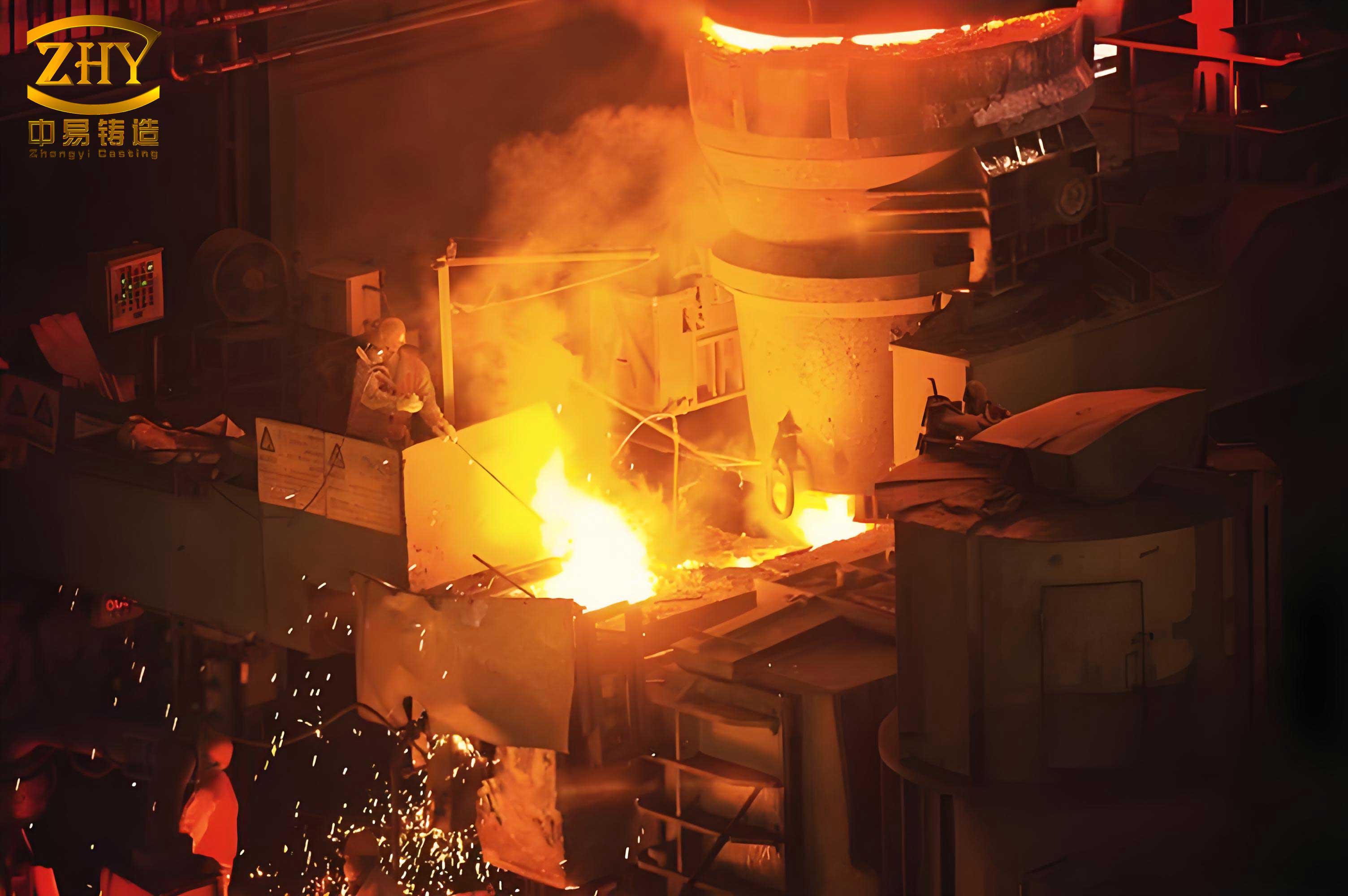
The coating was applied by brush in two layers, achieving a total thickness of 0.7 mm with excellent uniformity. The brushing performance was observed to be very good. After ignition, the coating surface cured within 5 seconds. The pouring temperature was 1,420 °C. Following pouring and holding, the mold was allowed to cool to 150–200 °C before shakeout. During the casting cleaning process, the coating exhibited excellent peelability, and the casting surface was clean and smooth. The cleaning time was substantially reduced, and the external chills were easily separated from the casting, greatly facilitating chill recovery and reuse.
Comparative performance data between the original coating system and the improved coating system are presented in Table 5, based on actual foundry test measurements and the requirements of GB/T 9439—2023 “Gray Iron Castings” and GB/T 6060.1—2018 “Surface Roughness Comparison Specimens—Part 1: Cast Surfaces.”
| Indicator | Before improvement | After improvement |
|---|---|---|
| Surface roughness Ra / μm | 25.0 | 12.5 |
| Sand adhesion area / % | 8.5 | <2 |
| Cleaning time / min | 45 | 25 |
| Chill recovery rate / % | 65 | >90 |
| Gas porosity defect rate (Φ > 2 mm) | Present | Absent |
The production validation results demonstrate that the improved coating system effectively addressed the challenges of adhesion, brushing performance, and sintering behavior on both sand mold surfaces and external chill metal surfaces. The coating exhibited excellent dual compatibility, resolving the longstanding issue of insufficient coating adhesion on chill surfaces and significantly improving the chill recovery rate. After casting, the coating was readily cleaned with excellent peelability, shortening the post-casting finishing and cleaning time. These results confirm that the developed coating formulation effectively satisfies practical production requirements in the sand casting foundry industry, delivering substantial engineering application value.
4. Conclusions
Based on the systematic experimental investigations and production validation conducted in this study, the following conclusions can be drawn:
(1) A composite modification approach combining lithiation, intercalation, and grafting was successfully applied to natural calcium-based bentonite. Characterization results confirmed that the modified bentonite exhibited significantly improved dispersibility and compatibility in the alcohol-based system, effectively enhancing the suspension stability of the alcohol-based casting coating.
(2) To address the insufficient adhesion balance between sand mold and metal chill surfaces in conventional alcohol-based coatings, an orthogonal experimental design was employed to systematically investigate the effects of particle size gradation, suspending agent content, and binder content. The optimal coating formulation was determined as: 250-mesh bauxite to 400-mesh bauxite mass ratio of 53:27, composite modified suspending agent content of 5%, and phenolic resin-PVB composite binder content of 2% (with a phenolic resin to PVB mass ratio of 2.5:1). This formulation achieved the best comprehensive performance, satisfying the requirements of “low viscosity-high suspension-good brushing performance,” while gas evolution and wear resistance remained within safe thresholds.
(3) Production validation in a large-scale sand casting foundry confirmed that the developed coating exhibits excellent dual compatibility on both sand mold and external chill surfaces. The coating effectively resolves the issue of insufficient adhesion on chill surfaces, substantially improving the chill recovery rate. After casting, the coating demonstrates excellent peelability and easy cleanability, significantly shortening post-casting finishing and cleaning time. The coating system successfully meets practical production requirements and demonstrates substantial engineering application value for the sand casting foundry industry.