
The traditional pedagogical approaches for teaching foundry practices, particularly gravity sand casting, have long relied on static textbooks, simplistic demonstrations, and constrained physical laboratory sessions. This model often fails to captivate students, provides limited hands-on opportunity due to cost and safety concerns, and struggles to convey the intricate, spatial, and procedural knowledge essential for mastering the craft. Physical labs for producing sand casting parts entail significant financial investment in equipment, materials, and space, alongside inherent risks from high-temperature metals, airborne particulates, and heavy tool handling. Consequently, there exists a pressing need for an innovative educational tool that bridges this experiential gap.
This article details the comprehensive development of a virtual reality (VR) training system designed to simulate the entire gravity sand casting process. The core objective is to create a safe, cost-effective, and highly interactive learning environment that allows users to repeatedly practice and visualize every step involved in creating sand casting parts. By leveraging modern software pipelines and VR technology, we transition from abstract description to embodied, interactive learning. The platform is built upon a core philosophy of fidelity to real-world procedures, strong user interactivity, and immersive visualization, aiming to transform how foundry education is delivered.
The fundamental process targeted for simulation is gravity sand casting, the most versatile and widely used method for producing metal components. It involves creating a cavity within a bonded sand mold that corresponds to the shape of the desired part. Molten metal is then poured under gravity into this cavity. The systematic procedure can be broken down into distinct stages, as summarized in the table below, each critical to the successful production of quality sand casting parts.
| Process Stage | Key Actions & Objectives | Virtual Training Focus |
|---|---|---|
| 1. Pattern Making | Design and create a replica (pattern) of the final part, accounting for shrinkage and machining allowances. | Visualization of pattern design principles; selection from a digital library of patterns for different sand casting parts. |
| 2. Mold Making | Prepare molding sand, place the pattern in a flask, pack sand around it, and carefully remove the pattern to leave a cavity. | Interactive simulation of sand ramming, tool use (rammer, trowel), and pattern drawing sequence. |
| 3. Gating System Setup | Carve channels (sprue, runner, gates) in the sand to allow molten metal to flow into the mold cavity. | Guided design and creation of gating system components, understanding their function. |
| 4. Core Making & Placement | Fabricate sand cores to define internal geometries of the sand casting parts and position them in the mold. | Assembly simulation, ensuring proper core placement and support. |
| 5. Melting & Pouring | Melt the alloy and pour it into the sprue until the mold is filled. | Visualization of metal flow, furnace operation, and safe pouring practices. |
| 6. Cooling & Solidification | Allow the metal to cool and solidify within the mold, a phase critical to the metallurgical properties. | Integration of thermal simulation data to visualize temperature fields and solidification fronts. |
| 7. Shakeout & Cleaning | Break away the sand mold, remove the casting, and cut off the gating system and flash. | Simulation of post-casting operations, resulting in the final virtual sand casting part. |
The development of this virtual platform required a synergistic technology stack, each component serving a specific purpose in the asset creation and system integration pipeline. The workflow was meticulously planned to ensure efficiency and high output quality for all digital assets representing tools, equipment, and sand casting parts.
| Development Phase | Primary Software/Tool | Core Function |
|---|---|---|
| 3D Modeling & Geometry Design | UG NX | Creation of precise, watertight 3D models for all physical entities: flasks, patterns (for various sand casting parts), tools, furnaces, etc. |
| Animation & Asset Enhancement | 3ds Max | Rigging and animating model movements (e.g., pattern drawing, pouring), applying realistic textures/materials, and pre-rendering complex sequences. |
| Physics-Based Process Simulation | Huazhu CAE Software | Numerical simulation of mold filling and solidification to generate scientific data on temperature distribution for sand casting parts. |
| Virtual System Integration & Logic | Unity3D Engine | The core platform for assembling all assets, programming interactivity (using C#), designing the UI, and building the final immersive application. |
| Immersive Display (Optional) | VR Headset (e.g., HTC VIVE) | Hardware to deliver a fully immersive first-person experience, enhancing spatial understanding of the casting setup. |
The initial and crucial phase was the creation of all digital 3D models. Using UG NX, a parametric and feature-based CAD software, we constructed highly accurate models. Special attention was paid to the patterns, which are the digital twins of the final sand casting parts. These models required specific design considerations, such as draft angles and shrinkage allowances, mirroring real-world pattern-making practice. The geometry of the gating system (sprue, runner, gates) was also modeled parametrically to allow for instructional variation. The complexity of the models was managed through mesh optimization to ensure smooth performance during real-time rendering in Unity3D without sacrificing visual fidelity for key components like the sand casting parts themselves.
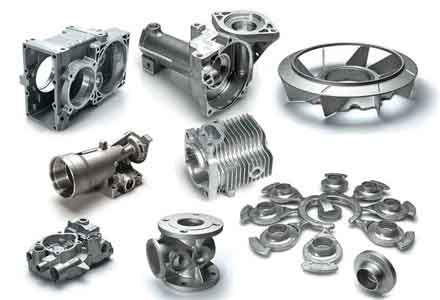
Subsequently, 3ds Max was employed to breathe life into the static models. This involved creating skeletal rigs for objects that required articulation (like the lid of a furnace or the movement of a tool) and defining precise animation sequences. For instance, the critical step of “pattern drawing” was animated frame by frame to show the careful, vertical removal of the pattern from the compacted sand. All animations were exported in the FBX format, preserving the hierarchy and keyframe data for seamless import into Unity3D. Furthermore, 3ds Max’s robust material and rendering system was used to apply realistic textures—such as the grainy appearance of sand, the metallic sheen of tools, and the wooden texture of patterns—greatly enhancing visual realism for all elements, especially the final sand casting parts.
To move beyond mere visual replication and incorporate scientific pedagogy, the platform integrated results from casting process simulation. Using the Huazhu CAE software, a dedicated finite element analysis tool for foundry processes, we simulated the pouring and solidification stage for selected sand casting parts. The process involves preparing the geometry (often in STL format), setting boundary conditions (pour temperature, mold material properties), and solving the governing equations for fluid flow and heat transfer. The core thermal equation solved is the heat conduction equation during solidification:
$$ \rho C_p \frac{\partial T}{\partial t} = \nabla \cdot (k \nabla T) + \dot{Q}_{latent} $$
where \( \rho \) is density, \( C_p \) is specific heat, \( T \) is temperature, \( t \) is time, \( k \) is thermal conductivity, and \( \dot{Q}_{latent} \) is the latent heat release rate due to phase change. The output of this simulation is a time-series dataset of temperature fields. This data was processed into visual assets—either as a sequence of images overlay or a color-mapped animation—that can be triggered within the virtual system after the “pouring” step. This allows learners to visualize unseen phenomena like the progression of the solidification front, the location of potential hot spots, or shrinkage porosity risks in the sand casting parts.
The Unity3D engine served as the central hub for integrating all components and building the interactive experience. The system architecture was designed with modularity and user flow in mind. Key modules include a Main Menu & Theory Section, a Process Walkthrough Module, a Free Practice Module, and a Simulation Visualization Module. The interactive logic was programmed using C# scripts, which are attached to GameObjects as components. These scripts handle a wide array of functionalities:
- User Interface (UI) Control: Managing button clicks, menu transitions, and information display.
- Animation State Control: Using Unity’s Animator Controller to break the long 3ds Max animations into discrete, triggerable states (e.g., “Start Ramming,” “Pour Metal”). User interaction, like clicking a “Next Step” button, triggers a state transition.
- Object Interaction: Scripts enable users to pick up, rotate, and inspect tools, patterns, and the resulting sand casting parts. Highlighting scripts provide visual cues for interactive objects.
- Camera Control: Allowing users to switch between predefined third-person views for overview and first-person views for detailed operation.
- Data Loading & Scene Management: Seamlessly loading different process stages and integrating the external simulation data for visualization.
A central design challenge was creating an intuitive yet comprehensive UI/UX. The interface employs a combination of on-screen buttons, contextual text instructions, and a procedural checklist. For example, in the mold-making stage, the UI might guide the user: “1. Select the Drag Flask from the rack. 2. Place the pattern for the [specific sand casting part] inside. 3. Select the Ramming Tool to compact the sand.” Each step is validated upon completion before the next is unlocked, ensuring structured learning.
The physics in Unity, while not simulating fluid dynamics at a CAE level, is used judiciously to enhance realism for object handling. Simple rigid body components and colliders are added to tools and small parts, so they can be “dropped” or interact with surfaces believably. The focus for process physics (metal flow, heat transfer) remains on the pre-computed CAE visualization, which is more accurate for educational purposes regarding the formation of sand casting parts.
Upon completion, the system can be built and deployed across multiple platforms. For this project, the primary deployment target was Windows PC, resulting in a standalone executable (.exe) file. This allows for easy distribution and use in computer labs. Furthermore, the project is configured to support VR headsets. By enabling the SteamVR or OpenXR plugins within Unity and configuring the camera rig, the experience can be transitioned into a fully immersive one. In VR mode, users can use motion controllers to virtually “grab” a shovel to fill the flask or “hold” the pattern, providing an unparalleled sense of scale and spatial understanding that is particularly beneficial for comprehending the assembly of complex molds for intricate sand casting parts.
The primary application of this platform is in academic and vocational training contexts. It serves as a precursor to physical lab work, ensuring students arrive with a solid procedural understanding and safety awareness. It also functions as a supplementary tool for remote learning or for institutions lacking extensive foundry facilities. The advantages over traditional methods are significant and multi-faceted, as outlined in the comparison below:
| Aspect | Traditional Training Method | VR-Based Virtual Training System |
|---|---|---|
| Safety | High risk: exposure to molten metal, fumes, heavy lifting, high-decibel noise. | Zero physical risk. Allows safe exploration of hazardous procedures. |
| Cost | Very high: requires dedicated space, furnaces, bulk sand, metal, tools, and waste management. | Primarily upfront development cost. Operational cost is negligible, allowing unlimited practice. |
| Accessibility & Scalability | Limited to lab schedules, number of workstations, and material availability. | Accessible anytime, anywhere on a standard PC. Scalable to any number of concurrent users. |
| Learning Outcome Depth | Limited by time and material; mistakes are costly and discourage experimentation. | Promotes exploration and learning from failure. Steps can be repeated, paused, and reviewed. Integrates scientific simulation data (e.g., thermal fields) impossible to see in real-time in a physical lab. |
| Visualization of Critical Phenomena | Internal processes like metal flow and solidification inside the mold are completely hidden. | Enables visualization of hidden processes through integrated CAE simulations, deeply explaining the formation of defects in sand casting parts. |
While the current system provides a robust foundation, the future development path is expansive. Potential enhancements include:
- Advanced Physics Interaction: Implementing real-time, simplified fluid simulation for the pouring phase to allow user-driven variations in pour speed and their visible consequences on the filling of the mold cavity for the sand casting part.
- Procedural Defect Generation: Linking user errors (e.g., incorrect gating design, poor ramming) algorithmically to the visual generation of corresponding defects (misruns, shrinkage porosity) on the virtual sand casting part during the “shakeout” phase.
- Multi-User Collaborative Mode: Enabling networked sessions where multiple trainees can work together in the same virtual foundry, one preparing the cope while another readies the drag, fostering teamwork.
- Assessment & Analytics Module: Integrating a backend system that tracks user actions, measures task completion time and accuracy, and generates performance reports for instructors.
- Expansion to Other Processes: Using the same framework to develop modules for investment casting, die casting, or forging, creating a comprehensive virtual manufacturing training suite.
In conclusion, the integration of virtual reality technology with the foundational principles of gravity sand casting has resulted in a powerful and transformative educational tool. This virtual training platform successfully addresses the major limitations of cost, safety, and accessibility inherent in traditional physical training methods. By providing an immersive, interactive, and risk-free environment, it enables deep procedural learning and conceptual understanding of every stage involved in producing sand casting parts. The combination of precise 3D modeling, controlled animation, interactive scripting, and integrated scientific simulation creates a holistic learning experience that is both engaging and instructionally rigorous. This approach represents a significant step forward in modernizing engineering education, aligning with digital transformation trends, and preparing a skilled workforce for advanced manufacturing environments. The platform’s modular architecture ensures it is not an endpoint but a adaptable foundation for continuous development, promising even richer and more effective virtual training experiences in the future.