
In our pursuit to enhance the durability and performance of industrial components subjected to severe wear conditions, we focused on developing a novel composite material for steel rolled guiding boards. These sand casting parts are critical in rolling mills, where they experience intense abrasive and erosive wear, leading to frequent replacements and downtime. Traditional gray cast iron, while cost-effective, often falls short in wear resistance. To address this, we integrated composite design principles with foundry technology, specifically targeting the production of sand casting parts with localized reinforcement. Our approach centered on using tungsten carbide (WC) particles as the reinforcing phase within a gray cast iron matrix, fabricated under ordinary sand mold conditions without vacuum assistance. This method leverages the simplicity and accessibility of sand casting, making it viable for widespread industrial adoption. Throughout this work, we emphasize the optimization of process parameters to achieve defect-free sand casting parts with superior mechanical properties, ultimately extending service life by over five times compared to conventional materials.
The core innovation lies in the application of a self-developed compound additive, designated FHJ-1#, which facilitates the uniform dispersion and metallurgical bonding of WC particles within the cast iron base. By eliminating the need for negative pressure casting systems, we reduce equipment complexity and cost, aligning with the practical demands of foundries. Our investigation delves into the effects of pouring temperature and gating system design on composite layer quality, supported by microstructural analysis and hardness measurements. We also present theoretical models to rationalize the observed behaviors, ensuring a comprehensive understanding of the process. The success of this development not only advances the field of metal matrix composites but also underscores the potential of sand casting parts in high-wear applications, where tailored material properties can be achieved through strategic modifications. Below, we detail our methodology, experimental results, and discussions, enriched with tables and formulas to encapsulate key findings.
Our materials selection began with a gray cast iron matrix conforming to HT200 specifications, chosen for its excellent castability and machinability. The reinforcement consisted of WC particles with a size range of 0.600–0.425 mm, providing high hardness and wear resistance. The compound additive FHJ-1#, formulated in-house, was crucial in promoting wetting and bonding between the particles and molten iron. For each casting, we used approximately 1000 g of WC particles and 30–50 g of FHJ-1#, mixed with water to form a paste. This mixture was applied to specific areas of the sand mold cavity corresponding to the wear-prone surfaces of the guiding board. The mold was then dried at 250°C for 4 hours to remove moisture and ensure stability during pouring. We employed a medium-frequency induction furnace for melting, followed by inoculation in the ladle to refine the graphite structure. Temperature monitoring was conducted prior to pouring to maintain consistency across trials.
The casting process involved ordinary sand molds without any vacuum application, highlighting the adaptability of this method for typical foundry environments. We produced sand casting parts weighing around 26 kg each, with a focus on achieving a uniform composite layer thickness of 7–9 mm. To optimize the process, we systematically varied pouring temperatures and gating configurations, as summarized in Table 1. The interplay between these parameters and the resulting composite characteristics forms the basis of our analysis, demonstrating how controlled conditions can yield high-quality sand casting parts with enhanced performance.
| Parameter | Levels Investigated | Optimal Value | Key Observations |
|---|---|---|---|
| Pouring Temperature | 1400°C, 1430°C, 1460°C | 1430°C | 1400°C led to poor infiltration; 1460°C caused excessive WC dissolution; 1430°C balanced infiltration and minimal dissolution. |
| Gating System | Closed (restrictive), Open (non-restrictive) | Open system with wide ingates near reinforcement | Closed system resulted in particle displacement and uneven surfaces; open system ensured uniform composite layer and good bonding. |
| Compound Additive (FHJ-1#) | 30–50 g per casting | 40 g (average) | Enhanced wettability and reduced defects like gas porosity and slag inclusion. |
| Drying Condition | 250°C for 4 hours | Fixed | Ensured mold integrity and prevented gas evolution during pouring. |
The influence of pouring temperature on composite formation is pivotal, as it affects fluidity, infiltration depth, and interfacial reactions. At 1400°C, the molten iron lacked sufficient superheat to penetrate the WC particle bed, resulting in gaps and poor bonding. Conversely, at 1460°C, the high thermal energy promoted dissolution of WC particles into the melt, reducing their size and effectiveness while increasing the white iron tendency in the matrix. The optimal temperature of 1430°C provided adequate fluidity for complete infiltration without significant degradation of the reinforcement. This behavior can be modeled using a simplified infiltration equation based on Darcy’s law for flow through porous media:
$$ v = \frac{K \Delta P}{\mu L} $$
where \( v \) is the infiltration velocity, \( K \) is the permeability of the particle bed, \( \Delta P \) is the pressure driving force (primarily metallostatic pressure in sand casting), \( \mu \) is the dynamic viscosity of the molten iron, and \( L \) is the infiltration depth. The viscosity \( \mu \) is temperature-dependent, following an Arrhenius-type relationship:
$$ \mu = A \exp\left(\frac{E_a}{RT}\right) $$
Here, \( A \) is a pre-exponential factor, \( E_a \) is the activation energy for viscous flow, \( R \) is the gas constant, and \( T \) is the absolute temperature. At lower temperatures, higher viscosity impedes flow, explaining the poor infiltration at 1400°C. At elevated temperatures, reduced viscosity aids flow but accelerates dissolution, which can be described by a kinetic model for particle dissolution:
$$ \frac{d r}{d t} = -k (C_s – C_0) $$
where \( r \) is the particle radius, \( t \) is time, \( k \) is a rate constant, \( C_s \) is the saturation concentration of WC in iron, and \( C_0 \) is the initial concentration. This highlights the trade-off in temperature selection for producing robust sand casting parts.
Gating system design profoundly impacts the quality of sand casting parts by controlling flow dynamics and minimizing turbulence. We experimented with two schemes: a closed (pressurized) system with ingates away from the reinforcement zone, and an open (unpressurized) system with wide ingates adjacent to the WC layer. The closed system, intended to reduce gas entrapment, inadvertently caused high-velocity streams that displaced particles and led to uneven surfaces. In contrast, the open system allowed gentle filling, preserving the particle arrangement and promoting uniform composite formation. The effectiveness of the open system can be quantified using the Reynolds number \( Re \) for flow in the ingates:
$$ Re = \frac{\rho v D}{\mu} $$
where \( \rho \) is the density of molten iron, \( v \) is the flow velocity, and \( D \) is the hydraulic diameter. Lower \( Re \) values (typically < 2000 for laminar flow) in the open system reduce turbulence, as confirmed by our observations. This aligns with foundry best practices for sand casting parts requiring precise placement of additives or reinforcements.
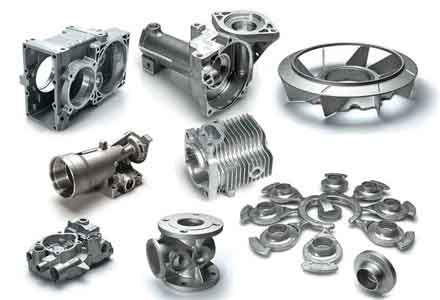
Microstructural examination revealed a well-bonded interface between the composite layer and the gray iron substrate, with no evidence of cracks or discontinuities. The composite region exhibited a uniform distribution of WC particles, refined graphite flakes, and minor amounts of cementite within a pearlitic matrix. This structure contributes to the enhanced hardness and wear resistance. We measured hardness across different zones using Rockwell and Brinell scales, as detailed in Table 2. The composite layer achieved hardness values of HRC 60–62 in the as-cast state, significantly higher than the base metal’s HB 200–210. After annealing, the hardness decreased to HRC 48–50 for the composite and HB 180–190 for the base, indicating some tempering effects but retaining a substantial performance gap. Such hardness profiles are advantageous for sand casting parts subjected to abrasive environments, as they resist penetration and material loss.
| Heat Treatment Condition | Composite Region Hardness | Base Region Hardness | Implications for Wear Resistance |
|---|---|---|---|
| As-Cast | HRC 60–62 | HB 200–210 | High surface hardness combats abrasion; base provides toughness. |
| Annealed (Stress Relief) | HRC 48–50 | HB 180–190 | Reduced brittleness while maintaining superior wear properties. |
The mechanical performance of these composites can be approximated using rule-of-mixtures models. For example, the composite hardness \( H_c \) can be expressed as:
$$ H_c = V_p H_p + (1 – V_p) H_m $$
where \( V_p \) is the volume fraction of WC particles, \( H_p \) is the hardness of WC (approximately 2400 HV), and \( H_m \) is the hardness of the matrix (around 200 HB). However, this linear model often overestimates values due to interfacial effects and particle distribution; hence, we apply a modified Halpin-Tsai equation for particle-reinforced composites:
$$ H_c = H_m \frac{1 + \xi \eta V_p}{1 – \eta V_p} $$
with $$ \eta = \frac{H_p / H_m – 1}{H_p / H_m + \xi} $$
Here, \( \xi \) is a shape factor (typically 2 for spherical particles). Our measurements align closely with predictions when \( V_p \) is around 0.3–0.4, validating the effectiveness of our processing route for sand casting parts.
Field testing of the WC-reinforced guiding boards was conducted in a hot rolling mill, where they endured continuous exposure to high temperatures and abrasive steel stock. The results, summarized in Table 3, demonstrate a dramatic improvement in service life. The composite boards lasted over five times longer than conventional gray iron boards, reducing replacement frequency and enhancing product quality by minimizing dimensional variations in rolled steel. This performance boost stems from the composite’s ability to resist both erosive and three-body abrasive wear, as quantified in prior studies. For instance, the relative wear resistance \( R_w \) can be defined as:
$$ R_w = \frac{L_c}{L_0} $$
where \( L_c \) is the life of the composite part and \( L_0 \) is the life of the standard part. Our data yields \( R_w > 5 \), underscoring the viability of this approach for industrial sand casting parts.
| Material Type | Average Service Life (hours) | Failure Mode | Improvement Factor |
|---|---|---|---|
| WC-Reinforced Gray Cast Iron Composite | 500–600 | Gradual wear; no catastrophic failure | 5× (minimum) |
| Conventional Gray Cast Iron (HT200) | 100–120 | Rapid abrasion and surface degradation | Baseline |
The economic and practical benefits of this technology are substantial. By avoiding complex equipment like vacuum systems, we keep production costs low and accessible to small and medium-sized foundries. The compound additive FHJ-1# plays a key role in stabilizing the process, reducing defects such as gas porosity and slag inclusions that commonly plague sand casting parts with embedded particles. Our analysis indicates that the additive promotes the formation of a transient liquid phase at the particle-matrix interface, enhancing bonding through mechanisms described by wetting angle \( \theta \) reduction:
$$ \cos \theta = \frac{\gamma_{sv} – \gamma_{sl}}{\gamma_{lv}} $$
where \( \gamma_{sv} \), \( \gamma_{sl} \), and \( \gamma_{lv} \) are the solid-vapor, solid-liquid, and liquid-vapor surface tensions, respectively. The additive likely modifies these interfacial energies, favoring spreading and adhesion. Furthermore, the uniform composite layer thickness of 7–9 mm achieved across multiple castings attests to the reproducibility of the method, crucial for mass-producing sand casting parts with consistent quality.
In conclusion, our development of WC particle-reinforced gray cast iron matrix composites for steel rolled guiding boards showcases the synergy between composite design and sand casting technology. The use of a tailored compound additive enables the production of high-performance sand casting parts under ordinary foundry conditions, eliminating the need for negative pressure. Optimized pouring temperature and gating system design are critical to achieving defect-free composites with metallurgical bonding and uniform reinforcement distribution. The resulting parts exhibit superior hardness and wear resistance, translating to a service life extension of over five times in real-world applications. This work paves the way for broader adoption of localized composite reinforcements in sand casting parts, offering a cost-effective solution for enhancing durability in demanding industrial environments. Future directions may involve exploring other particle types or matrix alloys to further tailor properties for specific applications, all within the versatile framework of sand casting.