
Lost foam castings have become a widely adopted near‑net‑shape manufacturing method, especially for producing complex components such as engine blocks and machine tool beds from gray cast iron. However, the conventional lost foam casting process often leads to coarse primary microstructures and inferior mechanical properties due to the high pouring temperature required to decompose the foam pattern and the relatively slow cooling rate in unbonded sand molds. To overcome these limitations, researchers have introduced mechanical vibration during solidification as a physical refinement technique. The application of vibration in lost foam castings not only enhances melt fluidity but also promotes grain refinement and modifies phase morphology. In this study, I systematically investigated the influence of vibration amplitude on the microstructure and mechanical properties of HT100 gray cast iron produced by lost foam castings, with the aim of identifying the optimal amplitude for property improvement.
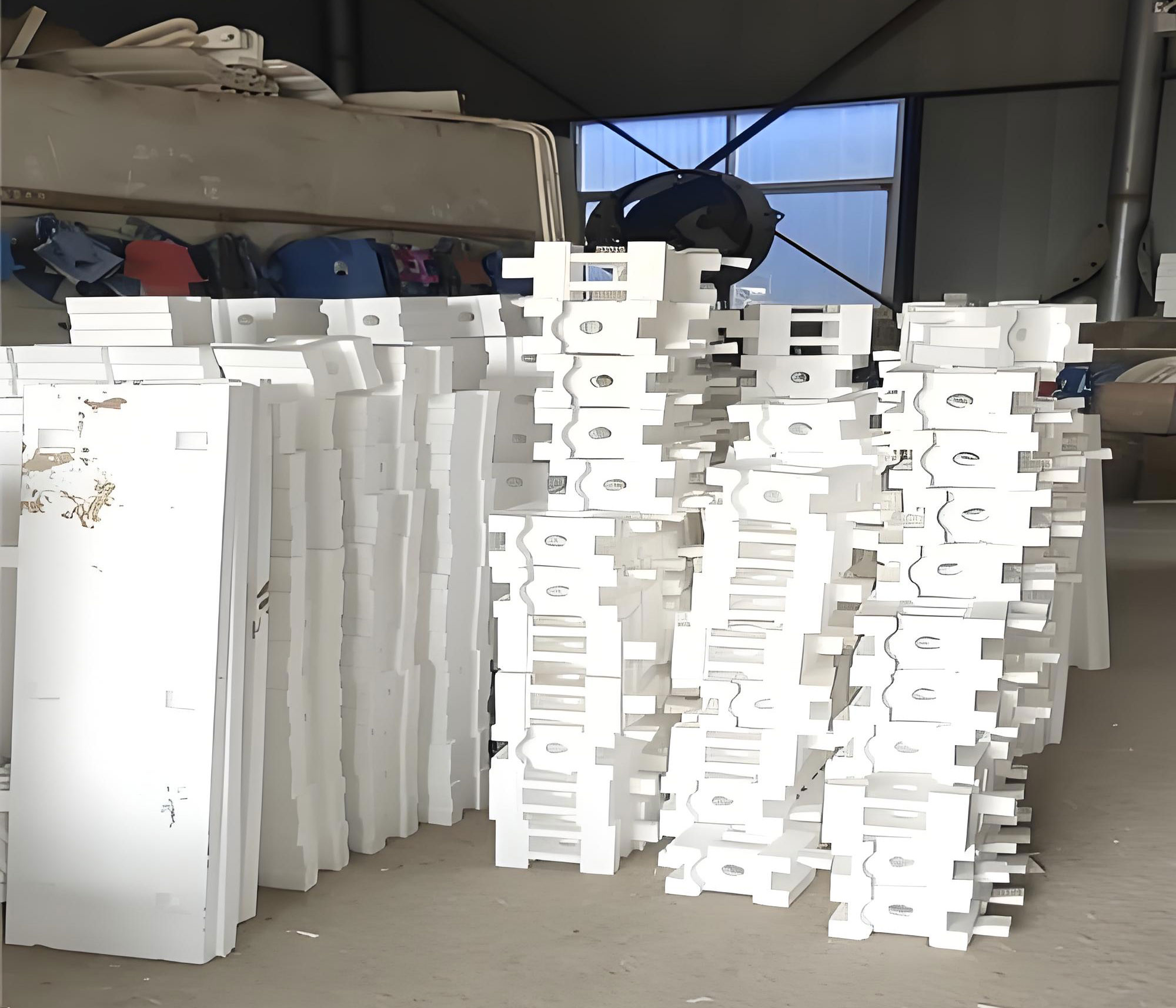
1. Introduction
Gray cast iron is a multi‑phase material consisting of flake graphite, ferrite, and cementite. Its mechanical behavior is sensitive to the morphology, size, and distribution of graphite flakes as well as the characteristics of the austenite (pearlite) matrix. In lost foam castings, the foam pattern decomposes into gas, which can cause defects like carburization or gas porosity, and the solidification front advances slower than in conventional sand casting. Mechanical vibration applied during solidification induces forced convection, breaks dendritic arms, and promotes heterogeneous nucleation. Previous studies on lost foam castings of magnesium and aluminum alloys have demonstrated significant grain refinement and enhanced tensile properties with appropriate vibration parameters. However, limited work has been reported on gray cast iron subjected to vibration during lost foam castings. The present work focuses on the effect of amplitude while keeping frequency constant, as amplitude directly governs the intensity of mechanical disturbance in the melt.
2. Experimental Procedure
The material used was HT100 gray cast iron with the nominal composition (mass fraction) given in Table 1. The melt was prepared in a 1‑ton medium‑frequency induction furnace using steel scrap, pig iron, ferromanganese, recarburizer, and Fe‑75Si as raw materials. After melting at 1500 °C, the composition was adjusted, and the melt was inoculated with 1.4% (by weight) of Fe‑75Si. Y‑shaped test blocks were produced by lost foam castings with a constant vibration frequency of 35 Hz and amplitudes of 0, 2, 3, and 4 mm. The vibration was applied throughout solidification.
| C | Si | Mn | P | S | Fe |
|---|---|---|---|---|---|
| 3.50 | 2.60 | 0.50 | <0.07 | <0.06 | Bal. |
Metallographic samples were taken from the same location of each Y‑block. Graphite morphology was observed without etching, while the primary austenite and pearlite were revealed using 4% nital. Image analysis software was used to measure graphite area fraction and length (mean of six fields). Brinell hardness was measured with a 10 mm tungsten carbide ball and 1000 kg load, taking the average of three valid readings. Tensile tests were conducted at room temperature at a crosshead speed of 1 mm/min using specimens with dimensions according to a standard. Fracture surfaces were examined by scanning electron microscopy.
3. Results and Discussion
3.1 Effect of Amplitude on Graphite Morphology
Figure 1 (not cited by number; refer to micrographs) illustrates the graphite morphology obtained at different amplitudes. At 0 mm, a few blocky C‑type graphite flakes were observed. As amplitude increased to 2 mm, the graphite flakes became shorter and thinner, and the proportion of type A flake graphite increased. At 3 mm, the graphite length reached a minimum, while at 4 mm, the flakes were again slightly longer. Table 2 summarizes the quantitative analysis of graphite parameters.
| Amplitude (mm) | Graphite area ratio (%) | Actual graphite length (mm) |
|---|---|---|
| 0 | 11.9 | 0.36 |
| 2 | 8.7 | 0.31 |
| 3 | 12.3 | 0.19 |
| 4 | 9.2 | 0.35 |
The reduction in graphite size at moderate amplitudes can be attributed to enhanced convection that reduces the concentration gradient around growing graphite and promotes fragmentation of nascent flakes. The slight increase in area ratio at 3 mm suggests that very strong vibration may remelt fine graphite arms and allow coarsening of remaining flakes.
3.2 Effect of Amplitude on Primary Austenite
The primary austenite morphology evolved significantly with amplitude. At 0 mm, the microstructure exhibited coarse columnar dendrites and some fine equiaxed cells. At 2 mm, columnar grains disappeared and well‑developed cellular austenite dominated, indicating effective dendrite fragmentation. At 3 mm, the cellular structure was less developed, and at 4 mm, the austenite appeared as coarse, stunted cells without a network skeleton. The fragmentation of secondary dendrite arms under vibration can be described by the resultant stress acting at the root of a dendritic arm, as given by Equation (1):
$$
\sigma_{\text{total}} = \sigma_{\text{ZU}}(L) + \sigma_{\alpha}(L) = \frac{24\eta L^2}{D_r^3} V + \frac{4\rho L^2}{D_r} \alpha
$$
where \(\eta\) is melt viscosity, \(L\) is dendrite arm length (proportional to amplitude), \(D_r\) is arm radius, \(V\) is melt flow velocity, \(\rho\) is dendrite density, and \(\alpha\) is acceleration. Increasing amplitude increases \(L\) and \(\alpha\), thus raising the total stress and promoting arm fragmentation. However, at very high amplitude, the excessive melt flow may cause remelting of fine fragments, resulting in coarser austenite.
3.3 Effect of Amplitude on Matrix Structure
The matrix of all specimens consisted of pearlite and graphite. At 0 mm, pearlite showed coarse cementite lamellae. At 2 mm, the lamellae became thicker and interlamellar spacing increased, indicating a tendency toward spheroidization of cementite. In contrast, at 3 mm and 4 mm, the pearlite exhibited finer spacing. The change in cementite morphology is related to the altered solidification cooling rate under vibration. Mechanical vibration increases the undercooling ahead of the solidification front, which can refine pearlite, but also enhances carbon diffusion in the solid state, promoting coarsening when the vibration is moderate.
3.4 Effect of Amplitude on Mechanical Properties
The Brinell hardness, tensile strength, and elongation all followed a similar trend: they increased from 0 mm to a maximum and then decreased at higher amplitudes (Table 3). The highest hardness (160 HBW) was obtained at 3 mm, whereas the best tensile strength (147.51 MPa) and elongation (1.17%) were achieved at 2 mm.
| Amplitude (mm) | Hardness (HBW) | Tensile strength (MPa) | Elongation (%) |
|---|---|---|---|
| 0 | 145 | 108.4 | 0.72 |
| 2 | 156 | 147.51 | 1.17 |
| 3 | 160 | 135.6 | 0.95 |
| 4 | 155 | 108.4 | 0.91 |
The improvement in strength and ductility at the optimal amplitude (2 mm) is attributed to the fine cellular austenite network that acts as a load‑bearing skeleton, combined with the shortest and thinnest graphite flakes that reduce stress concentration. The hardness peak at 3 mm corresponds to the finest pearlite spacing, but the deterioration of austenite morphology leads to lower tensile strength. The fracture surfaces (observed under SEM) revealed that at 0 mm, large pores were present, while at 2 mm, a dimple‑like morphology indicated ductile tearing; at higher amplitudes, dispersed cavities reappeared, corresponding to lower elongation.
4. Conclusions
Based on the experimental results obtained from lost foam castings of HT100 gray cast iron under mechanical vibration, the following conclusions can be drawn:
- Increasing amplitude from 0 to 4 mm increased the proportion of short, thin type‑A flake graphite. The primary austenite transformed from coarse columnar to cellular structure and then became coarse again at excessive amplitude.
- At an amplitude of 2 mm, pearlite lamellae coarsened and interlamellar spacing increased, indicating a transition from lamellar to granular cementite.
- The hardness, tensile strength, and elongation all increased first and then decreased with increasing amplitude. The maximum hardness (160 HBW) was achieved at 3 mm, while the highest tensile strength (147.51 MPa) and elongation (1.17%) were obtained at 2 mm.
- The property variations are primarily governed by the morphology and distribution of primary austenite and the characteristics of type‑A graphite flakes in the lost foam castings.