
The demand for renewable energy has propelled the widespread installation of wind turbines in diverse environments, including demanding coastal regions. The performance and longevity of these installations critically depend on the reliability of their critical casting parts, such as wind turbine hubs, main shafts, and planetary carriers. These large, structurally integral casting parts are predominantly manufactured from ductile iron grades like QT400-18L, prized for their excellent castability, good machinability, and favorable combination of strength and ductility.
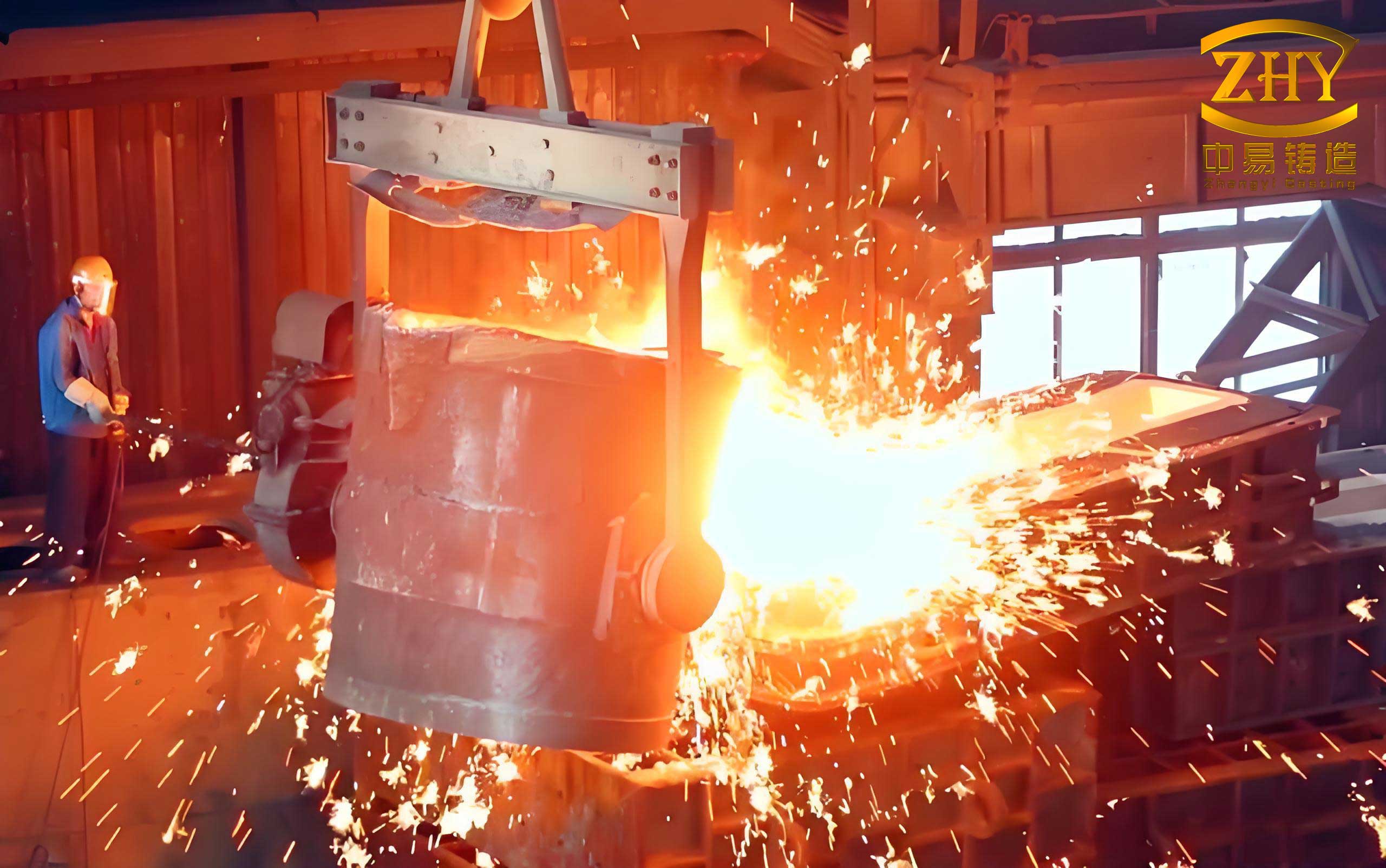
However, the operational environment for coastal wind turbine casting parts is particularly aggressive. Constant exposure to salt-laden atmospheres, high humidity, and cyclic wet-dry conditions from seawater, tides, and salt spray creates a severe corrosion challenge. These critical casting parts are expected to function reliably for 20 years or more with minimal maintenance, making enhanced corrosion resistance an essential property alongside high mechanical performance. Therefore, developing strategies to improve the atmospheric corrosion resistance of ductile iron casting parts without compromising their inherent mechanical properties is a key research focus for extending service life and reducing lifecycle costs.
This investigation explores a novel approach to enhance the durability of QT400-18L casting parts intended for coastal service. The methodology involves the introduction of multi-scale ceramic particles (MSCP) into the molten iron prior to casting. The core objective is to systematically evaluate the influence of these particles on the corrosion behavior of the iron under controlled humidity variations, simulating coastal atmospheric conditions. By analyzing corrosion rates, product formation, and microstructural evolution, we aim to elucidate the mechanisms through which MSCP additions improve corrosion resistance, thereby providing a new pathway for manufacturing more durable wind turbine casting parts.
1. Materials and Experimental Methodology
The base material for all experiments was a commercially produced ductile iron conforming to the grade QT400-18L. The chemical composition of the iron, determined via optical emission spectrometry, is summarized in Table 1. This composition is typical for ferritic ductile irons, with high carbon and silicon content to ensure graphitization and a fully ferritic matrix, and low levels of pearlite-promoting elements like manganese.
| Element | Composition Range (wt.%) |
|---|---|
| C | 3.56 – 3.68 |
| Si | 2.19 – 2.40 |
| Mn | 0.148 – 0.150 |
| P | 0.030 – 0.032 |
| S | 0.010 – 0.012 |
| Mg | 0.029 – 0.062 |
| Re (Rare Earth) | 0.032 – 0.047 |
| Fe | Balance |
The key modifying agent was multi-scale ceramic particles (MSCP), specifically surface-activated, composite silicon carbide (SiC) particles with a designed distribution of sizes. The particles were added to the molten iron in varying mass fractions: 0.00% (reference), 0.05%, 0.10%, and 0.15%. Their size distribution and specific surface area were characterized using laser diffraction particle size analysis (Mastersizer 2000).
Test castings were produced under controlled foundry conditions. From the central region of these castings, samples were extracted and machined into disc-shaped specimens with dimensions of ø25 mm × 3 mm. These specimens served as the representative test pieces for all subsequent corrosion and microstructural evaluations, simulating sections from actual wind turbine casting parts.
The corrosion testing regimen was designed to simulate the humidity fluctuations experienced in coastal environments. A “constant temperature, variable humidity” test was conducted according to the principles outlined in relevant environmental testing standards. Tests were performed in a programmable climate chamber (HS-100A) at a constant temperature of 60°C for a total duration of 168 hours (7 days). The relative humidity (RH) was varied across different test runs. The experimental matrix detailing the MSCP content and corresponding test humidity for each specimen group is presented in Table 2. For statistical reliability, three parallel specimens were tested under identical conditions, and reported results are the average of these triplicates.
| MSCP Addition (wt.%) | Specimen ID | Test Humidity (RH%) |
|---|---|---|
| 0.00 (Reference) | Ref-1 | 60 |
| Ref-2 | 80 | |
| Ref-3 | 90 | |
| Ref-4 | 98 | |
| 0.05 | MSCP-05-1 | 60 |
| MSCP-05-2 | 80 | |
| MSCP-05-3 | 90 | |
| MSCP-05-4 | 98 | |
| 0.10 | MSCP-10-1 | 60 |
| MSCP-10-2 | 80 | |
| MSCP-10-3 | 90 | |
| MSCP-10-4 | 98 | |
| 0.15 | MSCP-15-1 | 60 |
| MSCP-15-2 | 80 | |
| MSCP-15-3 | 90 | |
| MSCP-15-4 | 98 |
Post-corrosion, the specimens were carefully cleaned according to standard procedures to remove loose corrosion products without attacking the sound metal substrate. The corrosion rate was quantitatively assessed using the weight loss method, a fundamental metric for evaluating the degradation of metallic casting parts. The corrosion rate \( V \) was calculated using the following formula:
$$V = \frac{M_1 – M_2}{A \cdot t}$$
Where:
\( V \) is the average corrosion rate in \( g \cdot m^{-2} \cdot h^{-1} \),
\( M_1 \) is the initial mass of the specimen (g) before corrosion,
\( M_2 \) is the final mass of the specimen (g) after cleaning,
\( A \) is the total exposed surface area of the specimen (\( m^2 \)),
\( t \) is the total exposure time (hours).
A comprehensive materials characterization suite was employed. The microstructure of both as-cast and corroded specimens was examined using scanning electron microscopy (SEM). Energy-dispersive X-ray spectroscopy (EDS) attached to the SEM was used for elemental analysis of corrosion products and specific microstructural features. The phase composition of the corrosion scales was identified using X-ray diffraction (XRD). Furthermore, quantitative metallography was performed on polished as-cast samples using image analysis software in accordance with standard practices to determine key parameters: graphite nodularity grade, graphite nodule size, and the volume fraction of the ferritic matrix. This multi-faceted analytical approach allows for a direct correlation between the initial microstructure imparted by the MSCP and the subsequent corrosion performance of the casting parts material.
2. Results and Analysis
2.1 Influence of MSCP on Graphite Morphology
The microstructure of the base QT400-18L revealed the characteristic spheroidal graphite in a ferritic matrix. However, in the reference material (0% MSCP), the graphite nodules exhibited non-uniform size distribution and moderate sphericity, with occasional vermicular (worm-like) graphite present. The addition of MSCP induced a significant and consistent refinement and improvement in graphite morphology. The nodules became noticeably smaller and more uniformly spherical. Quantitative image analysis confirmed these observations, with the results compiled in Table 3.
| MSCP Addition (wt.%) | Nodularity Grade | Nodule Count (per mm²) | Avg. Nodule Diameter (µm) |
|---|---|---|---|
| 0.00 | 4 | ~120 | 45-50 |
| 0.05 | 3 | ~185 | 35-40 |
| 0.10 | 2 | ~210 | 30-35 |
| 0.15 | 3 | ~195 | 32-37 |
The data indicates an optimum MSCP addition level of 0.10 wt.%, yielding the highest nodularity grade (Grade 2), the highest nodule count, and the smallest average nodule size. At 0.05% and 0.15%, the refinement effect was still pronounced but slightly less effective than at 0.10%. This suggests that the activated MSCP particles act as potent heterogeneous nucleation sites for graphite during solidification, promoting a finer and more uniform distribution of graphite nodules. This refined graphite structure is a critical factor for the performance of ductile iron casting parts, influencing not only mechanical properties but also corrosion initiation, as will be discussed.
2.2 Influence of MSCP on Matrix Structure
The matrix of all investigated materials was predominantly ferritic, as expected for QT400-18L, with minor amounts of pearlite. Image analysis was used to quantify the ferrite volume fraction, with results presented in Table 4. The addition of MSCP consistently led to an increase in the ferrite content compared to the reference material.
| MSCP Addition (wt.%) | Ferrite Content (Vol.%) | Pearlite Content (Vol.%) |
|---|---|---|
| 0.00 | 79.2 ± 1.5 | 20.8 ± 1.5 |
| 0.05 | 86.4 ± 1.2 | 13.6 ± 1.2 |
| 0.10 | 85.8 ± 1.3 | 14.2 ± 1.3 |
| 0.15 | 87.0 ± 1.1 | 13.0 ± 1.1 |
The increase in ferrite content can be attributed to the graphitizing effect of silicon in the MSCP or its surface coatings, and potentially to the refinement of microstructure which can alter local solidification kinetics and micro-segregation patterns. Since ferrite and pearlite have different electrochemical potentials, this shift in phase balance has direct implications for the corrosion behavior of the casting parts.
2.3 Corrosion Rate as a Function of Humidity and MSCP Content
The corrosion rates calculated from the weight loss measurements are graphically presented in Figure 1 (conceptual plot). The data reveals two fundamental trends:
- Humidity Dependence: For all material variants, the corrosion rate increased with increasing relative humidity. This is a classic response, as higher humidity facilitates the formation and persistence of the aqueous electrolyte layer necessary for atmospheric corrosion.
- MSCP Influence and Critical Humidity Threshold: The most significant finding is the differential effect of MSCP based on humidity level. Below approximately 80% RH, the corrosion rates for all materials, with and without MSCP, were relatively low and increased at a similar, gradual rate. Above this 80% RH threshold, a dramatic divergence occurred. While the corrosion rate of the reference material increased sharply, the materials containing MSCP showed a markedly attenuated increase.
The quantitative corrosion rate data at key humidity levels is summarized in Table 5 to illustrate this divergence clearly.
| MSCP Addition (wt.%) | Corrosion Rate @ 80% RH, 60°C (g·m⁻²·h⁻¹) | Corrosion Rate @ 98% RH, 60°C (g·m⁻²·h⁻¹) | % Reduction vs. Ref. @ 98% RH |
|---|---|---|---|
| 0.00 (Ref) | 0.0032 | 0.0099 | – |
| 0.05 | 0.0031 | 0.0089 | 10.1% |
| 0.10 | 0.0029 | 0.0078 | 21.2% |
| 0.15 | 0.0028 | 0.0070 | 29.3% |
The existence of a critical humidity拐点 (around 80% RH) is consistent with established atmospheric corrosion theory. Below this level, the adsorbed moisture film is thin and discontinuous, limiting oxygen diffusion and the overall kinetics of the electrochemical corrosion cell. Above this critical point, thicker, more continuous electrolyte layers form, enabling rapid galvanic corrosion. The MSCP-modified materials demonstrate superior resistance specifically under these highly aggressive, high-humidity conditions most relevant to coastal service for wind turbine casting parts. The 0.15% MSCP addition provided the greatest benefit, reducing the corrosion rate by nearly 30% at 98% RH compared to the standard QT400-18L.
2.4 Analysis of Corrosion Products and Morphology
SEM examination of the corroded surfaces revealed distinct morphological features. The extent of corrosion correlated with the MSCP content and test humidity. The reference and 0.05% MSCP samples tested at high humidity (e.g., 80% RH and above) showed extensive, thick, and patchy corrosion product layers. In contrast, samples with 0.10% and 0.15% MSCP exhibited fewer, more discrete corrosion product clusters.
A striking and recurrent feature was the localization of corrosion products around the graphite nodules. In many cases, these products formed distinct, concentric “double-ring” patterns encircling the graphite sites. EDS point analysis on these rings consistently detected high oxygen and iron signals, along with carbon from the underlying graphite. XRD analysis of the scraped corrosion products identified them primarily as various iron oxides and hydroxides, including FeO (Wüstite), Fe₂O₃ (Hematite), and Fe₃O₄ (Magnetite). The relative intensity of the XRD peaks was lower for the MSCP-containing samples, indicating a lesser quantity of crystalline corrosion products formed, which aligns with their lower weight loss.
The formation of the “double-ring” corrosion pattern can be explained by micro-droplet corrosion phenomena, which are crucial in the atmospheric corrosion of casting parts. The interface between the graphite nodule (cathode) and the ferritic matrix (anode) is a site of high electrochemical activity and surface energy. Condensed moisture preferentially adsorbs and stabilizes at such active sites, forming a primary micro-droplet. As corrosion initiates, the local chemistry changes, with an increase in metal ion (Fe²⁺) concentration. This creates a concentration gradient, leading to the outward diffusion of ions. A secondary ring of smaller micro-droplets can form around the primary one due to this diffusion and local humidity gradients, leading to the observed double-ring pattern of corrosion product deposition. The more irregular the graphite-matrix interface, the more prone it is to such localized corrosion initiation and propagation. The MSCP-induced refinement and spheroidization of graphite create a smoother, less active interface, thereby mitigating this localized attack mechanism.
3. Discussion: Mechanisms of Corrosion Enhancement by MSCP
The integration of multi-scale ceramic particles into QT400-18L casting parts confers improved atmospheric corrosion resistance through a synergistic combination of microstructural modification and electrochemical effects. The mechanisms can be summarized as follows:
1. Microstructural Refinement and Interface Optimization:
The primary action of the activated MSCP is to refine the as-cast microstructure. By providing abundant nucleation sites, they promote the formation of a larger population of smaller, more spherical graphite nodules. This refinement has a dual beneficial effect on corrosion:
- Reduced Cathodic Area: Graphite acts as an efficient cathode in the iron-graphite galvanic couple. A larger number of smaller nodules distributes the cathodic sites more uniformly and may reduce their effective collective area compared to fewer, larger, or irregular nodules, potentially moderating the cathodic reaction kinetics (\( O_2 + 2H_2O + 4e^- \rightarrow 4OH^- \)).
- Smoothened Graphite-Matrix Interface: Improved nodularity creates a cleaner, less defective interfacial boundary between the graphite (cathode) and the ferritic matrix (anode). This smoother interface is less susceptible to the preferential adsorption of moisture and the initiation of concentrated micro-droplet corrosion, directly countering the formation of severe pit-like attacks around graphite.
2. Matrix Phase Stabilization and Galvanic Mitigation:
The MSCP addition promotes a higher volume fraction of ferrite in the matrix. In ductile iron, the pearlitic constituent itself forms a micro-galvanic cell where the ferrite lamellae (anode) corrode preferentially relative to the cementite lamellae (cathode). Therefore, by reducing the pearlite content, the MSCP-modified material inherently reduces the number of these intrinsic micro-couples within the matrix. The overall corrosion process becomes less driven by these internal galvanic effects. The relationship between phase fraction and galvanic current can be conceptually considered. If we model the corrosion rate as being partly proportional to the area of active anodic phases in galvanic contact with cathodic phases, reducing the pearlite area fraction directly reduces this component of corrosion.
3. Enhanced Surface Stability and Passivation:
The activated ceramic particles may contain or promote the formation of stable, protective oxides on the metal surface. Elements from the particle coatings or reactions could incorporate into the initial oxide layer that forms on the ferrite grains, making it more adherent, less porous, and more protective. This enhanced passive layer acts as a more effective barrier against the ingress of corrosive species (Cl⁻, O₂, H⁺) from the environment, a critical factor for casting parts exposed to salt spray. This effect complements the microstructural improvements.
The overall corrosion rate \( V_{total} \) of the casting parts material in this context can be considered a function of several factors influenced by MSCP:
$$V_{total} \propto f\left( A_{c, graphite}, I_{interface}, F_{pearlite}, Q_{passive} \right)$$
Where:
\( A_{c, graphite} \) represents the effective cathodic area of graphite,
\( I_{interface} \) represents the interfacial irregularity/activity at graphite nodules,
\( F_{pearlite} \) represents the volume fraction of pearlite (source of micro-galvanic cells),
\( Q_{passive} \) represents the quality/protectiveness of the surface oxide layer.
MSCP additions favorably modify all these parameters: they refine graphite (potentially lowering \( A_c \) and significantly reducing \( I_{interface} \)), increase ferrite content (lowering \( F_{pearlite} \)), and may improve \( Q_{passive} \), leading to the observed significant reduction in \( V_{total} \), especially under high-humidity conditions.
4. Conclusions
This investigation demonstrates a viable and effective method for enhancing the durability of ductile iron casting parts destined for corrosive coastal environments, such as wind turbine hubs and gearbox components. The addition of multi-scale ceramic particles (MSCP) to QT400-18L melt yields significant improvements in atmospheric corrosion resistance through targeted microstructural engineering. The key findings are:
- Microstructural Enhancement: MSCP additions effectively refine the graphite structure, improving nodularity grade and increasing nodule count while decreasing their average size. Concurrently, the ferrite content in the matrix is increased, yielding a more homogeneous and electrochemically favorable microstructure for the casting parts.
- Superior Corrosion Resistance: The modified materials exhibit significantly lower corrosion rates compared to standard QT400-18L under high-humidity conditions (>80% RH) that simulate coastal fog and salt spray exposure. A critical humidity threshold was identified near 80% RH, beyond which the beneficial effect of MSCP becomes pronounced. An addition of 0.15 wt.% MSCP provided the greatest improvement, reducing the corrosion rate by approximately 30% at 98% RH.
- Localized Corrosion Mechanism: Corrosion initiates preferentially at the graphite-matrix interfaces via micro-droplet formation, often leading to characteristic “double-ring” corrosion product patterns. The MSCP-induced refinement and spheroidization of graphite directly mitigate this localized attack by creating a less active and more regular interface.
- Synergistic Protective Mechanisms: The improved corrosion performance is attributed to a combination of mechanisms: (a) refined and optimized graphite morphology reducing cathodic activity and interface-driven initiation; (b) a higher ferrite fraction diminishing internal micro-galvanic coupling from pearlite; and (c) potential enhancement of the stability and protectiveness of the surface oxide layer.
The implementation of MSCP technology presents a promising foundry practice for manufacturing next-generation wind turbine casting parts. By integrating these particles during melting, it is possible to produce ductile iron castings with inherently enhanced resistance to atmospheric corrosion without the need for extensive alloying or post-casting coatings, offering a cost-effective strategy for extending service life and improving the reliability of renewable energy infrastructure in demanding environments. Further research could focus on long-term field exposures, synergistic effects with alloying elements like Cu or Ni, and the impact of MSCP on other crucial properties like fatigue strength and fracture toughness of these critical casting parts.