
As a researcher focused on advancing the performance of metallic materials, I have long been intrigued by the challenges associated with high manganese steel casting. Specifically, the well-known high manganese steel, such as ZGMn13, exhibits exceptional toughness and work-hardening capabilities under impact conditions. However, its initial wear resistance prior to substantial work-hardening is relatively poor due to its low as-quenched hardness, typically around HV200. This inherent limitation often leads to severe early-stage wear in components like crusher liners, railroad crossings, and mining equipment, undermining the full potential of high manganese steel casting in service. To address this, surface alloying via cast penetration—a method that enriches the surface layer with alloying elements during the casting process—presents a promising avenue. This technique aims to create a hardened, wear-resistant surface while preserving the tough, ductile core characteristic of high manganese steel casting. In this comprehensive study, I delve into the development and application of a novel cast penetration coating for high manganese steel casting, systematically investigating its formulation, the resulting microstructural evolution, and the consequential enhancement in initial wear resistance.
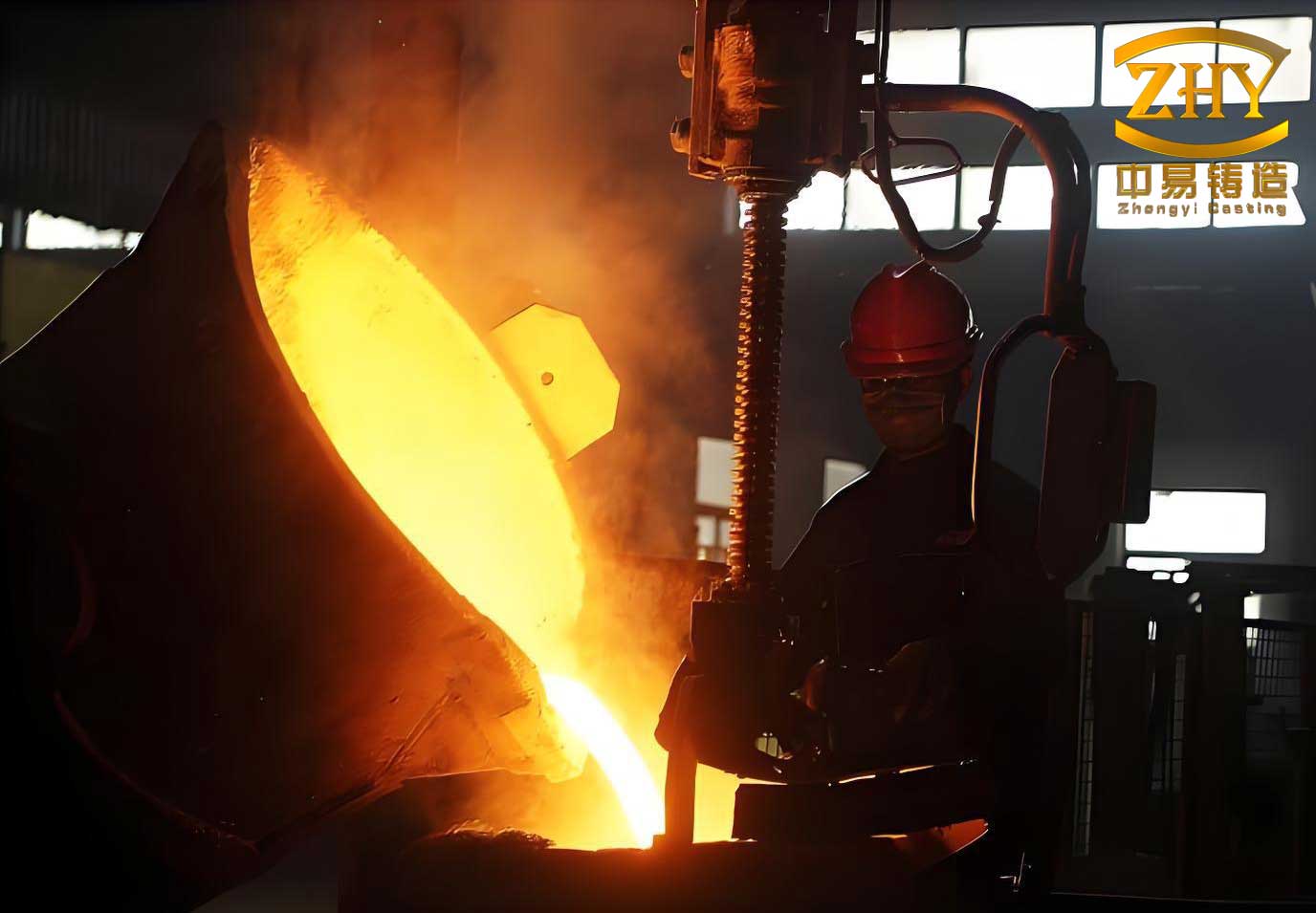
The core premise of this work is that by introducing hard-forming elements like titanium, chromium, and boron onto the mold surface, the molten high manganese steel casting will penetrate and interact with these elements, leading to in-situ formation of hard phases within a superficial layer. This approach directly tackles the initial wear weakness of high manganese steel casting. The success of such a method hinges on the design of a suitable coating—one that ensures good adhesion, prevents wash-away by molten metal, promotes effective wettability and dissolution, and ultimately yields a sound, high-integrity surface on the high manganese steel casting. My investigation encompasses the design of multiple coating compositions, a detailed analysis of the penetrated layer’s microstructure and hardness profile, and rigorous wear testing to quantify the improvement. The goal is to establish a reliable process window and composition set that can be industrially adopted to elevate the performance metrics of high manganese steel casting components from their very first hours of operation.
Experimental Framework: Materials and Methodology
To lay the foundation for this investigation into high manganese steel casting enhancement, a precise set of materials and procedures was employed. All experiments were conducted with the aim of simulating industrial conditions while allowing for controlled analysis.
Base Material and Alloying Additives
The substrate for all specimens was a standard ZGMn13 high manganese steel casting, melted and provided by an industrial partner. Its chemical composition, verified via spectrometry, is presented in Table 1. This composition is quintessential for achieving the desired austenitic structure after water quenching.
| Element | C | Mn | Si | S | P |
|---|---|---|---|---|---|
| Content | 1.03 | 12.64 | 0.54 | 0.054 | 0.04 |
The cast penetration coatings were formulated using various alloy powders, each selected for its specific role in modifying the surface of the high manganese steel casting. The powders included ferrotitanium (40% Ti, 50-150 mesh), high-carbon ferrochromium (27-32% Cr, 150-300 mesh), and boron carbide (75% B, 50-150 mesh). These provide the sources for Ti, Cr, and B, respectively. Auxiliary materials included graphite powder (<100 mesh) as a carbon source, borax (<200 mesh) as a flux and wetting agent, sodium silicate (modulus 2.4-2.6, density 1.58 g/cm³) as a binder, and carboxymethyl cellulose (CMC) as a suspending agent.
Specimen Preparation and Cast Penetration Process
The casting process was designed to produce test specimens for subsequent analysis. Molds were made from water-glass quartz sand. The cavity design yielded specimens with dimensions of 50 mm × 50 mm × 150 mm. A critical step was the application of the cast penetration coating onto the mold cavity surface. Prior to applying the experimental coating, a foundational layer of magnesite-based alcohol coating was applied and fired to create a stable base. Subsequently, the aqueous cast penetration slurry was brushed on. Three distinct coating compositions, labeled T1, T2, and T3, were developed and tested. Their formulations are detailed in Table 2.
| Coating ID | CMC | B₄C | Ferro-Ti | Borax | Ferro-Cr | Sodium Silicate | Graphite | Water* |
|---|---|---|---|---|---|---|---|---|
| T1 | 1.5 | – | 100 | 5 | – | 5 | – | QS |
| T2 | 1.5 | 50 | 50 | 3 | – | 5 | – | QS |
| T3 | 1.5 | – | 30 | 3 | 50 | 5 | 20 | QS |
*QS denotes Quantities Sufficient to achieve a workable slurry viscosity. CMC content is relative to the total powder weight.
The coated molds were then dried using a hot air stream to remove moisture and solidify the coating. The key properties of the dried coatings, crucial for process success, are summarized in Table 3. High suspension stability ensured uniform distribution of alloy powders, while adequate green strength and controlled thickness were vital to withstand the thermal and mechanical shock of molten metal pouring during high manganese steel casting.
| Property | Value / Description |
|---|---|
| Suspension Stability (after 8h) | >98% |
| Slurry Density | 1.5 – 1.7 g/cm³ |
| Coating Strength | Good (not removable by fingernail scratch) |
| Coating Thickness | 0.5 – 0.7 mm |
| Gas Evolution | ≤ 15 ml/g |
| Drying Cracks | Minor |
Pouring was conducted with the standard ZGMn13 melt at approximately 1500°C. After cooling and shakeout, the cast high manganese steel casting specimens with the penetrated surface layer were obtained. A set of control specimens (designated as Sample 4) was cast without any penetration coating. All specimens, including control and those with T1, T2, T3 coatings (Samples 1, 2, 3 respectively), were then subjected to standard water-quenching (water toughening) heat treatment: austenitization at 1050-1100°C for 1.5 hours followed by rapid water quenching. This treatment is essential for dissolving carbides and obtaining a homogeneous, tough austenitic matrix in the bulk of the high manganese steel casting.
Characterization and Testing Protocols
Post-treatment, specimens were sectioned using wire electrical discharge machining to obtain samples for various analyses. Microstructural examination was performed using optical and scanning electron microscopy on etched cross-sections. Phase identification within the penetrated layer was carried out using X-ray diffraction (XRD). The hardness profile, a direct indicator of the success of surface modification in the high manganese steel casting, was measured from the surface inward using a Vickers microhardness tester under a standard load.
The wear resistance, the ultimate property of interest, was evaluated using a controlled abrasion test. Wear samples of size 10 mm × 10 mm × 3 mm were machined from the treated blocks, ensuring the worn surface was the cast-penetrated face. Testing was performed on an ML-10 type abrasive wear tester under the following conditions: applied load of 1.8 kg (17.66 N), 260-grit abrasive paper, disc rotation speed of 60 rpm, and a sample traverse rate of 2 mm/revolution. The wear loss was quantified by measuring the mass loss of the sample using a precision analytical balance. The relative wear resistance, ε, was calculated using the formula:
$$ \epsilon = \frac{W_0}{W} $$
where \( W_0 \) is the wear loss (mass loss) of the untreated high manganese steel casting (Sample 4) and \( W \) is the wear loss of the cast-penetrated sample. A value greater than 1 indicates improvement.
Development and Action Mechanism of the Cast Penetration Coating
The development of an effective coating system is paramount for successful surface alloying in high manganese steel casting. The formulation strategy was based on several pillars: ensuring mechanical stability of the coating layer, facilitating metallurgical interaction, and promoting the formation of hard phases. CMC was chosen as the primary suspending agent due to its high water-absorption and swelling capacity, which provides excellent suspension stability for the heavy alloy powders. Upon drying, the CMC matrix leaves a porous network, creating channels for the infiltration of molten steel into the coating—a critical process in cast penetration. A small addition of sodium silicate acts as a secondary binder, enhancing the coating’s resistance to erosion by the incoming molten metal stream during the pouring of the high manganese steel casting, thereby preserving the integrity and uniformity of the alloyed layer.
The role of borax is multifaceted. It lowers the melting point and viscosity of the slag formed at the coating/metal interface, acting as a flux. More importantly, it significantly improves the wettability between the molten high manganese steel casting and the solid alloy particles, enabling effective dissolution and diffusion of alloying elements into the steel matrix. The selection of alloy powders—Ti, B, and Cr—was guided by their strong carbide-forming tendencies and their ability to create extremely hard compounds. Titanium forms stable TiC carbides. Boron, from B₄C, can form hard borides like TiB₂ and also retains B₄C particles. Chromium forms complex carbides like (Cr,Fe)₇C₃ and also contributes to solid solution strengthening of the austenite. Graphite in the T3 coating provides an additional carbon source to support carbide formation.
The interaction during casting can be conceptually described by a diffusion-reaction model. When the molten high manganese steel casting contacts the coating, heat transfer causes local melting and dissolution. Alloy elements diffuse into the liquid steel boundary layer. The subsequent solidification of this enriched layer leads to the formation of novel phases. The concentration profile of an alloy element, say titanium, as a function of distance from the surface (x) and time (t) can be approximated by Fick’s second law, considering a moving boundary (solidification front):
$$ \frac{\partial C}{\partial t} = D \frac{\partial^2 C}{\partial x^2} – v \frac{\partial C}{\partial x} $$
where \( C(x,t) \) is the concentration of the diffusing element, \( D \) is the diffusion coefficient (temperature-dependent), and \( v \) is the velocity of the solidification front. The initial condition is a high concentration of the element at the surface (from the coating), and the boundary condition at the solid/liquid interface involves partition coefficients. This complex interaction results in the graded microstructure observed in the high manganese steel casting after cast penetration.
Microstructural and Phase Transformation Analysis
Macroscopic examination of sectioned samples revealed a distinct surface layer, confirming the formation of a cast-penetrated zone in the high manganese steel casting. The thickness of this modified layer was consistent across samples from the same coating batch, averaging around 3 mm. This represents a significant volume for wear protection in a high manganese steel casting component.
The microhardness traverses from the surface to the core for Samples 1, 2, and 3 are graphically summarized in Figure 1 (represented here by the derived data in Table 4). The hardness profiles exhibit a classic gradient, with peak hardness at the very surface and a gradual decline to the base metal hardness over a distance of approximately 3 mm.
| Distance from Surface (mm) | Sample 1 Hardness (HV) | Sample 2 Hardness (HV) | Sample 3 Hardness (HV) | Base Metal (HV) |
|---|---|---|---|---|
| 0 (Surface) | 1280 | 1320 | 1360 | ~200 |
| 0.5 | 1150 | 1200 | 1250 | – |
| 1.0 | 950 | 1050 | 1100 | – |
| 1.5 | 750 | 850 | 920 | – |
| 2.0 | 550 | 650 | 750 | – |
| 2.5 | 380 | 450 | 550 | – |
| 3.0 | 300 | 320 | 350 | 290 |
This hardness gradient can be modeled empirically using an exponential decay function relative to the base hardness:
$$ H(x) = H_{base} + (H_{surface} – H_{base}) \cdot e^{-k x} $$
where \( H(x) \) is the hardness at distance \( x \) from the surface, \( H_{base} \) is the core hardness (~290 HV), \( H_{surface} \) is the measured surface hardness, and \( k \) is a decay constant related to the diffusion and dilution of alloying elements. For instance, for Sample 3, with \( H_{surface} = 1360 \) HV, a fit yields a \( k \) value of approximately 0.8 mm⁻¹. The surface hardness values, ranging from HV1260 to HV1360, represent a dramatic increase over the base high manganese steel casting, directly attributable to the microstructural changes induced by cast penetration.
Microstructural analysis showed a progressive change from the surface inward. The core structure was the typical single-phase austenite of water-quenched high manganese steel casting. In the penetrated layer, the volume fraction of undissolved carbides and other hard phases increased significantly towards the surface. X-ray diffraction analysis provided definitive phase identification for each coating type after water toughening:
- Sample 1 (T1 coating, Ti-rich): The dominant hard phase was titanium carbide (TiC). The presence of Ti, a strong austenite stabilizer when in solution but also a potent carbide former, led to retained TiC particles after quenching. The matrix was primarily austenite, but with a higher solute (C, Mn, Ti) content, enhancing its intrinsic hardness.
- Sample 2 (T2 coating, Ti+B₄C): In addition to TiC, phases like titanium diboride (TiB₂) and residual boron carbide (B₄C) were detected. The formation of TiB₂ is highly favorable thermodynamically and occurs during the high-temperature interaction. These borides and carbides act as extremely hard, finely dispersed particles. Furthermore, both B₄C and TiB₂ can act as heterogeneous nucleation sites during solidification of the high manganese steel casting, leading to a noticeable refinement of the as-cast microstructure in the penetrated zone.
- Sample 3 (T3 coating, Ti+Cr+C): The phase assemblage was the most complex, featuring TiC along with chromium-iron carbides such as (Cr,Fe)₇C₃ and (Cr,Fe)₃C. The addition of graphite ensured sufficient carbon availability for these carbide formations. Chromium also extensively dissolves in the austenite matrix, providing significant solid-solution strengthening, which is reflected in the highest measured surface hardness.
The volume fraction of hard phases, \( V_h \), can be correlated to the alloy addition. A simple rule of mixtures can be conceptualized for the composite-like surface layer of the high manganese steel casting:
$$ H_{layer} \approx V_h \cdot H_{hard\ phase} + (1 – V_h) \cdot H_{matrix} $$
where \( H_{hard\ phase} \) is the intrinsic hardness of carbides/borides (often >2000 HV) and \( H_{matrix} \) is the hardness of the strengthened austenite (which is higher than the base austenite due to solute enrichment). The high \( V_h \) near the surface directly yields the ultra-high hardness. The dissolution of alloying elements like Cr and Ti into the austenite raises its hardness, \( H_{matrix} \), which can be estimated using solid solution strengthening models, such as:
$$ \Delta H_{ss} = \sum k_i \cdot C_i^{2/3} $$
where \( k_i \) is a strengthening coefficient for solute element \( i \), and \( C_i \) is its concentration in solid solution. The combined effect of hard particles and a strengthened matrix creates a synergistic reinforcement of the high manganese steel casting surface.
Quantitative Evaluation of Wear Resistance Enhancement
The ultimate validation of the cast penetration process for high manganese steel casting lies in its tribological performance. Abrasive wear tests were conducted under fixed conditions to allow for direct comparison. The cumulative wear loss (mass loss in mg) as a function of sliding distance for the four sample types is presented in Table 5 and the derived wear rates.
| Sample Description | Total Mass Loss, Δm (mg) | Relative Wear Resistance, ε | Approx. Wear Rate (mg/m) |
|---|---|---|---|
| Sample 4 (Untreated Base) | 15.2 | 1.00 (Reference) | 0.152 |
| Sample 1 (T1 Coating) | 5.7 | 2.67 | 0.057 |
| Sample 2 (T2 Coating) | 5.14 | 2.96 | 0.0514 |
| Sample 3 (T3 Coating) | 4.92 | 3.09 | 0.0492 |
The data unequivocally demonstrates the remarkable improvement in initial wear resistance for the cast-penetrated high manganese steel casting. The wear loss for the best-performing sample (T3) is less than one-third that of the untreated high manganese steel casting. In other terms, the relative wear resistance is improved by a factor of approximately 3, meaning the penetrated surface lasts nearly three times longer under these abrasive conditions before wearing to the same depth. This translates to the statement that the wear loss is reduced by nearly two-thirds, or conversely, the penetrated high manganese steel casting has a wear life nearly three times greater initially.
The wear mechanism in the untreated high manganese steel casting is primarily micro-ploughing and micro-cutting of the soft austenite by abrasive particles. In the cast-penetrated layers, the hard carbides and borides (TiC, TiB₂, (Cr,Fe)₇C₃) act as effective barriers to abrasion. They resist penetration and cutting, forcing the abrasive particles to either fracture, become blunt, or preferentially wear away the surrounding matrix. The wear rate, \( \dot{W} \), in such a particle-reinforced composite surface can be related to the hardness and volume fraction of hard phases. A modified form of the Archard or Rabinowicz abrasive wear equation can be considered:
$$ \dot{W} = K \cdot \frac{P}{H_{eff}} $$
where \( K \) is a wear coefficient, \( P \) is the applied pressure, and \( H_{eff} \) is the effective hardness of the composite surface. For a matrix with hard particles, \( H_{eff} \) is significantly higher than the matrix hardness alone, leading to a proportional decrease in wear rate. The effective hardness can be approximated by a model that accounts for the load-bearing capacity of hard particles. Furthermore, the solid-solution strengthened austenitic matrix in the penetrated layer of the high manganese steel casting itself has a higher resistance to plastic deformation and micro-cutting compared to the base austenite, contributing to the overall wear reduction. The synergistic effect is clearly seen in the performance ranking: T3 (with Cr for matrix strengthening and multiple carbides) > T2 (with TiB₂ and refined structure) > T1 (primarily TiC) > Base metal.
Discussion: Process Optimization and Industrial Implications
The success of this cast penetration approach for high manganese steel casting opens avenues for process optimization and broader application. The coating composition is a critical variable. Based on the results, a system containing multiple hard-phase formers (Ti, B, Cr) along with a carbon source (graphite) and a effective flux (borax) yields the best performance. The role of CMC as a porogen and suspending agent is well established. The process parameters—coating thickness, drying procedure, pouring temperature of the high manganese steel casting, and mold material—also influence the final outcome. For instance, an optimal coating thickness exists: too thin, and the alloying effect is insufficient; too thick, and it may cause defects like slag entrapment or incomplete penetration.
The economic and practical implications for foundries producing high manganese steel casting components are significant. This method is relatively simple, integrating seamlessly into existing sand casting processes for high manganese steel casting without requiring major capital investment in equipment like furnaces for post-cast surface treatments (e.g., hardfacing). It adds a single step—coating application—to the mold preparation stage. The consumables (alloy powders, CMC, borax) are commercially available and cost-effective. The resulting component has a built-in wear-resistant skin, potentially eliminating the need for initial run-in periods or reducing the frequency of early replacements in harsh environments. This enhances the reliability and lifecycle cost-effectiveness of high manganese steel casting products.
Future research directions could involve exploring other alloy systems (e.g., incorporating tungsten or vanadium), modeling the thermal and fluid dynamics during penetration to predict layer thickness, and testing under more specific service-condition wear modes (e.g., impact-abrasion) for high manganese steel casting components. The adhesion and coherence between the penetrated layer and the substrate are excellent, as they are metallurgically bonded during the solidification of the high manganese steel casting itself, a key advantage over coatings applied after casting.
Concluding Synthesis
This investigation systematically demonstrates that the initial wear resistance of high manganese steel casting can be profoundly enhanced through the application of a tailored cast penetration coating during the molding process. The developed aqueous coatings, utilizing CMC as a suspending agent and incorporating alloy powders of titanium, chromium, and boron, proved effective in creating a metallurgically bonded, gradient surface layer on high manganese steel casting specimens. Key findings are synthesized as follows:
- Successful Coating System: A stable, brushable coating formulation was achieved, capable of withstanding the pouring process and facilitating the alloying reaction. The inclusion of borax was crucial for promoting wettability and metallurgical bonding between the molten high manganese steel casting and the alloy powders.
- Formation of a Hardened Layer: The cast penetration process consistently produced a surface-modified layer approximately 3 mm thick on the high manganese steel casting. This layer exhibited a steep hardness gradient, with surface hardness soaring to values between HV1260 and HV1360, compared to the ~HV290 of the base water-quenched high manganese steel casting.
- Microstructural Basis for Hardness: The ultra-high hardness is attributed to the in-situ formation of hard phases such as TiC, TiB₂, B₄C, and complex chromium-iron carbides, which remain undissolved after water toughening. Additionally, the enrichment of the austenite matrix with Ti, Cr, and C provides substantial solid-solution strengthening. The composite microstructure effectively transforms the surface region of the high manganese steel casting into a wear-resistant composite material.
- Dramatic Wear Improvement: Under controlled abrasive wear conditions, the cast-penetrated high manganese steel casting samples exhibited a reduction in wear loss by a factor of approximately 2.7 to 3.1 compared to the untreated high manganese steel casting. The relative wear resistance increased from 1.0 (base) to between 2.67 and 3.09, with the T3 coating (containing Ti, Cr, and C) delivering the best performance. This translates to an extension of service life by nearly three times during the critical initial wear period for high manganese steel casting components.
- Process Practicality: The method is industrially viable, adding minimal complexity to the standard sand casting process for high manganese steel casting. It offers a cost-effective route to engineer the surface properties of cast components, addressing a long-standing weakness of this otherwise excellent material.
In essence, the cast penetration technique serves as a powerful tool for surface engineering, enabling the production of high manganese steel casting parts that are “born hard” on their surface while retaining their characteristically tough core. This breakthrough significantly broadens the applicability and performance reliability of high manganese steel casting in demanding wear-intensive applications from the moment they are put into service.