
In the manganese steel casting foundry industry, the pursuit of cost-effective and high-quality production methods is paramount. As an experienced practitioner in this field, I have observed that many foundries utilizing the lost foam casting process for manganese steel casting components rely on coatings such as magnesia, corundum, or zircon powders. While these materials offer certain benefits, they often fall short in terms of performance and economic viability, particularly in demanding applications like manganese steel casting foundry environments where durability and surface finish are critical. Through extensive experimentation and application, our manganese steel casting foundry has adopted forsterite powder as a primary coating material, yielding superior results in both quality and efficiency. This article delves into the comprehensive advantages, formulation, and underlying mechanisms of forsterite-based coatings, supported by detailed tables and formulas to guide practitioners in optimizing their manganese steel casting foundry processes.
The manganese steel casting foundry sector frequently grapples with challenges such as high production costs, environmental concerns, and suboptimal casting surfaces. Forsterite powder, derived from magnesium olivine, presents a transformative solution. Its alkaline nature and unique physicochemical properties make it exceptionally suitable for manganese steel casting foundry applications, where resistance to thermal shock and chemical erosion is essential. In my experience, transitioning to forsterite coatings has not only reduced expenses but also enhanced the overall sustainability of our manganese steel casting foundry operations. Below, I explore the key aspects of this material, from its intrinsic characteristics to practical implementation, aiming to provide a robust framework for adoption in any manganese steel casting foundry.
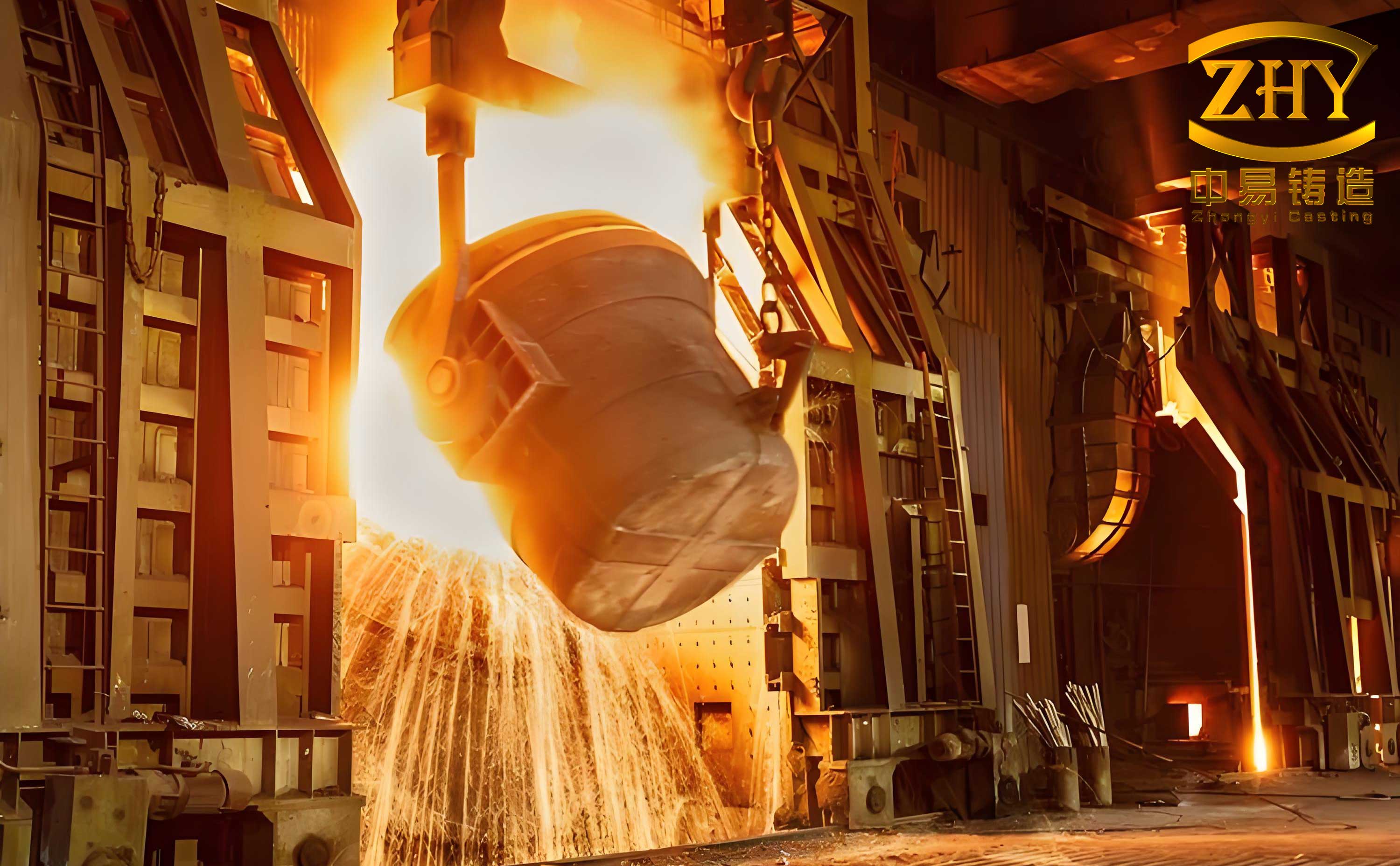
The performance of forsterite powder in a manganese steel casting foundry context stems from its exceptional thermal and chemical stability. As a refractory material, it exhibits high耐火度 and low thermal expansion, which minimizes defects like sand inclusion and veining during the casting of manganese steel components. In our manganese steel casting foundry, we have quantified these properties through rigorous testing, leading to the development of optimized coating systems. The following table summarizes the typical chemical composition of forsterite powder used in our manganese steel casting foundry operations, highlighting its alkaline profile that combats basic slag erosion effectively.
| Component | MgO | SiO2 | Al2O3 | Fe2O3 | Cr2O3 | Others |
|---|---|---|---|---|---|---|
| Content | ≥45 | ≤40 | ≤3 | ≤11 | Trace | ≤1 |
Beyond chemical makeup, the physical properties of forsterite powder are crucial for its success in a manganese steel casting foundry. Its spherical particle morphology ensures good flowability and coating adherence, while low moisture content prevents gas evolution during pouring. The table below details these characteristics, which contribute to reduced silicon dust hazards and improved workplace safety—a significant advantage for any manganese steel casting foundry aiming to meet environmental standards.
| Property | Sphericity | Fine Particles | Moisture | Refractoriness | Loss on Ignition | Density (g/cm³) |
|---|---|---|---|---|---|---|
| Value | ≥75% | 3% | <0.5% | 1700°C | ≤3% | 3.0 |
The thermal conductivity of forsterite powder can be modeled using Fourier’s law of heat conduction, which is vital for predicting its behavior in a manganese steel casting foundry. The heat flux $$q$$ through a coating layer is given by:
$$q = -k \frac{dT}{dx}$$
where $$k$$ is the thermal conductivity coefficient, and $$\frac{dT}{dx}$$ is the temperature gradient. For forsterite, $$k$$ is relatively high, promoting uniform heat dissipation and reducing thermal stresses during solidification of manganese steel castings. This property aligns with the need for consistent cooling in a manganese steel casting foundry to achieve desired microstructure and hardness. Additionally, the refractory performance can be expressed through the Arrhenius equation for high-temperature stability:
$$R = A e^{-\frac{E_a}{RT}}$$
where $$R$$ is the reaction rate, $$A$$ is the pre-exponential factor, $$E_a$$ is the activation energy, $$R$$ is the gas constant, and $$T$$ is the absolute temperature. For forsterite, the high $$E_a$$ value contributes to its resistance against decomposition at typical manganese steel casting foundry temperatures, ensuring coating integrity.
In our manganese steel casting foundry, the formulation of forsterite-based coatings is a meticulous process that balances performance and cost. The coating serves multiple roles: it reinforces the foam pattern, prevents metal penetration, and facilitates easy shakeout. A well-designed recipe is essential for any manganese steel casting foundry seeking to leverage forsterite’s benefits. Based on our trials, the following table presents a standard formulation that has proven effective in producing high-quality manganese steel castings.
| Component | Forsterite Powder | Bentonite | Sodium Carbonate | Sodium Carboxymethyl Cellulose | Polyvinyl Acetate Emulsion | Organic Binder | Water |
|---|---|---|---|---|---|---|---|
| Amount | 100 | 6–10 | 1–3 | 2–3 | 3–4 | 2–3 | Adjust as needed |
The preparation procedure involves sequential mixing to achieve optimal rheology. First, the organic binder is combined with forsterite powder, followed by the addition of sodium carbonate and bentonite. After homogenization, sodium carboxymethyl cellulose and polyvinyl acetate emulsion are incorporated, with continuous stirring for at least four hours. This process ensures a stable suspension with good thixotropy, which is critical for uniform application in a manganese steel casting foundry. The viscosity $$\eta$$ of the coating can be described by the Herschel-Bulkley model:
$$\tau = \tau_0 + K \dot{\gamma}^n$$
where $$\tau$$ is the shear stress, $$\tau_0$$ is the yield stress, $$K$$ is the consistency index, $$\dot{\gamma}$$ is the shear rate, and $$n$$ is the flow behavior index. For our forsterite coatings, $$\tau_0$$ is适中 to prevent sagging while allowing easy brush or spray application in the manganese steel casting foundry. The yield value typically ranges from 0.5 to 1.0 Pa, ensuring adequate adherence without excessive thickness.
To further optimize the coating for manganese steel casting foundry use, we have derived empirical formulas linking composition to performance. For instance, the coating strength $$S_c$$ can be estimated as:
$$S_c = \alpha C_f + \beta C_b + \gamma C_p$$
where $$C_f$$, $$C_b$$, and $$C_p$$ are the concentrations of forsterite powder, bentonite, and polymer binders, respectively, and $$\alpha$$, $$\beta$$, $$\gamma$$ are material-specific constants determined through regression analysis in our manganese steel casting foundry. This approach allows for fine-tuning based on specific casting geometries, such as thin-walled magnetic liners or heavy-duty shovel teeth common in manganese steel casting foundry outputs.
The mechanism by which forsterite coatings enhance manganese steel casting foundry productivity revolves around their self-stripping behavior. When exposed to molten manganese steel, the alkaline coating fosters an oxidative atmosphere at the metal-coating interface. This leads to the formation of a brittle oxide layer that acts as a weak boundary, facilitating automatic剥离 upon cooling. The stress $$\sigma$$ generated due to differential thermal contraction between the coating and the casting can be expressed as:
$$\sigma = E \cdot \Delta \alpha \cdot \Delta T$$
where $$E$$ is the Young’s modulus of the coating, $$\Delta \alpha$$ is the difference in thermal expansion coefficients, and $$\Delta T$$ is the temperature change. For forsterite, $$\Delta \alpha$$ is significant compared to manganese steel, resulting in stresses exceeding the adhesive strength of the oxide layer, typically around 1.8 MPa. Consequently, the coating spalls off cleanly, yielding smooth, sand-free surfaces—a hallmark of efficiency in any manganese steel casting foundry.
In addition, the glassy phase content in sintered forsterite coatings contributes to this effect. The volume fraction of glass phase $$V_g$$ can be correlated with剥脱性能 using the following relation:
$$P_d = \frac{V_g \cdot \Delta \epsilon}{\tau_c}$$
where $$P_d$$ is the剥脱 propensity, $$\Delta \epsilon$$ is the strain mismatch, and $$\tau_c$$ is the critical shear stress for layer failure. Our measurements in the manganese steel casting foundry indicate that forsterite coatings with $$V_g$$ above 20% exhibit excellent self-release, minimizing post-casting清理 efforts. This mechanistic insight is invaluable for scaling up production in a manganese steel casting foundry, as it reduces labor and energy costs associated with finishing operations.
From an economic perspective, adopting forsterite coatings in a manganese steel casting foundry yields substantial savings. To quantify this, consider a comparative analysis with traditional magnesia-based coatings. The cost per ton $$C_t$$ of coating material can be broken down as:
$$C_t = \sum_{i=1}^n (c_i \cdot w_i)$$
where $$c_i$$ is the unit cost of component $$i$$, and $$w_i$$ is its weight fraction. For magnesia coatings, the骨料 cost alone is approximately 3000 USD per ton, whereas forsterite powder costs about 500 USD per ton. Assuming similar additive costs, the overall reduction $$R_c$$ in coating expense is:
$$R_c = \frac{C_{m} – C_{f}}{C_{m}} \times 100\%$$
where $$C_{m}$$ and $$C_{f}$$ are the total costs for magnesia and forsterite coatings, respectively. In our manganese steel casting foundry, this translates to a cost reduction of over 70%, dramatically lowering the per-unit expense for manganese steel castings. The table below extrapolates these savings across common casting weights, demonstrating the scalability for a manganese steel casting foundry.
| Casting Type | Weight Range (kg) | Magnesia Coating Cost | Forsterite Coating Cost | Savings |
|---|---|---|---|---|
| Magnetic Liner | 8–50 | 120–750 | 36–225 | 84–525 |
| Shovel Tooth | 100–150 | 1500–2250 | 450–675 | 1050–1575 |
| Mill Liner/Grid Plate | 200–350 | 3000–5250 | 900–1575 | 2100–3675 |
Furthermore, the environmental benefits amplify the economic advantage in a manganese steel casting foundry. Since forsterite contains no free silica, it eliminates silicosis risks and reduces gaseous emissions like CO during pouring. The overall environmental impact $$I_e$$ can be modeled using a simplified lifecycle assessment formula:
$$I_e = \sum (m_j \cdot f_j)$$
where $$m_j$$ is the mass of emission $$j$$, and $$f_j$$ is its impact factor. For forsterite, $$m_j$$ values for silica dust and CO are negligible, leading to a lower $$I_e$$ compared to alternatives. This aligns with growing regulatory pressures on manganese steel casting foundry operations worldwide, making forsterite a future-proof choice.
In practical applications across our manganese steel casting foundry, forsterite coatings have been successfully used to produce a diverse range of components, from delicate 8 kg magnetic liners with 8 mm wall thickness to robust 130 kg shovel teeth and 300+ kg mill liners. The consistent outcome is a flawless surface finish, free of adhesions and roughness, which reduces machining needs and enhances product lifespan. This versatility underscores the material’s suitability for high-volume manganese steel casting foundry production, where repeatability and quality are paramount. To ensure optimal results, we monitor coating parameters such as thickness $$t_c$$ and drying time $$t_d$$, which follow empirical relationships derived from our manganese steel casting foundry data:
$$t_c = \frac{\rho \cdot V}{A \cdot \eta}$$
where $$\rho$$ is the coating density, $$V$$ is the applied volume, $$A$$ is the surface area, and $$\eta$$ is the viscosity. For typical manganese steel casting foundry patterns, $$t_c$$ is maintained between 0.5 and 1.0 mm to balance insulation and permeability. Similarly, $$t_d$$ is governed by diffusion kinetics:
$$t_d = \frac{\delta^2}{D}$$
where $$\delta$$ is the coating thickness, and $$D$$ is the effective diffusivity of water. In controlled manganese steel casting foundry conditions, $$t_d$$ ranges from 4 to 8 hours, ensuring crack-free coatings ready for sand filling and vibration.
The integration of forsterite coatings into a manganese steel casting foundry workflow also involves quality control measures. We employ statistical process control charts to track key indicators like coating adhesion strength and refractory loss. For example, the mean $$\mu$$ and standard deviation $$\sigma_s$$ of adhesion strength are calculated periodically:
$$\mu = \frac{1}{N} \sum_{i=1}^N x_i, \quad \sigma_s = \sqrt{\frac{1}{N-1} \sum_{i=1}^N (x_i – \mu)^2}$$
where $$x_i$$ are measured strength values from sample coatings in the manganese steel casting foundry. This data-driven approach ensures consistency and early detection of deviations, minimizing scrap rates in manganese steel casting production.
Looking ahead, the adoption of forsterite-based coatings represents a significant advancement for the manganese steel casting foundry industry. Its combination of low cost, high performance, and environmental friendliness addresses multiple pain points simultaneously. In our manganese steel casting foundry, we have observed not only improved铸件 quality but also enhanced worker safety and reduced waste disposal costs. The self-stripping特性 alone can cut cleaning time by up to 50%, accelerating throughput in a busy manganese steel casting foundry. As global demand for durable manganese steel castings grows—from mining to construction sectors—this coating technology offers a competitive edge.
To summarize, the journey toward optimizing a manganese steel casting foundry through forsterite coatings is grounded in both science and practical experience. By leveraging its alkaline chemistry, excellent thermal properties, and favorable rheology, foundries can achieve superior铸件 with minimal post-processing. The formulas and tables provided here serve as a roadmap for implementation, adaptable to specific needs of any manganese steel casting foundry. As I reflect on our successes, from producing intricate衬板 to massive磨机 components, it is clear that forsterite powder is not just an alternative but a transformative material for the future of manganese steel casting foundry operations worldwide.