
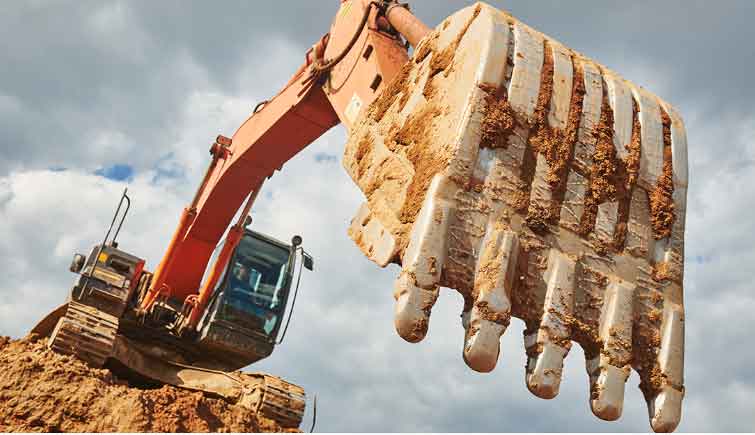
As foundry engineers at Jinduicheng Molybdenum Mining Corporation, we revolutionized excavator bucket teeth production by implementing lost foam casting. This , made from ZGMn13 high-manganese steel (130kg weight, 944×300×150mm dimensions), traditionally suffered from high rejection rates and labor-intensive finishing. Lost foam casting eliminated these issues while enhancing dimensional accuracy.
Process Advantages and Economic Impact
Lost foam technology provided distinct advantages for this critical excavator casting part:
| Parameter | Sand Casting | Lost Foam Casting |
|---|---|---|
| Cores Required | Multiple | 0 |
| Draft Angles | 3-5° | 0-1° |
| Post-Casting Labor | 45 min/part | 15 min/part |
| Yield Rate | 55-60% | 95-98% |
The economic advantage is quantified by the yield improvement equation:
$$\eta = \frac{m_{casting}}{m_{metal}} \times 100\%$$
Where η represents yield percentage, mcasting is final part mass, and mmetal is poured metal mass. Our optimized process increased η by 40% compared to conventional methods.
Pattern Fabrication and Material Science
Pattern quality fundamentally determines final excavator casting part integrity. We selected EPS beads meeting stringent specifications:
| Parameter | Specification | Measurement Method |
|---|---|---|
| Bead Size | #4-#5 Mesh | Sieve Analysis |
| Density | ≤0.018 g/cm³ | Buoyancy Method |
| Pentane Content | ≥5.5% | Gas Chromatography |
Pattern density directly impacts decomposition characteristics during pouring, governed by:
$$\frac{\partial \rho}{\partial t} = -\alpha \cdot \nabla^2 T + \beta \cdot P_v$$
Where ρ is pattern density, t is time, T is temperature, Pv is vapor pressure, and α/β are material constants. Lower density facilitates complete decomposition without residual carbon.
Coating Technology Development
Our proprietary water-based magnesia-olivine coating ensured dimensional stability for this excavator casting part:
| Component | Proportion (wt%) | Function |
|---|---|---|
| Magnesia-Olivine (270 mesh) | 85.5% | Refractory base |
| Anhydrous Sodium Carbonate | 1.7% | pH modifier |
| Bentonite | 6.8% | Rheology control |
| Cellulose | 1.3% | Green strength |
| Polyvinyl Acetate | 3.4% | Binder |
| Proprietary Binder | 2.3% | Permeability enhancer |
Coating thickness followed the relationship:
$$t_c = k \cdot \sqrt[3]{V_m}$$
Where tc is coating thickness (1.5-2.5mm), Vm is pattern volume, and k is application coefficient (0.15 for brush/dip combination). Permeability was enhanced with foaming agents in subsequent layers, critical for gas evacuation during excavator casting part formation.
Gating System Optimization
Group casting configuration (10 pieces per flask) maximized yield for this excavator casting part. The pressure-balanced gating system obeyed continuity equations:
$$A_s \cdot v_s = \sum A_r \cdot v_r = \sum A_i \cdot v_i$$
Where A and v represent cross-sectional areas and flow velocities at sprue (s), runner (r), and ingate (i) positions. Our experimentally optimized dimensions were:
| Component | Dimensions (mm) | Flow Ratio |
|---|---|---|
| Sprue | 50×50 | 1.0 (Reference) |
| Runner | 40×40 | 0.64 |
| Ingate | 35×35 | 0.49 |
The vacuum pressure differential drove metal flow according to:
$$\Delta P = \frac{\rho_m \cdot v_m^2}{2} + \rho_m \cdot g \cdot h – P_v$$
Where ΔP is vacuum pressure (≤0.015MPa), ρm is metal density, vm is flow velocity, g is gravity, h is metallostatic head, and Pv is vapor pressure from decomposing foam.
Process Parameters and Control
Critical thermal parameters for this excavator casting part production:
| Process Stage | Parameter | Value |
|---|---|---|
| Pattern Drying | Temperature | ≤50°C |
| Sand Compaction | Vibration Frequency | 50-60 Hz (3D) |
| Pouring | Temperature | 1480-1530°C |
| Vacuum | Pressure | ≤0.015 MPa |
| Cooling | Time to Shakeout | 25 min |
The heat transfer during water toughening followed:
$$\frac{\partial T}{\partial t} = \frac{k}{\rho \cdot C_p} \nabla^2 T + \frac{q}{\rho \cdot C_p}$$
Where T is temperature, t is time, k is thermal conductivity, ρ is density, Cp is specific heat, and q is internal heat generation from phase transformation. Quenching parameters were strictly controlled: initial water temperature ≤45°C, final temperature ≤60°C, immersion time ≥30 minutes to achieve complete austenitization.
Quality and Performance Validation
Field testing confirmed superior performance of lost foam-produced excavator casting parts:
| Performance Metric | Sand Casting | Lost Foam Casting |
|---|---|---|
| Mining Capacity (tons/set) | 160,000-180,000 | 200,000-220,000 |
| Surface Roughness (Ra, μm) | 25-35 | 12-18 |
| Dimensional Tolerance (mm) | ±2.5 | ±1.0 |
| Rejection Rate | 18-22% | 2-5% |
The work hardening behavior of water-toughened high-manganese steel followed the relationship:
$$\sigma_y = \sigma_0 + K \cdot \epsilon^n$$
Where σy is yield strength, σ0 is initial strength, K is strength coefficient, ε is strain, and n is work hardening exponent. Lost foam castings exhibited 15-20% higher K values due to finer microstructure.
Industrial Implementation and Scaling
Production scaling demonstrated linear cost reduction for this excavator casting part:
$$C_p = C_f + \frac{C_v}{N}$$
Where Cp is unit cost, Cf is fixed cost ($1,200/flask), Cv is variable cost ($800/flask), and N is number of parts per flask. At 10 parts/flask, unit cost decreased by 38% versus single-part production. The process eliminated 50% of finishing labor through absence of parting lines and core flashes.
Conclusion
Lost foam casting fundamentally transformed production economics and performance of this critical excavator casting part. The integrated approach combining optimized patterns, specialized coatings, vacuum-assisted pouring, and controlled heat treatment consistently delivered high-integrity components. Field results validated 20-25% service life extension with simultaneous 40% reduction in manufacturing costs, establishing this as the premier production methodology for high-wear excavation components.