
As a researcher in the field of advanced manufacturing, I have been deeply involved in studying the intricacies of lost foam casting, particularly for aluminum alloys. Lost foam casting, often hailed as the “21st-century casting technology” or the “green revolution in the foundry industry,” holds immense promise due to its ability to produce complex, near-net-shape components with minimal waste. However, the application of lost foam casting to aluminum alloys presents unique challenges that have kept defect rates stubbornly high. In this article, I will delve into the common defects encountered in aluminum alloy lost foam casting, analyze their root causes using theoretical frameworks and empirical data, and propose comprehensive control measures. My goal is to provide a detailed resource that can aid foundry engineers and researchers in overcoming these persistent technical hurdles.
The widespread adoption of aluminum alloys in industries such as automotive, aerospace, and consumer goods is driven by their excellent strength-to-weight ratio, corrosion resistance, and machinability. However, when it comes to producing intricate, thin-walled components via lost foam casting, the process is fraught with difficulties. Unlike ferrous alloys like cast iron and steel, which dominate the current landscape of lost foam casting, aluminum alloys exhibit distinct behaviors during the casting process. These include lower density, higher reactivity, and a narrower solidification range, all of which contribute to a higher propensity for defects. My analysis is based on both literature review and practical observations, and I will structure this discussion to highlight the critical aspects of defect formation and mitigation.
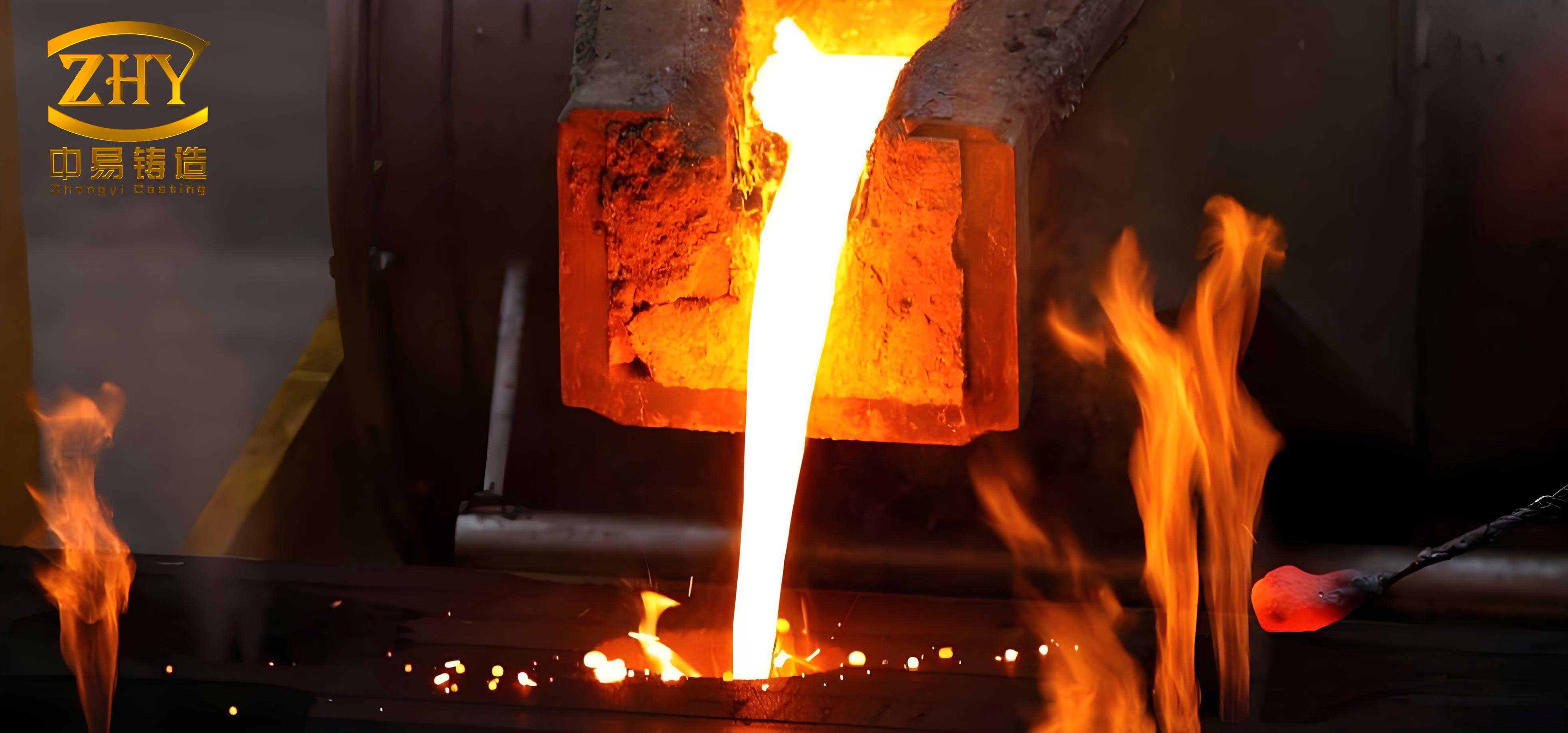
To understand the defects in aluminum alloy lost foam casting, one must first grasp the fundamental principles of the process. In lost foam casting, a foam pattern—typically made of expanded polystyrene (EPS)—is coated with a refractory coating and embedded in unbonded dry sand. Molten metal is then poured into the mold, causing the foam to vaporize and decompose, thereby filling the cavity. This method differs radically from conventional sand casting or metal mold casting, as it relies on the thermal degradation of the pattern rather than on a permanent mold. For aluminum alloys, the process parameters must be meticulously controlled. The pouring temperature, for instance, is a double-edged sword: it must be high enough to ensure complete pattern decomposition and adequate metal fluidity, but not so high as to promote excessive gas absorption and oxidation. The typical pouring temperature for aluminum alloys in lost foam casting ranges from 750°C to 780°C, which is significantly higher than in traditional casting methods. This elevated temperature, combined with the slow cooling rate of the dry sand mold, prolongs the solidification time, leading to a tendency for pasty solidification. This, in turn, creates an environment ripe for defect formation.
The defects in aluminum alloy lost foam casting are multifaceted and often interrelated. They can be broadly categorized into filling-related defects, gas-related defects, shrinkage-related defects, and surface quality defects. Below, I present a detailed analysis of each category, supported by tables and mathematical models where applicable.
Filling-Related Defects: Incomplete Filling and Cold Shuts
Incomplete filling and cold shuts are prevalent in aluminum alloy lost foam casting, especially for complex, thin-walled parts. The primary cause is poor metal fluidity during mold filling. This can be attributed to two main factors: backpressure and premature cooling of the metal front.
Backpressure arises from the gases generated during the thermal decomposition of the foam pattern. As the molten aluminum advances, it causes the EPS to vaporize, producing a mixture of gaseous hydrocarbons, carbon monoxide, and hydrogen. The volume of gas generated, \( V_g \), can be estimated using the ideal gas law and the decomposition kinetics:
$$ V_g = \frac{nRT}{P} $$
where \( n \) is the number of moles of gas produced per unit mass of EPS, \( R \) is the gas constant, \( T \) is the temperature, and \( P \) is the pressure. For aluminum alloys, the lower pouring temperature compared to ferrous alloys means that the gas generation rate is slower, but the backpressure can still impede flow if the venting through the coating is insufficient.
The metal front temperature drop is another critical issue. The heat required to decompose the foam, known as the latent heat of decomposition, \( Q_d \), cools the metal. The temperature decrease, \( \Delta T \), can be modeled as:
$$ \Delta T = \frac{Q_d}{m \cdot c_p} $$
where \( m \) is the mass of the metal and \( c_p \) is its specific heat capacity. For aluminum, with its high thermal conductivity, this cooling effect is pronounced, leading to premature solidification at the flow front and resulting in cold shuts or incomplete filling.
To quantify the risk of these defects, I have compiled a table summarizing key influencing factors:
| Factor | Effect on Filling | Optimal Range for Aluminum Alloys |
|---|---|---|
| Pouring Temperature | Higher temperature improves fluidity but increases gas absorption | 760°C ± 10°C |
| Pattern Density | Higher density increases gas generation and heat absorption | 20-25 kg/m³ for EPS |
| Coating Permeability | Higher permeability reduces backpressure | 2-4 GPU (Gas Permeability Units) |
| Metal Flow Velocity | Faster flow reduces cooling but may cause turbulence | 0.5-1.0 m/s |
Gas-Related Defects: Pinholes and Gas Porosity
Pinholes and gas porosity are among the most stubborn defects in aluminum alloy lost foam casting. They result from gas entrapment in the molten metal, primarily hydrogen, which originates from multiple sources. The high pouring temperature exacerbates hydrogen solubility in aluminum, as described by Sieverts’ law:
$$ C_H = K_H \sqrt{P_{H_2}} $$
where \( C_H \) is the hydrogen concentration in the melt, \( K_H \) is the solubility constant (which increases with temperature), and \( P_{H_2} \) is the partial pressure of hydrogen. During solidification, the solubility drops sharply, causing hydrogen to precipitate and form pinholes. In lost foam casting, additional hydrogen comes from the decomposition of the foam pattern and any moisture in the coating or sand.
The prolonged solidification time in lost foam casting favors the formation of dispersed pinholes. The critical solidification time, \( t_c \), for pore formation can be approximated using the diffusion equation:
$$ t_c = \frac{d^2}{D} $$
where \( d \) is the diffusion distance and \( D \) is the diffusion coefficient of hydrogen in aluminum. Since \( D \) is relatively high, the slow cooling allows hydrogen bubbles to nucleate and grow uniformly.
Another contributor is the use of recycled charge materials. If not properly preheated, these materials can introduce oxides and organic contaminants that decompose into gases. Therefore, effective melt treatment is paramount. The table below outlines common sources of gas and their mitigation strategies:
| Gas Source | Mechanism | Control Measure |
|---|---|---|
| Foam Decomposition | EPS breaks into hydrocarbons and H₂ | Use low-density patterns; optimize coating permeability |
| Melt Hydrogen Pickup | From atmosphere or wet charge | Implement rigorous degassing (e.g., rotary degassing) |
| Coating/Sand Moisture | Water vapor reacts with Al to form H₂ | Dry coatings and sand thoroughly; use moisture barriers |
| Oxide Inclusions | Trapped air from turbulent flow | Design gating for laminar flow; use filters |
Shrinkage-Related Defects: Shrinkage Porosity and Cavities
Shrinkage defects, including macro-porosity and micro-shrinkage, are common in aluminum alloy lost foam casting due to the pasty solidification mode. Unlike directional solidification in some processes, the slow cooling in dry sand molds promotes a wide mushy zone. The volume deficit during solidification, \( \Delta V \), is given by:
$$ \Delta V = V_0 \cdot \beta \cdot (T_l – T_s) $$
where \( V_0 \) is the initial volume, \( \beta \) is the volumetric shrinkage coefficient (about 6-7% for aluminum), and \( T_l \) and \( T_s \) are the liquidus and solidus temperatures, respectively. In lost foam casting, the lack of effective feeding pressure from risers exacerbates this issue, as the foam decomposition products can interfere with metal flow into shrinkage regions.
To combat shrinkage, proper riser design is crucial. However, in lost foam casting, risers are often less effective due to the lower thermal gradients. Instead, techniques like pressure-assisted solidification or controlled cooling can be employed. The efficacy of a riser can be evaluated using the modulus method, where the modulus \( M \) is the volume-to-surface area ratio. For a riser to feed a casting section, its modulus should be greater than that of the section:
$$ M_{riser} > M_{casting} $$
But in lost foam casting, this relation is often compromised by the insulating nature of the process.
Surface Quality Defects: Carbonaceous Films (Wrinkles) and Surface Irregularities
Surface carbon defects, commonly known as wrinkles or folds, arise from the incomplete decomposition of the foam pattern. When the pouring temperature is below 750°C, EPS tends to melt into a viscous liquid rather than vaporize completely. This liquid can be absorbed into the coating, leaving behind a carbonaceous film that manifests as wrinkles on the casting surface. The severity of this defect depends on the pattern density, coating properties, and temperature profile.
Mathematically, the critical temperature for complete vaporization, \( T_{vap} \), can be derived from the pyrolysis kinetics of EPS. The reaction rate \( k \) follows the Arrhenius equation:
$$ k = A e^{-E_a/(RT)} $$
where \( A \) is the pre-exponential factor, \( E_a \) is the activation energy, and \( R \) is the gas constant. For aluminum alloys, maintaining \( T > T_{vap} \) (typically above 750°C) is essential to avoid carbon residues.
Surface凹凸现象 (凹凸不平) , which I refer to as surface irregularities, are often pre-existing defects from the pattern itself. Imperfections in the foam pattern, such as uneven bead fusion or damaged surfaces, get replicated onto the casting. Regular inspection and quality control of patterns are vital to prevent this.
The interplay between process parameters and surface defects is summarized in the following table:
| Defect Type | Primary Causes | Preventive Actions |
|---|---|---|
| Carbonaceous Films | Low pouring temperature; high pattern density; poor coating permeability | Increase pouring temperature; use low-density EPS; optimize coating thickness |
| Surface Irregularities | Pattern surface defects; inadequate coating application | Implement pattern quality checks; ensure uniform coating application |
| Sticky Sand/Inclusions | Coating breakdown; sand penetration | Use high-strength coatings; control sand compaction |
Comprehensive Control Measures for Aluminum Alloy Lost Foam Casting
Based on my experience and research, I propose a multi-faceted approach to defect control in aluminum alloy lost foam casting. These measures address the root causes identified earlier and can be integrated into a robust production protocol.
1. Melt Refinement and Degassing: The aluminum melt must be thoroughly refined to remove dissolved gases and inclusions. Rotary degassing with inert gases like argon or nitrogen is highly effective. The efficiency of degassing can be modeled using the mass transfer equation:
$$ \frac{dC}{dt} = -k \cdot (C – C_{eq}) $$
where \( C \) is the hydrogen concentration, \( C_{eq} \) is the equilibrium concentration, and \( k \) is the mass transfer coefficient. Achieving a hydrogen content below 0.1 mL/100g Al is recommended for high-integrity castings.
2. Optimized Pouring Temperature Control: While increasing pouring temperature improves fluidity, it must be balanced against gas absorption. I recommend a dynamic temperature profile, starting at the higher end of the range (780°C) for thin sections and adjusting downward for thicker sections to minimize porosity.
3. Advanced Coating Technology: The coating serves as a barrier between the metal and sand, and its properties are critical. Key parameters include permeability, thickness, and thermal conductivity. The ideal coating for aluminum alloys should have a permeability of 2-4 GPU and a thickness of 0.5-1.0 mm. The heat transfer through the coating can be described by Fourier’s law:
$$ q = -k_c \frac{dT}{dx} $$
where \( q \) is the heat flux, \( k_c \) is the thermal conductivity of the coating, and \( dT/dx \) is the temperature gradient. Coatings with moderate \( k_c \) help regulate the cooling rate.
4. Pattern Design and Material Selection: The foam pattern should have low density (20-25 kg/m³ for EPS) to reduce gas generation. Bead fusion must be complete to avoid surface defects. Computer simulations can optimize the pattern geometry for uniform filling. The pattern’s influence on fluidity can be quantified using the fluidity length \( L_f \), given by:
$$ L_f = v \cdot t_f $$
where \( v \) is the flow velocity and \( t_f \) is the time until solidification. For complex patterns, \( L_f \) must exceed the flow path length.
5. Application of External Pressure: Pressure-assisted lost foam casting, such as vacuum-assisted or pressure-solidification techniques, can significantly reduce porosity and improve surface finish. The applied pressure \( P_a \) suppresses gas bubble formation according to the Henry’s law relation:
$$ C_H \propto \sqrt{P_a} $$
By increasing \( P_a \), the solubility of hydrogen is raised, reducing precipitation during solidification.
6. Mechanical Vibration During Solidification: Vibrating the mold during solidification promotes grain refinement and reduces shrinkage defects. The vibration frequency \( f \) and amplitude \( A \) should be optimized to avoid sand instability. The vibration intensity \( I \) is often expressed as:
$$ I = A^2 \cdot f^3 $$
For aluminum alloys, a frequency of 50-100 Hz and an amplitude of 0.1-0.5 mm are typical.
To encapsulate these measures, I present a holistic table linking defects to solutions:
| Defect Category | Recommended Control Measures | Expected Outcome |
|---|---|---|
| Incomplete Filling/Cold Shuts | Increase pouring temperature; optimize gating design; use low-density patterns | Improved fluidity; reduced backpressure |
| Pinholes/Gas Porosity | Implement melt degassing; control coating/sand moisture; use vacuum assistance | Lower hydrogen content; minimized gas entrapment |
| Shrinkage Porosity | Apply pressure solidification; optimize riser design; use chilling techniques | Enhanced feeding; reduced void formation |
| Surface Carbon Defects | Ensure pouring temperature >750°C; use high-permeability coatings | Complete pattern decomposition; clean surface |
| General Quality | Adopt mechanical vibration; rigorous pattern inspection; process monitoring | Refined microstructure; consistent results |
Future Research Directions in Aluminum Alloy Lost Foam Casting
Despite advancements, many challenges in aluminum alloy lost foam casting remain unresolved. In my view, future research should focus on the following areas to push the technology forward:
1. Enhanced Foam Pattern Materials: Developing new foam materials with lower gas generation and better thermal characteristics is crucial. Bio-degradable or polymer blends could offer alternatives to traditional EPS.
2. Innovative Coating and Sand Systems: Research into nanocomposite coatings or functionalized sands that actively absorb decomposition products could reduce defects. The interaction between coating and metal can be modeled using computational fluid dynamics (CFD) simulations.
3. Advanced Melt Treatment Technologies: Exploring in-line degassing and filtration systems tailored for lost foam casting environments will improve melt quality. Real-time monitoring of hydrogen levels using sensors is a promising avenue.
4. Pressure and Vibration Integration: More work is needed to optimize pressure parameters and vibration modes for aluminum alloys. Combining vacuum with mechanical vibration could yield synergistic effects, as described by the coupled equation:
$$ P_{eff} = P_{vac} + \rho \cdot g \cdot h + \Delta P_{vib} $$
where \( P_{eff} \) is the effective pressure on the solidifying metal, \( P_{vac} \) is the vacuum pressure, \( \rho \) is the metal density, \( g \) is gravity, \( h \) is the metallostatic height, and \( \Delta P_{vib} \) is the dynamic pressure from vibration.
5. Digital Twin and AI-Driven Process Control: Implementing digital twins of the lost foam casting process can enable predictive defect analysis and real-time adjustments. Machine learning algorithms can correlate process variables with defect outcomes, leading to autonomous optimization.
Conclusion
In summary, aluminum alloy lost foam casting is a promising yet challenging technology that requires deep understanding and precise control. The defects discussed—ranging from filling issues to surface imperfections—stem from the complex interplay of thermal, chemical, and physical phenomena inherent to the process. By adopting a systematic approach that includes melt refinement, parameter optimization, and advanced auxiliary techniques, significant improvements in casting quality can be achieved. As we continue to innovate in materials, coatings, and process control, I am confident that the full potential of lost foam casting for aluminum alloys will be realized, paving the way for wider adoption in high-performance applications. The journey toward defect-free castings is ongoing, but with collaborative effort and relentless research, the barriers will surely be overcome.